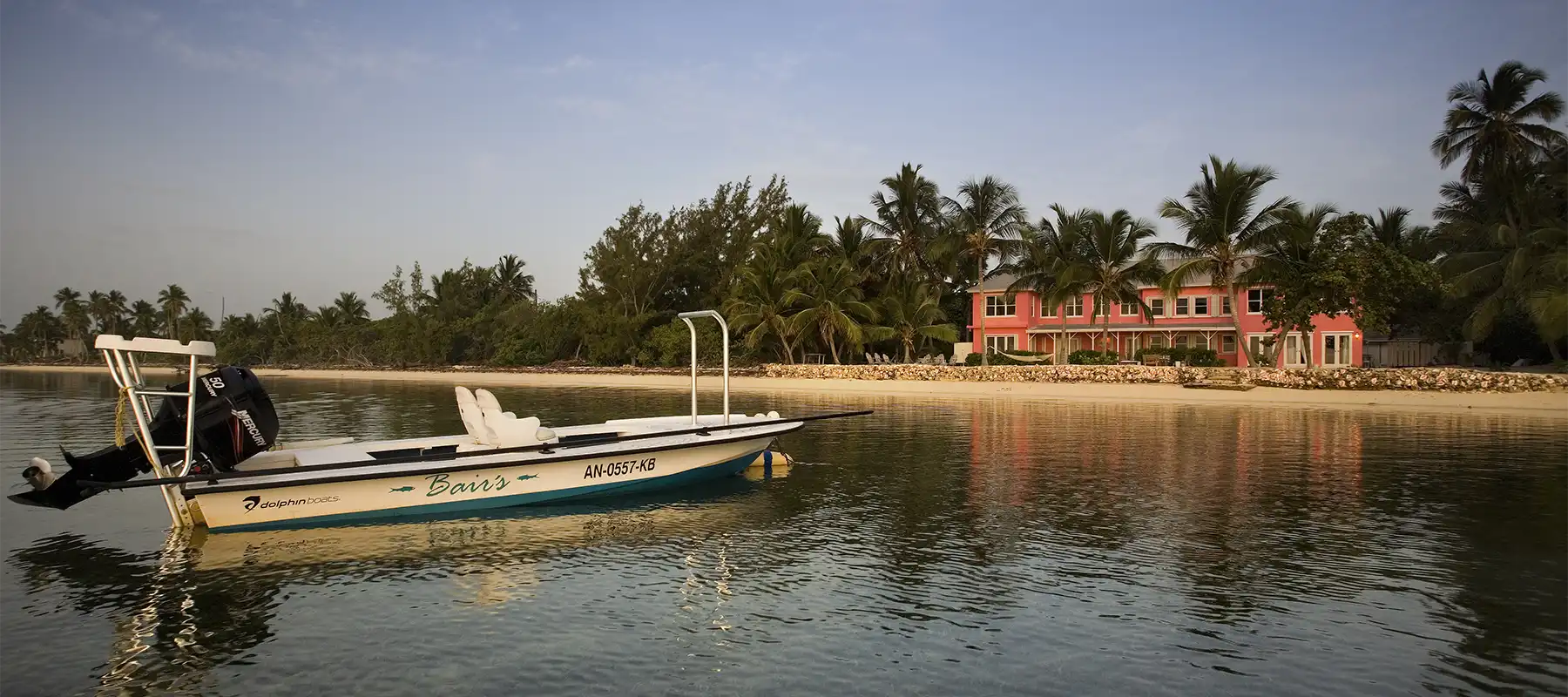
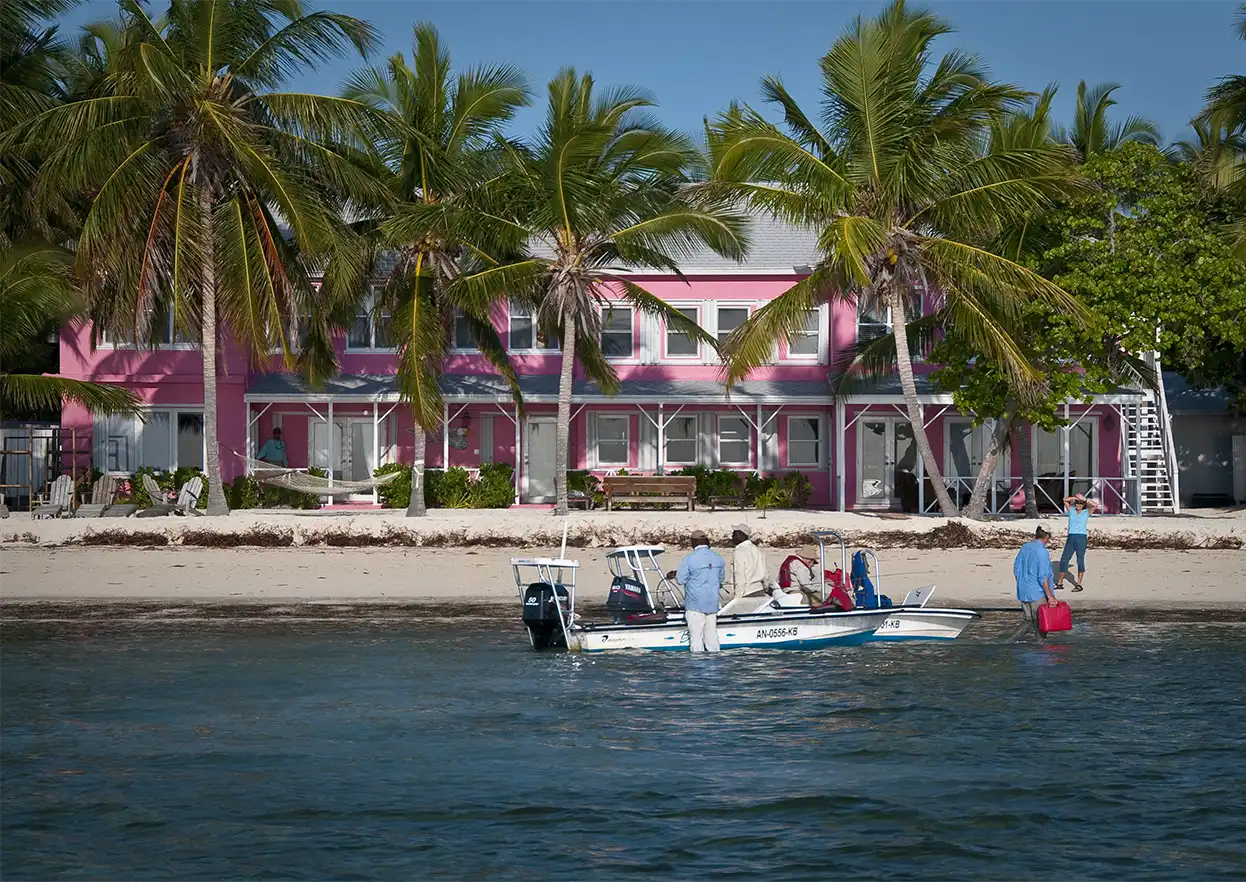
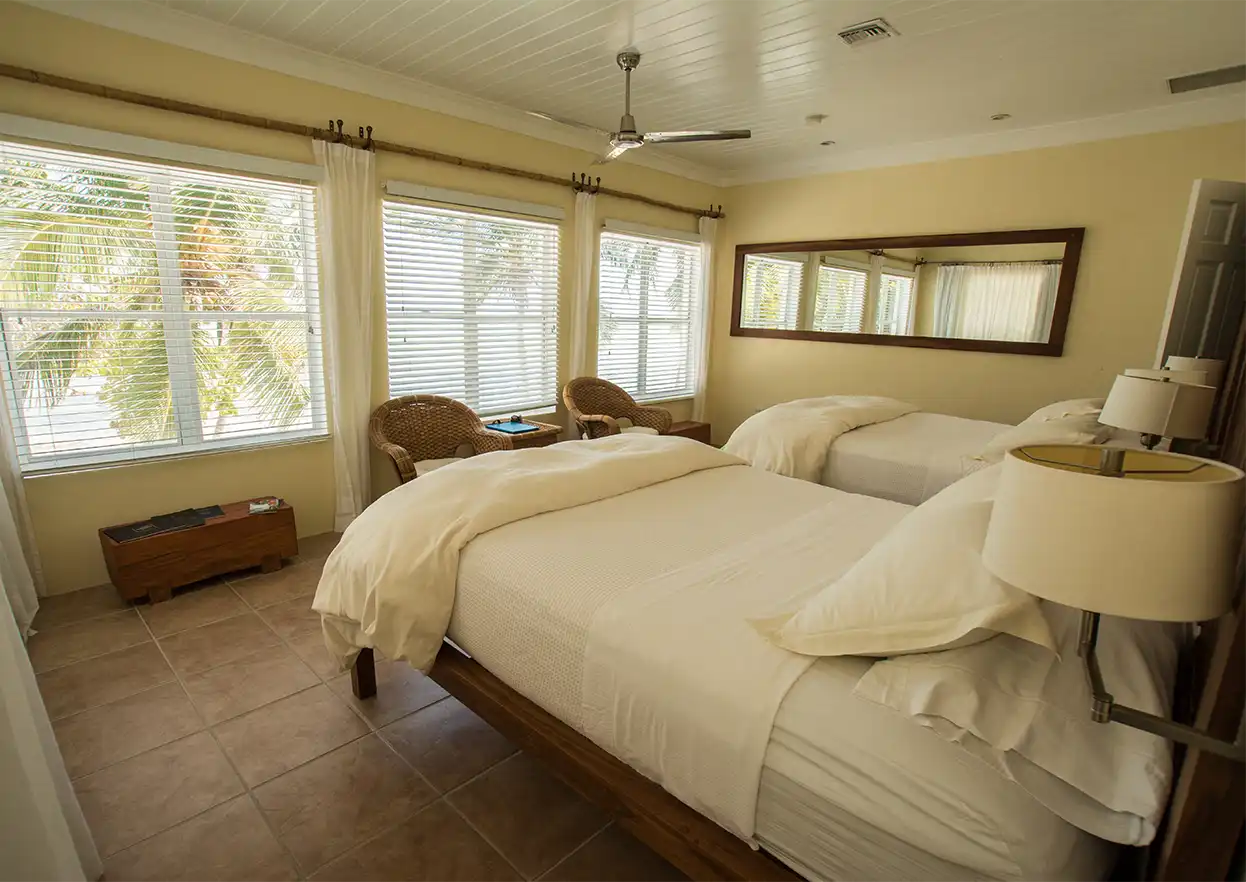
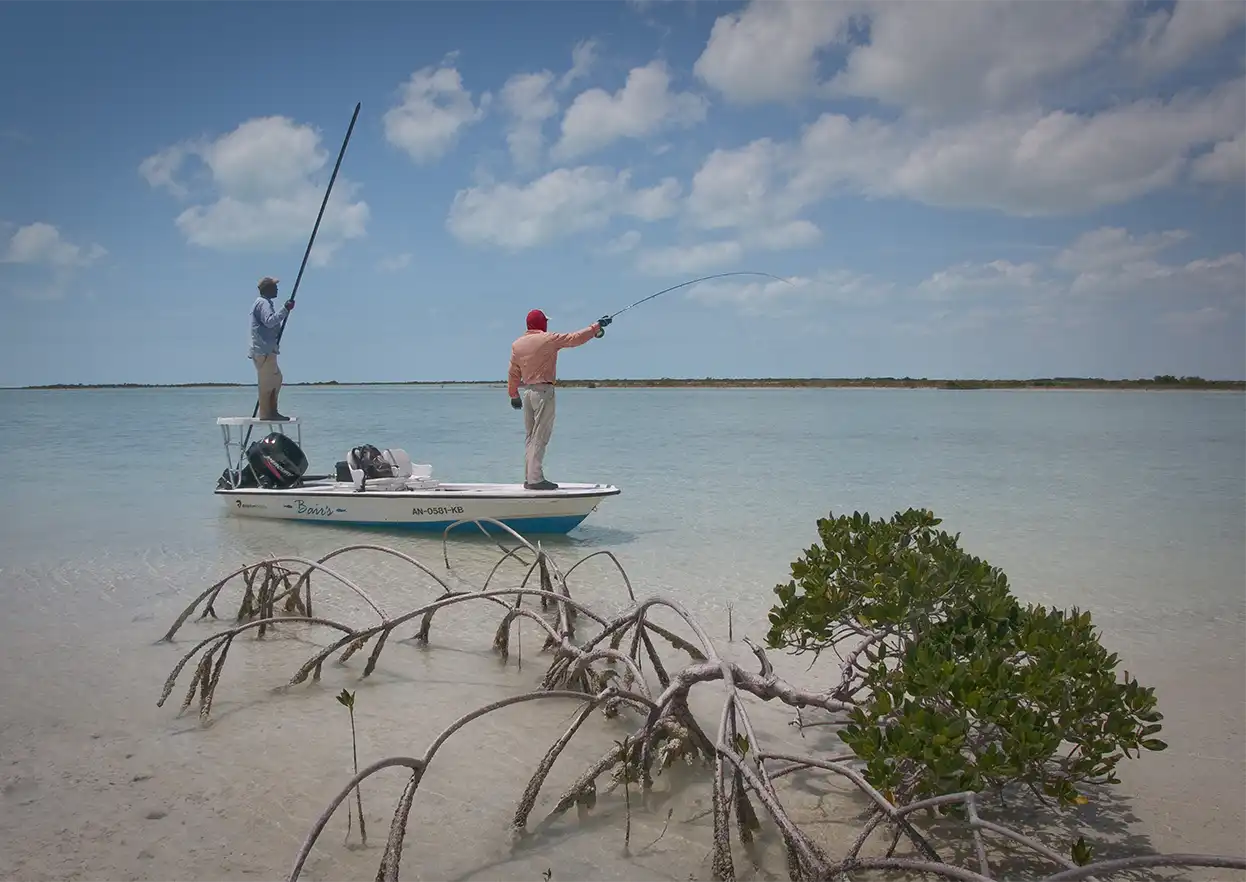
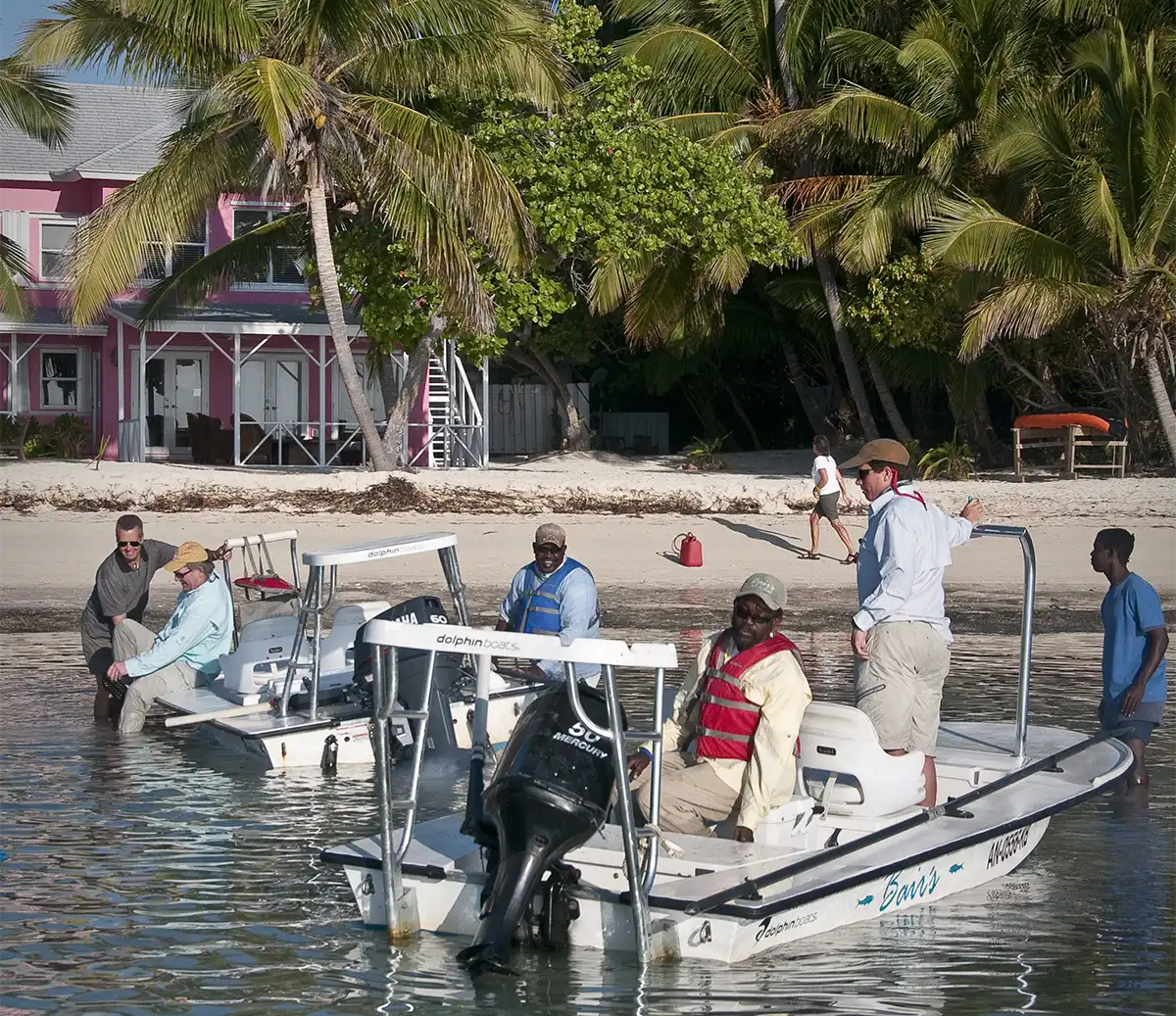
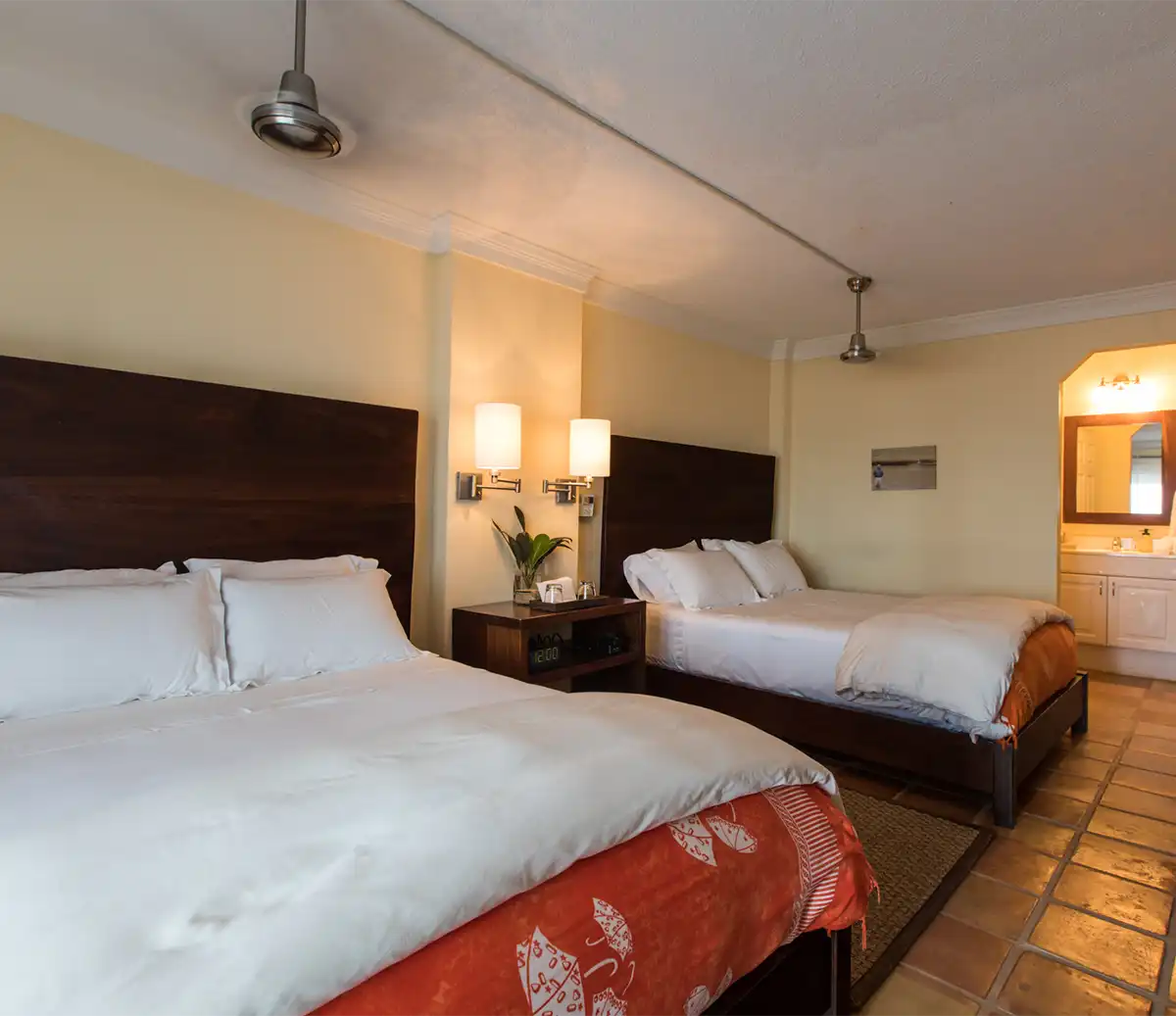
A typical day of fishing at Bair's Lodge begins early in the morning.
Coffee is ready at 6:30 a.m. and breakfast will be served at 7:00 a.m. All the fixings for lunch will be out on the lunch table as you are responsible for making your own lunch in the morning, and the menu will be handed out the night before.
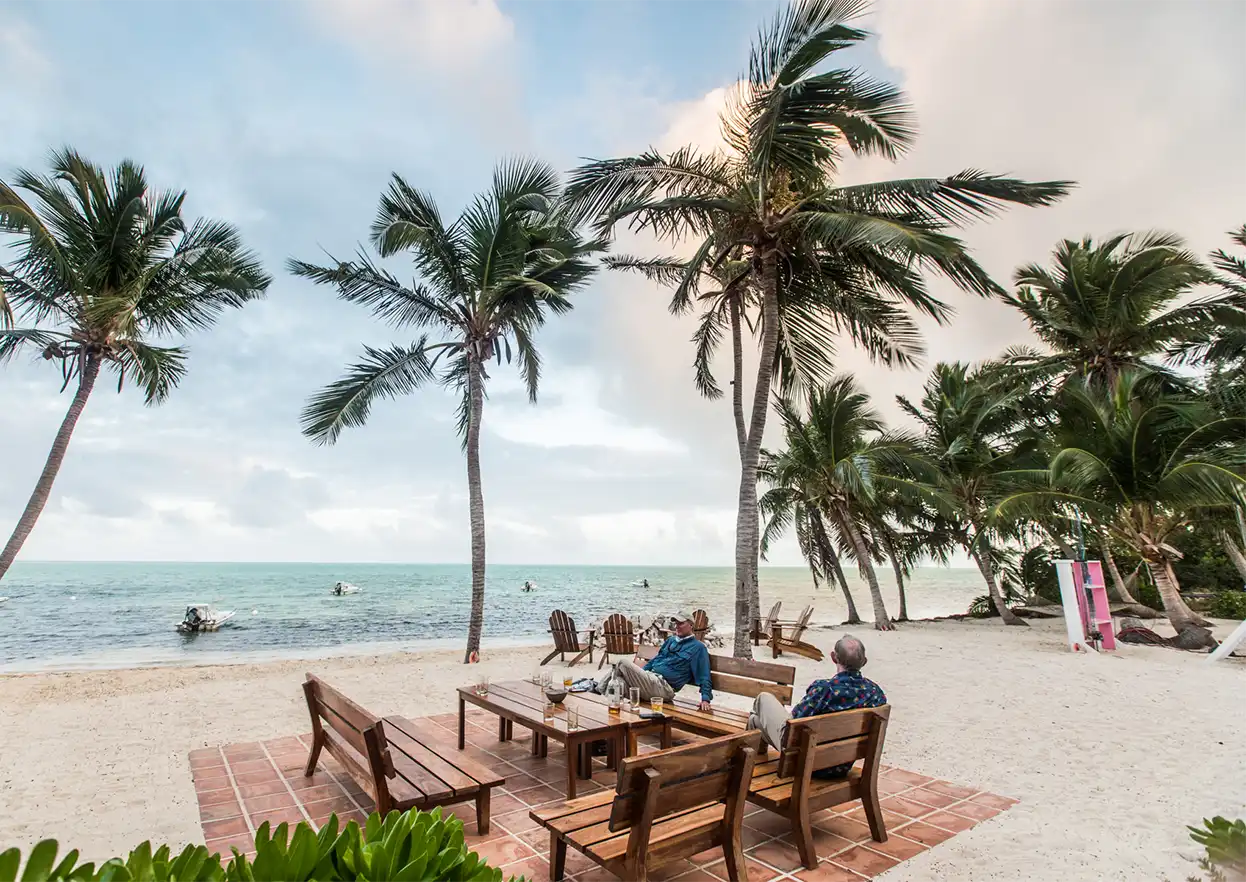
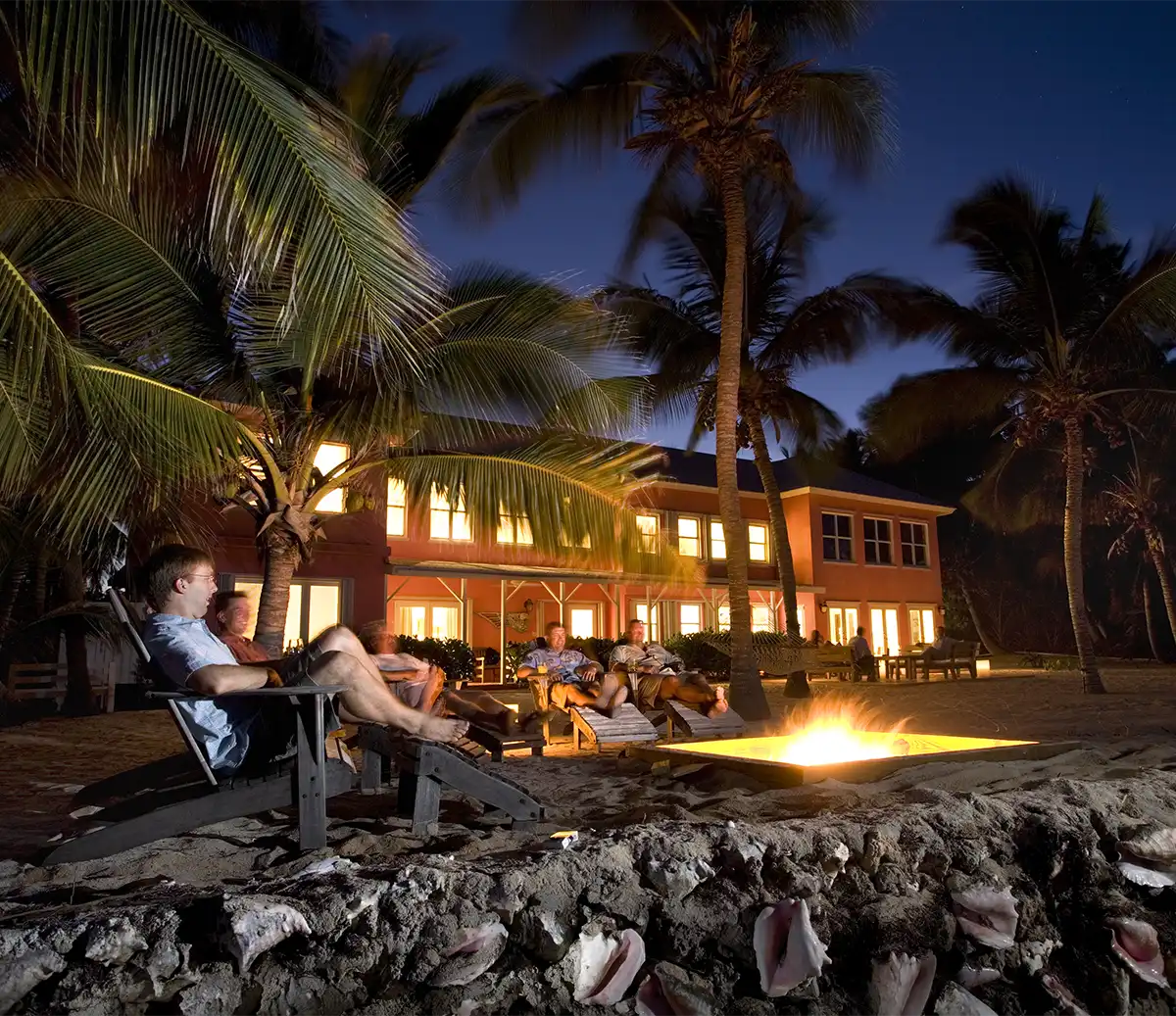
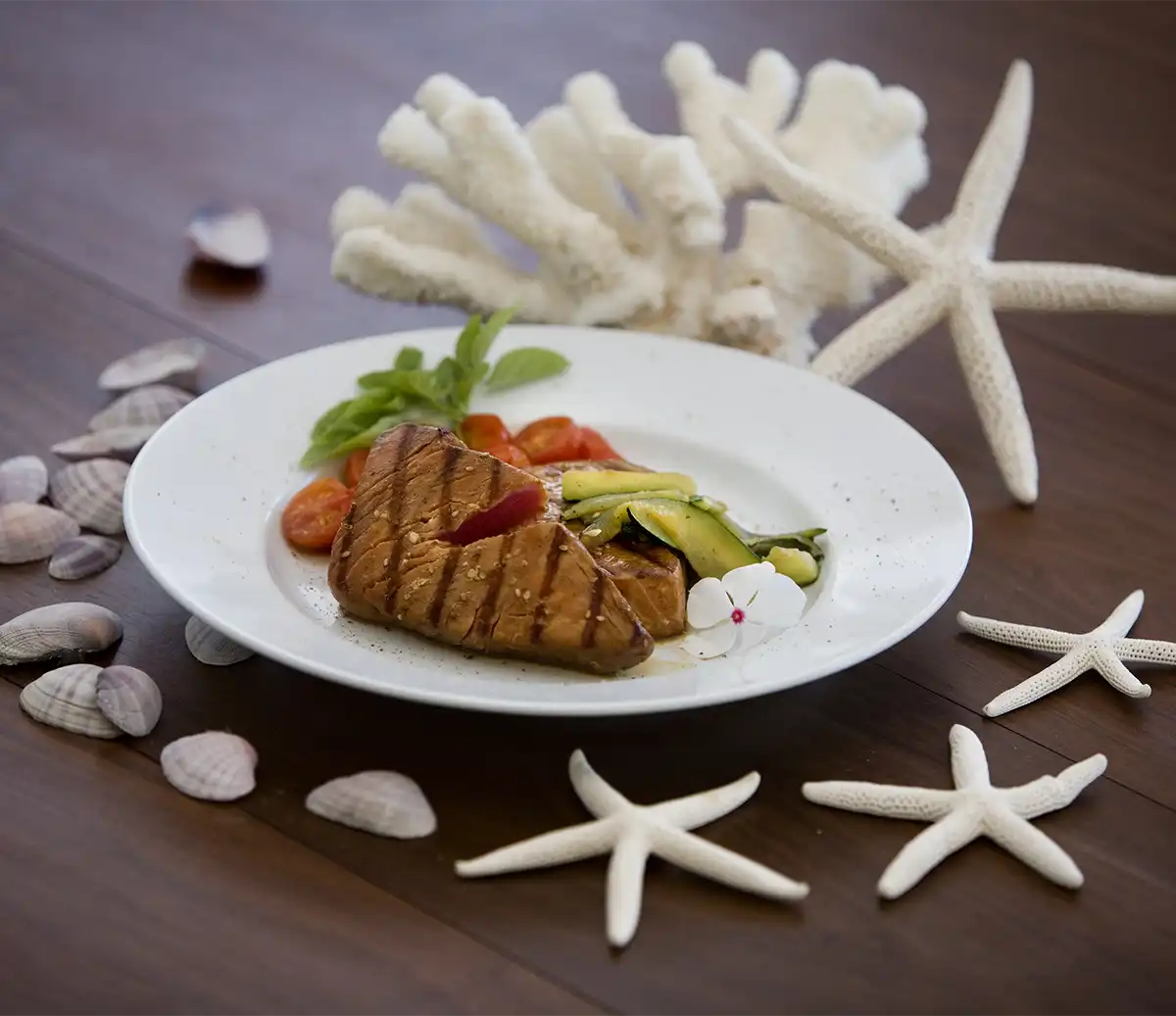
Boats depart from the dock at 8:00 a.m. returning at approximately 4:00 p.m. The bar is well-stocked and ready upon your return with cocktails, beer, and a beach bar for some days of the week. Appetizers are ready at 5:30 p.m., and dinner is usually served at 7:00 p.m. In most cases, during or after dinner the lodge managers will discuss guide assignments and fishing options for the following day.Offshore fishing can be arranged seasonally for billfish species, wahoo, tuna, and dorado.
Since fly rodders have fished for bonefish, Andros has been a name synonymous with the biggest fish, and South Andros has built a reputation over the years as being the location to try for a "giant".
Names like Grassy Creek, Deep Creek, Little Creek, the Water Cays and Curley Cut Cays are intrinsically linked to sight fishing for some of the world´s largest bonefish.
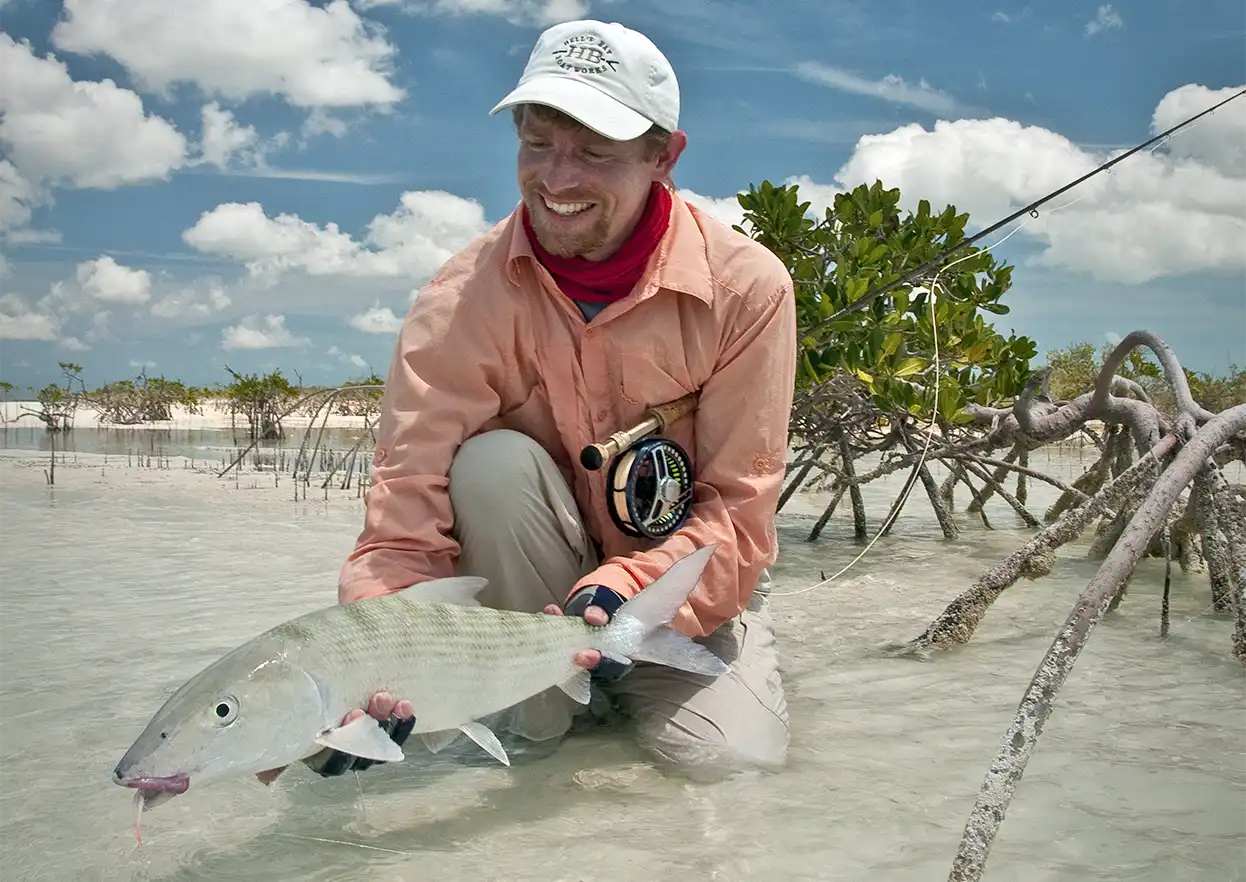
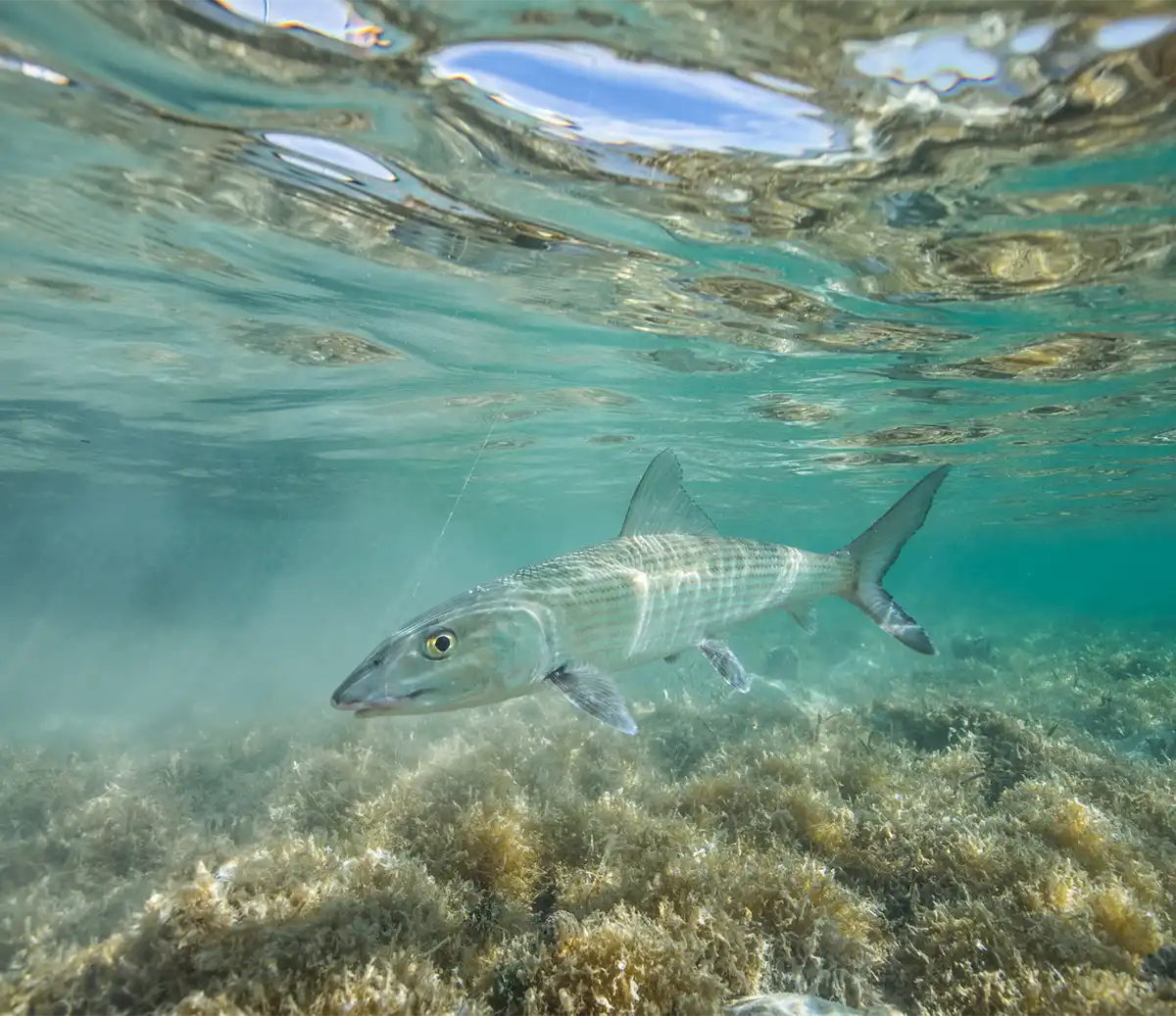
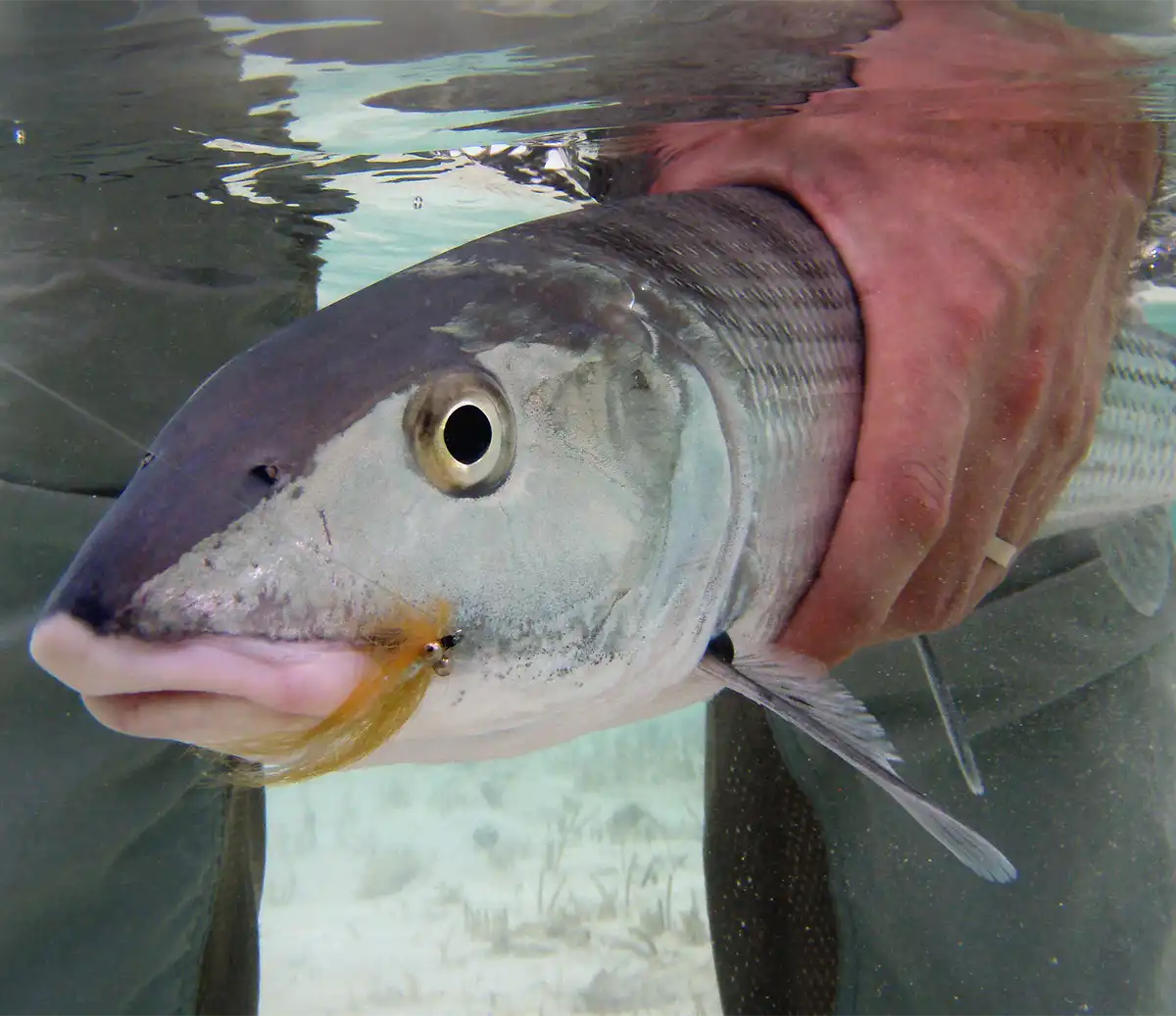
Since the early 90's Bair's has become highly regarded as providing the best fishing South Andros has to offer, primarily for bonefish, with occasional tarpon and permit. Other species encountered include barracuda, jacks and several types of snapper.
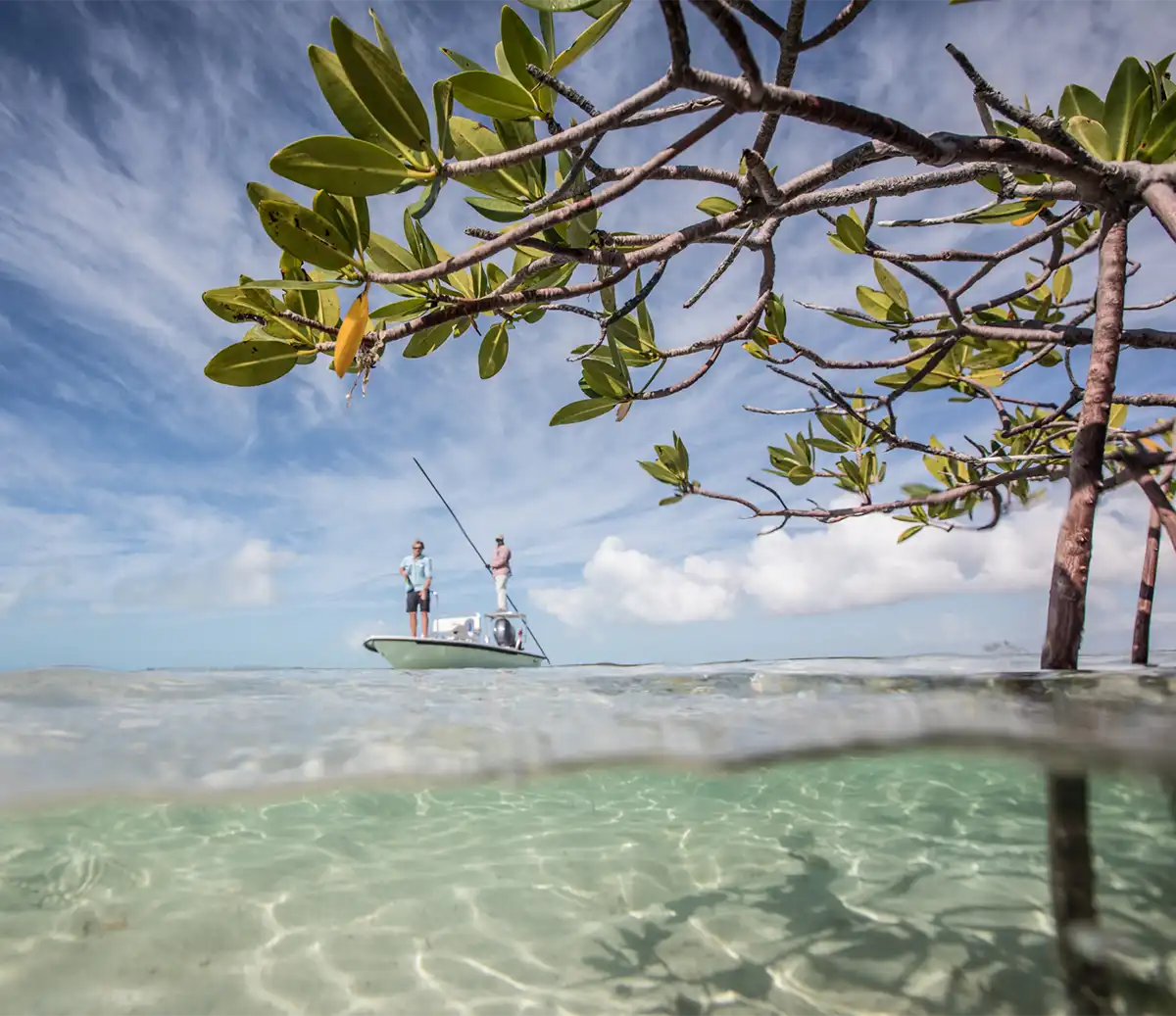
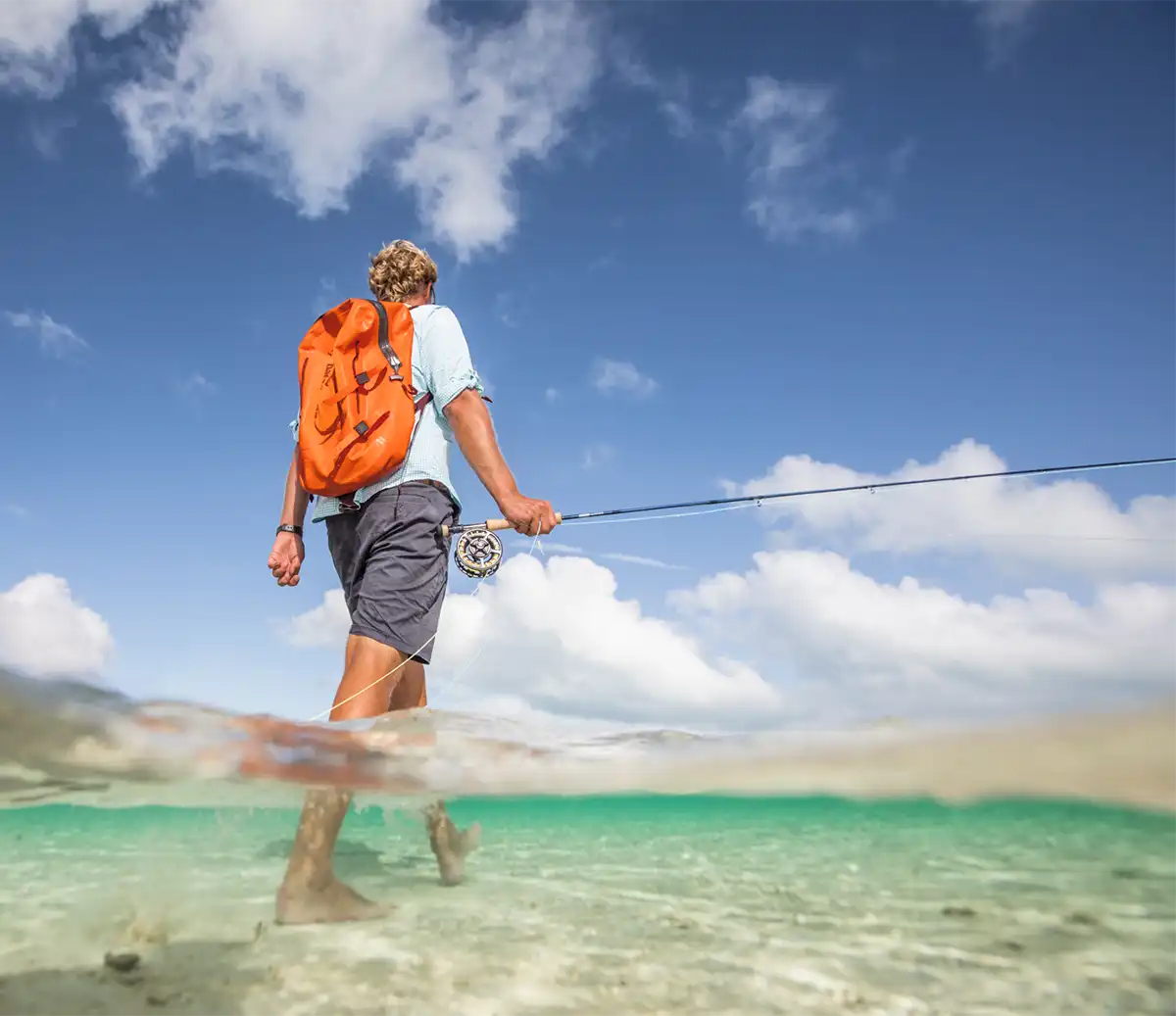
Ideally located to access Deep Creek, Little Creek, and the famous West side and Southern Cays, the lodge enjoys some of the most under-fished flats in Andros, in a context of easy access to wading flats and protected areas in the event of bad weather.
The Southern flats are home to some of the largest schools of bonefish. Grassy Creek is a 40 min boat ride from the lodge. Weather permitting you can ride on to Hawksbill Creek and onto Cistern Point. This area sees little fishing pressure and is regarded as the place to come for numbers of fish.
Recommended fly gear includes nine foot, 6 to 9 weight fly rod with 200 yards of 20lb backing and saltwater type floating lines.; 9 to 12 ft bonefish leaders with 8 to 16 lb test tippets. Fly patterns which work best are tan and pink. "Gotcha´s" are especially effective as well as shrimp and crab patterns. Hooks size 2-6.
Spinning Gear required includes 6 to 7 foot ultra light to medium rod with 200 yards of 6 to 10 lb test tippets. Anglers should bring plenty of lures (small jigs, pink or tan), since they are not available on the island.
Fishing schedule can be tailored to suit anglers´ needs, though generally speaking a typical day will start with breakfast at 7, fishing beginning at 8 and ending between 4 and 5 pm. Picnic lunches and cold drinks are taken to the flats in a cooler by your guide.
Bair's Lodge is a strictly CATCH AND RELEASE fishery.
Fishing Techniques:
One of the biggest mistakes a bone fisherman can make is not to adjust his fly to changing water depth. Your fly should be weighted such that it sinks quickly to the bottom and then stays near the bottom within view of the fish after you begin stripping. However fishing too heavy a fly, (Lead Eyes) in shallow water will undoubtedly spook many fish. Often bonefish are spooked by seeing flies that do not match the environment in which they are swimming. A fly that matches the background color of the flat you are fishing, can pay dividends. The watchword in general is flexibility; listen to your guide, no-one in the boat has a better idea of technique or choice of fly than him!
Typical Depth:
The average flat depth, whether you're wading or poling, ranges from 12"-30". In this depth, a Gotcha or Shrimp pattern with medium sized bead chain eyes should provide close to the perfect sink rate without over-weighing the fly (and potentially spooking the fish). A good rule of thumb is your fly should reach the bottom in about 3 seconds. If you find your fly is not getting to the bottom, you should switch to a fly with lead eyes or add a few wraps of lead wire to the eye of the fly.
Deeper Flats:
The angler who is willing to fish deeper flats will often be rewarded with the largest bonefish. Big bonefish prefer the protection of deeper flats or shallow flats close to deep water. When you're fishing water 3-4 feet deep, you'll need a fly with lead eyes to get to the bottom quickly. A proven deep water fly is the Clouser Minnow and the two best color combinations for bonefish are tan and white and chartreuse and white. Another killer, deep water fly is the Simram, which is a fuzzy (rabbit fur) version of the Gotcha fly with lead eyes. Lead eyes come in a variety of weights but for ease of casting, you'll want to carry flies with the smaller lead eyes as well as the heavier lead eyes that cause many of us to duck when forward casting. Another of the larger flies with lead eyes to fish in deeper water (over 3 feet) is the Big Bone with its overall tan coloration and red eyes.
Shallow Flats & Tailing Fish:
The last thing a bone-fisherman wants to do is scare an actively feeding fish by casting too heavy a fly too close to the fish. Therefore, you must go light in skinny water. By light we mean no weight other than the weight of the hook. For this we recommend mono (or plastic) eyes and a body that lands softly. Good color combinations would be the same as the other productive flies we've already described; tan and white, brown and white and the Gotcha colors, pink and white. Tie in sizes 4, 6, and 8. The Bunny Bone is a good example of this type of fly. You can throw this un-weighted fly right on the nose of a tailing fish. Its entry into the water is almost imperceptible, but it sinks well. The rabbit fur makes it look alive even before it's stripped. If it's within view of the bonefish and he's hungry, all you need do is give it the tiniest of strips.
Crab Flies:
Crab patterns have come a long way since George Anderson introduced us to the McCrab. Actually the Mc Crab has a design flaw. It's all deer hair. To get deer hair to sink it must be loaded with lead. To cast it you need a hard hat. Del Brown corrected this flaw by forming the body of his Del Brown permit fly with Aunt Lydia's rug yarn. This fly sinks quickly with a lot less lead. Jan Isley used similar materials in creating the Rag Head. Bonefish like these crabs just as much as permit. When tied in smaller sizes (size # # 4, # 6 and 8), crab flies are much more enjoyable to cast and perform well on medium to deep flats for bonefish and permit. Tie one of these on when you're fishing one of those flats where you're not sure whether the next fish you spot is apt to be a bonefish, a permit or possibly a mutton snapper.