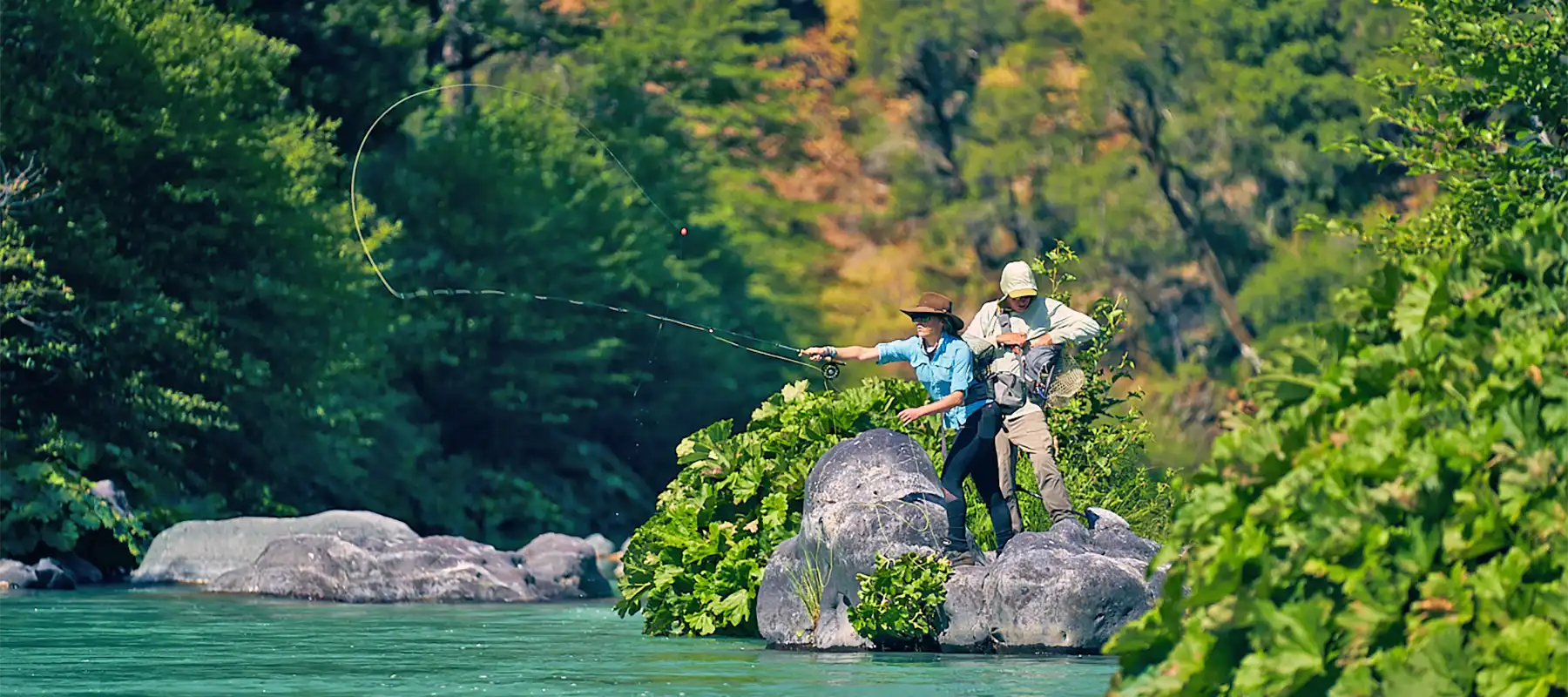
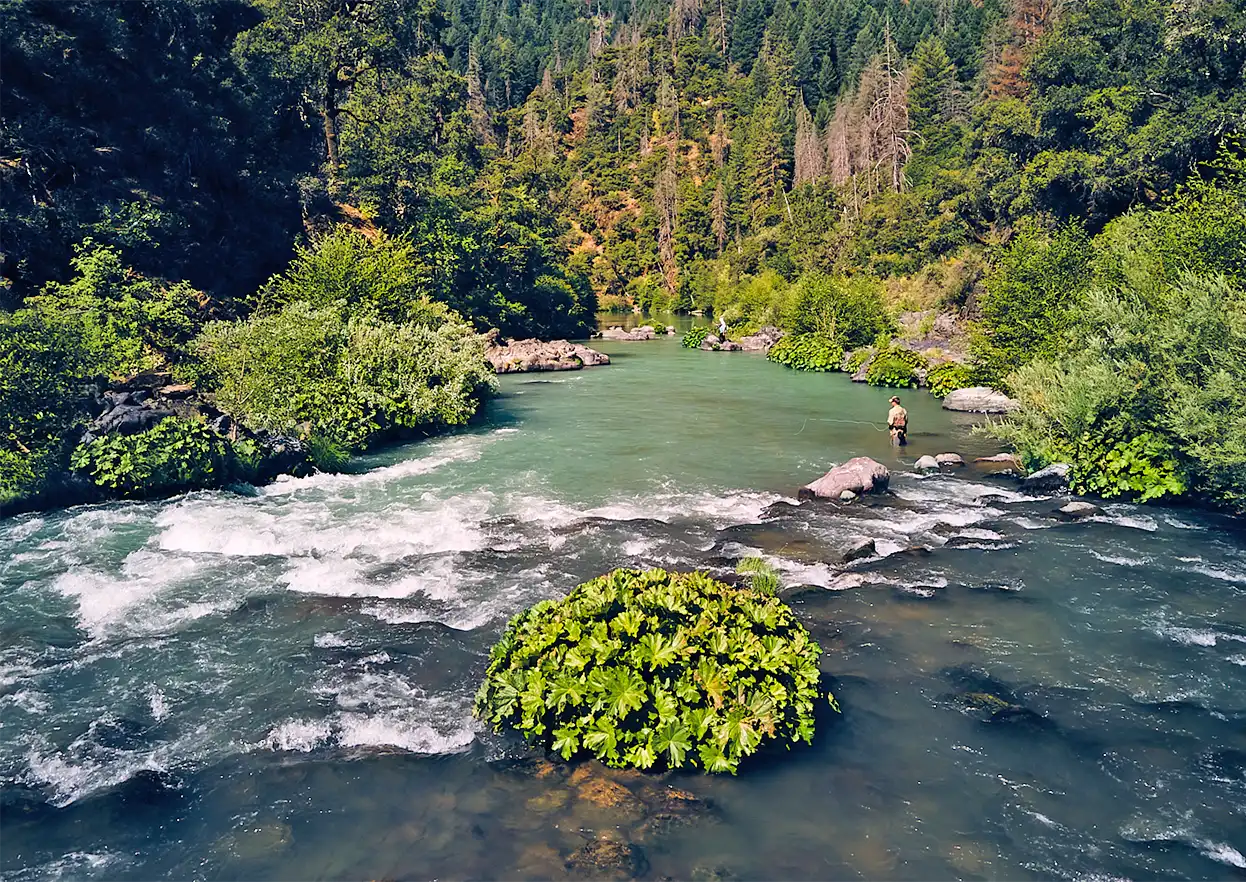
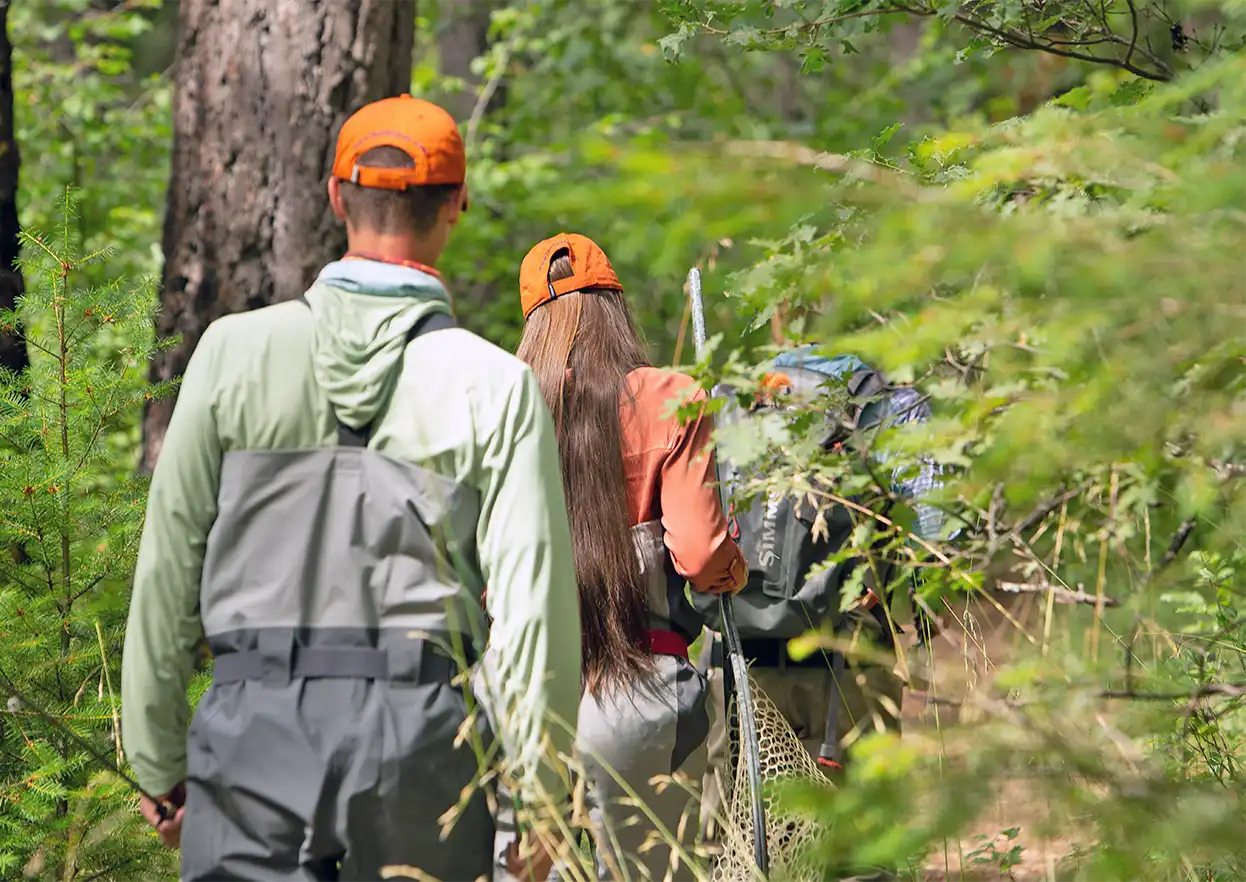
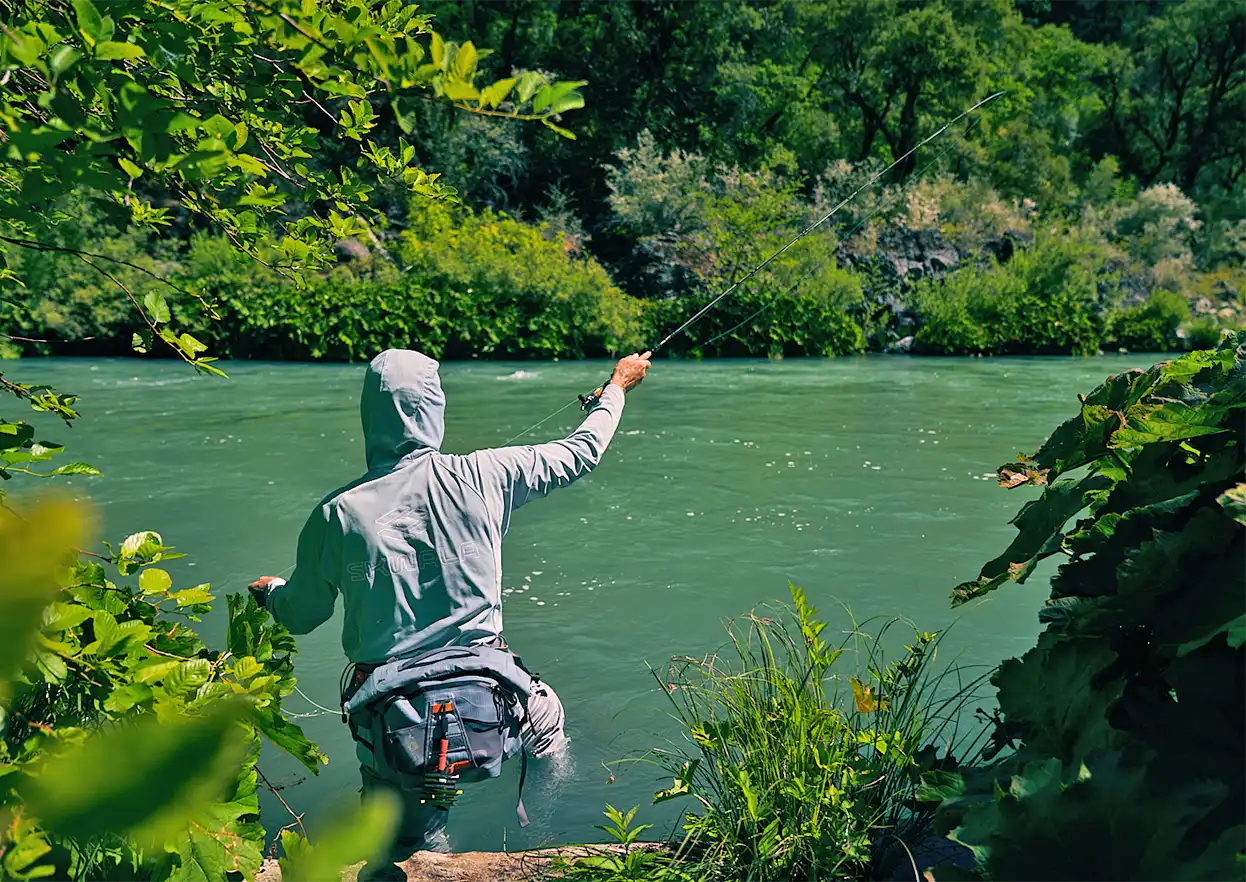
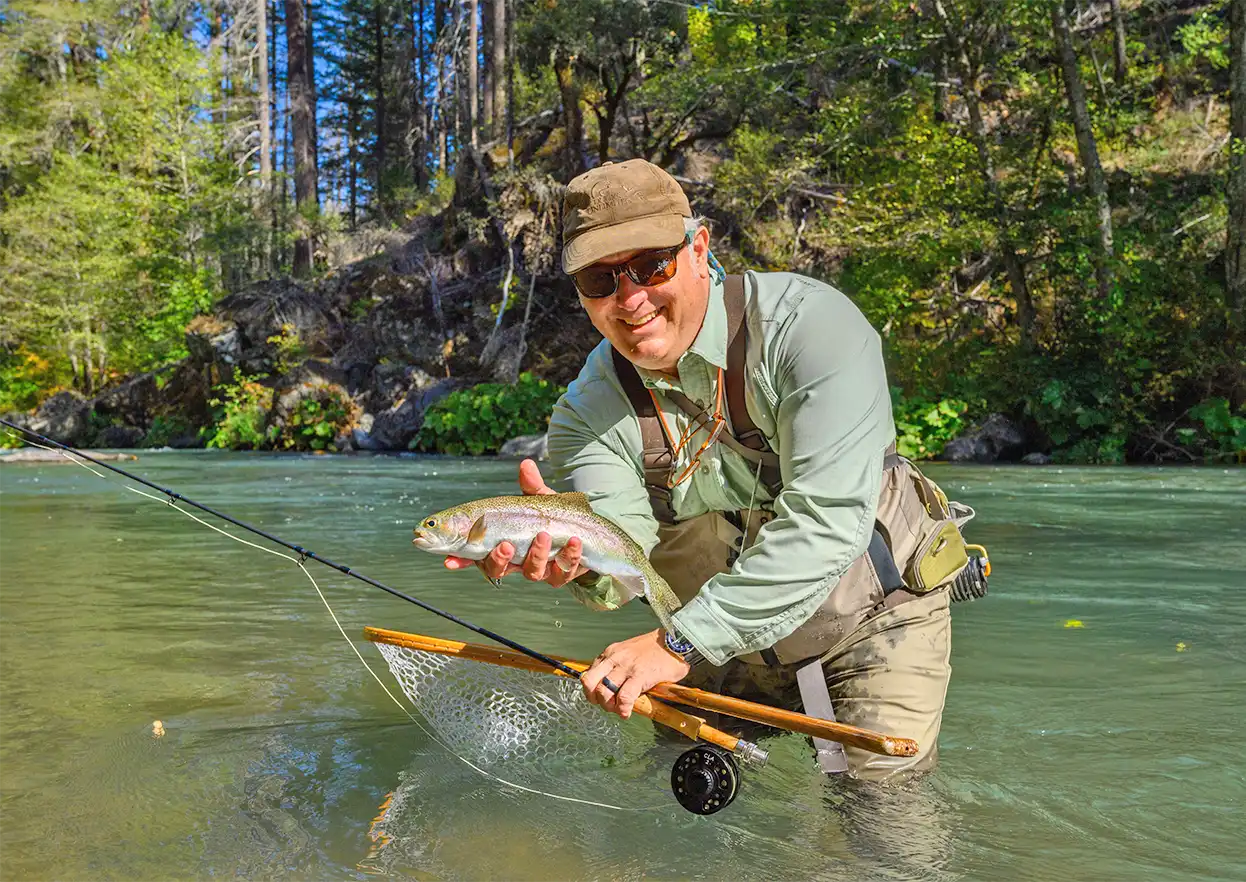
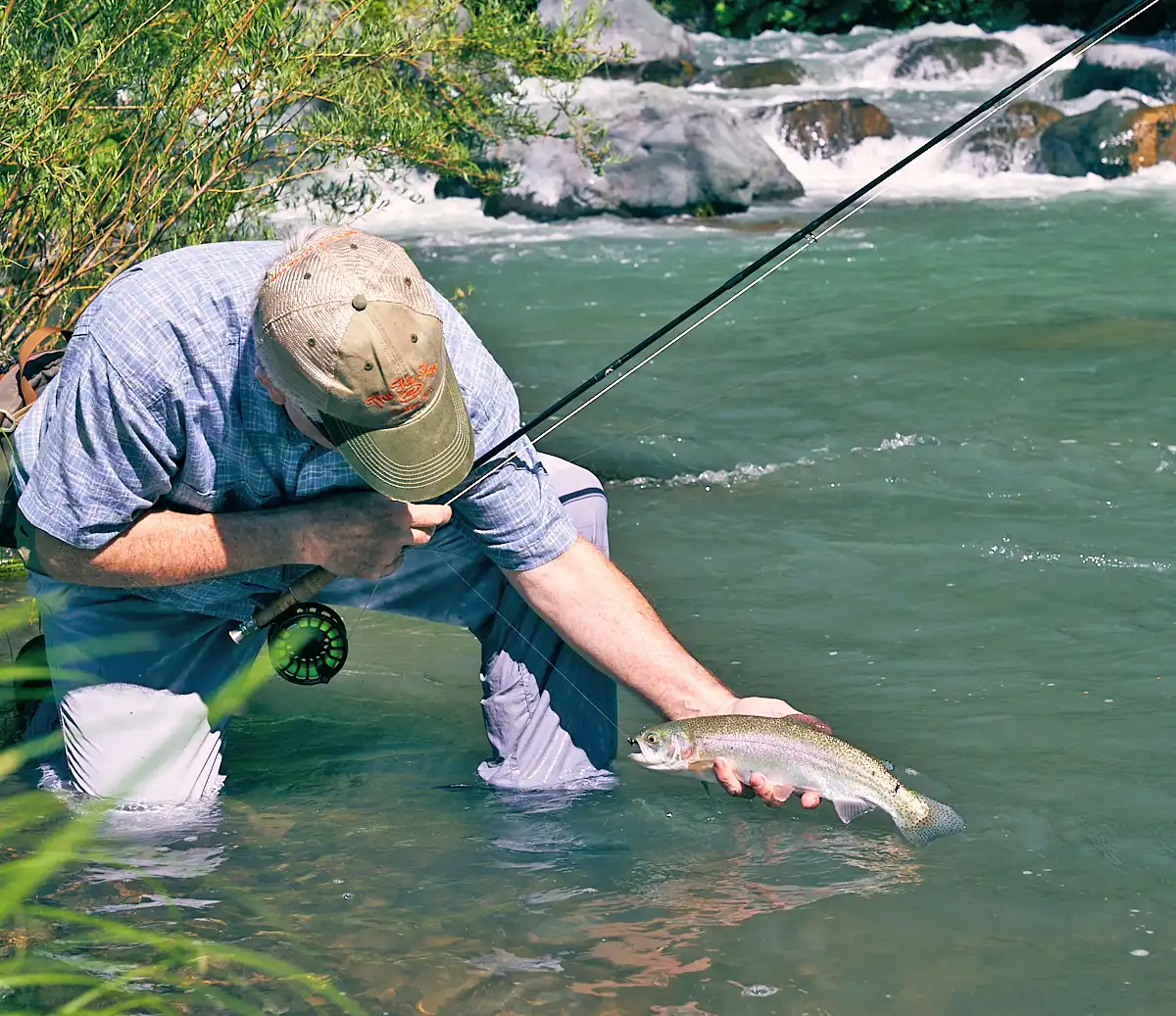
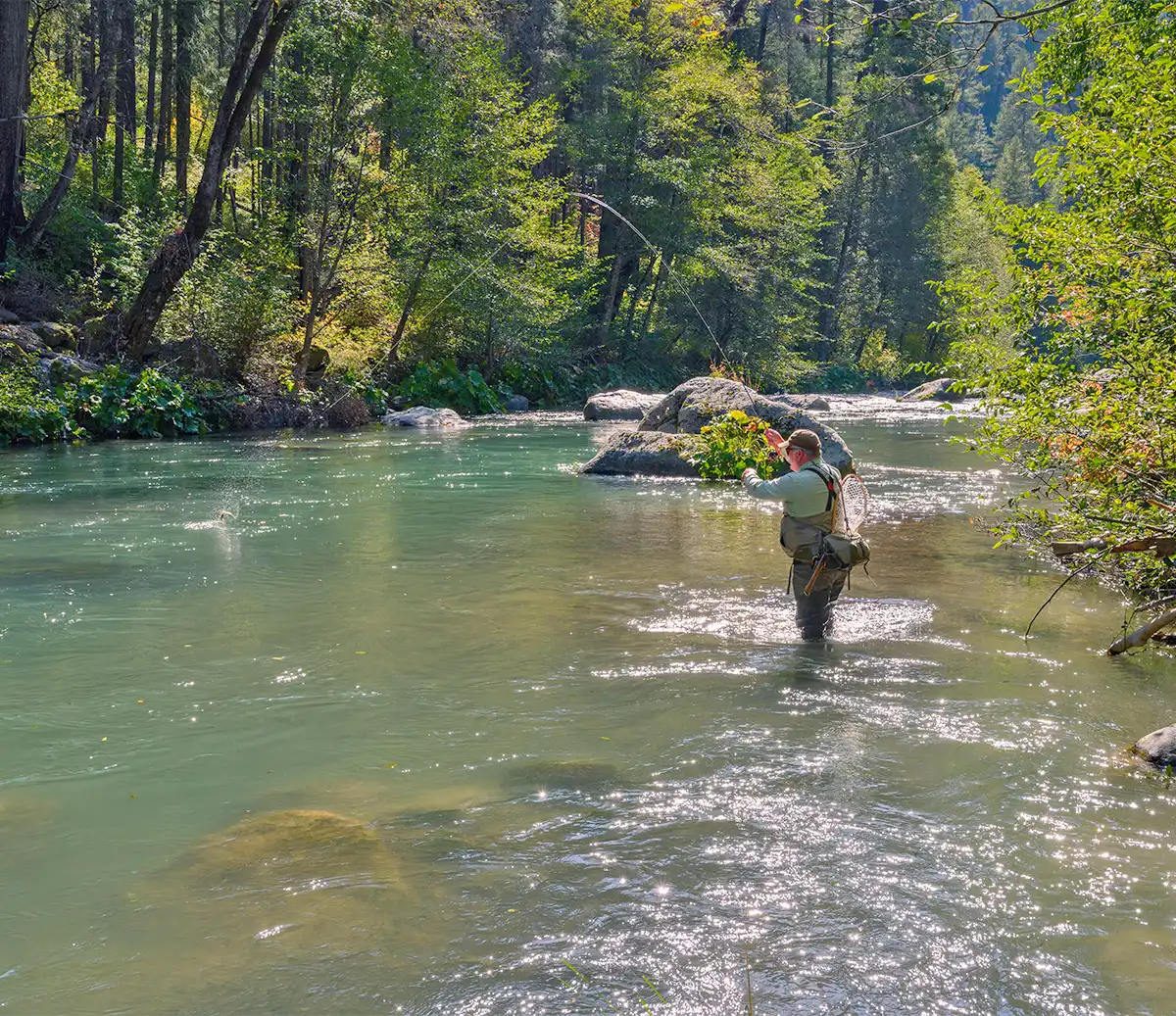
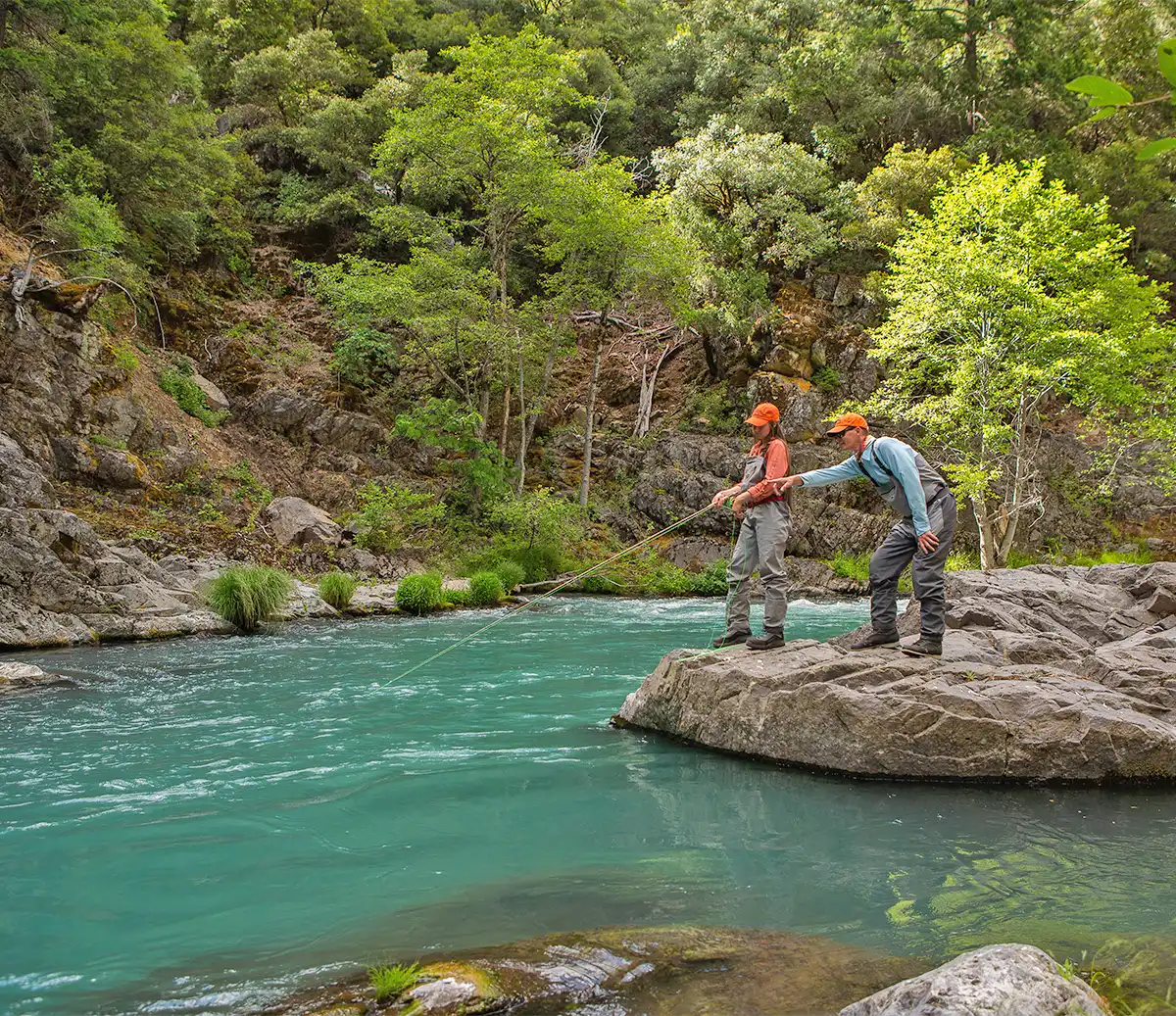
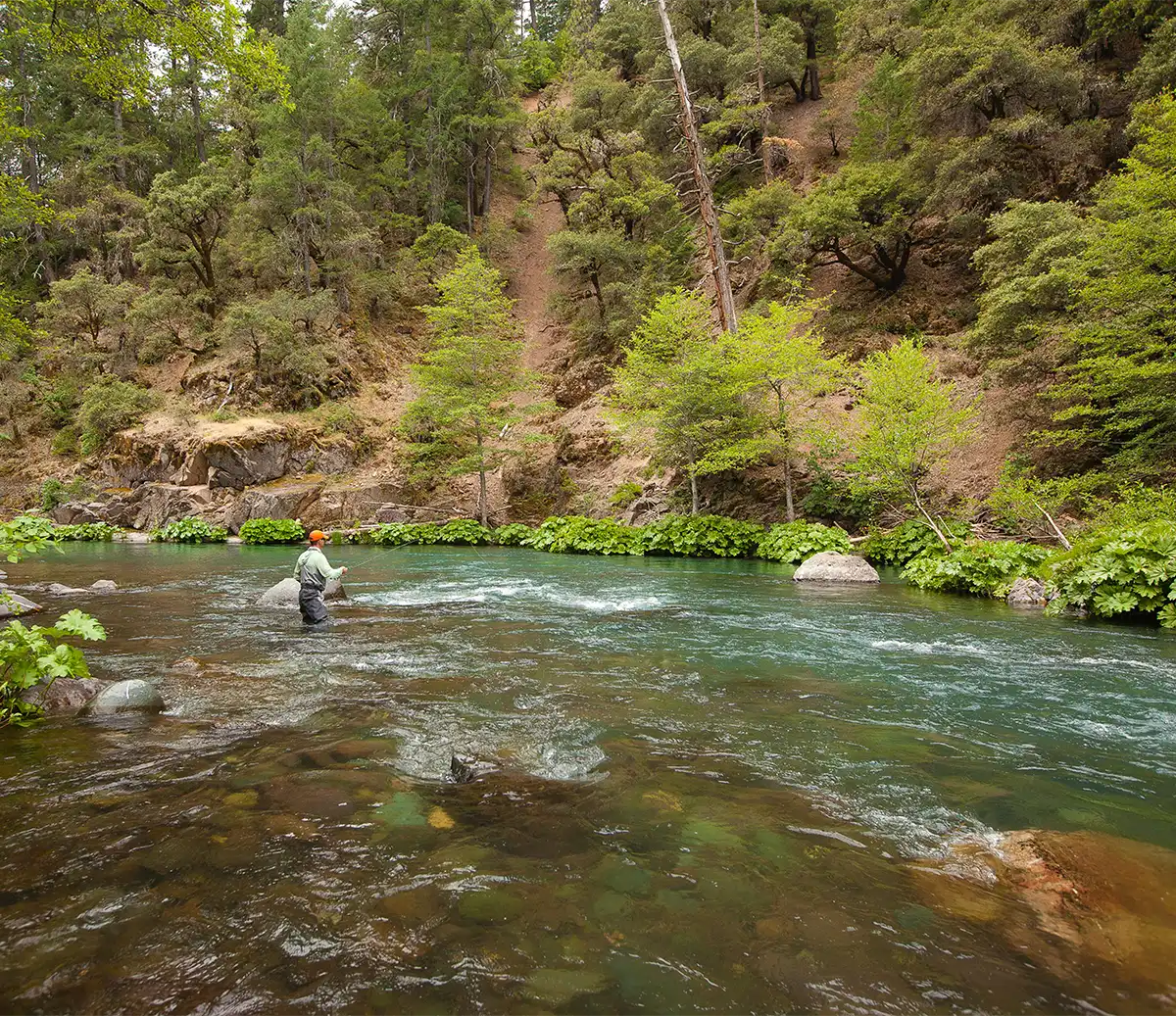
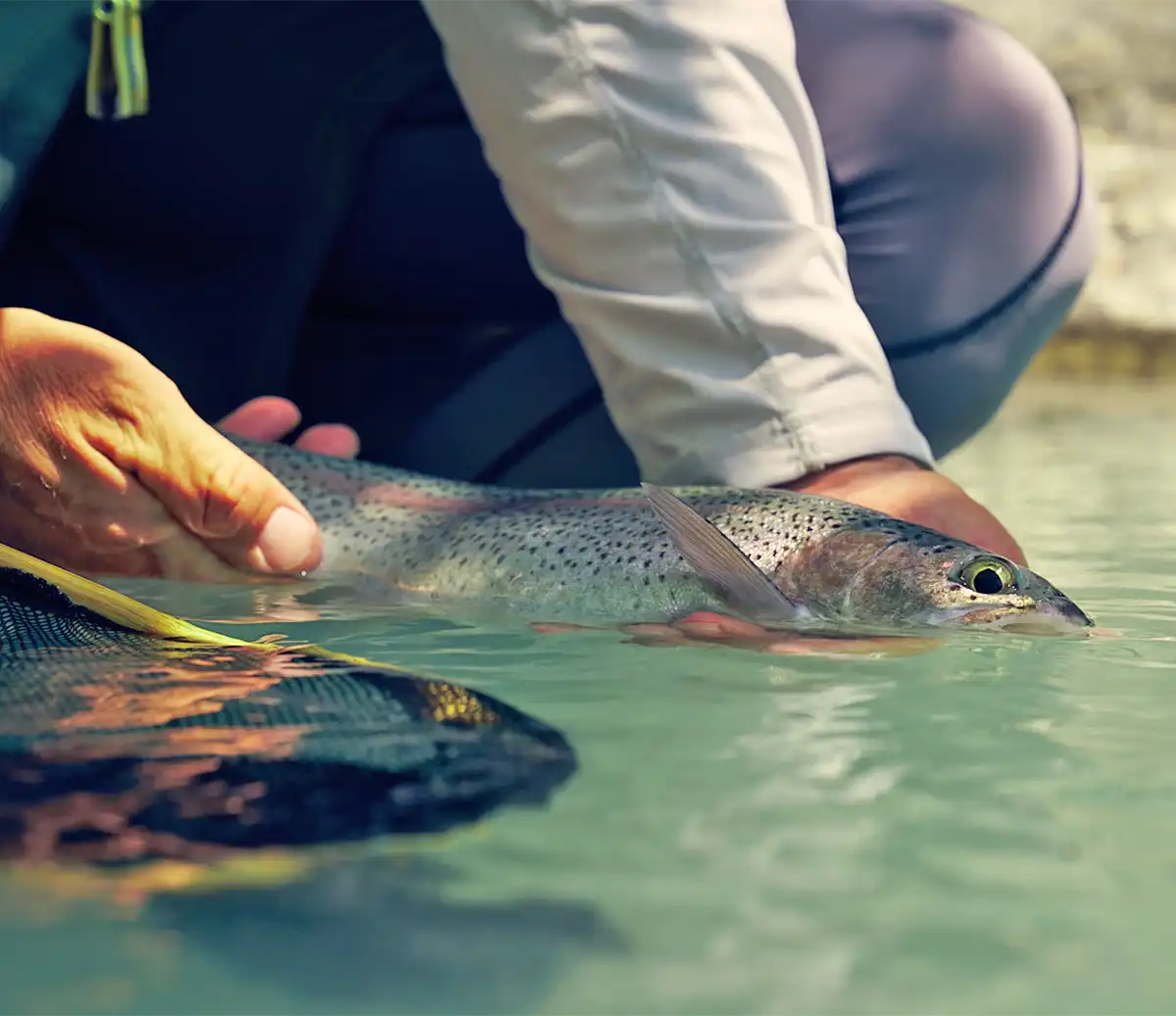
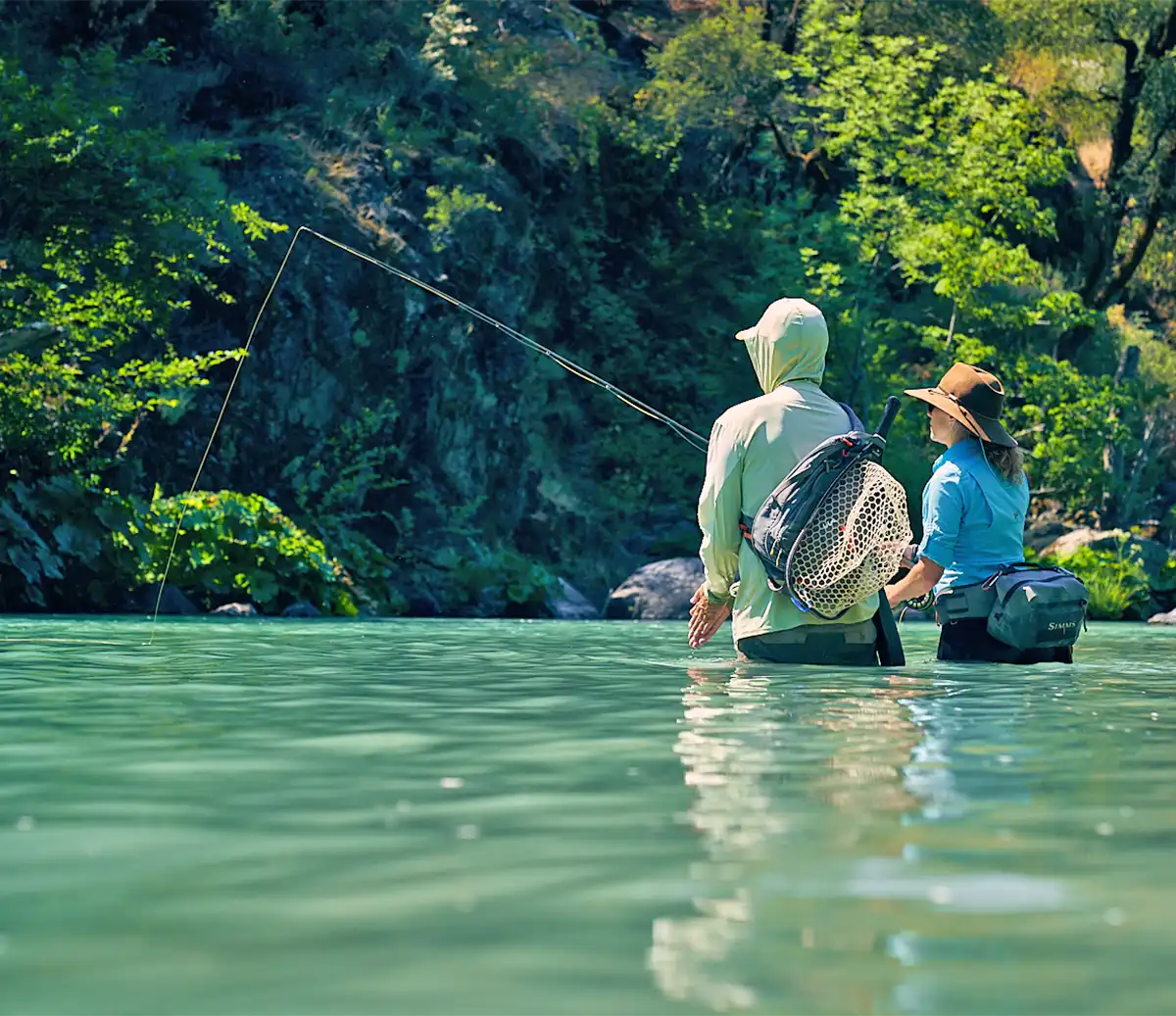
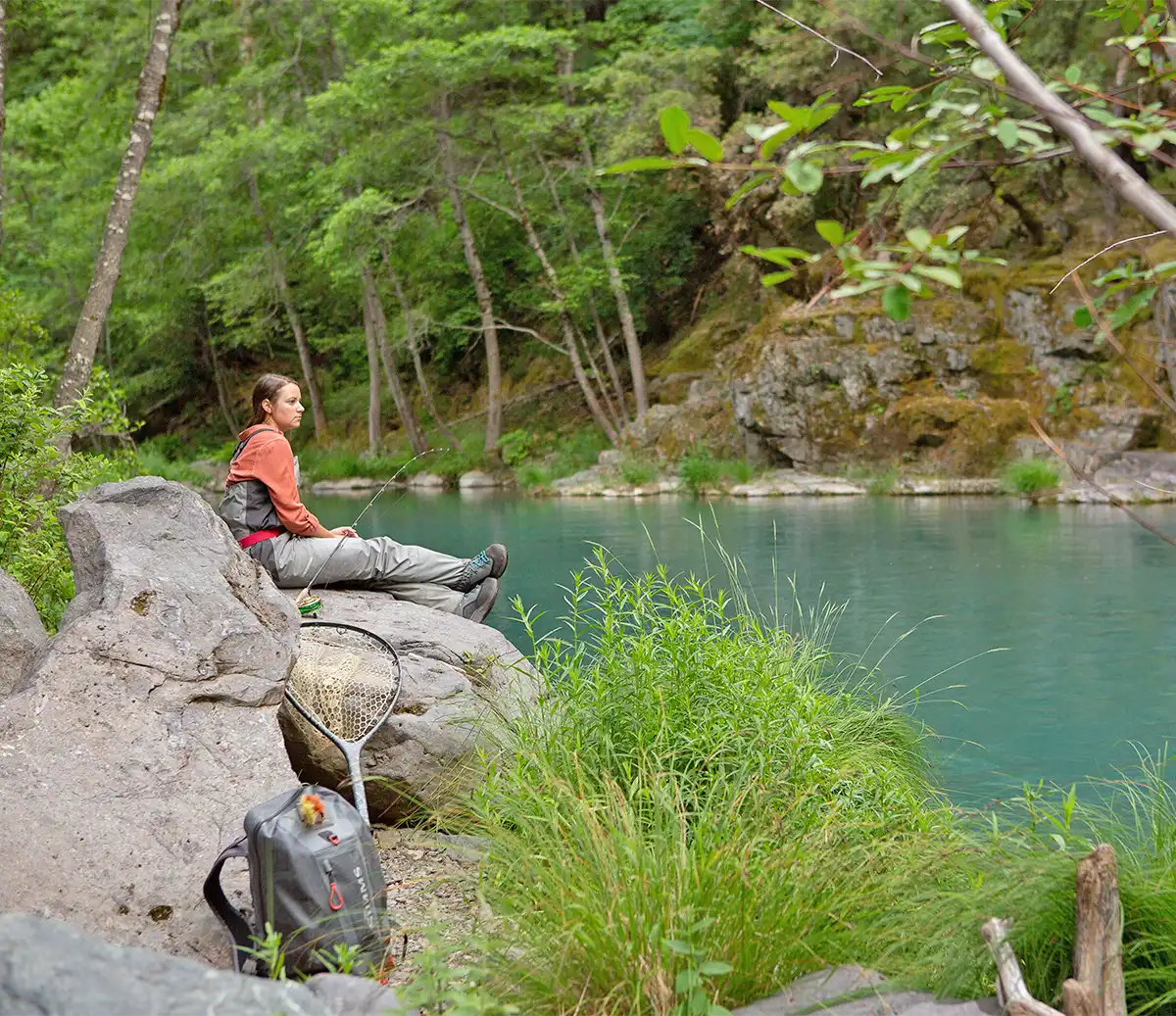
The McCloud River is now open to fishing year 'round. The McCloud is controlled by dam releases from McCloud Reservoir, which generally maintains consistent flows throughout the season, making the McCloud a good option when other local rivers are subject to runoff.
May and June:
May and June are generally considered the "prime time" months on the river. Starting as early as the last Saturday in April, myriad insects begin to hatch on the McCloud, creating consistent opportunities throughout each day to catch fish on both nymphs and dry flies.
The most important hatches on the McCloud are from the order Plecoptera: stoneflies. The massive salmon flies are the first of the stoneflies to appear, hatching sporadically throughout the month of May and sometimes into early June. They are followed by numerous Golden Stoneflies and Little Yellow Stoneflies, all of which can get the McCloud River's numerous rainbow and brown trout rising on the surface. And even when the fish aren't focused on the flying adult insects, they'll readily take dead drifted stonefly nymphs in the McCloud's many pockets and deep pools.
In addition to the stoneflies, there are many other insects hatching on the McCloud during this time of year, including several species of caddis, PMD mayflies, and several other varieties and sizes of lesser mayflies. With so many different kinds of insects in the air, there are dry fly opportunities throughout the day, and many different kinds of nymph patterns will also produce strikes from aggressive fish.
July and August:
Summertime on the McCloud River sees the lightest fishing pressure of the season. Though much of Northern California can be baked in sweltering heat, the McCloud remains shaded and cool at the bottom of a deep, heavily forested canyon and can continue to fish well all summer long with both nymphs and dry flies.
There are generally less insects hatching later in the summer, though Golden Stoneflies will still be found throughout much of the summer and caddis continue to come off every evening just before dark. The best dry fly opportunities will come late in the day, though nymphing the pockets and pools remains productive throughout the day. Summertime can be a great time of year for fishing streamers, too, targeting some of the bigger brown trout that reside in the McCloud's deep pools.
On dry, exceptionally warm summers, melting glaciers on Mount Shasta can pump silt-colored water into the lower McCloud River. Although the off-color water can be disconcerting at first, we've discovered over the years that it's not necessarily bad for the fishing. As long as there's a foot or more of visibility (which there usually is), the fish can still see your flies but they are less spooky and eat with much more confidence. Bigger, darker flies are more successful, and it is primarily a nymphing game. That said, the upper McCloud remains fishable and can be a good nearby option to get your dry fly fix.
September, October, & November:
The Fall Season is a standby favorite for long-time McCloud River fanatics. The cool nights of fall brings out the giant October Caddis hatch, there can be stellar blue-winged olive hatches on overcast days, and the big bad browns begin to migrate upriver from Shasta Lake.
The first of the monstrous October Caddis larvae begin to appear on the rocks and boulders near the edge of the river in mid September, and by October there are literally millions of the inch-long cases decorating the river bottom as they prepare for emergence. The adult insects hatch at dusk throughout October and November, providing brief flurries of dry fly activity every evening and enticing trout to rise to big attractor patterns sometimes even in the middle of the day. Moreover, they'll eat the larvae and pupae of the caddis like trout candy every hour of the day.
On overcast days, there can be some phenomenal blue-winged olive hatches. These tiny mayflies respond to changes in barometric pressure, and hatch whenever a storm front moves through the area, stimulating some great midday dry fly action on all of our regional streams, including the McCloud River.
And one can't forget the big brown trout that migrate upriver from Shasta Lake in the fall. These brutes can be a real adventure, chasing big streamers on sinking lines in the deep pools and often measuring better in pounds than inches. They're not easy to find and take true devotion to catch, but are an exciting option for big fish anglers willing to work hard for quality fish.
December through May:
The winter season on the McCloud has recently opened to fishing, we can only make comparative observations with the other rivers in nearby watersheds, the Pit and Upper Sacramento Rivers. This time of year will begin with some Blue Wing Olive and midge hatches. Fish moving up from Lake Shasta to pre stage for the spawn will begin to make their way up in December. If there is a big storm they will make their way up the system quickly. During drier winters, the releases from Lake McCloud will remain low, expect to see the salmonfly hatch to peak in April. The road over the hill into Ah-Di-Na will be snow bound and quite muddy. Check the weather and road conditions before you venture out.