The Klamath River is open year 'round to fishing most years, but the timing of the steelhead runs mean that certain times of year will be more productive than others. Also, warm water conditions can make the upper sections of the river un-fishable in the late summer months.
Spring:
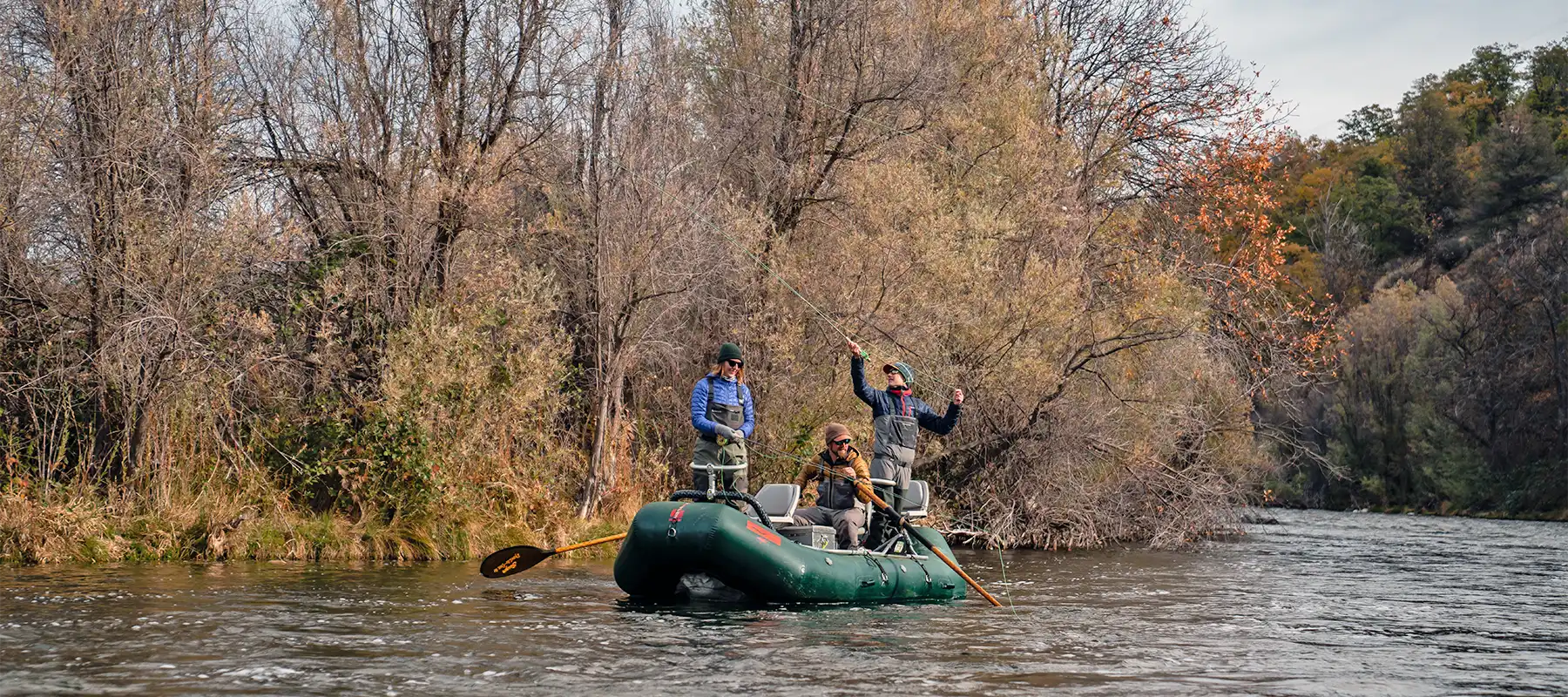
The late spring/early summer season, from the time flows begin to drop around the end of May until the water grows too warm to fish by the middle of July, presents one of the most exciting dry fly fisheries in the region. Thousands of giant stoneflies – both salmonflies and golden stoneflies – hatch on the upper reaches of the Klamath during this time of year. The Klamath's resident rainbows in the section of river pod up in the riffles and near the willow-lined banks. Our guides drift the river, while anglers cast big dry flies to aggressive trout that average 10-14 inches, with fish over 20 inches hooked daily.
Summer:
The season can start on the lower Klamath as early as July, but the real season doesn't get started until sometime around the middle of August to the middle of September. There can be some great traditional steelhead fishing on the lower Klamath River during this early season, from the mouth of the Klamath upstream past Johnson's Bar and on towards the confluence with the Trinity River near the town of Weitchpec. Steelhead fishing on the Klamath in this early season is an exciting angling adventure. Anglers typically use jet boats to maneuver the river and access various riffles and runs that hold these early season steelhead.
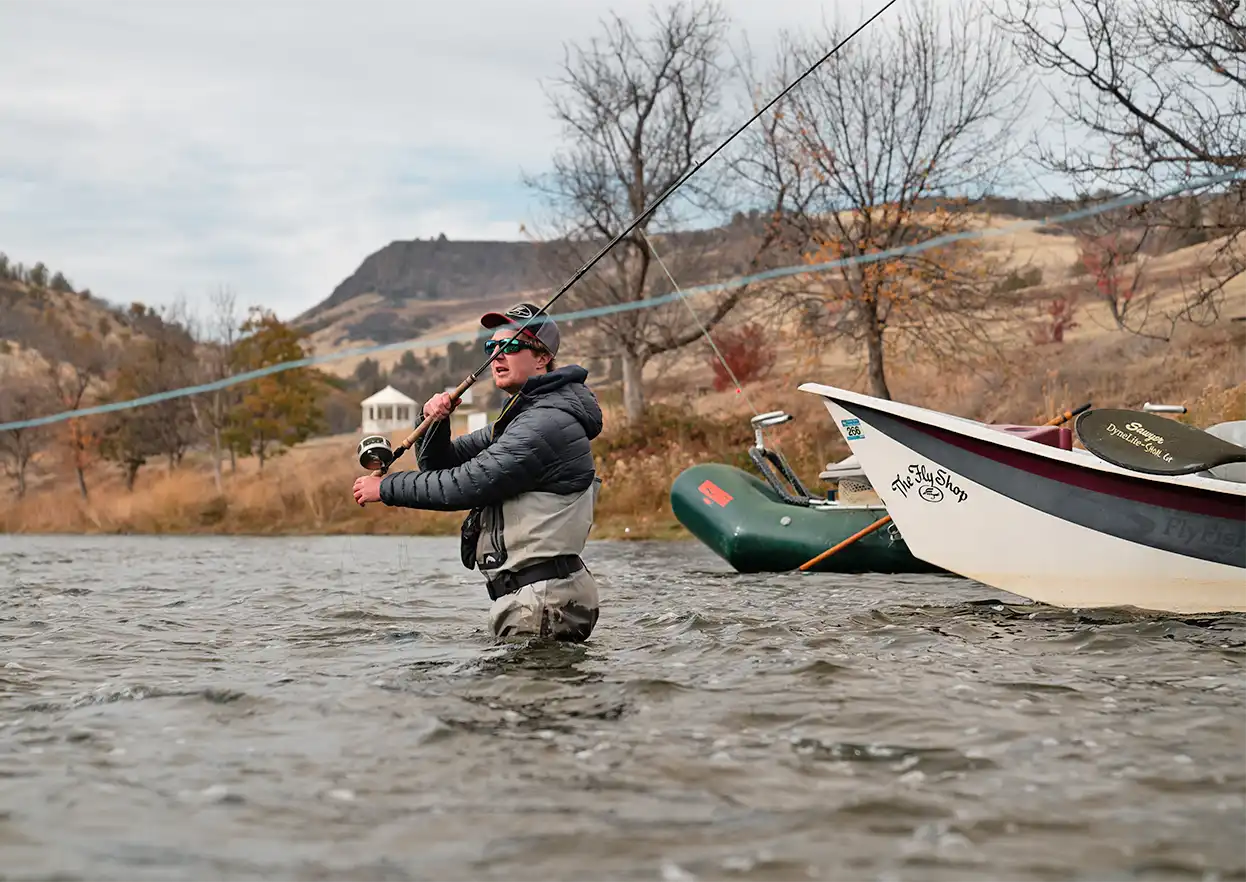
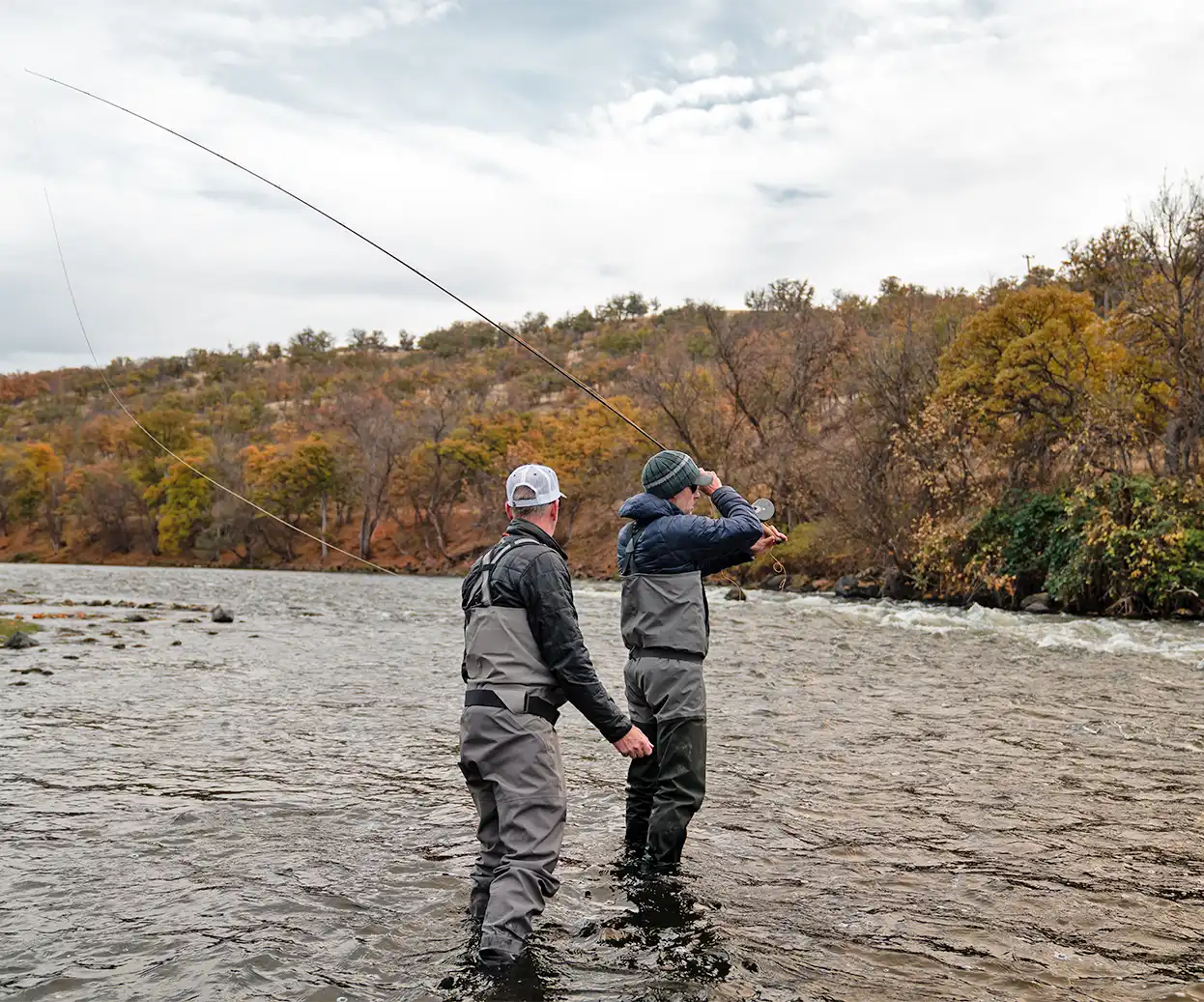
The primary technique is traditional swinging, with single or two-handed rods, using various floating lines, sink-tip lines and shooting heads. This is the way steelhead are meant to be caught; once you've felt the tug of a chrome-bright fish at the end of a tight line, you'll be hooked as tightly as any fish. The Steelhead in this part of the river are fresh from the ocean, full of all the strength and ire of any saltwater species. They run in size anywhere from half-pounders to adults ranging up to 12 pounds.
Fall:
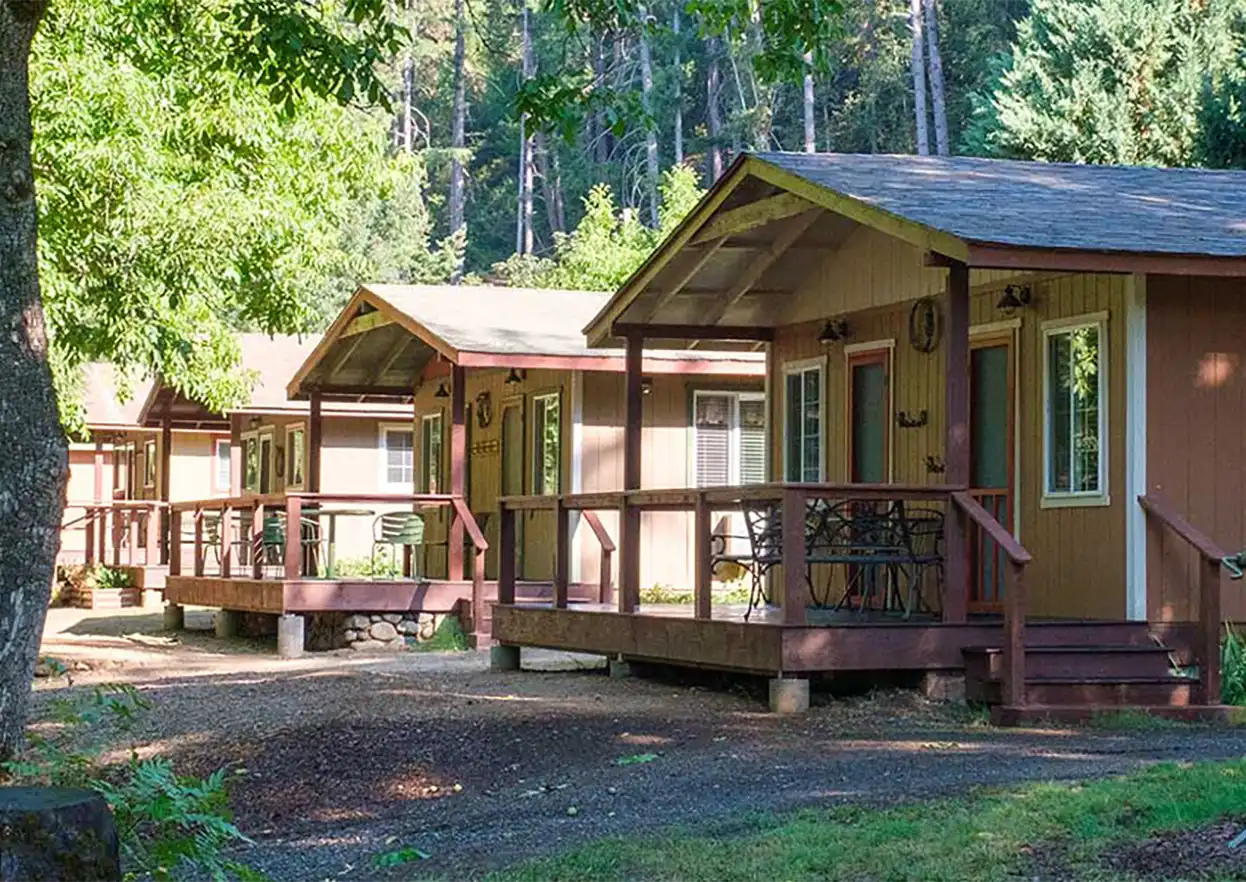
The so-called "middle Klamath" is the rugged, remote section of the river starting at Weitchpec and running upstream through Somes Bar, Orleans, Happy Camp, and the Seiad Valley. Highway 96 paralells the river through much of this section. There's a lot of fantastic steelhead water in this section of the Klamath, and not much angling traffic. In fact, our friends at the Marble Mountain Ranch are located smack dab in the middle of all of it, and usually have the river to themselves from early October through November.
Winter:
The portions of the Klamath River that our guide staff concentrate on begins at the Iron Gate Dam, just north of the town of Yreka and south of the Oregon border along the Interstate-5 corridor. There are several drifts in this upper region of the Klamath that our guides focus on during the late fall and winter months, targeting both half-pounders and adult steelhead.
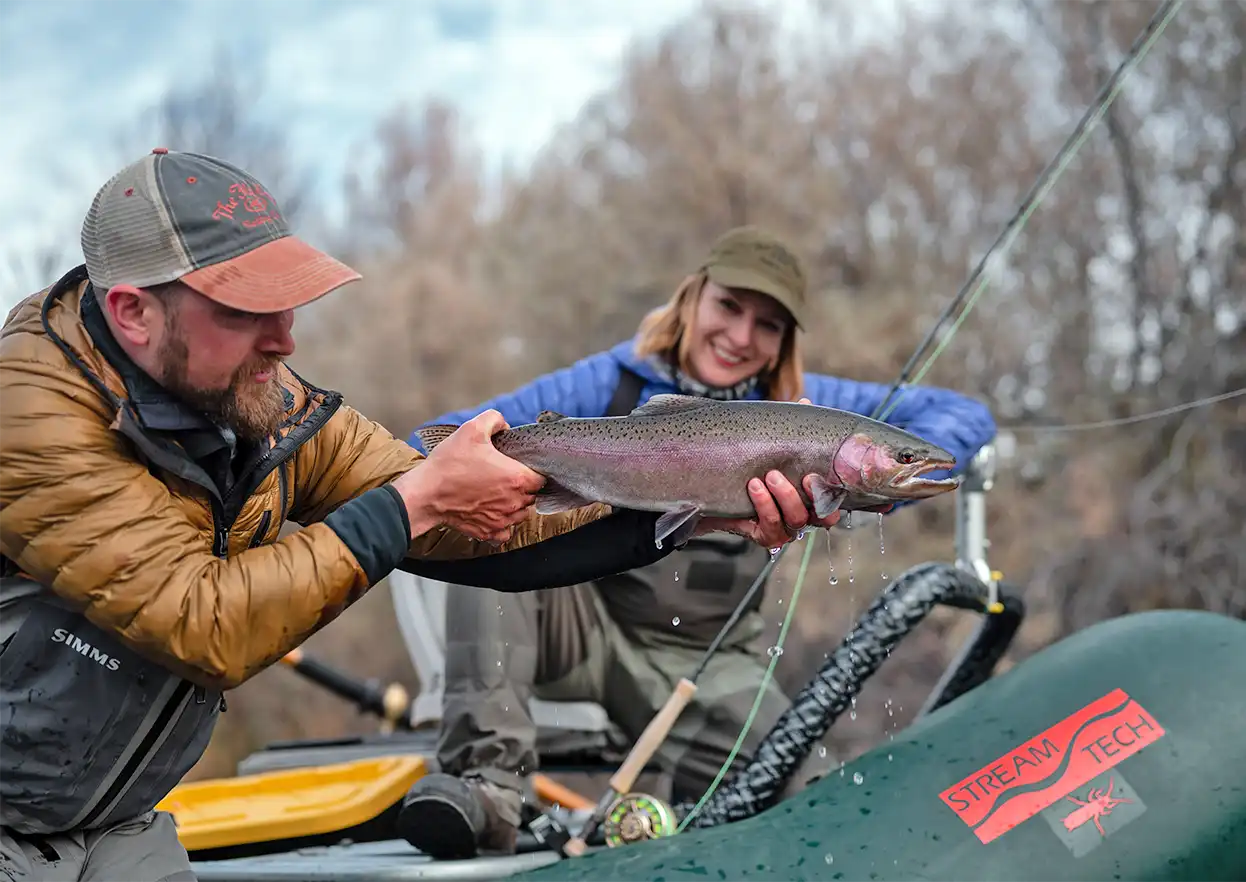
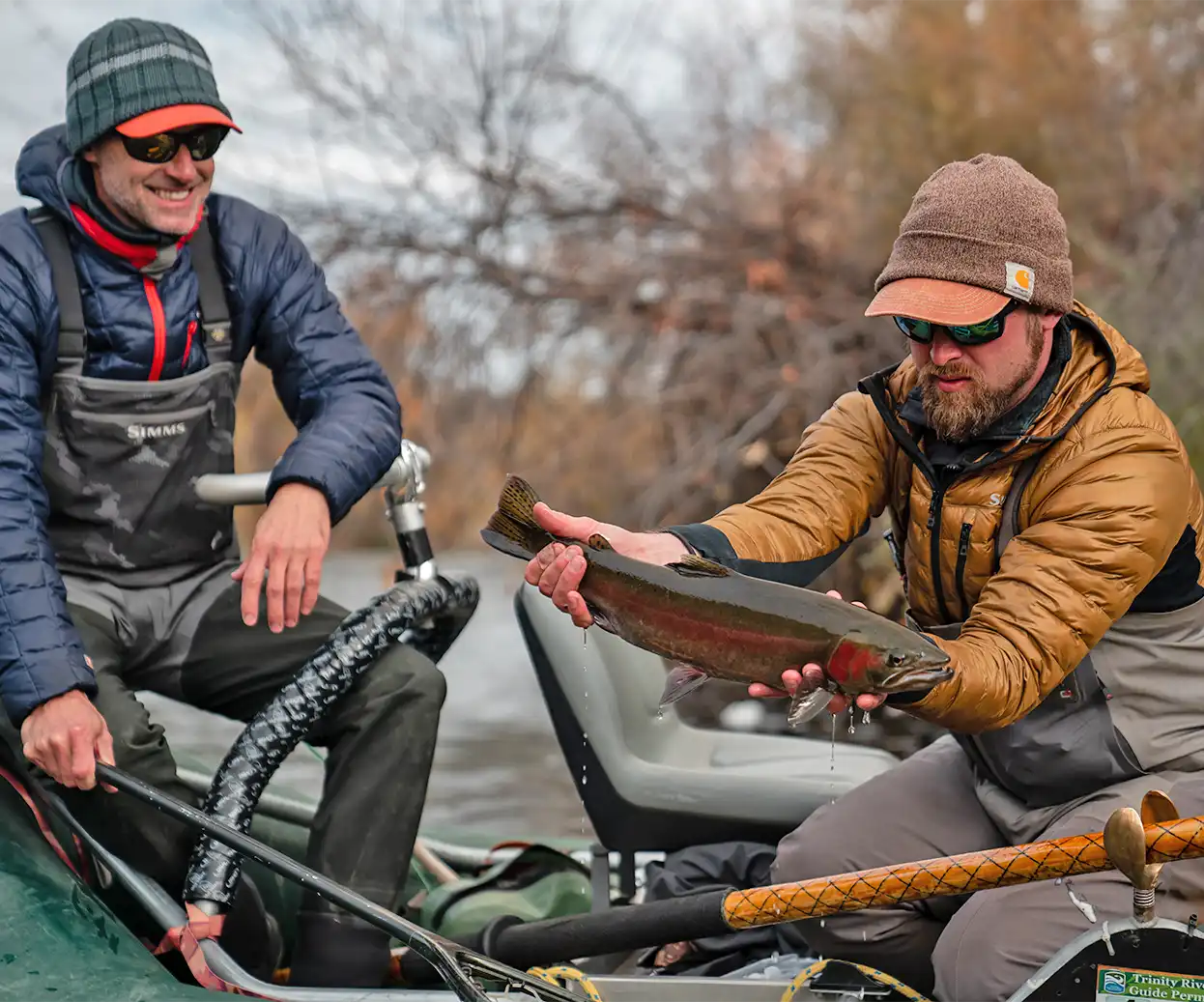
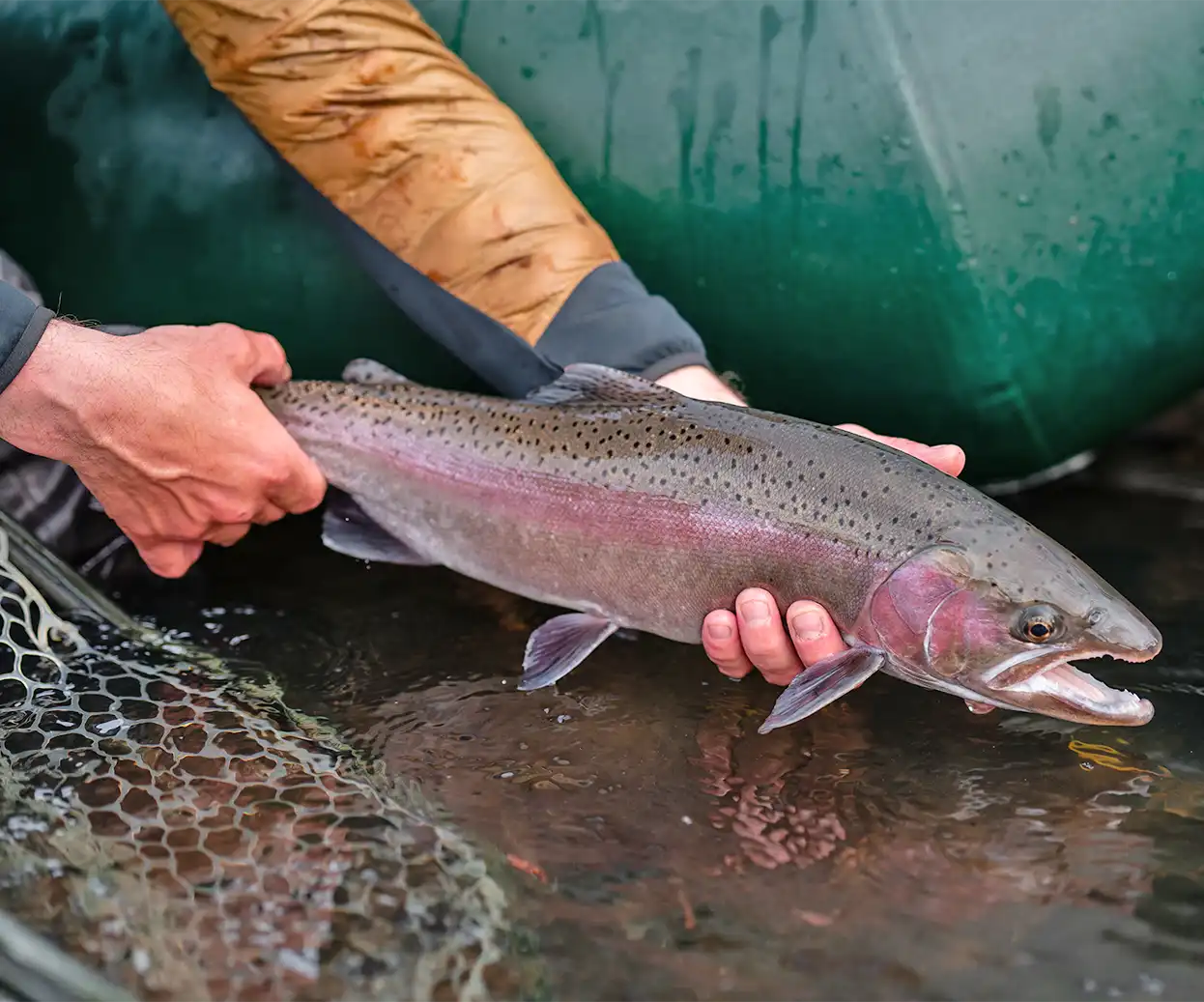
Starting around the middle of November, steelhead start showing in good numbers in these upper reaches of the Klamath, and they'll keep coming until around the middle of March. These are strong, wild fish that consistently keep anglers enthralled with aerial acrobatics and long, powerful, reel-burning runs. The fish on the Klamath River are a mixture of "half-pounders" in the 16-20 inch range, and adult steelhead that average 4-5 pounds, with fish up to 10 pounds landed each year.
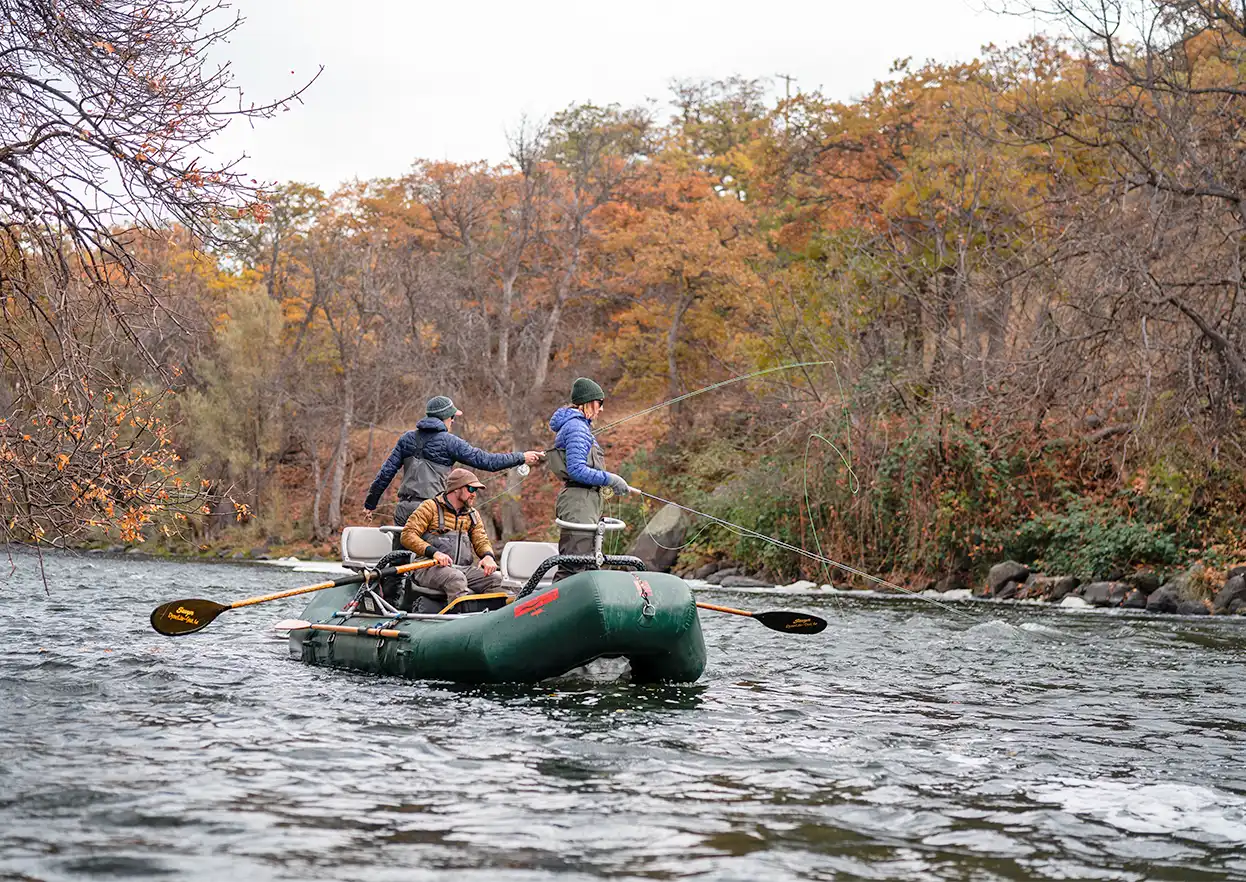
In the colder fall and winter season (November through February), our guides prefer to drift nymphs under indicators in the upper Klamath, as they have found over the years that we've been guiding this river that it is far and above the most productive way to catch fish during the winter. The upper Klamath River's deep pools and channels are ideal for dead-drifting nymphs.
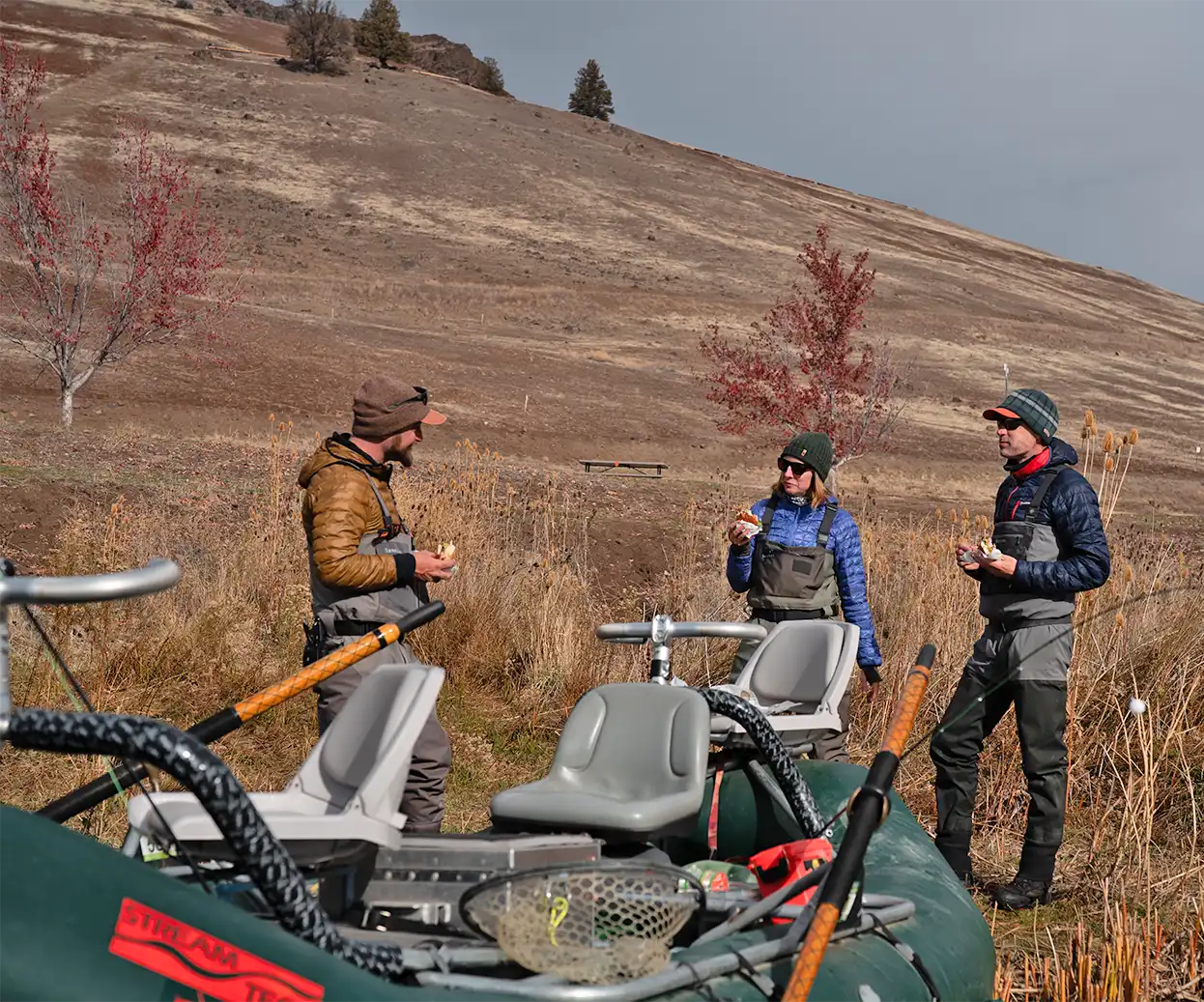
Our guides fish this stretch of the Klamath in comfortable drift boats. There is very little wade access between Iron Gate Dam and Interstate 5, so drifting these sections of river is the most effective way to cover the water and find the fish.