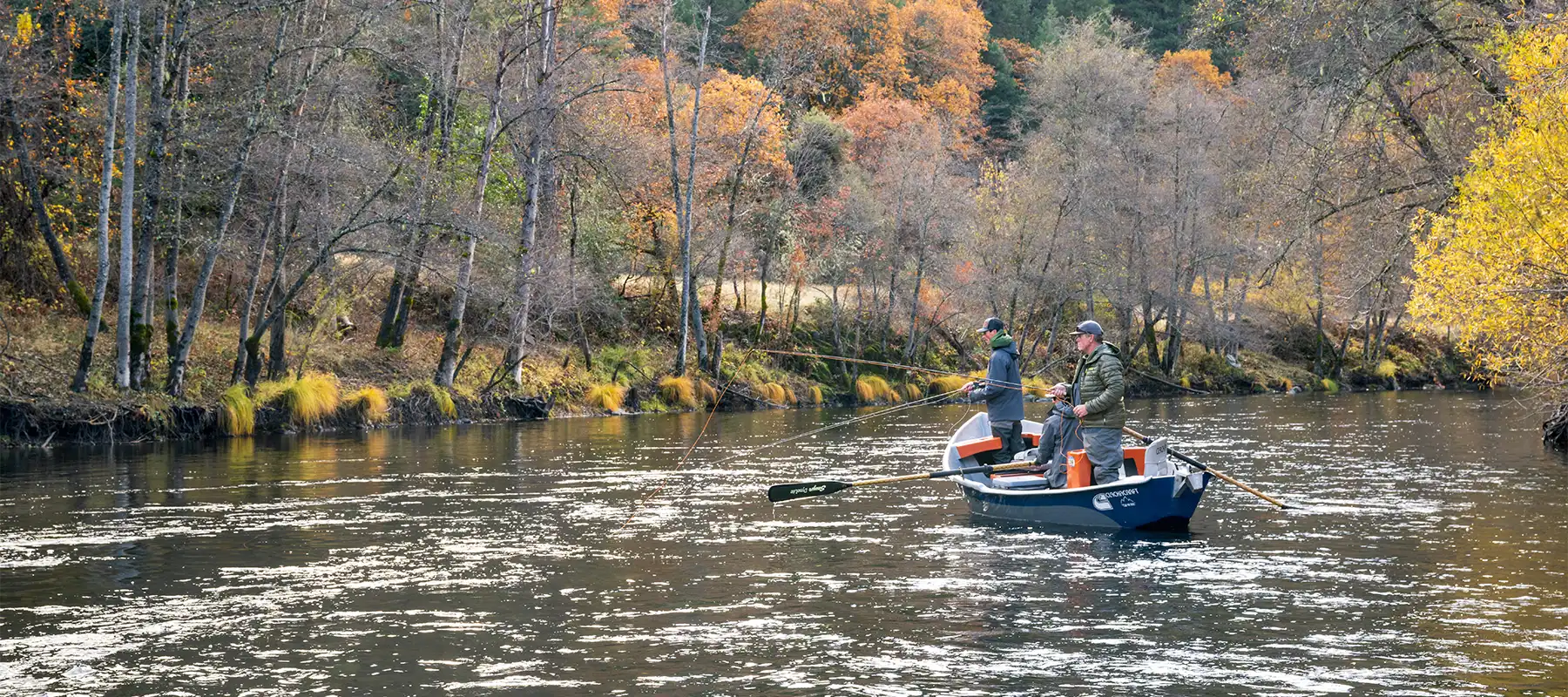
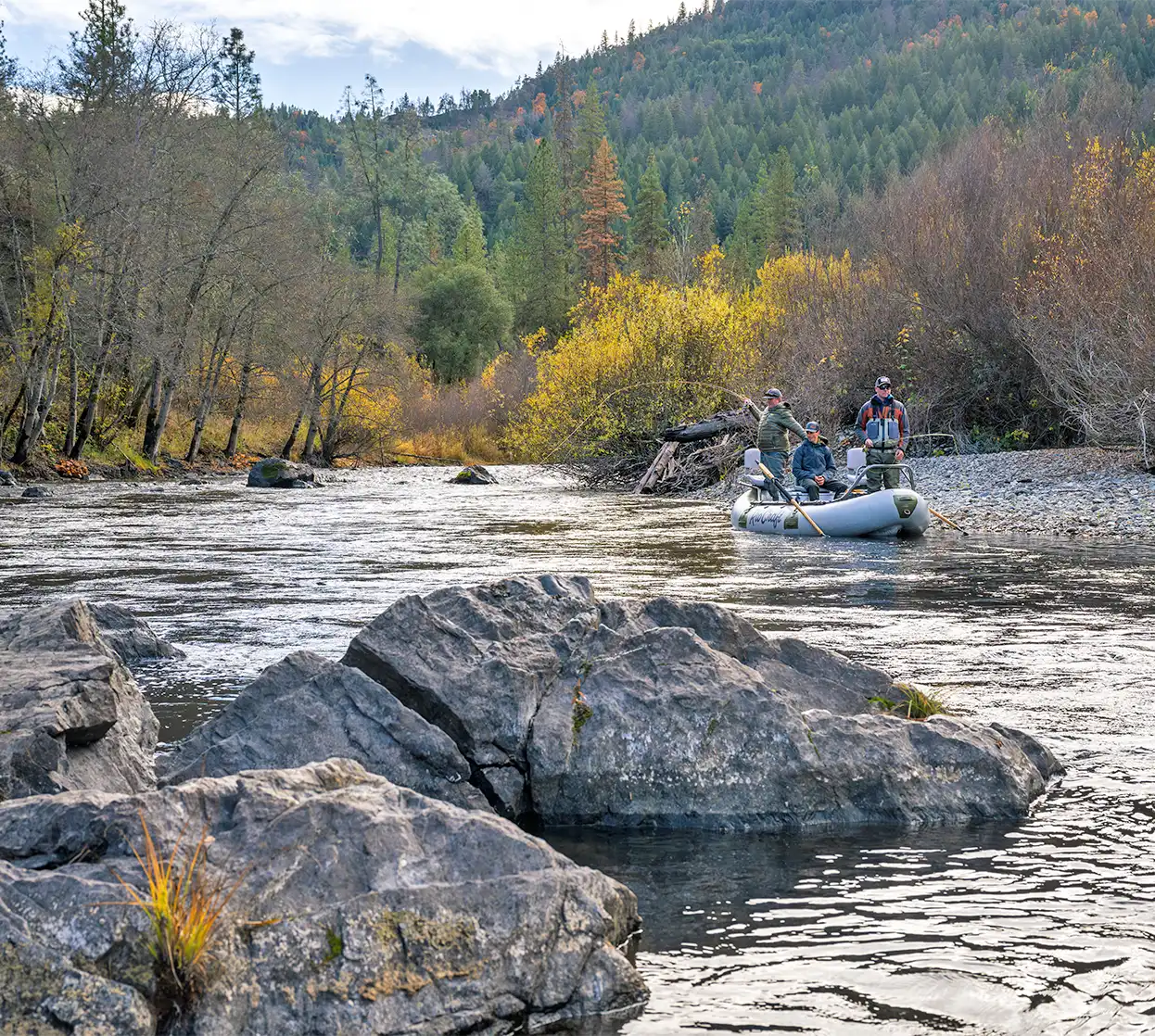
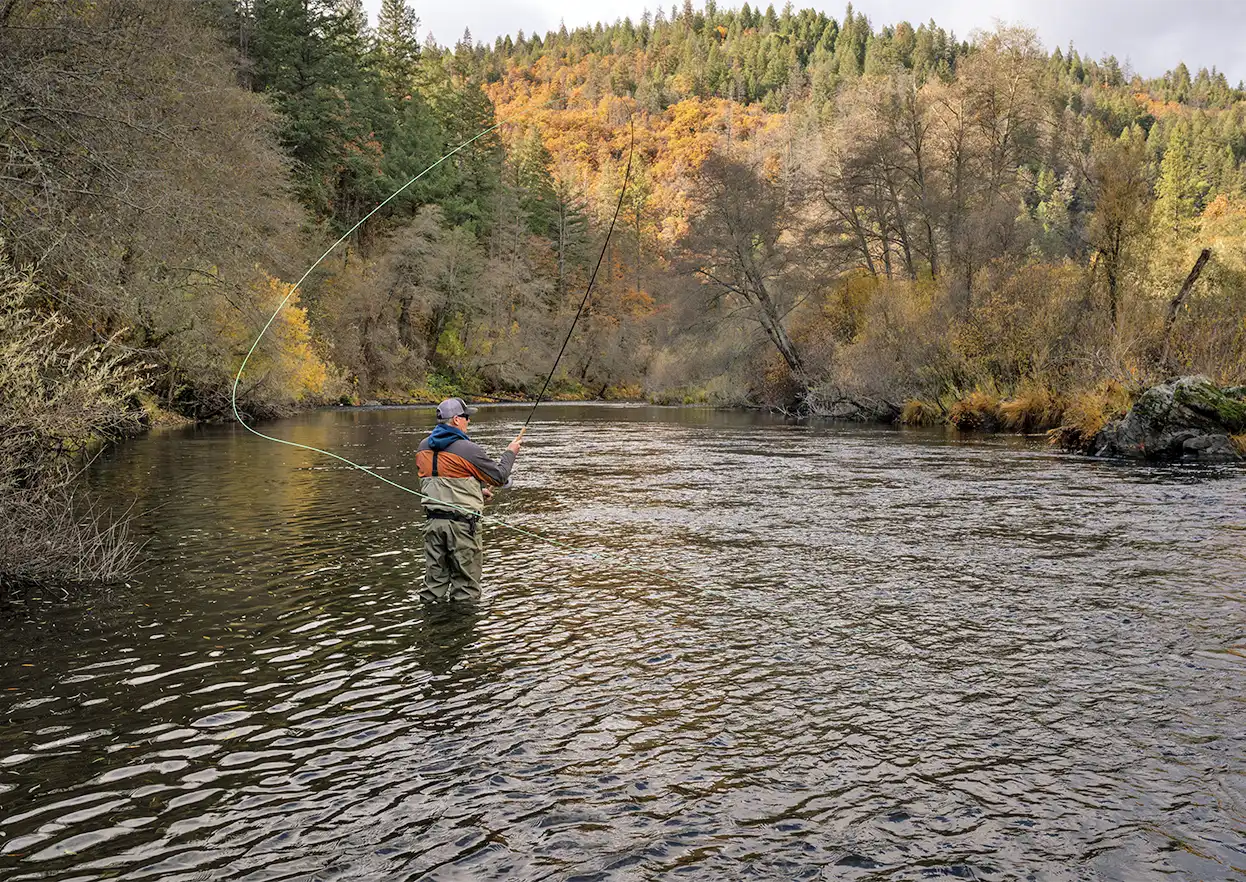
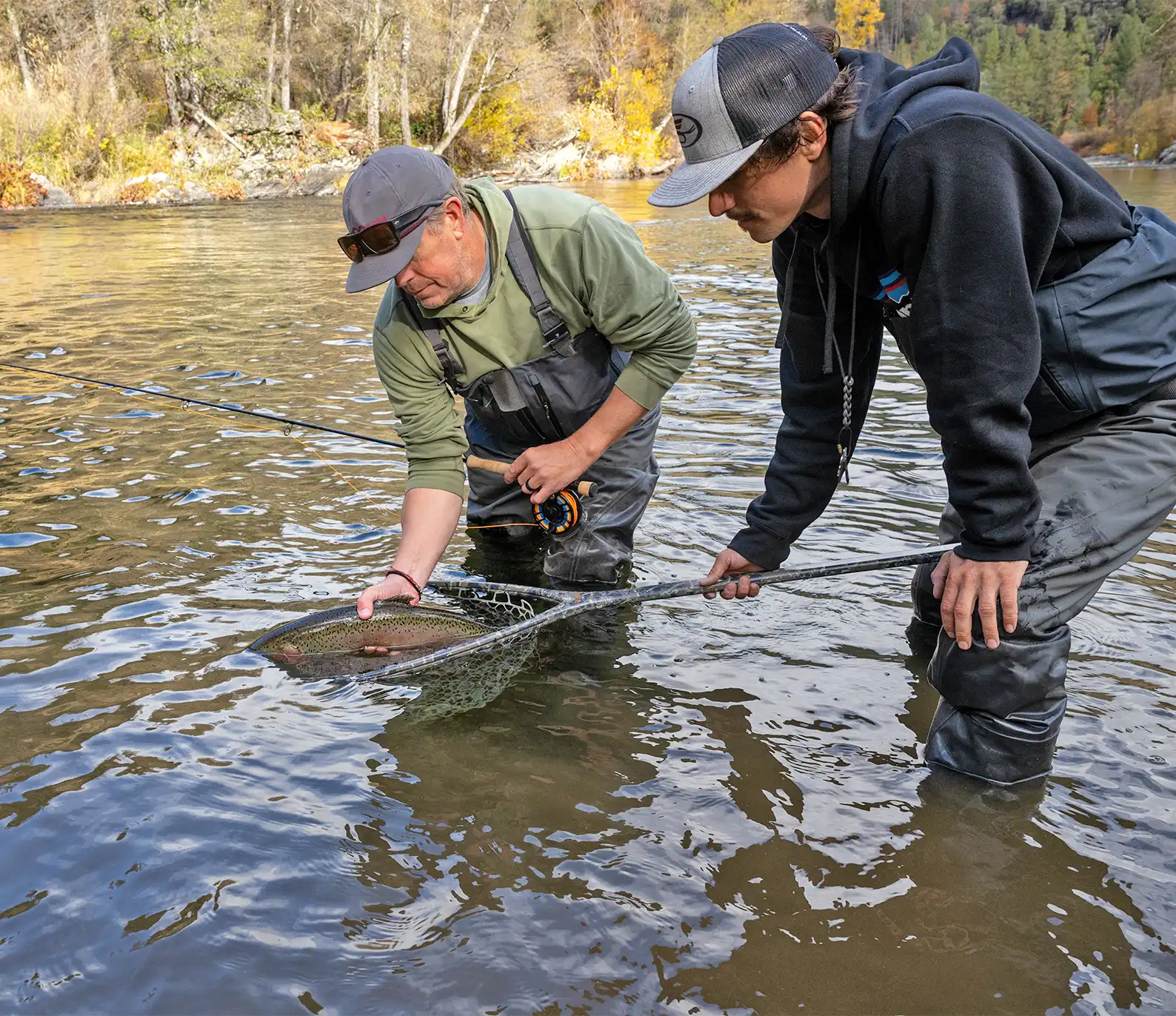
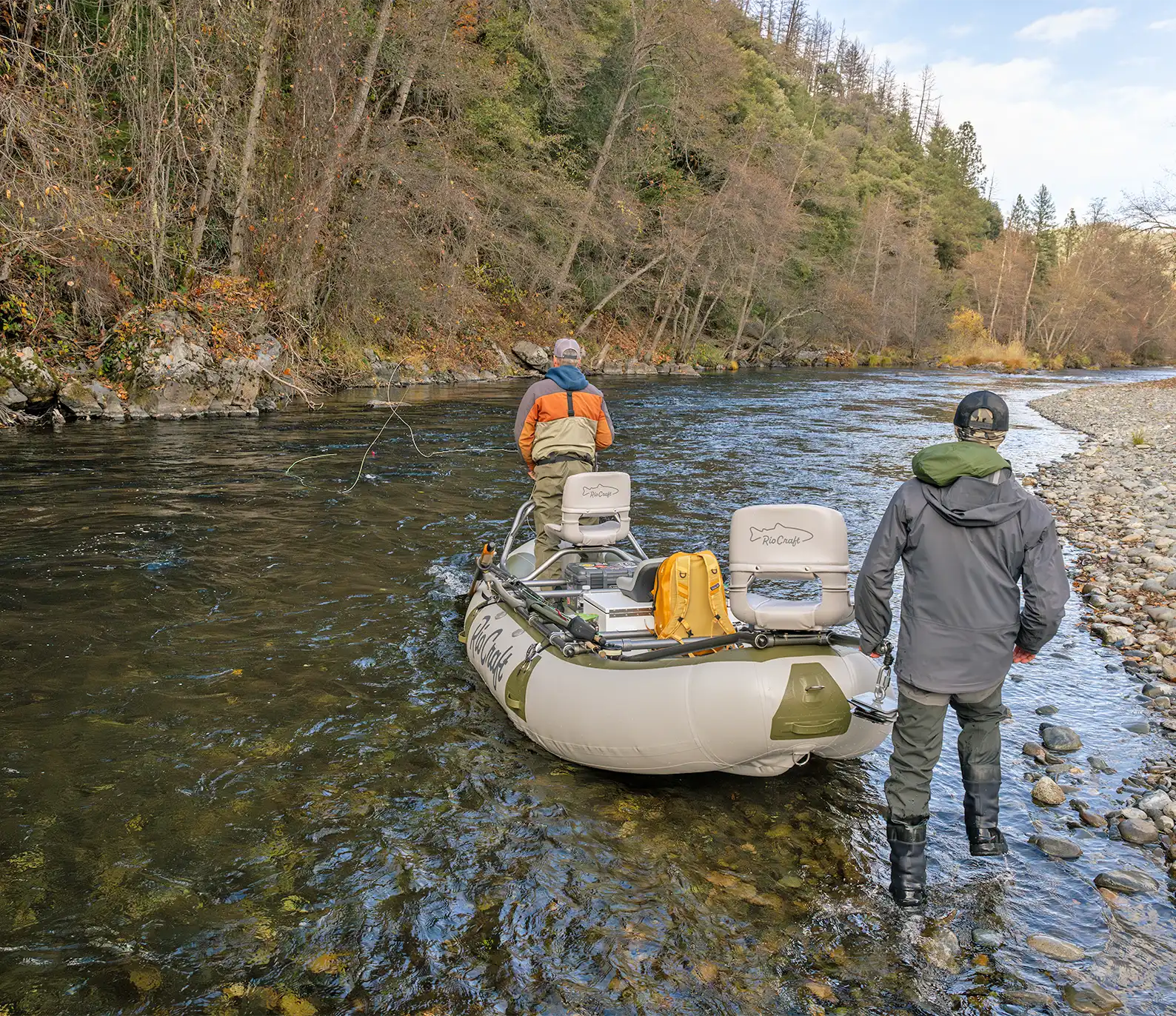
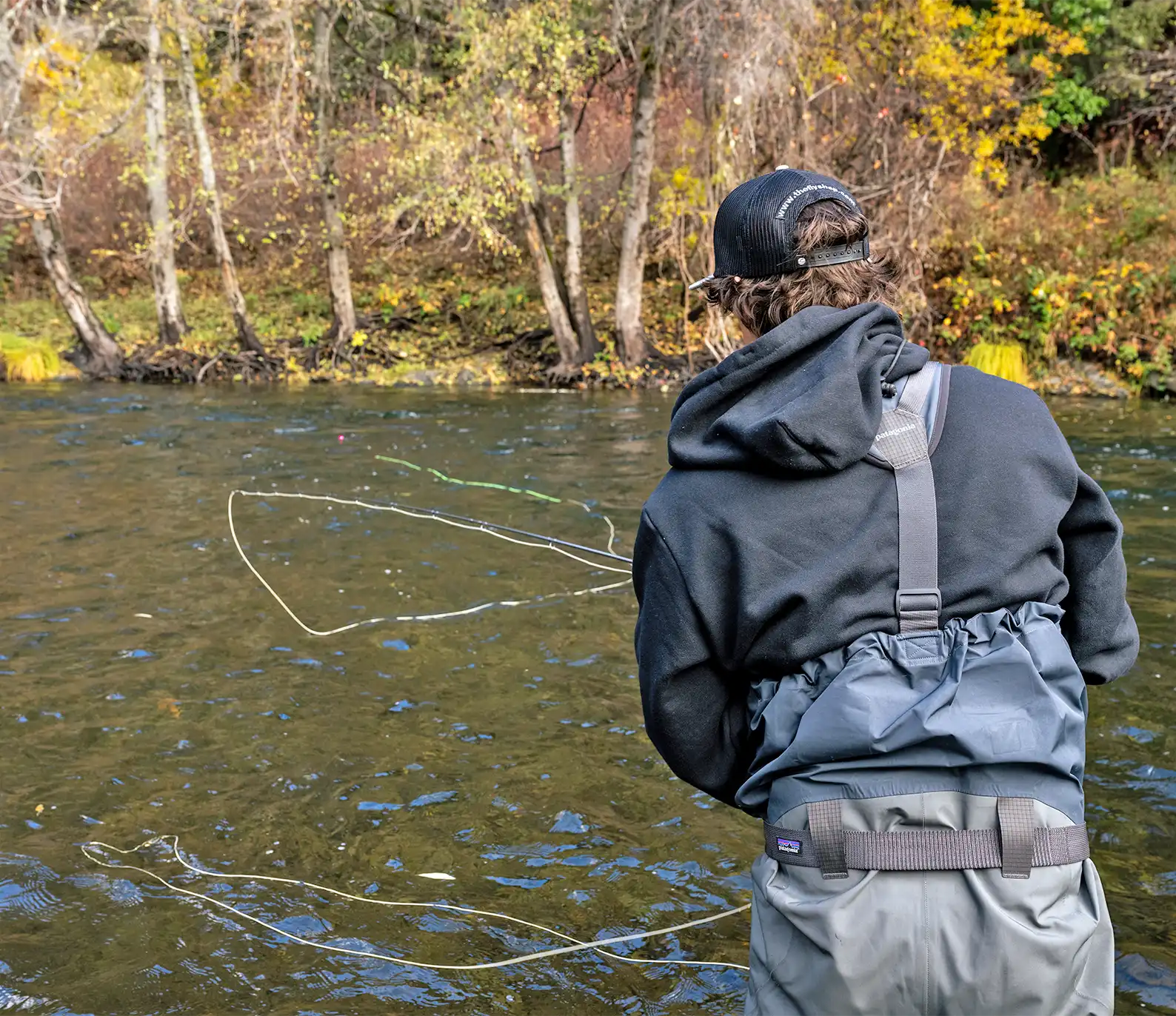
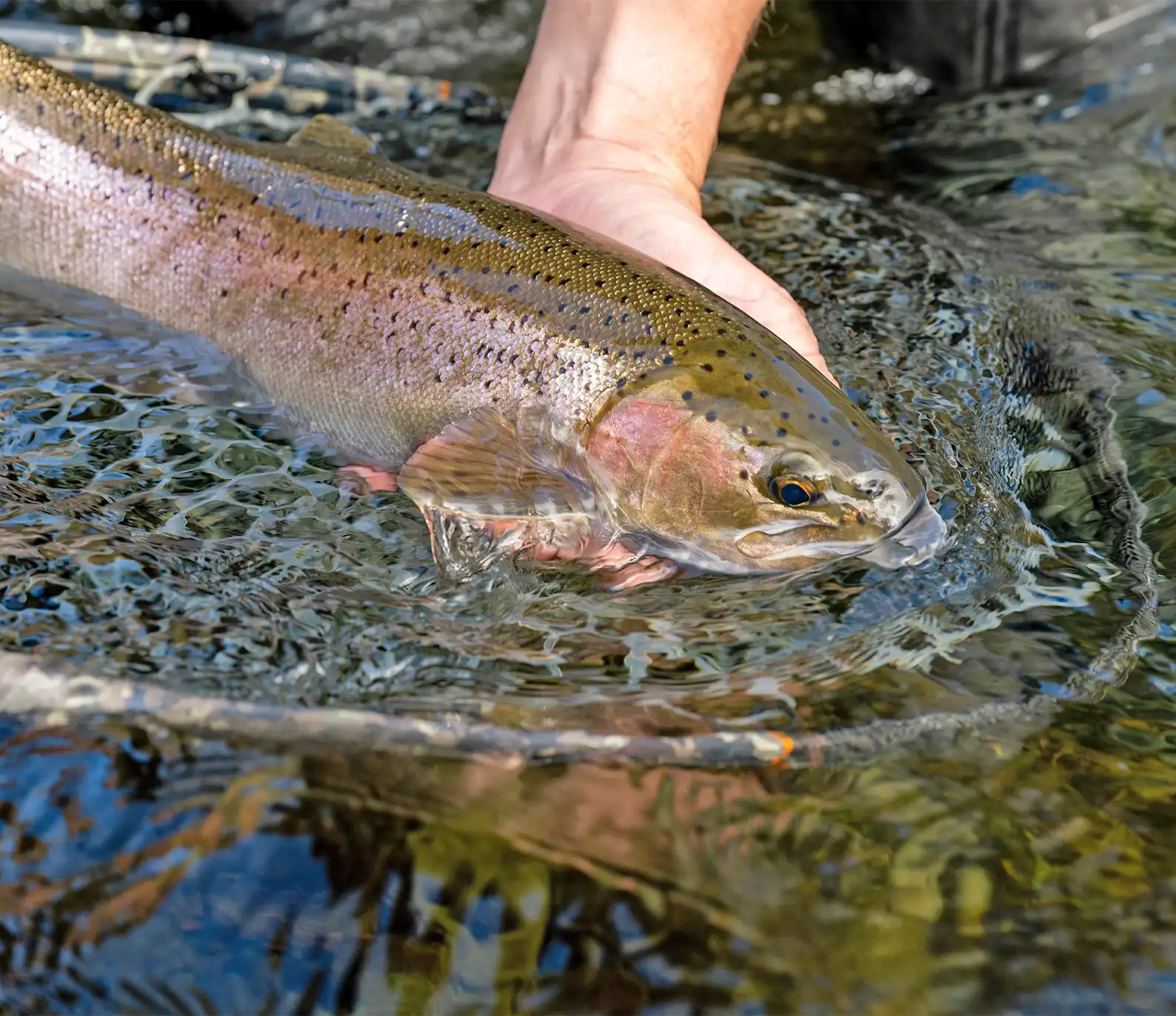
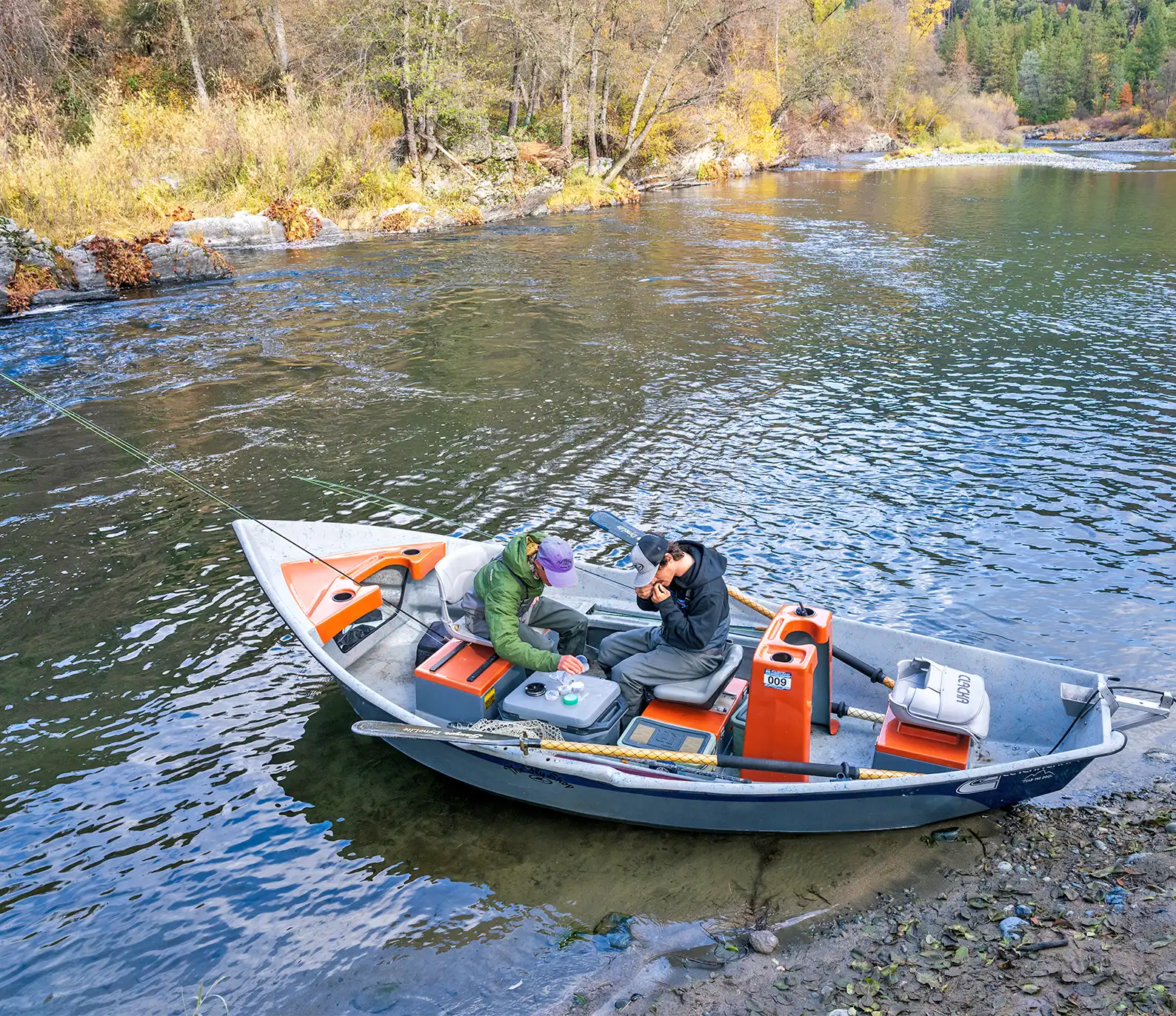
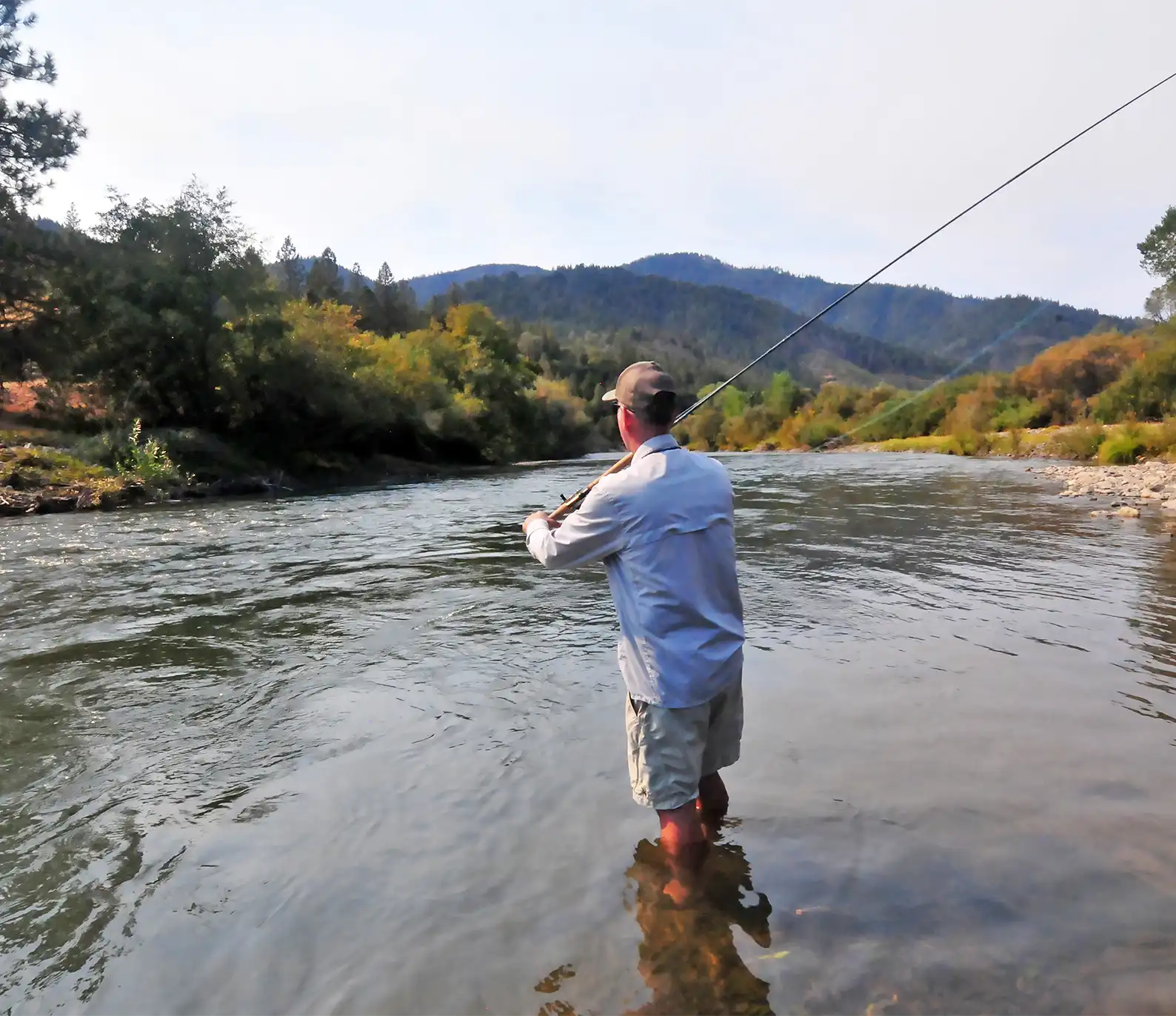
The Trinity River is open to fishing every month of the year, with the exception of the “Fly Fishing Only Section”, the few miles immediately below Lewiston Dam, which only opens to fishing from April 1 to September 15. Throughout the year, there are good options for fishing on the Trinity, while each season brings its own unique highlights.
Most years we can catch winter steelhead on the Trinity River all the way through to late March. In fact, March has become a bit of a “sleeper” month on the river. Most of the crowds are gone. There are fewer fish in the river, but with less pressure on the river there can still be some very productive days. And if you’re really lucky, a warm sunny day can bring some great March Brown hatches, and we’ve even seen rare days with adult steelhead and resident brown trout slurping dries!
The Fly Fishing Only Section of the Trinity opens early for the month of April, and can bring about some fun fishing before the General Trout Opener on the last Saturday in April. There are usually still a few holdover adult steelhead to be found, but the real draw to the fly-only water this time of year is dry fly fishing for the many smolts and trout-sized immature steelhead that populate these upriver riffles and runs.
Early May marks the start of the purging flows on the Trinity. As part of the Trinity River Restoration Project, Lewiston Dam begins to release very high flows (from 5,000-12,000 cfs). These high flows are designed to provide extra habitat for the smolts of the native salmon and steelhead of the river, and to help push the immature fish out to the ocean. They're ultimately great for the river's anadromous fish, but they do make fishing a non-issue on the Trinity for the months of May and early June until the flows begin to drop.
June typically shows high flows as the Bureau of Reclamation releases water out of Lewiston Dam to simulate historical snow-melt runoff. There are some early summer steelhead and spring chinook in the river, and anglers wading carefully along the edges fishing with two-handed rods can have some productive fishing. With the big water, wading can be treacherous so caution is strongly suggested.
Flows begin to drop to fishable levels by July on the Trinity River. At this time there are a handful of steelhead still around in the Fly Fishing Only Section just below Lewiston Dam, as well as healthy numbers of immature steelhead smolt ranging from 8-14 inches, a few half-pounder steelhead from 16-20 inches, and a smattering of summer run steelhead. There's a lot of great wade access near the town of Lewiston, and these aggressive fish will take swung flies, nymphs, egg patterns, even dry flies.
Summer-run steelhead, too, begin to make their first appearances as early as July, with numbers consistently increasing into August. There are not nearly as many steelhead in the river at this early time of year, making the steelhead fishing challenging, but rewarding. Water temperatures are warm, so the few fish that are moving upriver are aggressive and late summer can be the best time of year to take steelhead on the surface with skated or waking attractor dry flies or using traditional greased-line techniques.
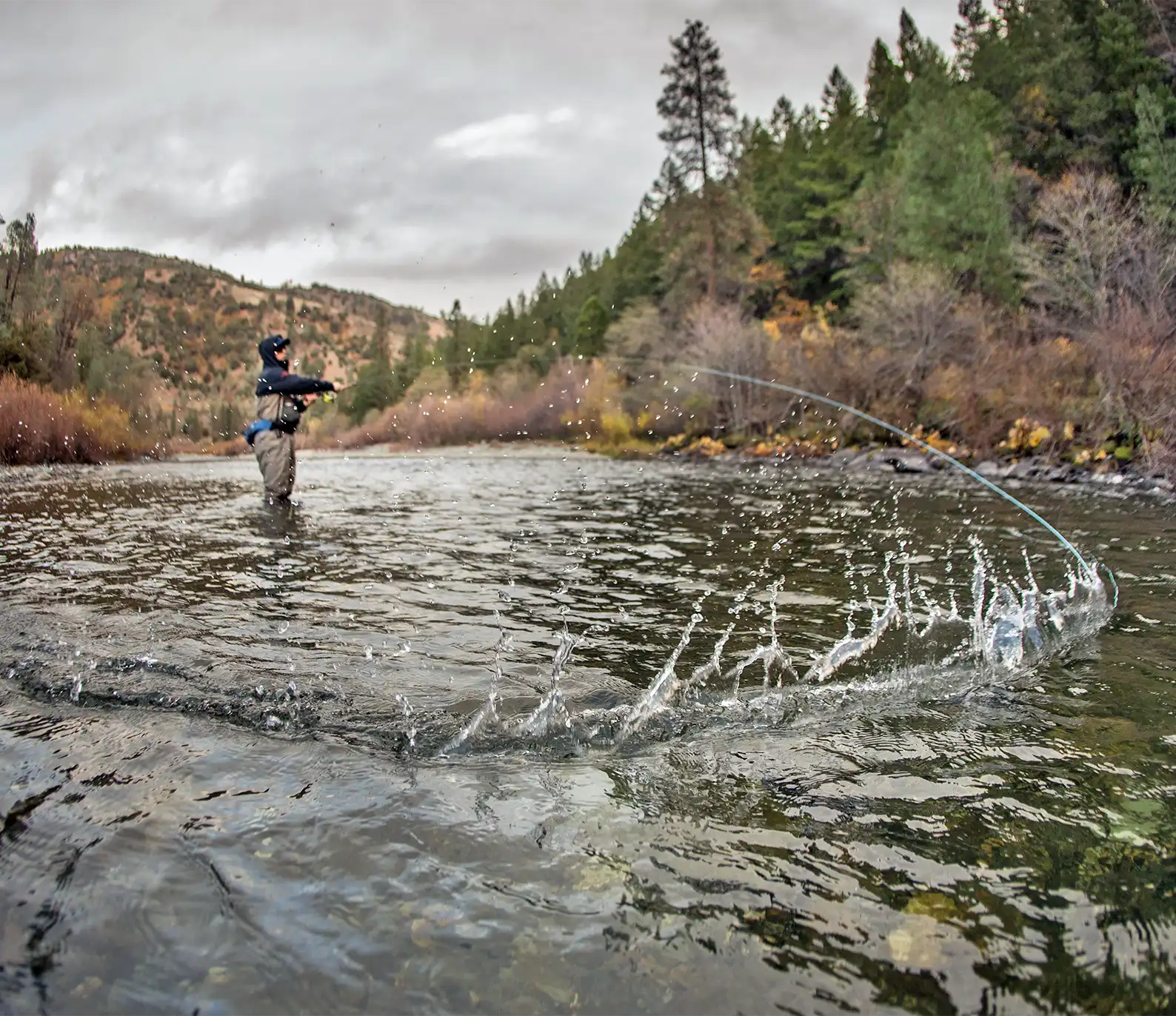
The bulk of the summer run of steelhead on the Trinity River starts entering the river in September, with numbers continuously increasing through October and peaking in November. The weather on the Trinity River during the fall season is as good as it gets, making October and November the most popular - and therefore crowded - two months of the year on the river. Steelhead are usually spread out throughout the entire system, so there is a lot of fishable water. Moreover, water temperatures are still moderate, so the fish will eat both swinging flies and dead-drifted nymphs and egg patterns. This early run of steelhead is predominantly hatchery fish headed to the Lewiston National Fish Hatchery, and there's always a few wild steelhead mixed in.
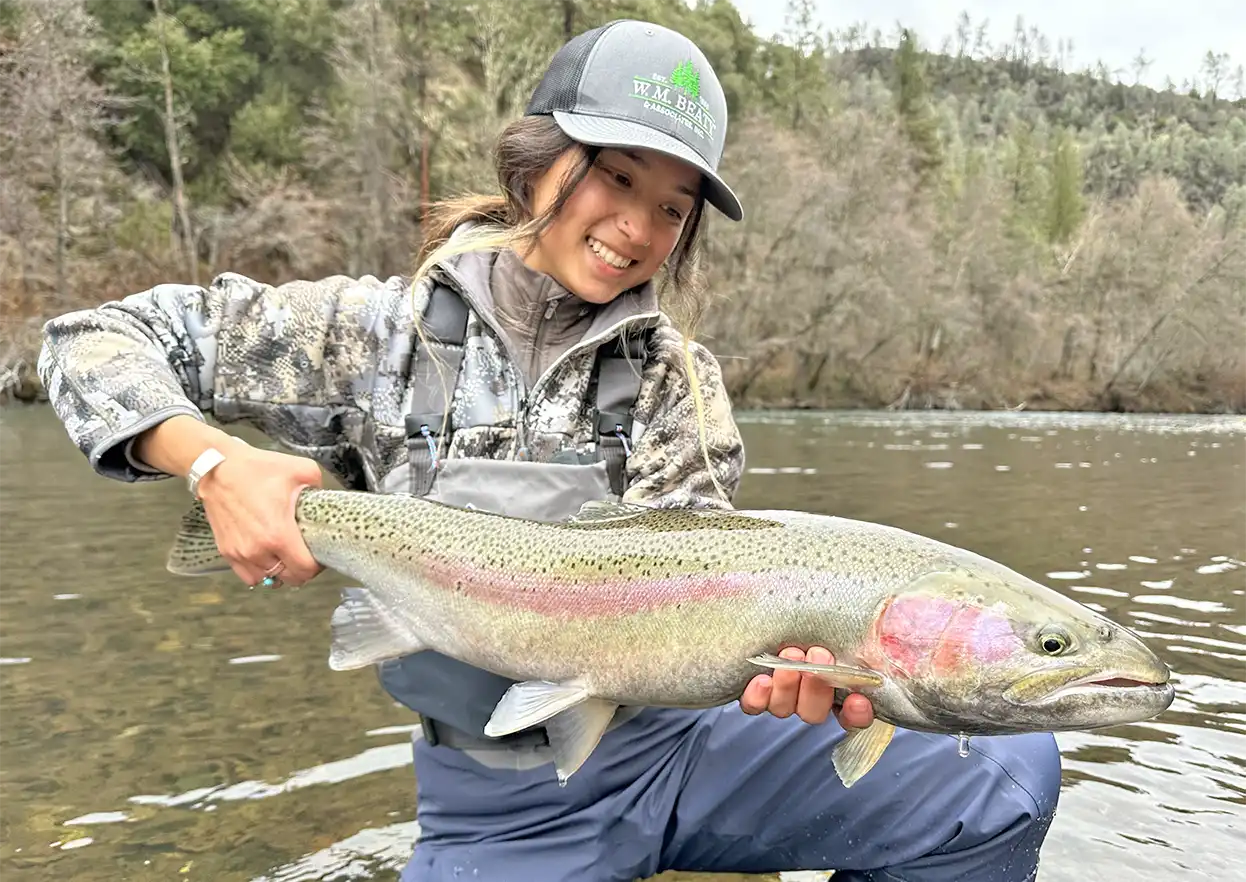
The winter run of steelhead start to show as early as Thanksgiving, with fresh fish migrating upriver throughout the rest of the winter season. The majority of these winter fish are wild, and the average size of the steelhead generally gets progressively larger later into the winter months. Water temperatures are considerably colder, so the steelhead are less likely to move for traditional fly patterns and dead-drifting nymphs is the preferred method for hooking Trinity River steelhead from November through February.
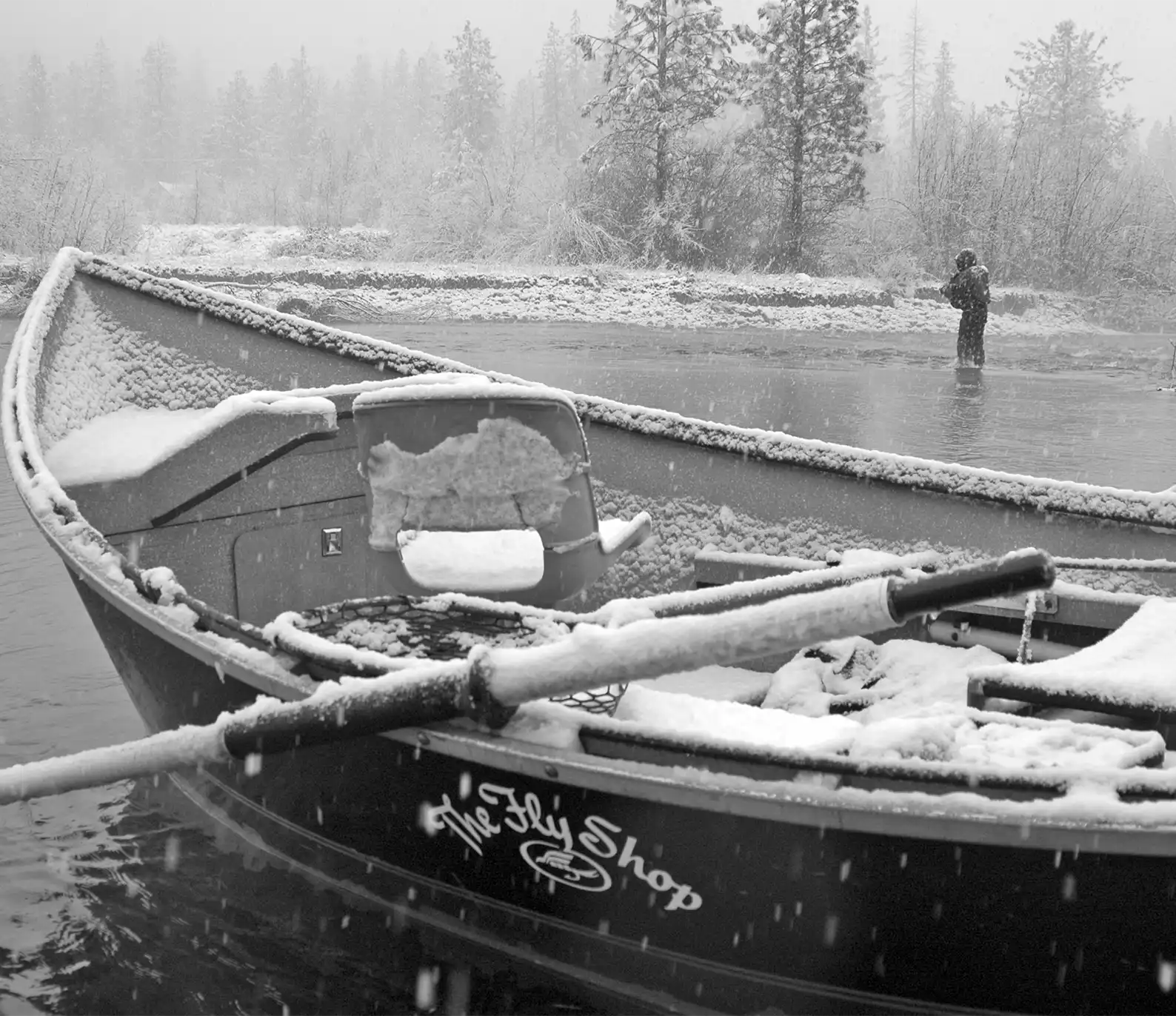
Winter weather ranges from mid-60s to below freezing. The winter steelhead season is not for the faint of heart, making it ideal for true steelhead die-hards willing to brave the cold in order to catch these special creatures. The benefit to the colder weather, however, is that it definitely helps to keep some of the crowds away.
The best conditions for fishing on the Trinity from late Fall through Winter are stormy days, or the days immediately following a storm. Wet weather gets steelhead on the move. Fish on the move are burning calories, more active, and more likely to eat your fly. The upper 40 miles of the Trinity are primarily controlled by flow releases from Lewiston Dam which remain low all winter long, so there are very few days when the river blows out to unfishable conditions, and it will always clear within a day or two.