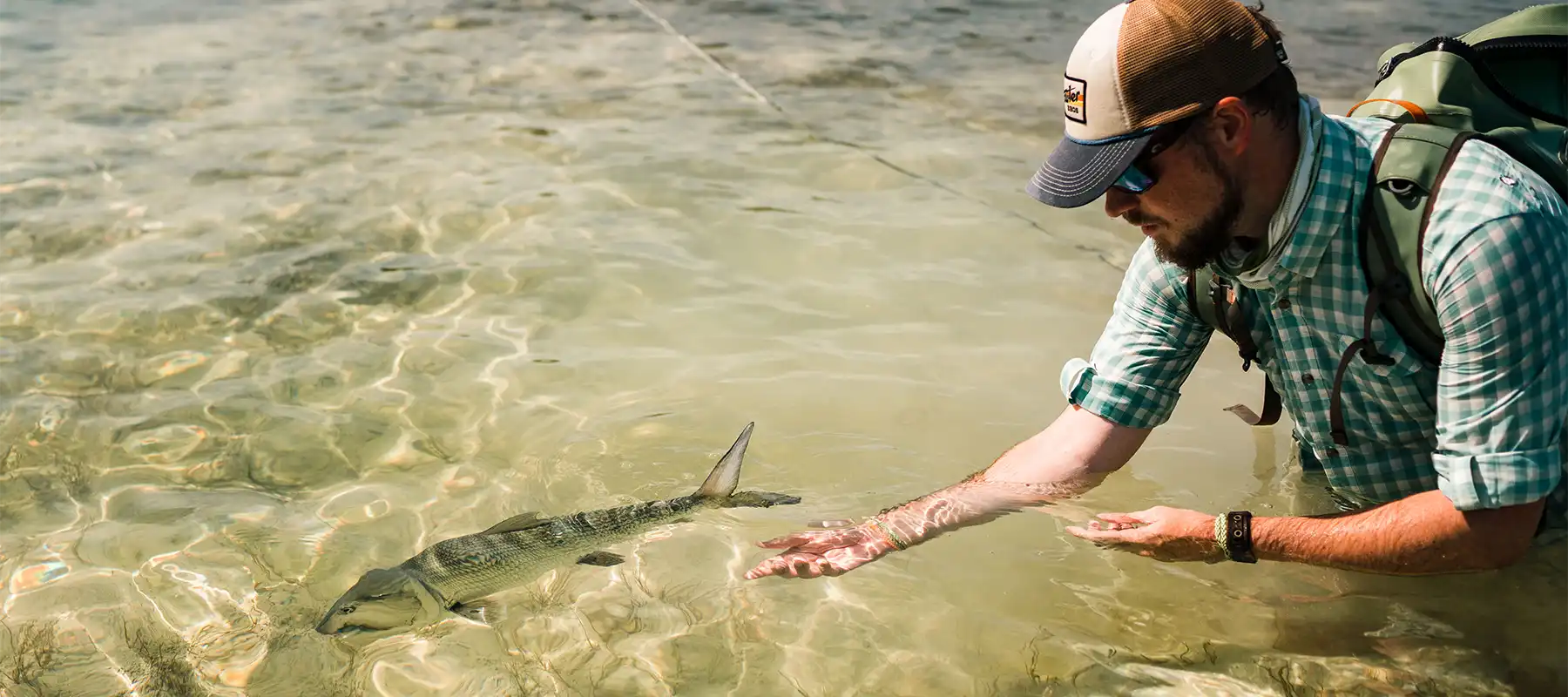
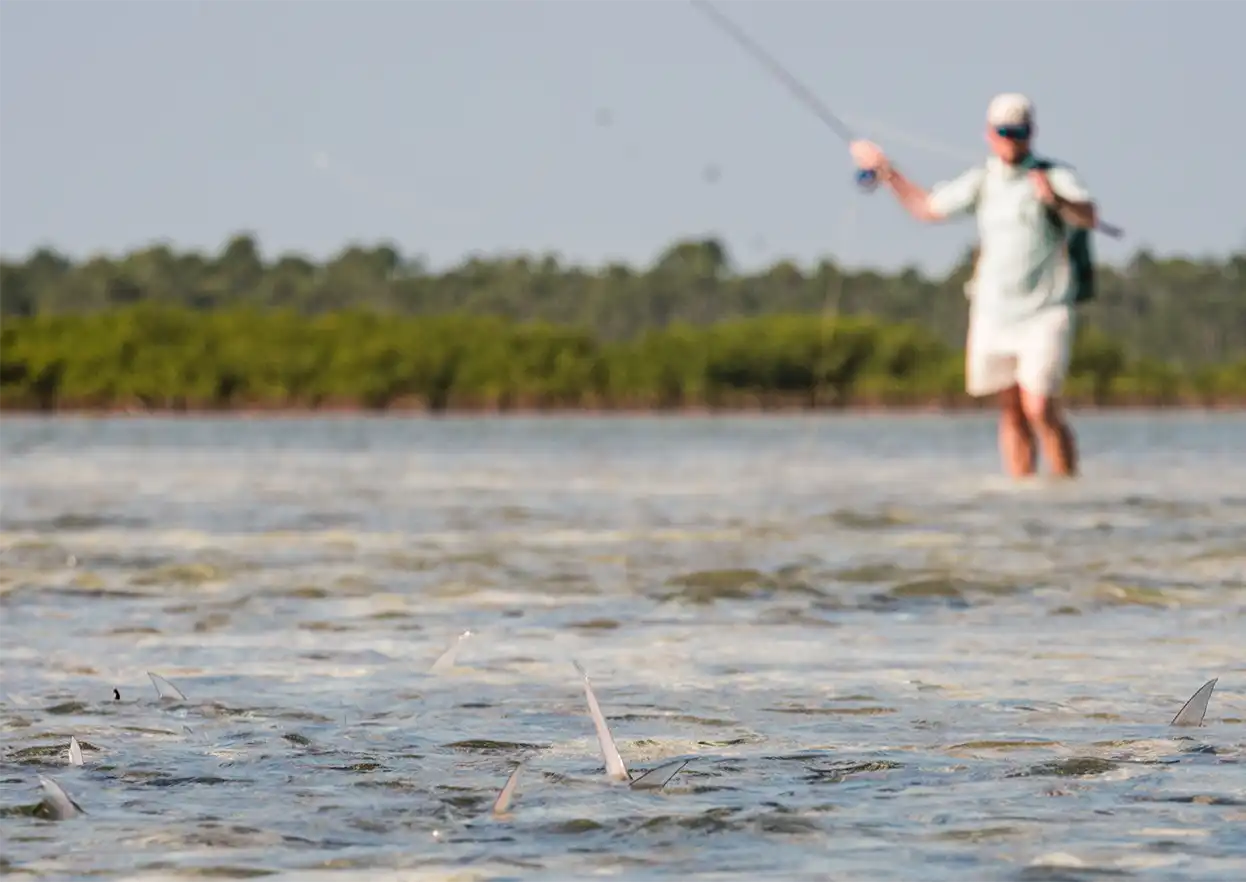
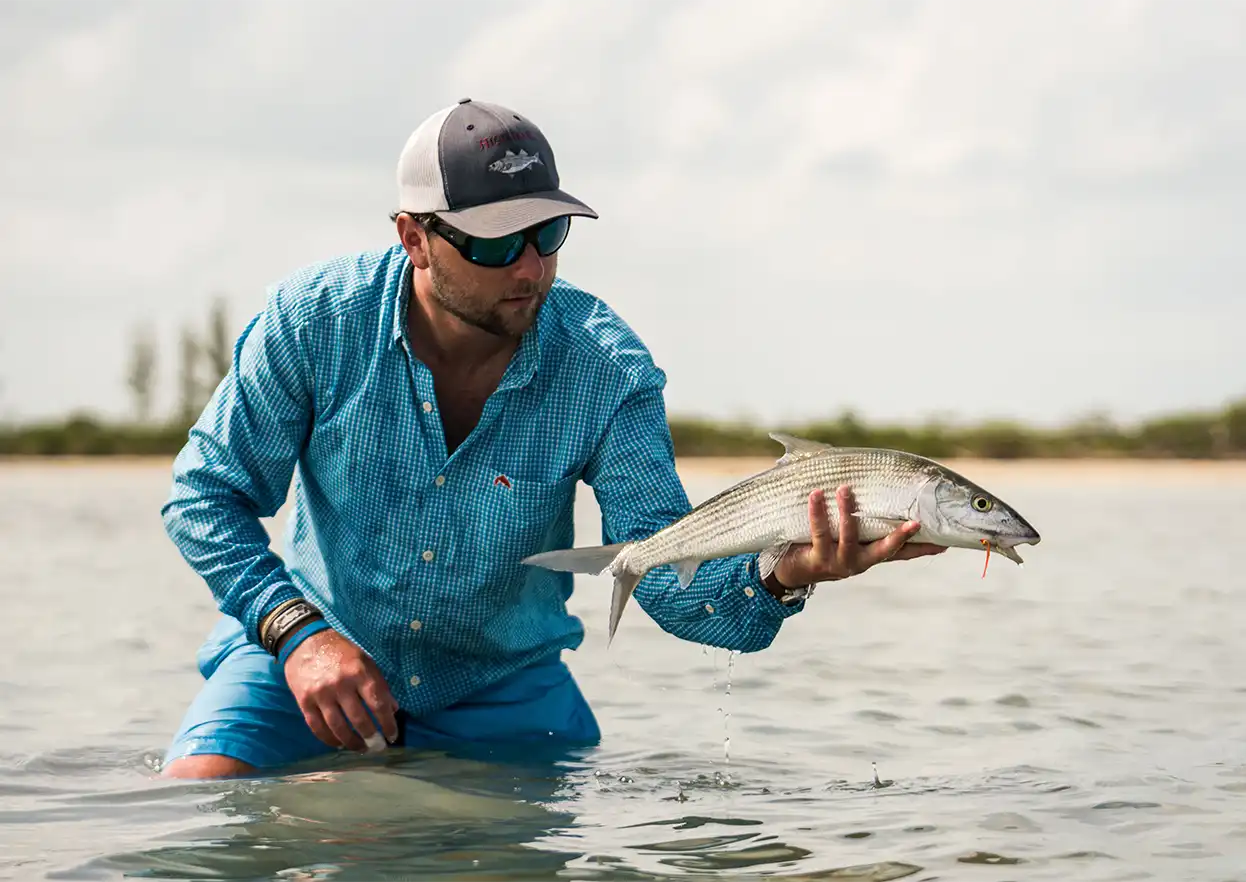
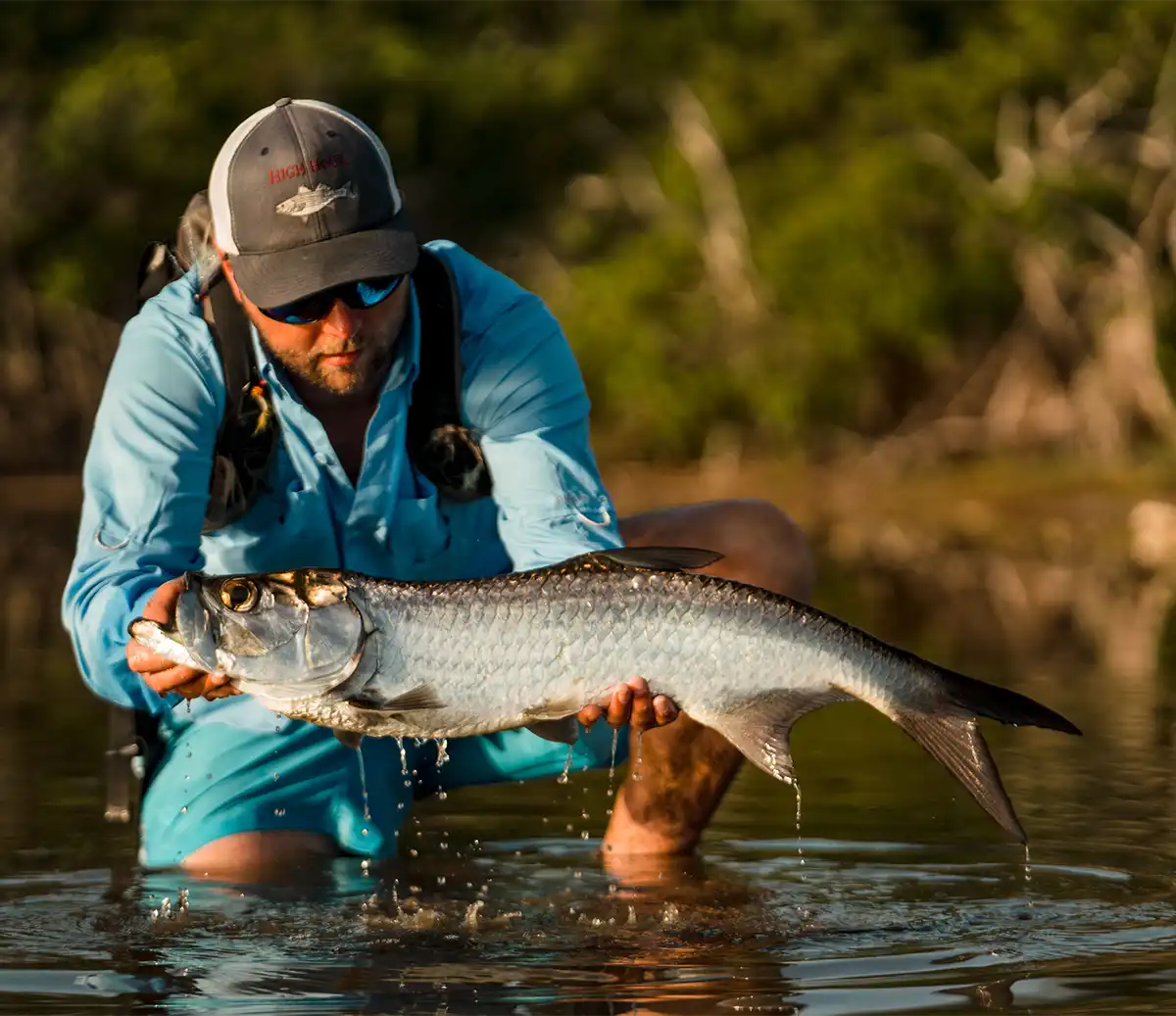
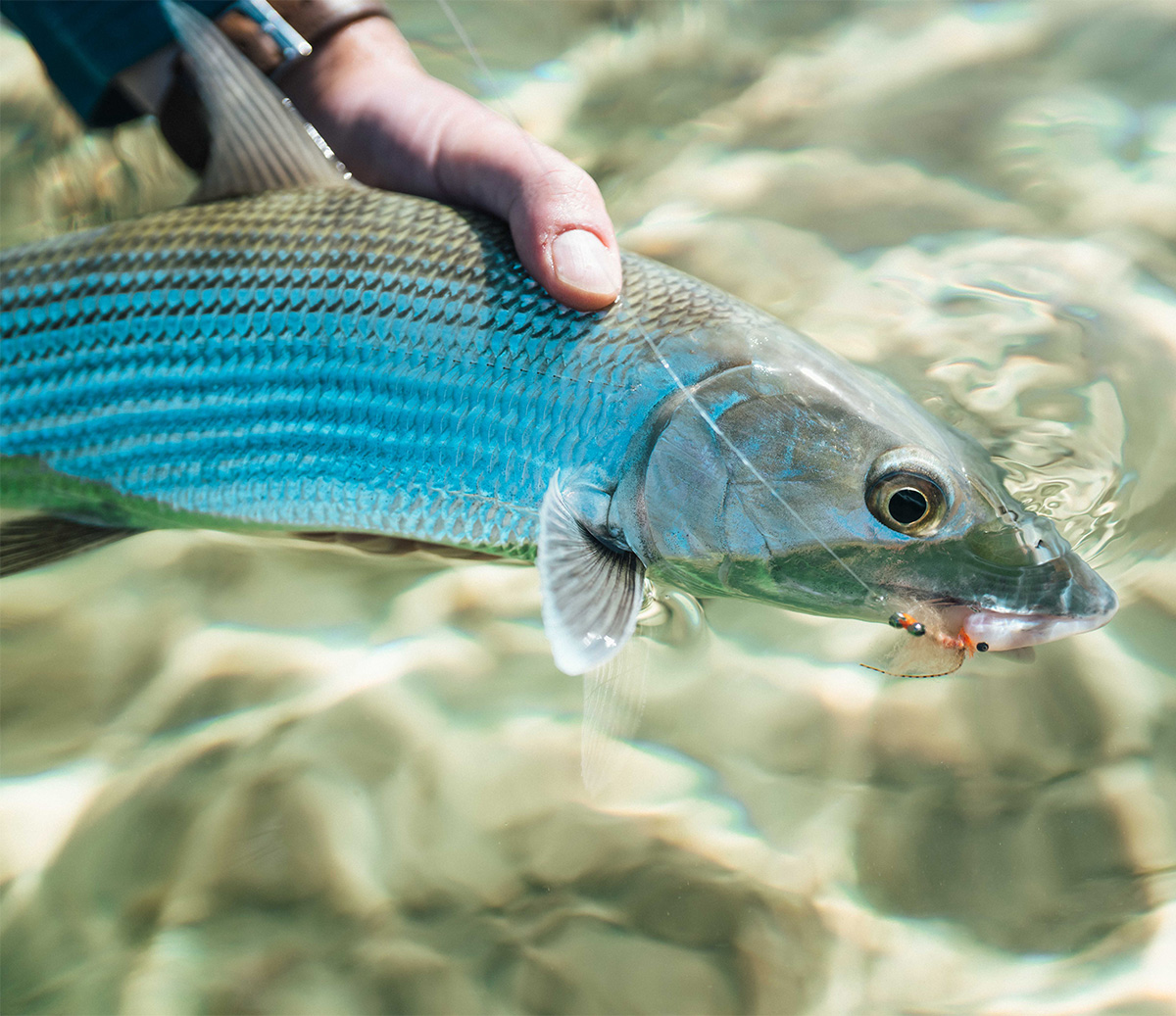
The islands throughout the Bahamas are bonefish heaven, and Abaco is no different. The bonefish in the Marls average 2-4 pounds with the occasional larger fish. The ocean side flats offer opportunities at some of the biggest bonefish in the Bahamas, with big fish pushing the ten pound mark. There are the occasional shots at permit, tarpon, 'cudas, jacks, triggerfish, and sharks, and it is recommended that you bring the appropriate tackle just in case. There is nothing more frustrating than seeing a 20 lb permit tailing, or a 5 ft. tarpon cruising the flat, and not having the right gear set up.
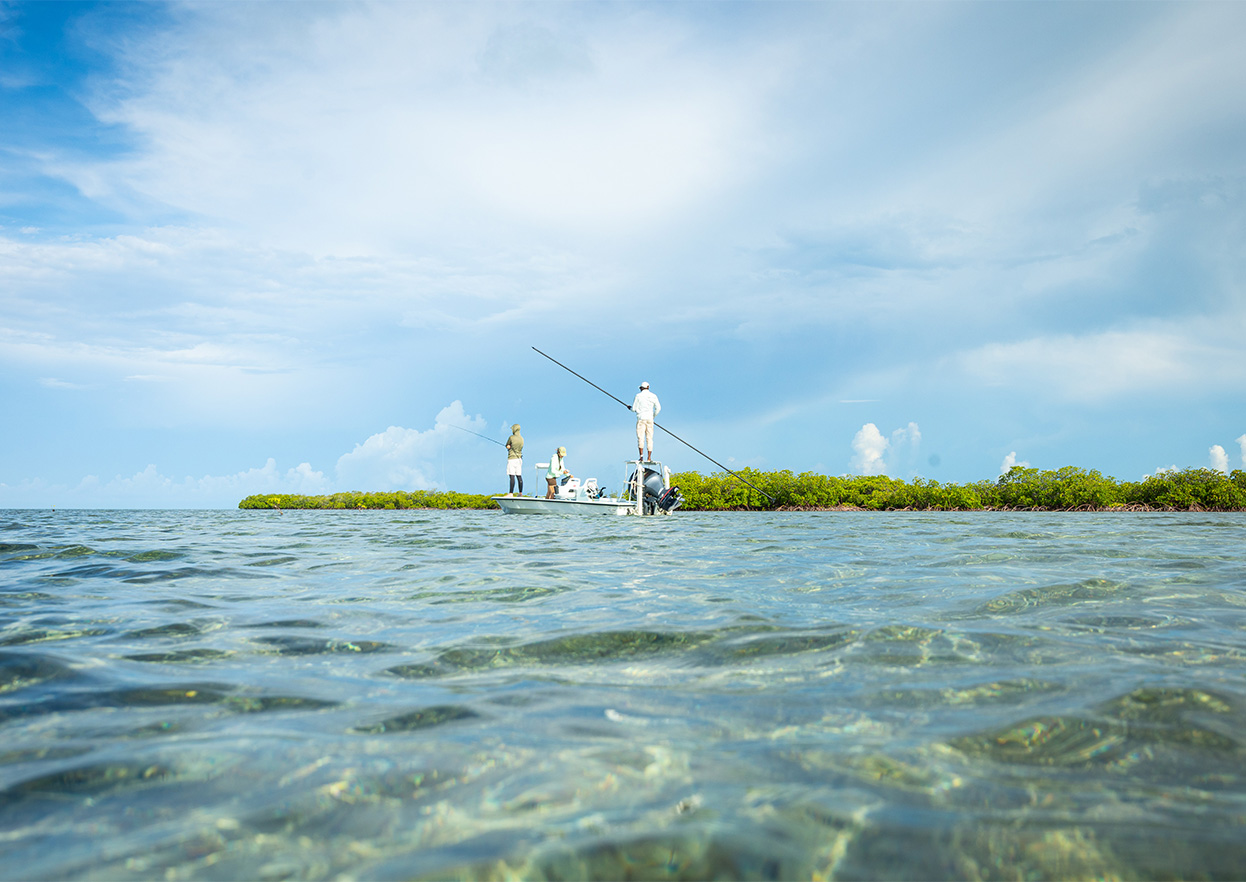
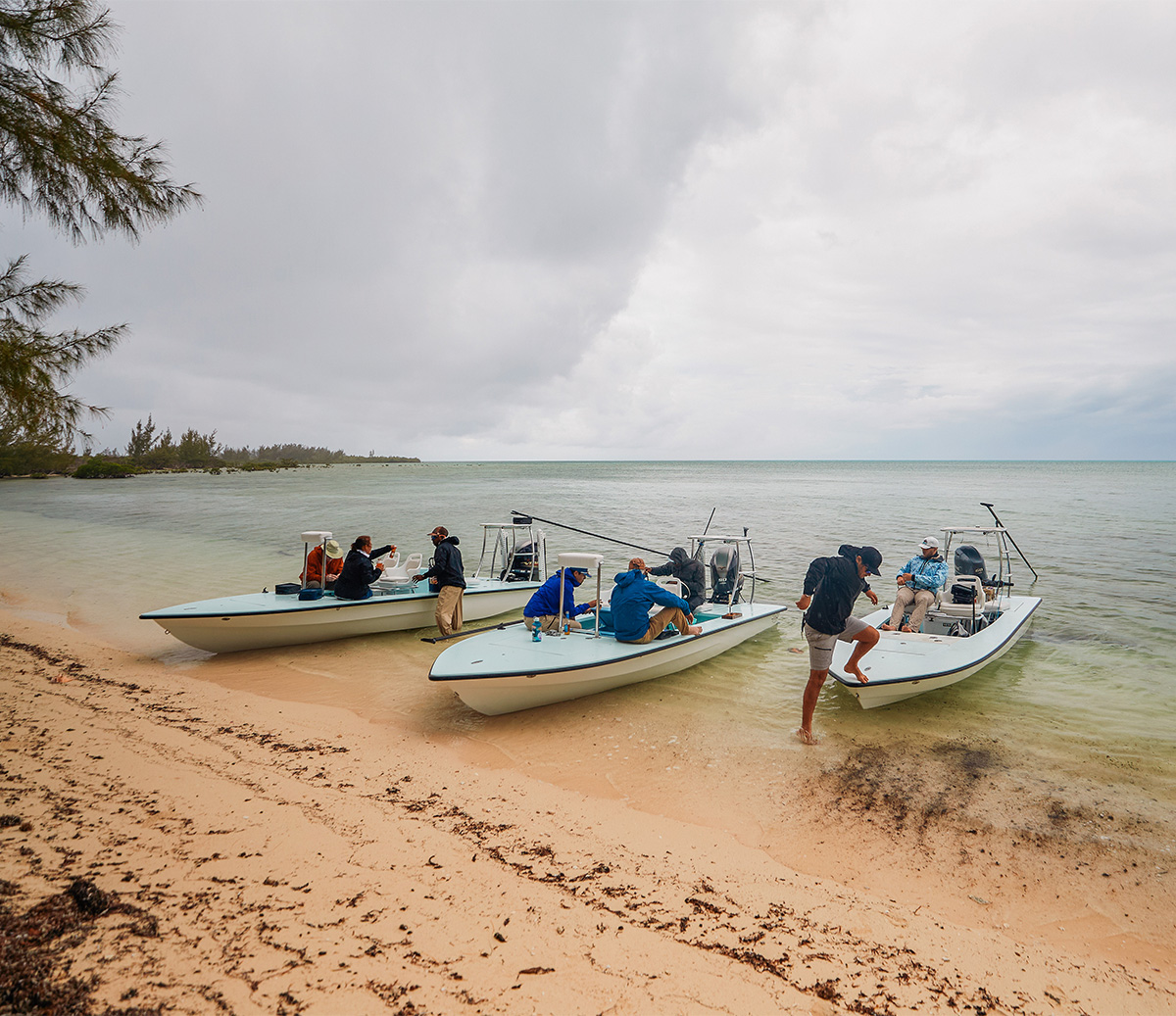
The majority of the fishing in the Marls is done from the skiff, as the bottom is typically soft, making wading difficult. Wade fishing opportunities are available if you prefer, and your guide can usually take you to wadeable flats depending on the tide. Runs from the boat launch to the flats vary from 10 to 45 minutes. The Club fishes a fleet of Hell’s Bay boats which is broken down into 4 Hell’s Bay professionals and 2 Hell’s Bay Marquesas. Each skiff has Spot Tracker, safety box, first aid kit, tool set and life jackets. The guides and the launch points for the boats are rotated during the week to provide maximum diversity in fisheries and opportunity. Boat launch points are normally just a 10-20 minute drive from the Club, although a few launches require a bit more driving time.The guides are all highly competent, experienced professionals.
In addition to the wonderful flats fishing, Abaco has world class blue water fishing. We are happy to coordinate a day or two with the best captains available in search of marlin, sailfish, dorado, wahoo, or tuna depending on the season. A 27ft Grady White which can be booked for Blue Water fishing can be reserved for a maximum of 3 guests. Arrangements for this need to be booked well in advance due to availability. There will be an additional charge for this fishing.
Fishing Techniques:
One of the biggest mistakes a bone fisherman can make is not to adjust his fly to changing water depth. Your fly should be weighted such that it sinks quickly to the bottom and then stays near the bottom within view of the fish after you begin stripping. However fishing too heavy a fly in shallow water will undoubtedly spook many fish. Often bonefish are spooked by seeing flies that do not match the environment in which they are swimming. A fly that matches the background color of the flat you are fishing, can pay dividends. Please consult your guide in making fly choices, as he brings years of experience for your benefit.
Typical Depth:
The average flat depth, whether you're wading or poling, ranges from 12"-30". In this depth, a Gotcha or Shrimp pattern with medium sized bead chain eyes should provide close to the perfect sink rate without overweighing the fly . A good rule of thumb is your fly should reach the bottom in about 3 seconds. If you find your fly is not getting to the bottom, you should switch to a fly with lead eyes or add a few wraps of lead wire to the eye of the fly.
Deeper Flats:
The angler who is willing to fish deeper flats will often be rewarded with the largest bonefish. Big bonefish prefer the protection of deeper flats or shallow flats close to deep water. When you're fishing water 3-4 feet deep, you'll need a fly with lead eyes to get to the bottom quickly. A proven deep water fly is the Clouser minnow, and the two best color combinations for bonefish are tan and white and chartreuse and white. Another effective, deep water fly is the Simram, which is a fuzzy (rabbit fur) version of the Gotcha fly with lead eyes.
Shallow Flats & Tailing Fish:
The last thing a bone-fisherman wants to do is scare an actively feeding fish in super shallow water. Therefore, you must go light to your lightest flies in skinny water. By light we mean no weight other than the weight of the hook. For this we recommend mono or plastic eyes and a body that lands softly. Good fly colors include combinations of tan, brown, white and pink.
A Day at the Delphi Club:
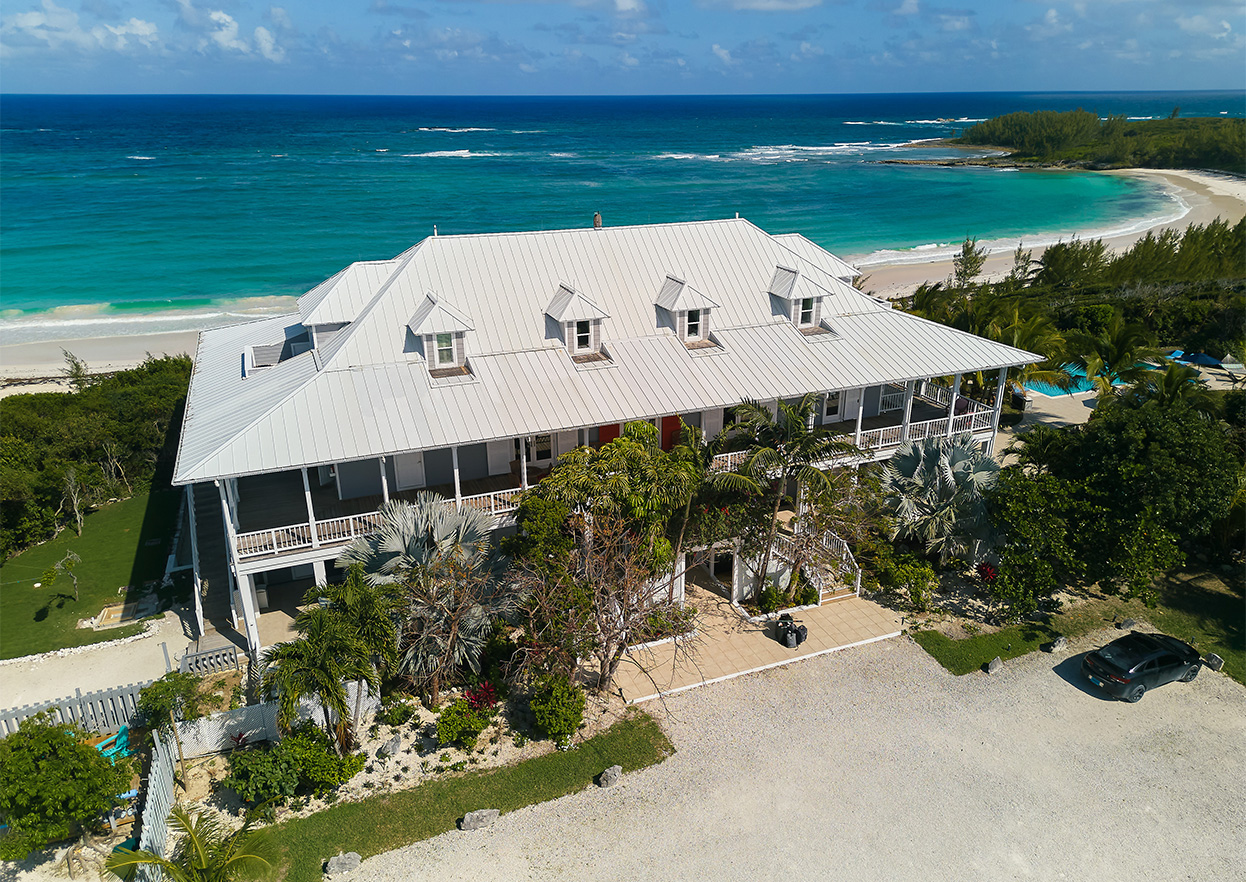
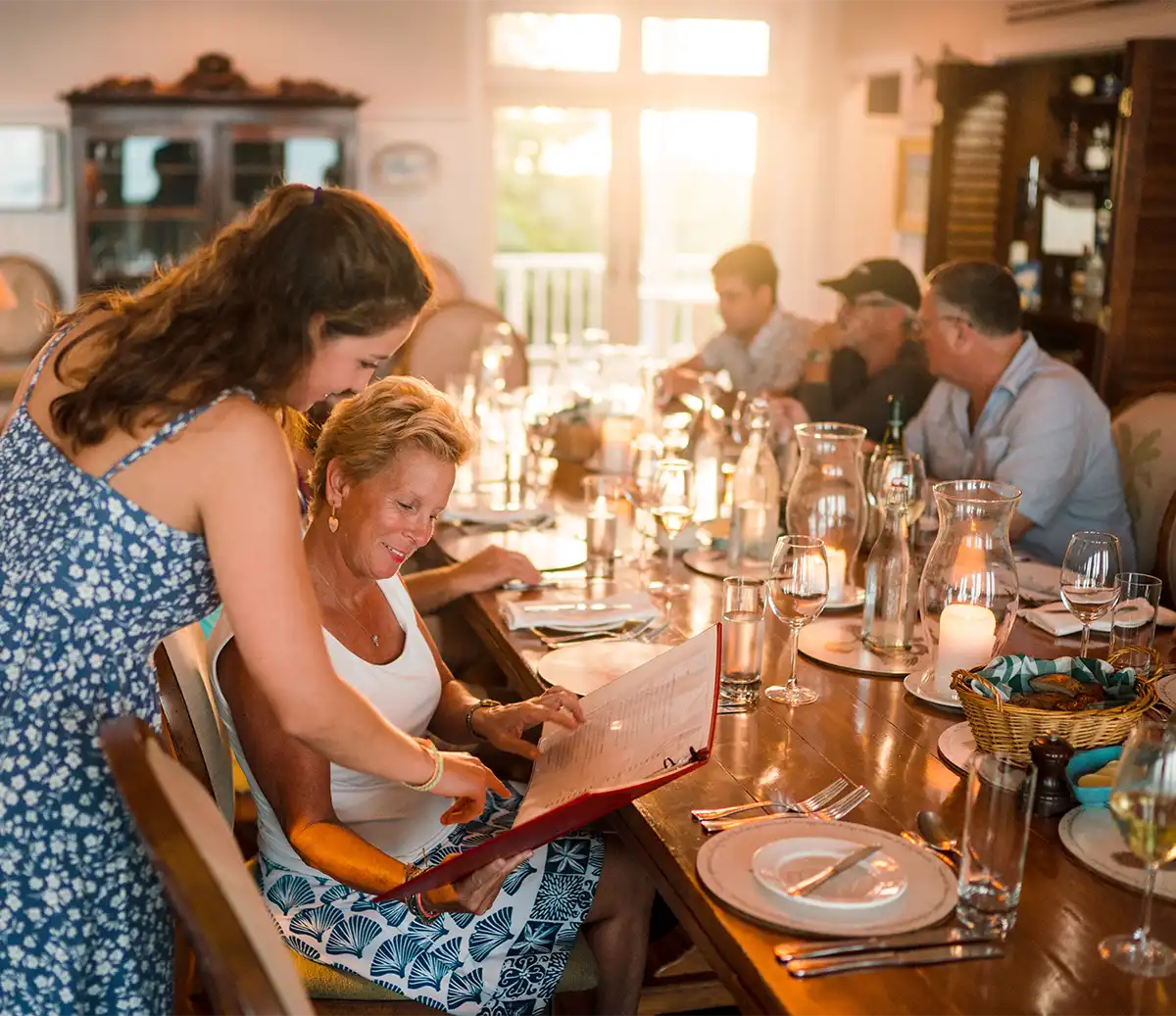
Breakfast is served at 7:00am (we have a coffee machine in the snack corner which is open 24/7 for any early risers). Guests can expect to depart at 7:45am or 7:30am depending on the location of fishing for the day. You will return to the Club at 4:30 - 5:00pm (location dependant), and on some days there is a return cocktail experience on our fishing deck (located next to the fly shop). Delphi Management will be around at cocktail hour to discuss fishing plans for the next day and dinner is served shortly after 7:00pm.
Weather:
Cooled by the prevailing south-easterly trade winds in the summer and warmed by the surrounding waters and the Gulf Stream in the cooler months, the Abacos are rarely uncomfortably hot or cold…..Although the central Abacos are on the same latitude as Palm Beach, Florida, the winter temperatures average 10° (F) warmer than Florida and the summer highs are generally somewhat lower than those found on similar Florida latitudes due to the moderating effects of the surrounding waters. The average daily highs and lows rarely differ by more than 12 degrees (F), with monthly rainfall averaging about 2 inches in the winter and 6 inches in the summer, primarily in the ‘20-minutes-and-they’re-gone’ afternoon showers.
Non-Angler activities:
Abaco has a very good tourism infrastructure and offers a wealth of attractive options for day trips, many of them involving boat rides. The outer cays, with their charming colonial settlements such as Hope Town and Green Turtle Cay are easily reached by ferries from Marsh Harbour and Treasure Cay, and make for pleasant day trips. There is a great company called Brendals Dive Centre or Abaco Tours & Activities which can be booked in advance for a day of excursions and they are located at the Green Turtle Ferry Dock in Treasure Cay.