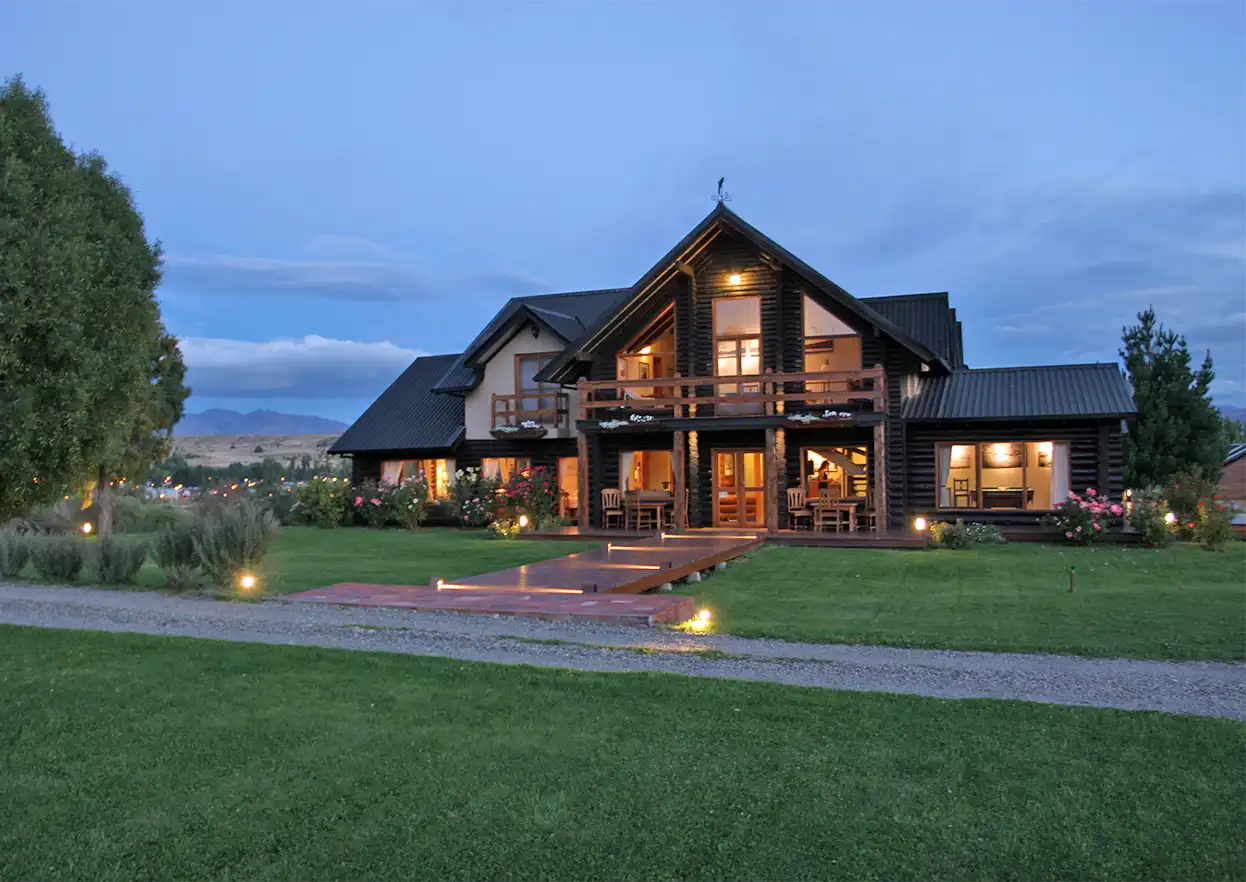
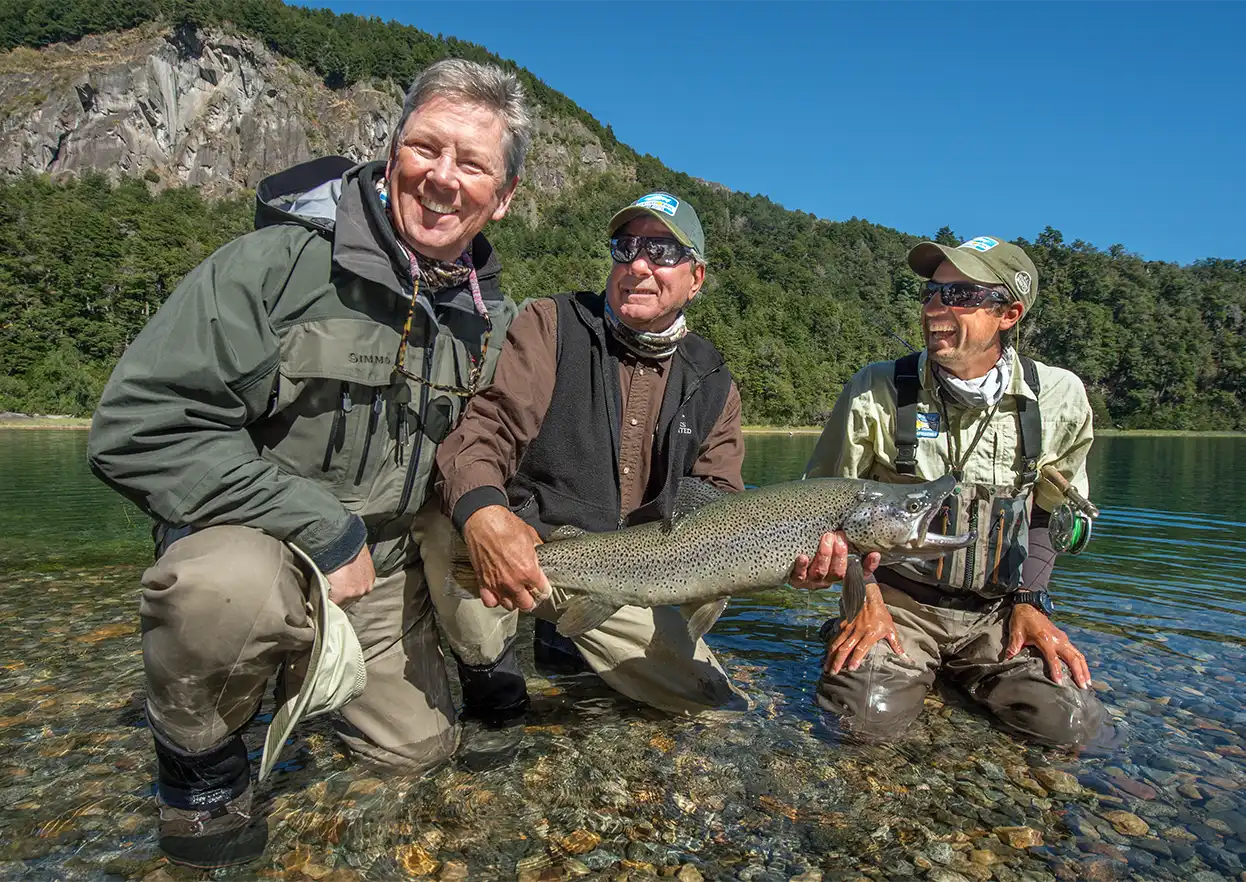
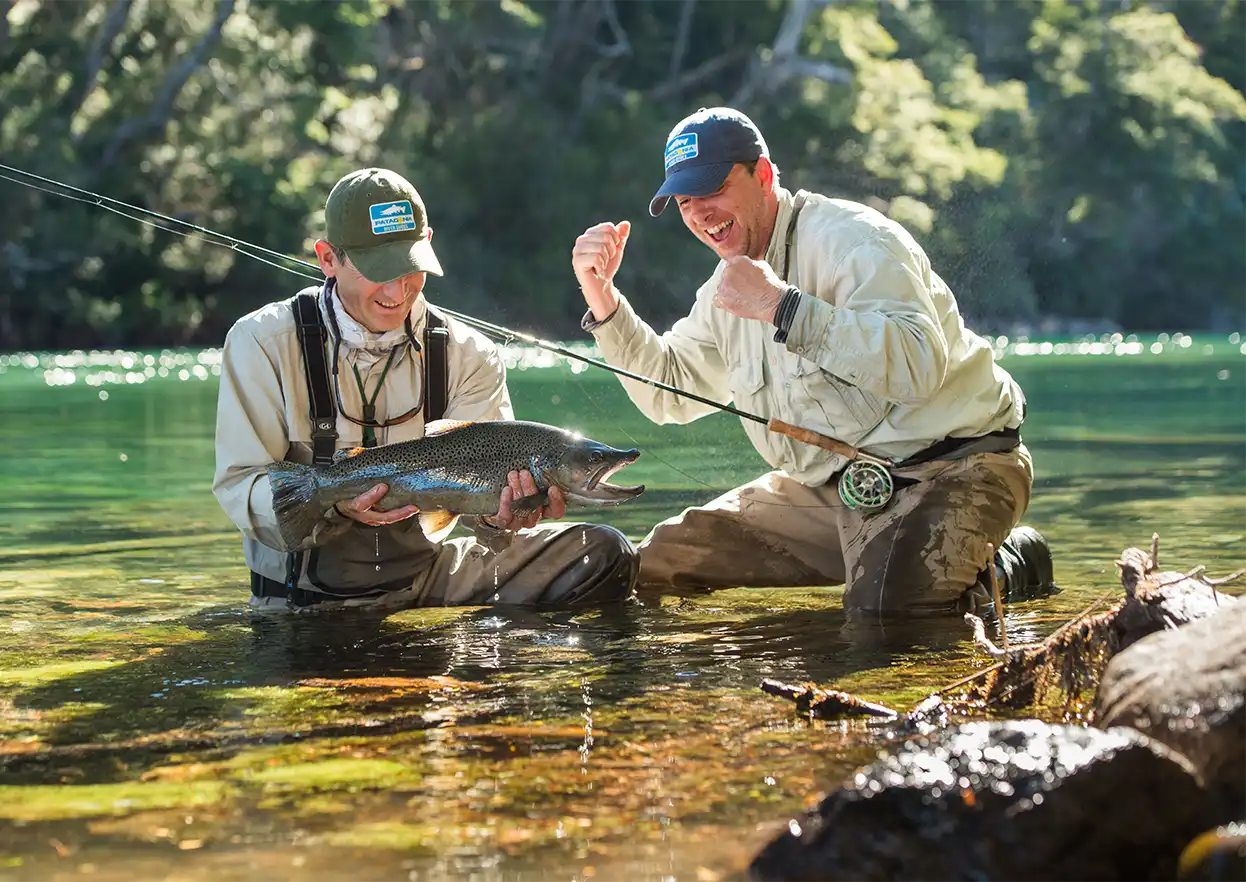
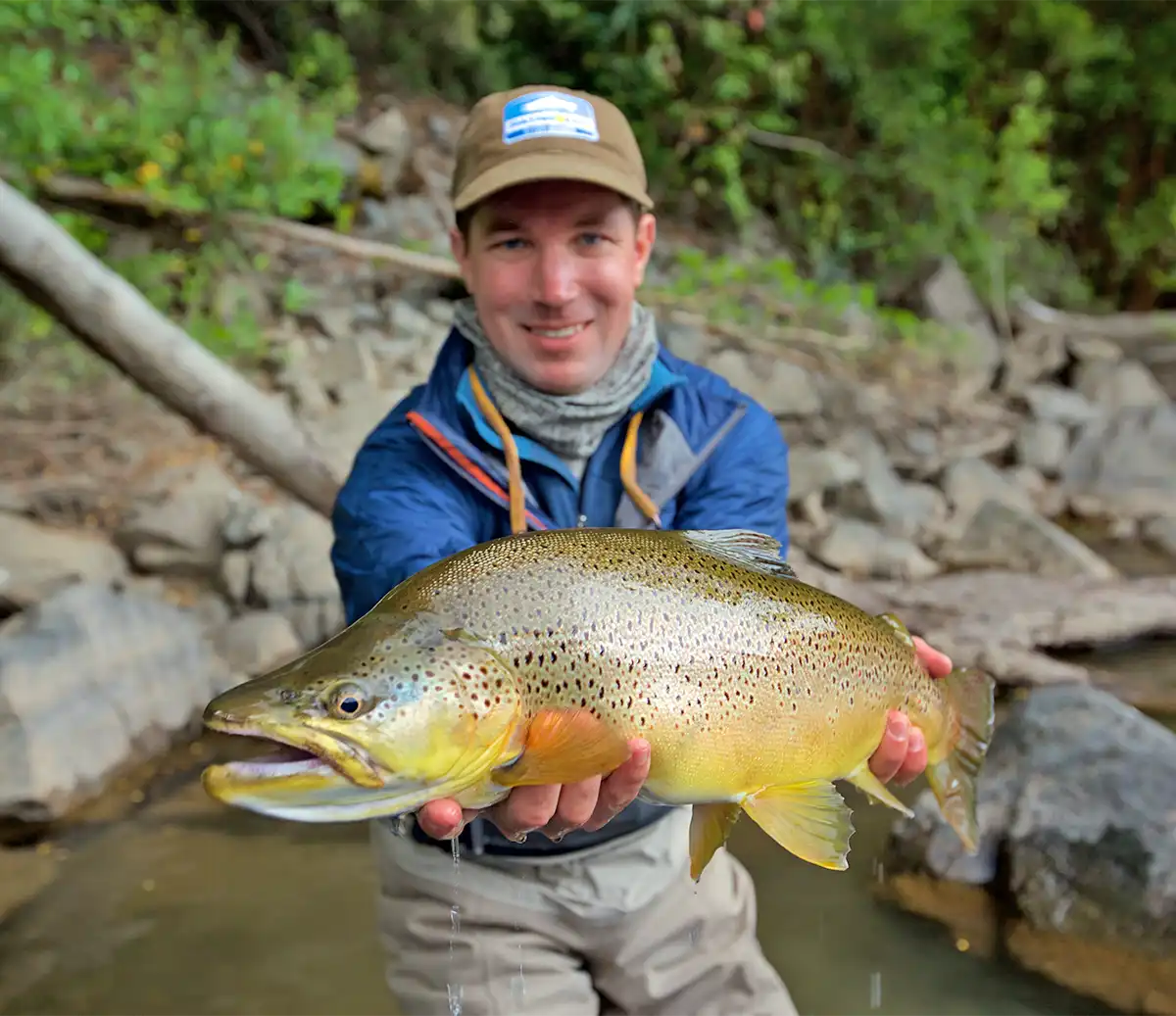
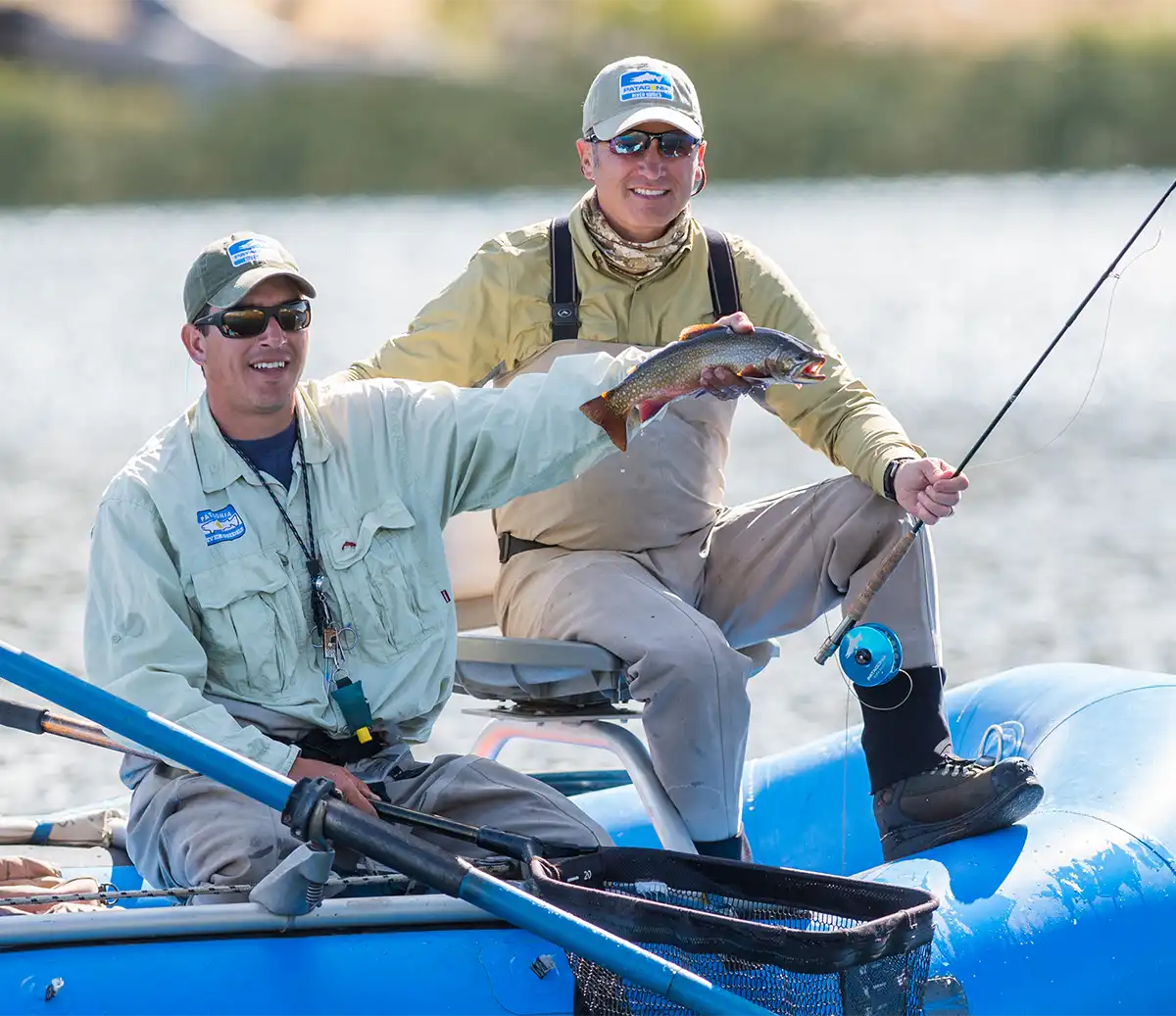
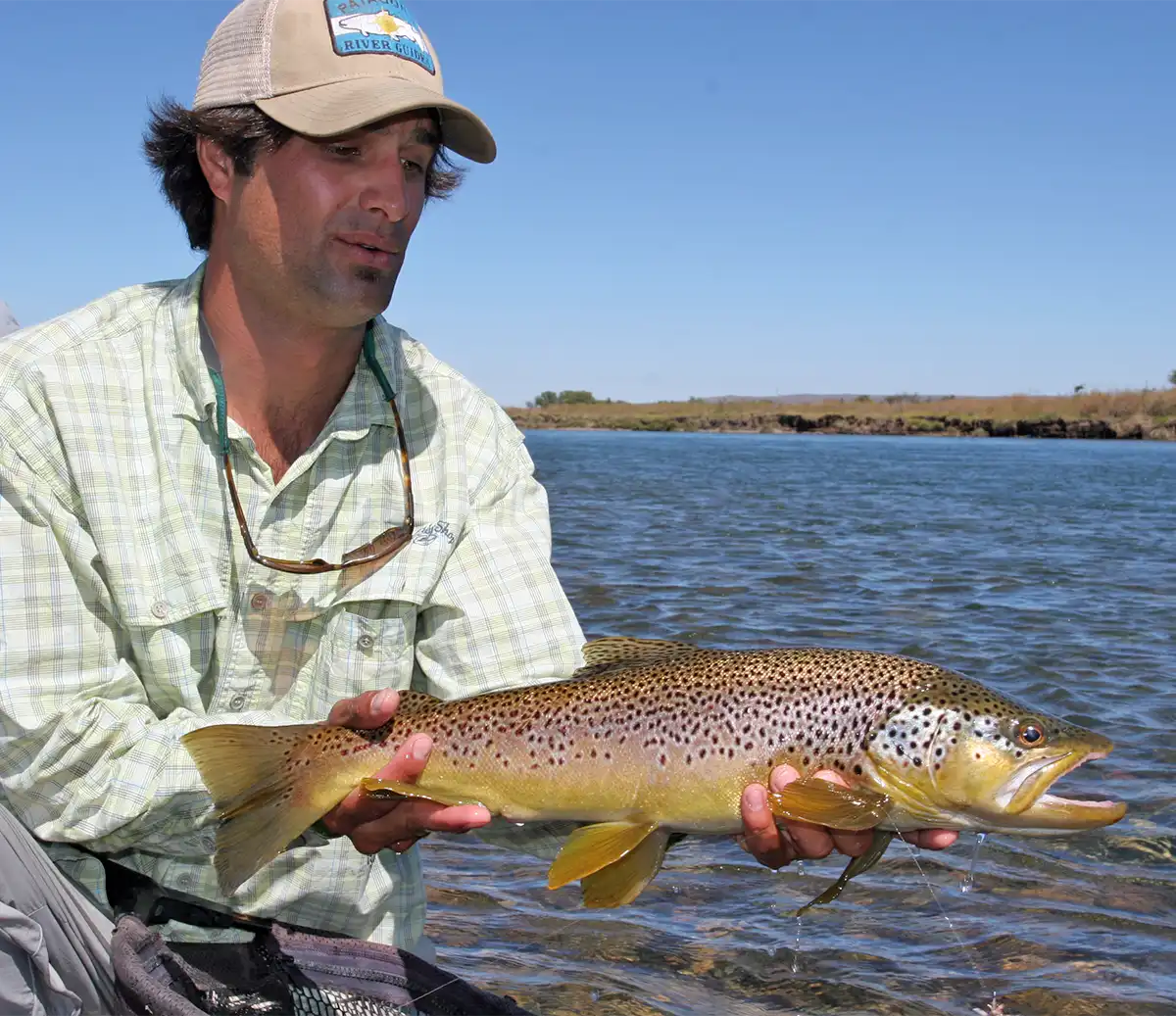
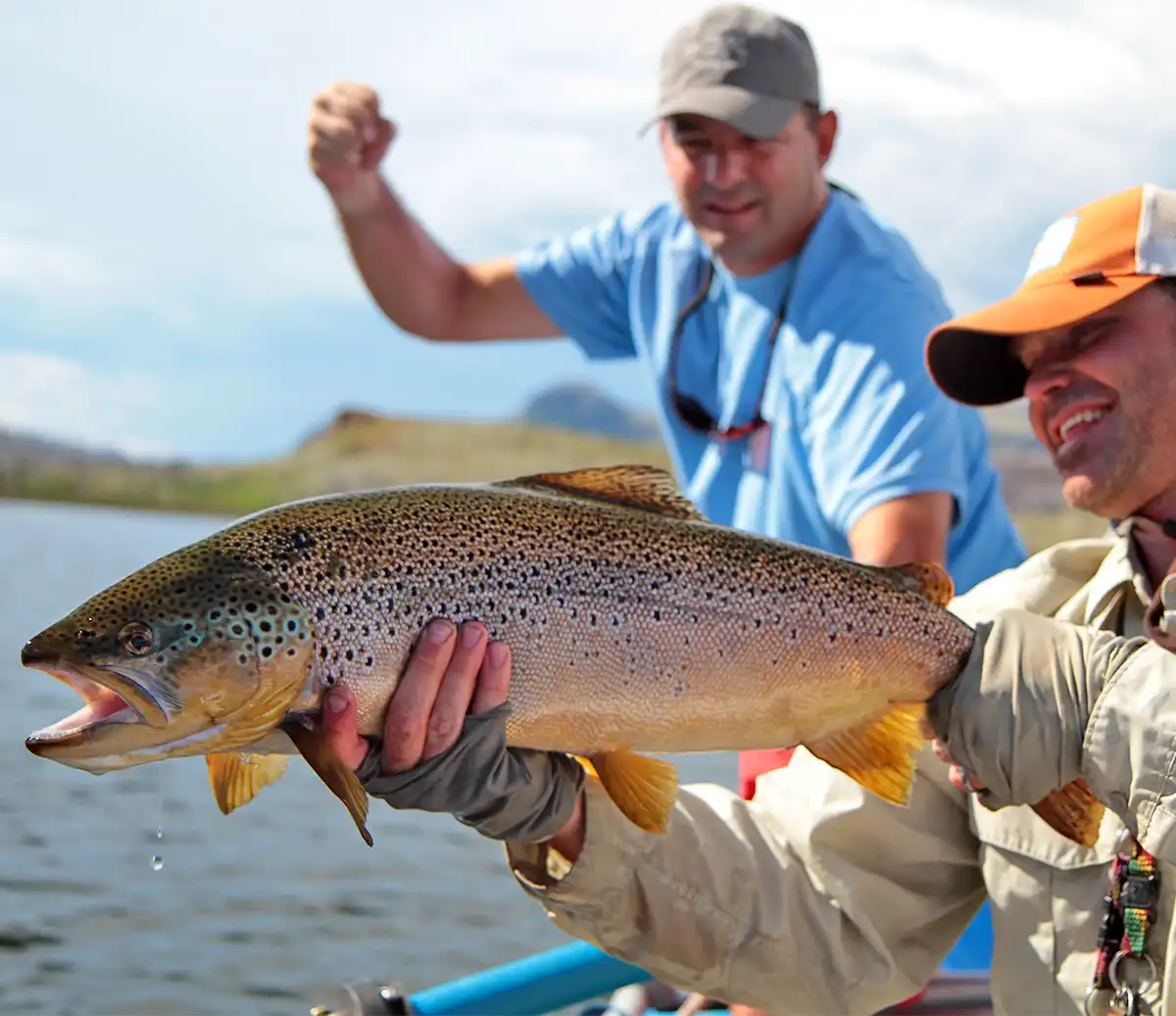
Patagonia River Guides has a straightforward "blue-collar" approach to its fishing program. Each guide has all of the finest equipment necessary to make your fly fishing experience ideal including: trucks, boats, waders, rods, reels, flies, lines, leaders and tippet. Two anglers fish together with a professional guide (and sometimes an assistant guide) to give every angler the finest angling experience possible.
A Typical Day of Fishing with Patagonia River Guides Trevelin:
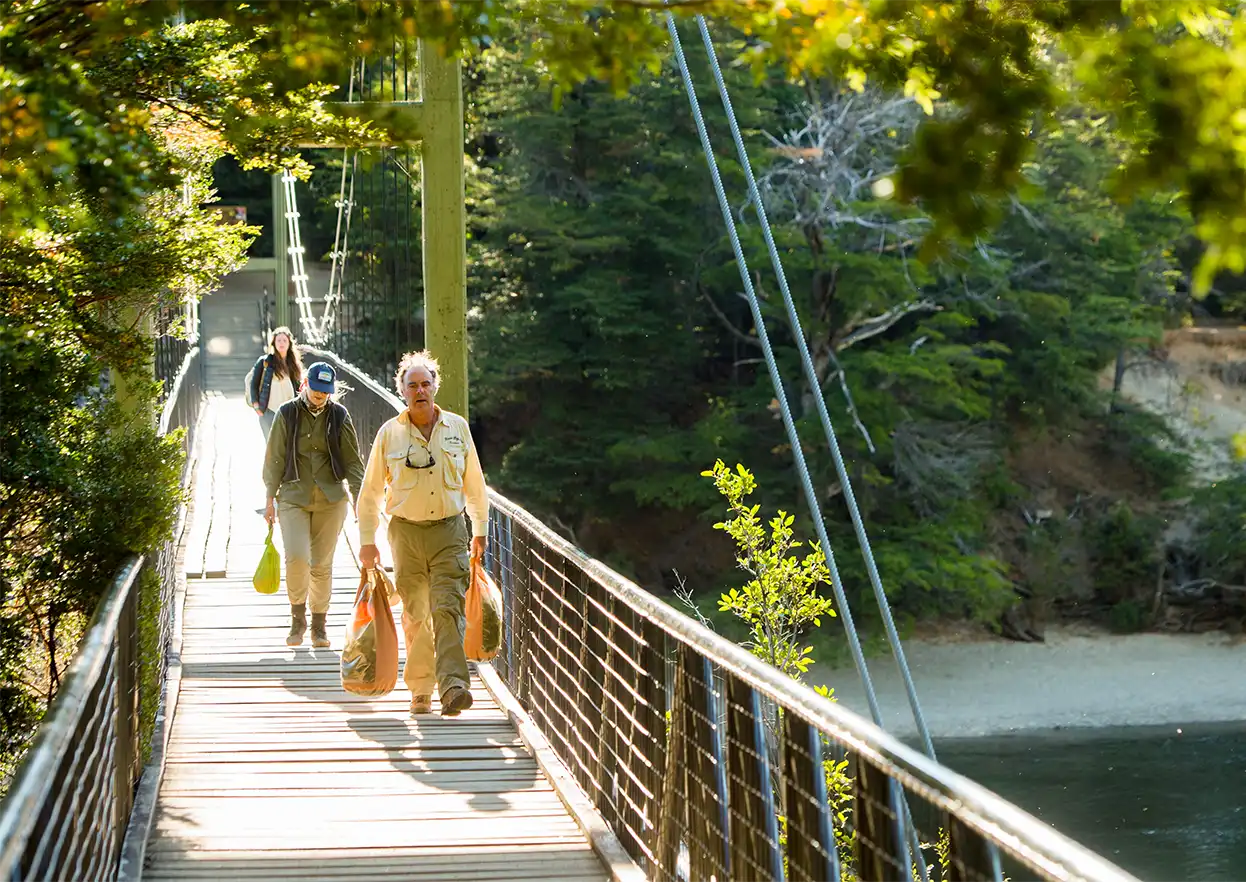
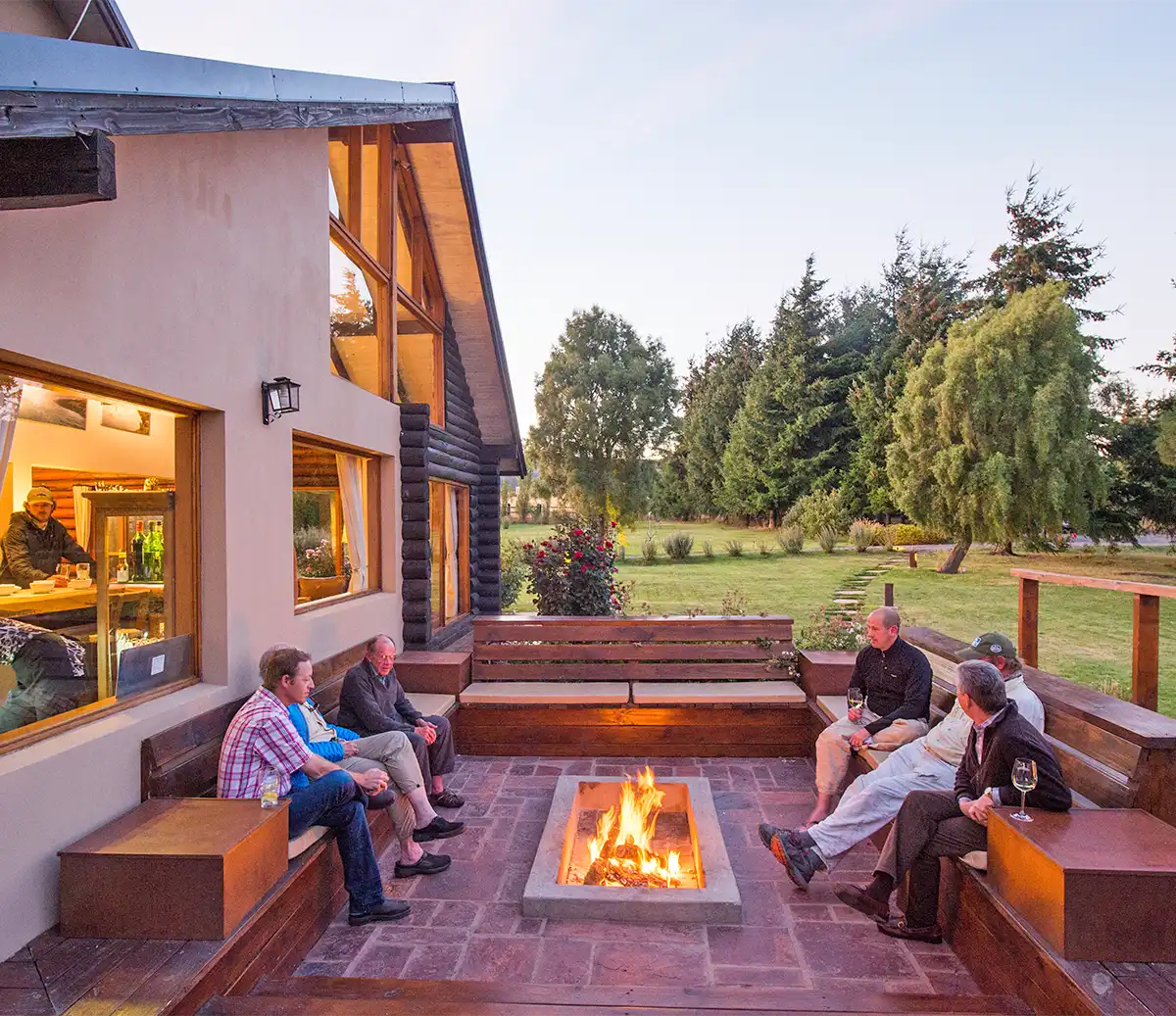
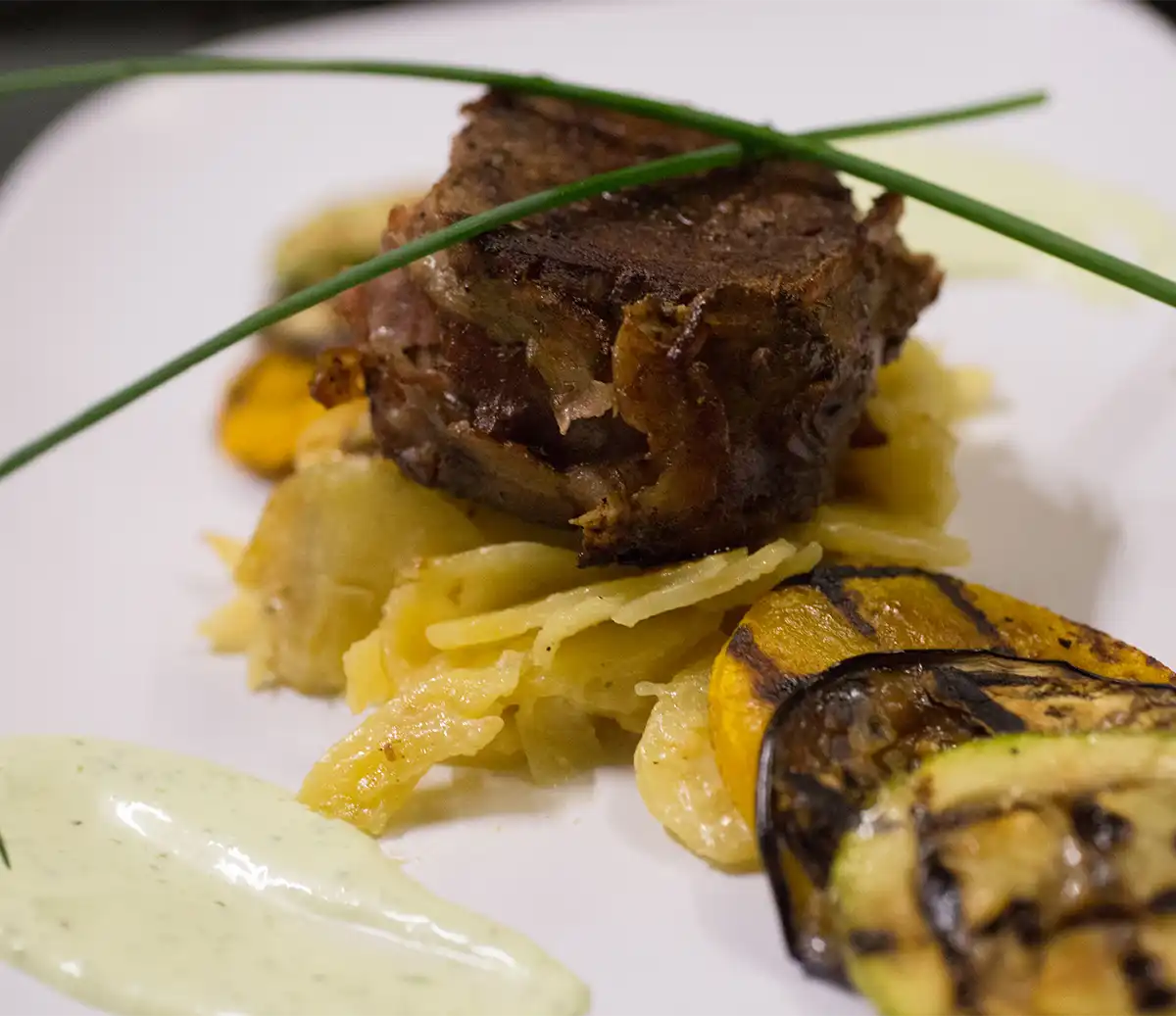
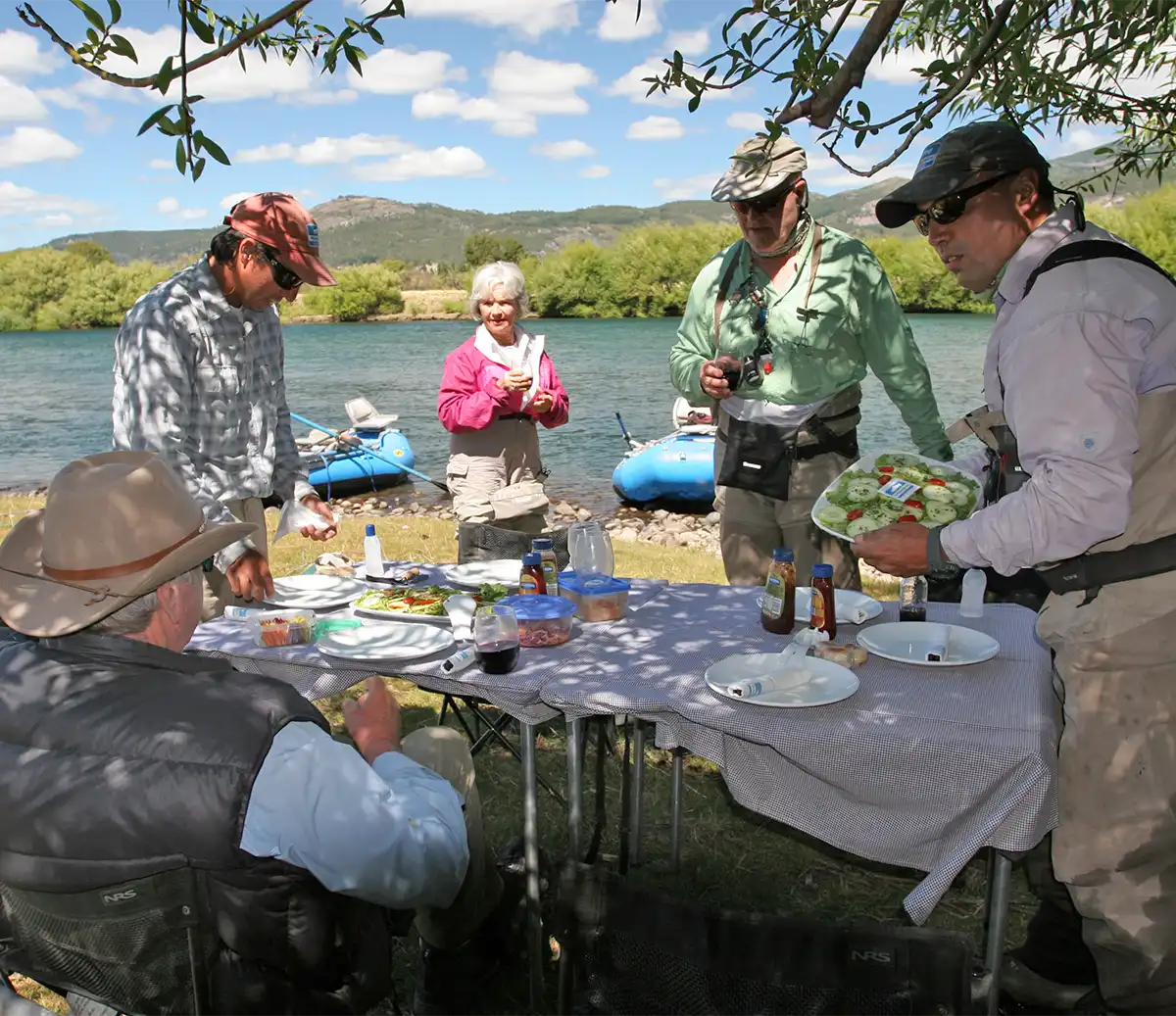
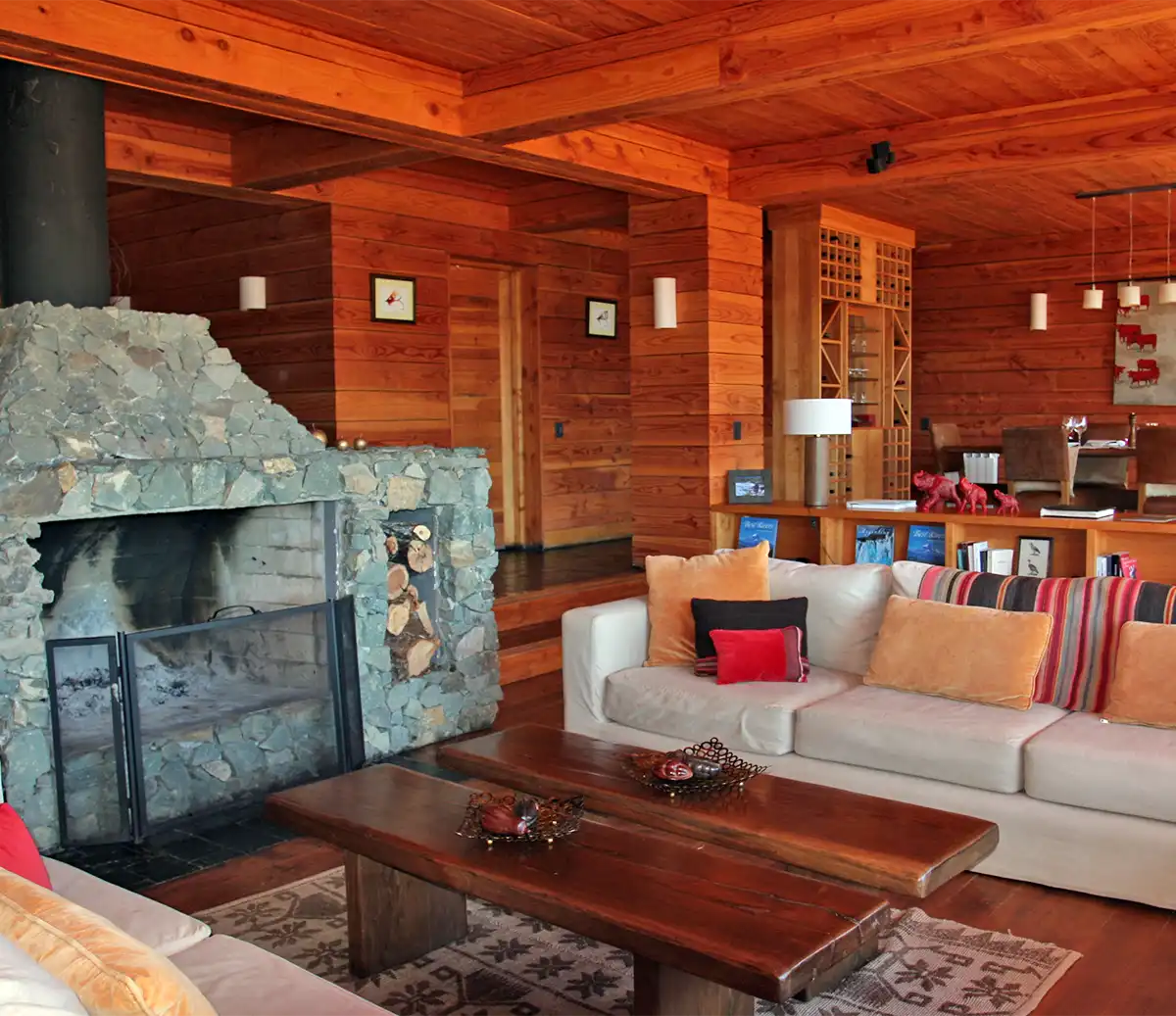
Fishing programs start on your schedule, which is normally an 8:00 to 8:30 am departure after a hearty breakfast and a meeting with your guide. The lodge is centrally located and the rivers they fish are normally less than an hour drive. Most days end around 6:00 to 7:00 pm, at which time you are driven back to the lodge for a hot shower, cocktails in our cocktail lounge, and then a magnificent dinner complimented by a great bottle of Argentine wine.
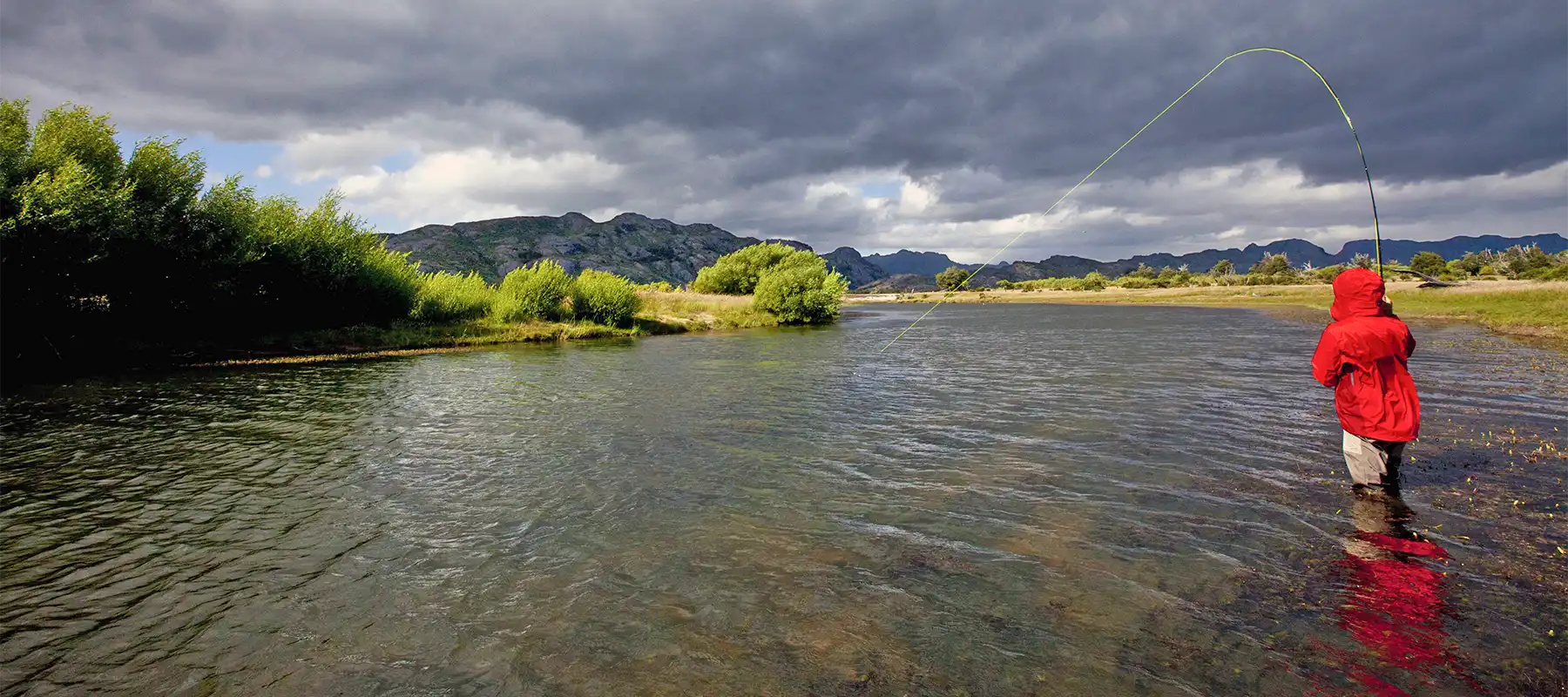
You will be treated to a blend of floating and wading on area spring creeks, lakes and rivers. Your options depend on your desires and what is fishing best. Fishing techniques include dry fly, dry-dropper, and streamers. Patagonia River Guides try to fish dries at all times when the conditions are right and the fish are feeding, though it is sometimes necessary to go under the surface.
The Esquel region resembles fishing in the American West in many ways. Rivers in this area originate in the Andes Mountains or the Patagonia Steppe. All the rivers except for the Arroyo Pescado, Tecka and the Chubut flow east to the Pacific Ocean. Strange but true, the continental divide is actually on the eastern side of the Andes Mountains. The rivers in this area are as varied as the countryside and there are many creeks, lakes, and rivers, all of which contain excellent numbers of trout. Some of the rivers are large and carry a substantial volume of water year-round; others are small and intimate and require a stealthy approach. About half the rivers PRG Trevelin fishes are floated, and the rest waded.
The Rio Grande "Futaleufú":
The Rio Grande, not to be confused with its namesake in Tierra del Fuego, is a lot like Montana's Missouri River. It is not only one of Argentina's most prolific trout streams but also one of its most beautiful. The Rio Grande is a large river containing lots of flat water, riffles and deep pools, all of which give you a chance to catch good numbers of fish on dry flies. It has been a tailwater fishery for about thirty years and is maturing more and more every season. It is one of the best terrestrial fishing rivers in the country. We float numerous sections, all with varied water and fishing conditions. The average fish is 16 to 18 inches and it is not uncommon to boat 30 fish per day here.
Arroyo Pescado:
Arroyo Pescado is one of the best spring creeks in the world! It is situated about thirty minutes east of Esquel in the Patagonian desert and flows about three miles before joining up with the Rio Gualjaina (which in turn joins the Chubut). Fising access to the creek is strictly enforced by the private estancia it resides in. There are daily hatches and rising fish depending on conditions. Arroyo Pescado offers something for everyone, including pink Chilean Flamingos, Magellan and Ashy Head Geese, a variety of ducks, black neck swans, ibis, parrots, greater rheas, and condors. The water is extremely clear and shallow in most parts so the fish can be selective, as on any spring creek. The best way to fish the river is by sight-fishing. Trout on Arroyo Pescado range in size between 16 - 22 inches.
The Corcovado:
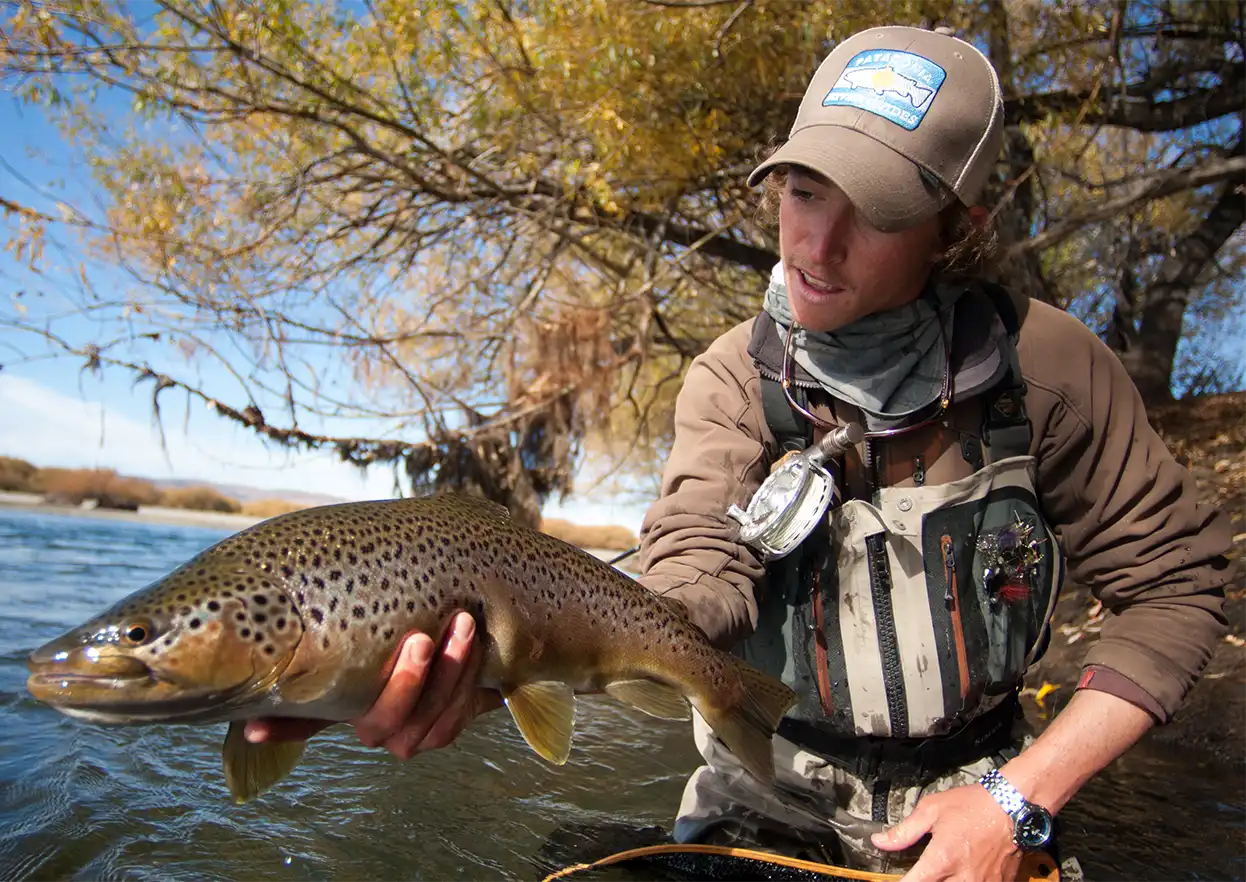
The Corcovado is a fabulous fishery that stretches more than sixty miles in Argentina before crossing the border into Chile, where it is renamed the Palena. It originates at Lago Vinter, one of the largest lakes in the region, which keeps the river cold and full of water for most of the season. It offers some classic trout water and contains some very large brown trout, as well as average-sized rainbows. The lower stretches around the town of Corcovado fishes well with streamers, large dries, and nymphs. A day on the Corcovado provides a combination of white water, and classic riffle-pool water. You can also enjoy some wading in the many riffles in the river. Some of the largest brown trout of the season are landed on this river, and they are very strong and stocky due to living in this fast flowing river. In the late fall the Corcovado just downstream of the lake produces some huge brook trout, fish often exceeding the four pound mark and often visible in the crystal-clear flows.
The Nant Y Fall:
The Nant Y Fall is a lake-fed stream with spring creek characteristics. It is best to fish this creek in the early and late season when the water temperature is cool. Some large rainbows can be taken here and the average can be more than eighteen inches. The only way to fish the stream is by wading on private access. You will have spectacular views of the Andes and be in the middle of a large waterfowl habitat, giving you the opportunity to see many of the birds in Patagonia. When this stream is fishing well, it's a must try!
Rio Corintos & Rio Percey:
These two small streams flow about 30 miles each before meeting and flowing into the Rio Grande. They offer prime walk wading opportunities for those wanting to get their feet wet. Not all the fish are large on these streams but the occasional fish over 18 inches can be caught on large dry flies. The character of water is a mix of freestone, pocket water, and spring creek. These creeks are a nice choice for those that want to wade fish with a light rod and enjoy fishing in spectacular scenery.
The Rio Gualjaina (Rio Tecka):
This small stream is born on the Patagonia Steppe and offers miles of uninterrupted wade fishing. The fish are not all large but the ability to fish a light rod and dry flies makes up for the size of the fish. Both rainbows and browns can be caught. This is a good choice for those that want to walk and cover water.
Los Alerces National Park Area:
Los Alerces National Park was formed to protect one the last stands of giant sequoia trees, Los Alerces, in South America. These trees aren't as large as their cousins in the United States, but are actually older. Los Alerces encompasses more than 500,000 acres and contains over two dozen rivers and lakes. Most of this national park never gets touched because there are almost no roads, except on the eastern edge. The ecosystem is best described as Valdivian rainforest, making it different than most of Argentine Patagonia. Fortunately, a park ranger planted trout here in 1964 and they are flourishing. You can catch rainbow trout, brown trout, brook trout, and land-locked salmon in the emerald waters, and you will enjoy the park as much for the scenery as the fishing.
The Rivadavia River:
The Rivadavia has to be one of the most beautiful rivers in the world. It flows from Lago Rivadavia five miles until it reaches Lago Verde. The fishing is challenging but very rewarding as the fish average over 18 inches. Most anglers get very excited about beauty and the numbers of fish you can see and fish to. The water is gin clear and the banks are lined with beech trees and fallen logs, which make the casting challenging. Wading and sight-fishing with small nymphs is a good way to hook up, as well as fishing large dries over the sunken logs or chucking streamers under the tree-lined banks to entice the large browns to be found there. There is also a fishable spring creek that flows into the Rivadavia and offers some excellent sight-fishing. This river is the favorite choice for most experienced anglers because of the challenge, beauty, and fishing. The Rivadavia contains rainbows, browns, brook trout, and landlocked salmon.
The Arrayanes River:
The Arrayanes River connects Lago Verde to Lago Futalaufquen. The slow and deep river stretches about four miles and offers some exciting fishing, mostly in the early season (Nov-Jan). It is named for the areas strange trees with orange bark and gnarled branches (resembling manzanitas). The most exciting ways to fish the Arrayanes is to sight cast dry flies to cruising rainbows suspended just under the surface, or pull streamers on sink tip lines to find the large browns. You won't believe the distance a fish will move for a dry fly and how slowly they eat your fly! It is a good choice when the conditions are right.
The Frey River:
The Frey is the largest river in the park and one of the most remote. You will have to cross two lakes to get there, which means the river has much less pressure, and eager fish. The river is deep and difficult to access from shore so floating is the best (and only) choice. You'll like fishing the Frey and the journey to get there is part of the experience. The Frey is justifiably famous for huge brown trout.
The Carrileufu:
The Carrileufu originates just outside the National Park and flows through the northern border. It is best known for early-season landlocked Atlantic salmon; however, it also holds hard fighting browns and rainbows. This beautiful river with some of the clearest water on earth flows from Lago Cholila through the dry Cholila Valley, once home to Butch Cassidy. The river eventually flows into Lago Rivadavia, the source of the Rivadavia River. Early in the season (Nov-Jan) offers the best fishing, and floating is the best way to access this river.
Lago Verde & Lago Kruger:
These small lakes are hard to beat when they are fishing well. Nice fish will readily rise to eat large dry flies cast to the bank. Coupled with the backdrop of ten thousand-foot peaks, this is a good option for those wanting to fish dry flies and see the beautiful lake system of Los Alerces.
Lago Menendez:
This lake is one of the most remote in the national park, offers some of the most incredible scenery on earth, and is full of eager trout that readily take a dry fly. You will be fishing under the Torcillas Glacier and have the opportunity to see the rare Alerces Tree. The journey to Lago Menendez is half the fun and experience, as are the trout (some over 25 inches).