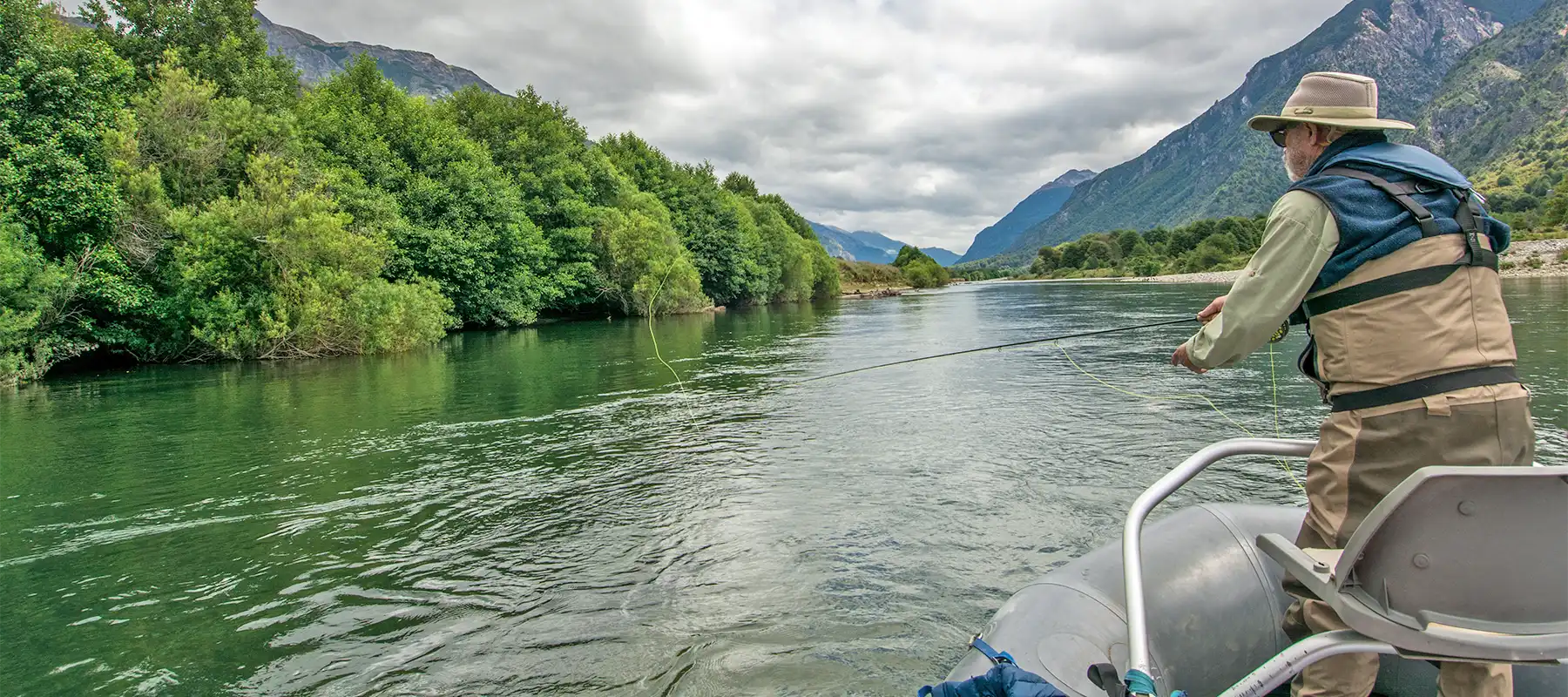
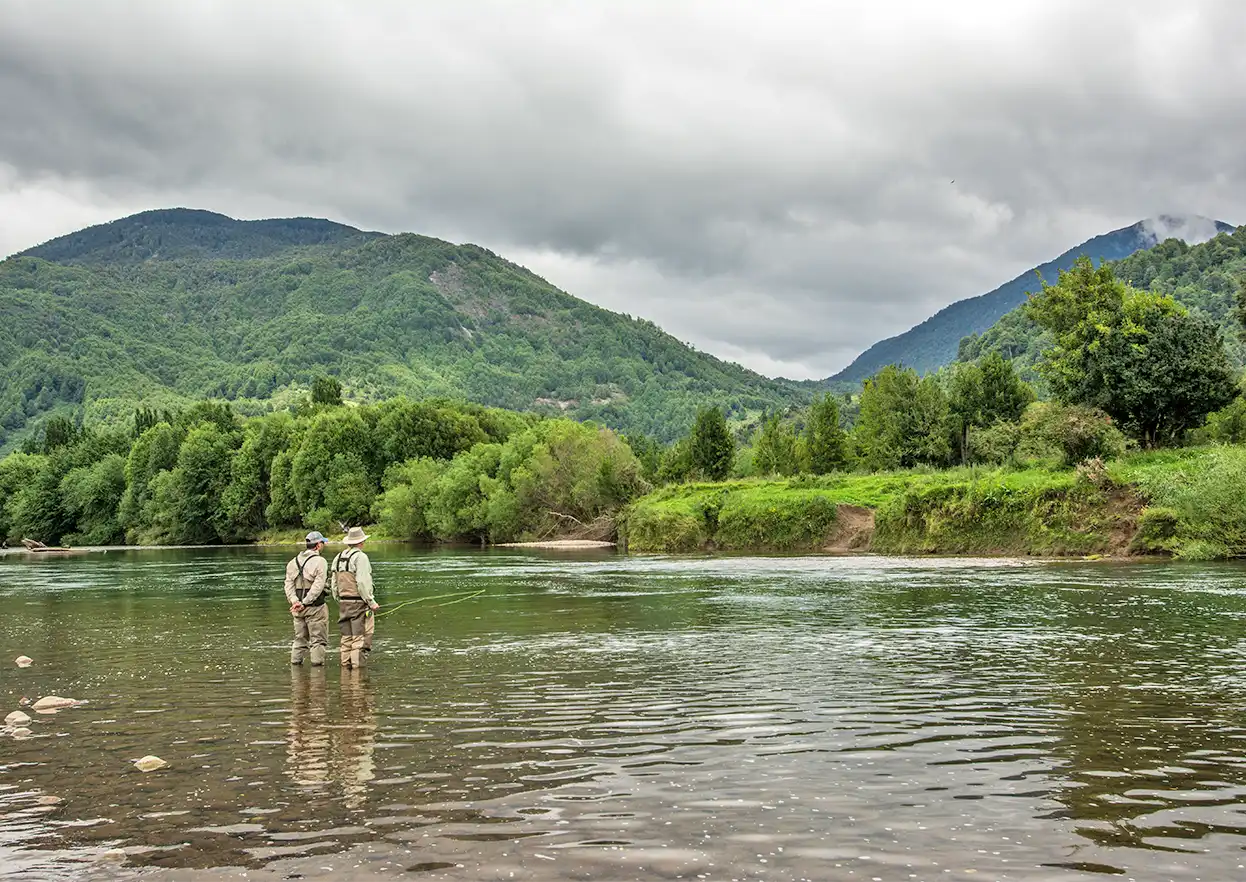
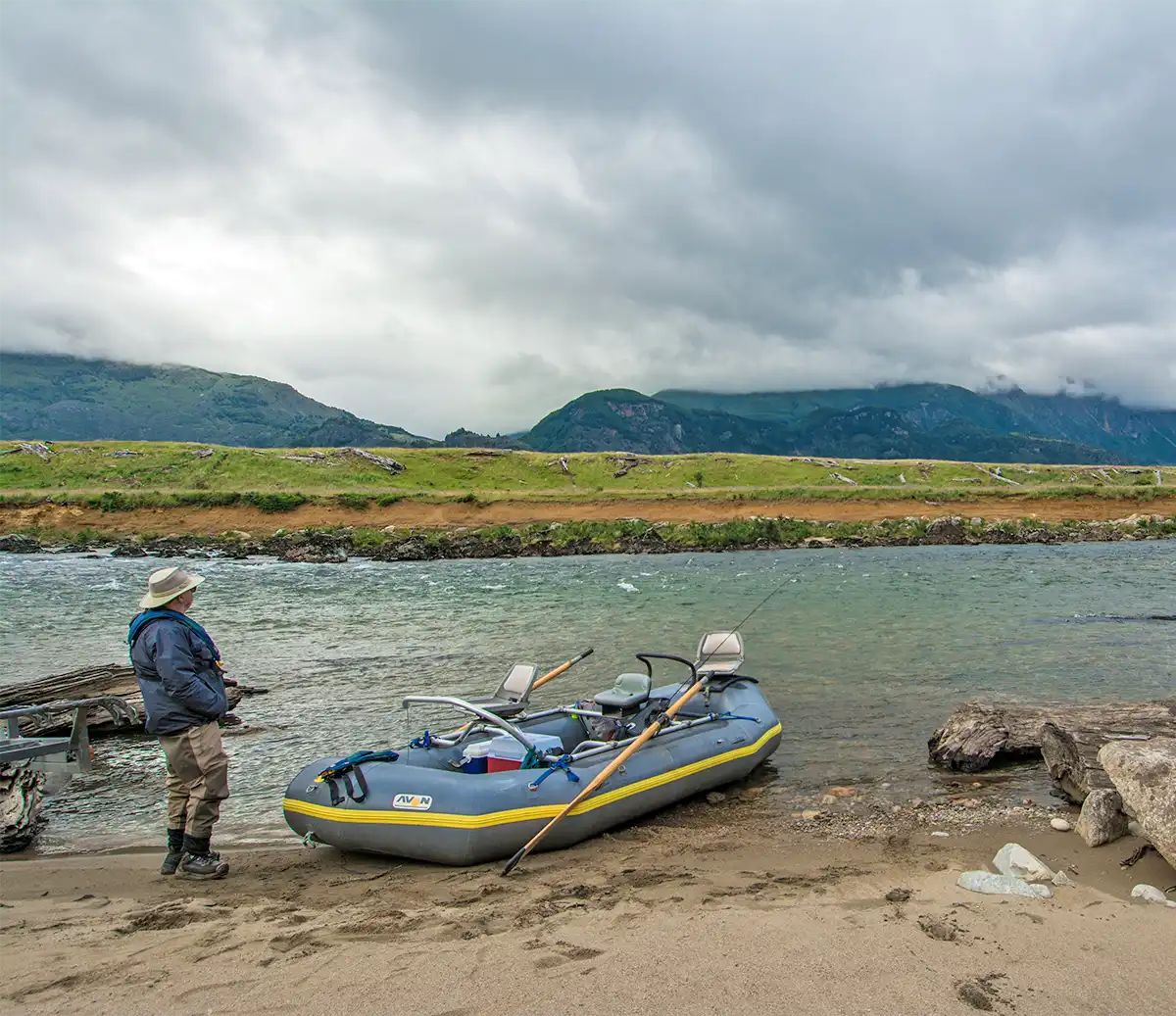
The hardest decision you have at Trouters Patagonia is whether to do a wade trip or a float trip.
Float Trip Fisheries:
Rio Simpson (Los Torreones):
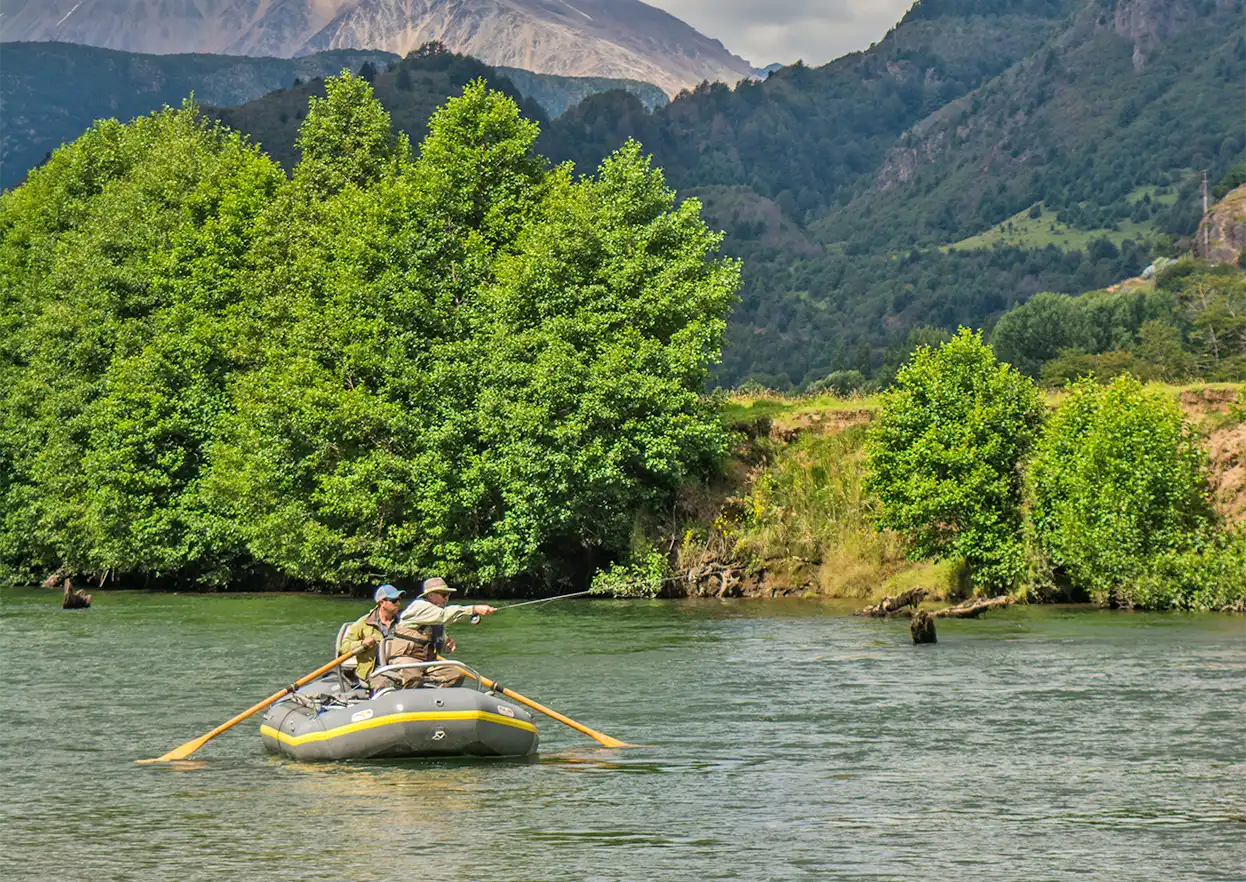
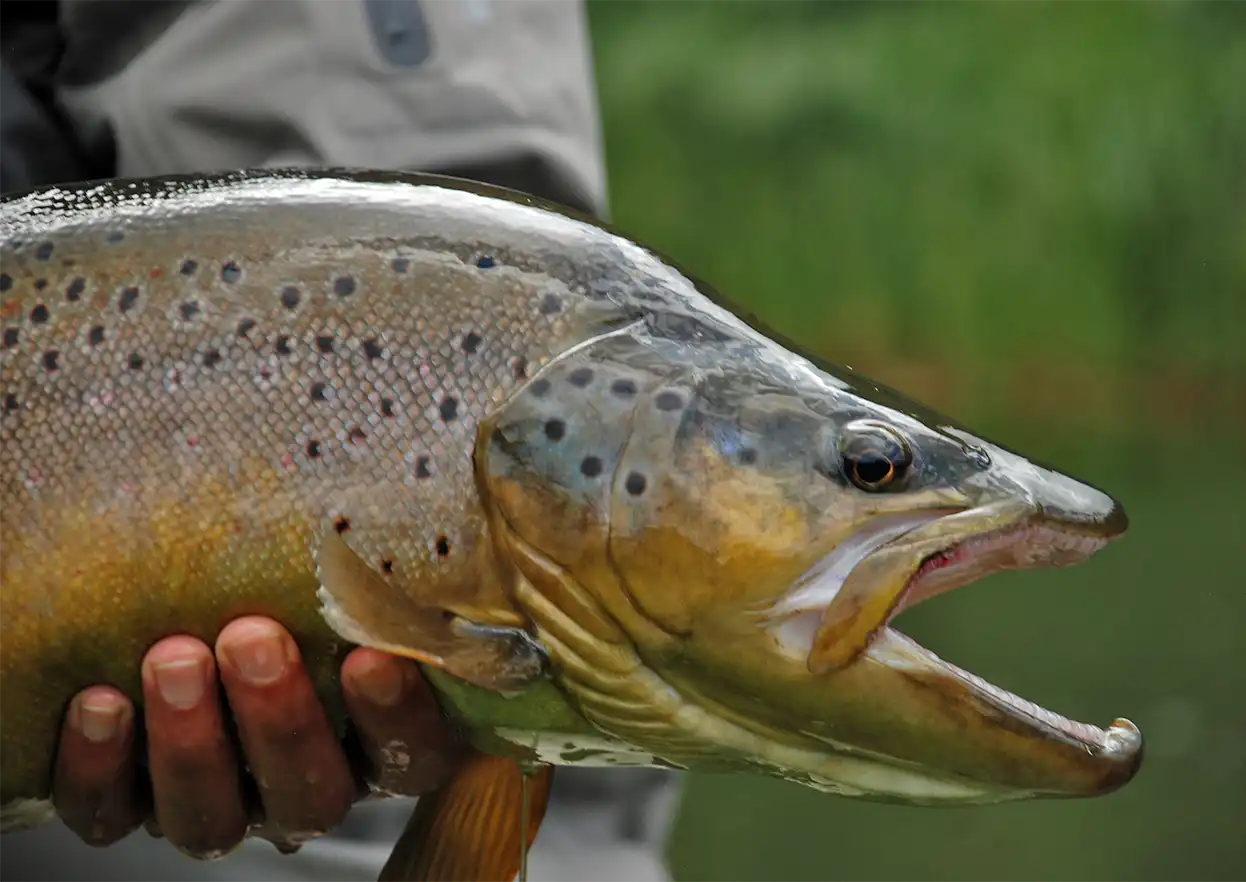
Pastoral valley with a meandering peat green river that is unmatched for the amount of structure in the water and along the banks. Never is there a moment when there isn't a fishy looking spot to place a fly. Rainbow and brown trout 13-18 inches are common, with occasional trophies to truly obese proportions.
• River Width: 50-130 feet
• Rods: 5 or 6 weight
• Flies: mayflies, caddis, midges, beetles & streamers
Rio Aisen:
The Rio Aisen is the cumulative flow of the Simpson and Manihuales. Big eddies, structured banks and long runs make up the character of the Aisen. It flows into the fjords (ocean) several miles below our take-out, near the port town of Aisen. This is big water with huge panoptic vistas. Resident rainbow and browns to 20-inch plus class, with occasional Sea Run i.e. Chinook, Coho, browns, rainbows and Atlantics.
• River Width: 100-300 feet
• Rods: 5 - 7 weight
• Flies: mayfly, caddis, midges, beetles, stones & streamers
Rio Blanco & Tributaries:
Probably the most visually stimulating of all the rivers we fish, featuring glaciers, waterfalls, and impenetrable rainforest, although it's a tough call with so much water as our disposal. Some days our best fishing is in the mainstem itself. Other days, one or both of the tributaries we hit prove to be the most productive, another day and maybe the hatch is on the lower Aisen. In any case there are many options on this river and no way to explore them all in one visit.
• River Width: 100-300 feet
• Rods: 5 - 7 weight
• Flies: stones, beetles, mice & streamers
Mañihuales River: (2 beats):
Beat 1 (the pasarella):
This float commonly sees quite a lot of hook-ups per day. A bouldered upper stretch gives way to a more pastoral and larger river. Rainbows and browns 13 - 23+ inches
• River Width: 70-150 feet
• Rods: 5 or 6 weight
• Flies: hoppers, stones, beetles, mice, streamers & eggs
Beat 2 (the classic):
The perfect size float river, with a walk/wade tributary stream in the middle of the float. Rainbows and browns 15 - 23+ inches.
• River Width: 100-200 feet
• Rods: 5 - 7 weight
• Flies: hoppers, stones, beetles, mice & streamers
Walk & Wade Fisheries:
Rio Turbio:
With the exception of the bottom 1/3 mile of canyon, this stream is open banked and pastoral. The water is absolutely gin clear and the browns are all true trophies. This is New Zealand fishing, with the exception; you actually see the fish, and big ones at that! Getting in position and making the 60 to 80 foot cast necessary for a hook-up is quite another thing. If you enjoy hunting and stalking, this river is for you. The most difficult of all the waters we fish, it can also produce the biggest rewards. browns to 25+ inches.
• River Width: 40-90 feet
• Rods: 6 - 7 weight
• Flies: hoppers, nymphs & beetles
Rio Canyoñ:
Sister river to the Turbio (gin clear). Fishes at its very best when the hoppers are at their peak. Mainstem fish come up to feed on the hoppers and are a lot easier to catch than the resident fish. This stream terminates miles up from the mainstem in a series of gin clear 15 foot deep pools. The last of which (where the river flows out of the slot canyon) is as beautiful a spot as can be imagined. Rainbowd and browns to 23 inches +.
• River Width: 40-60 feet
• Rods: 5 - 6 weight
• Flies: hoppers, beetles & nymphs
Rio Emperador Guillermo (Bill Creek):
This stream has several beats, but the one we prefer is a several mile long stretch that is willow infested and to which we have near exclusive access. Of all the waters we fish, this stream is the easiest for the beginner and yet offers big rewards for the angler with advanced skills. It's not uncommon for the rank beginner to land 30 + small fish in a day and on a dry fly. Advanced anglers, using stealth, occasionally find fish to 24 inches +. Therefore, this stream is a must see. Walks on this beat are designed around the skill and physical abilities of the angler. From covering a very few pools that we can just about drive, working them thoroughly with different flies and techniques, to fishing the entire several mile beat, which turns into a lot of walking and a lot of fish brought to hand.
• River Width: 30-60 feet
• Rods: 5 - 6 weight
• Flies: hoppers, mayflies, stones, caddis, beetles, mice, nymphs & streamers
Lower Nireguao:
Several miles of semi-arid cut bank pasture land. With an increase of biblical proportions over the last half dozen years of the hopper population, and an exponential increase in the number of spawning king salmon, there is certainly no shortage of food for these trout. This stream is well suited to the beginner as well as the advanced angler. The beginner, with a short cast and a hopper/dropper rig can expect numerous small fish. As the anglers ability to make longer, more accurate casts increases, so does the size of the fish, some of which are well over 20 inches. During the summer season (until the end of February) this is hopper and brown trout country. Starting the first week of March, the Kings move onto the redds and rainbows come up out of the main stem (Manihuales). Using egg patterns, thrown at the tails of the Kings, it's a 50/50 brown and rainbow show. It's not uncommon to land fish over the 20 inch mark (size is increasing yearly due to both the increase in hoppers and Kings.)
• River Width: 50-80 feet
• Rods: 5 - 6 weight
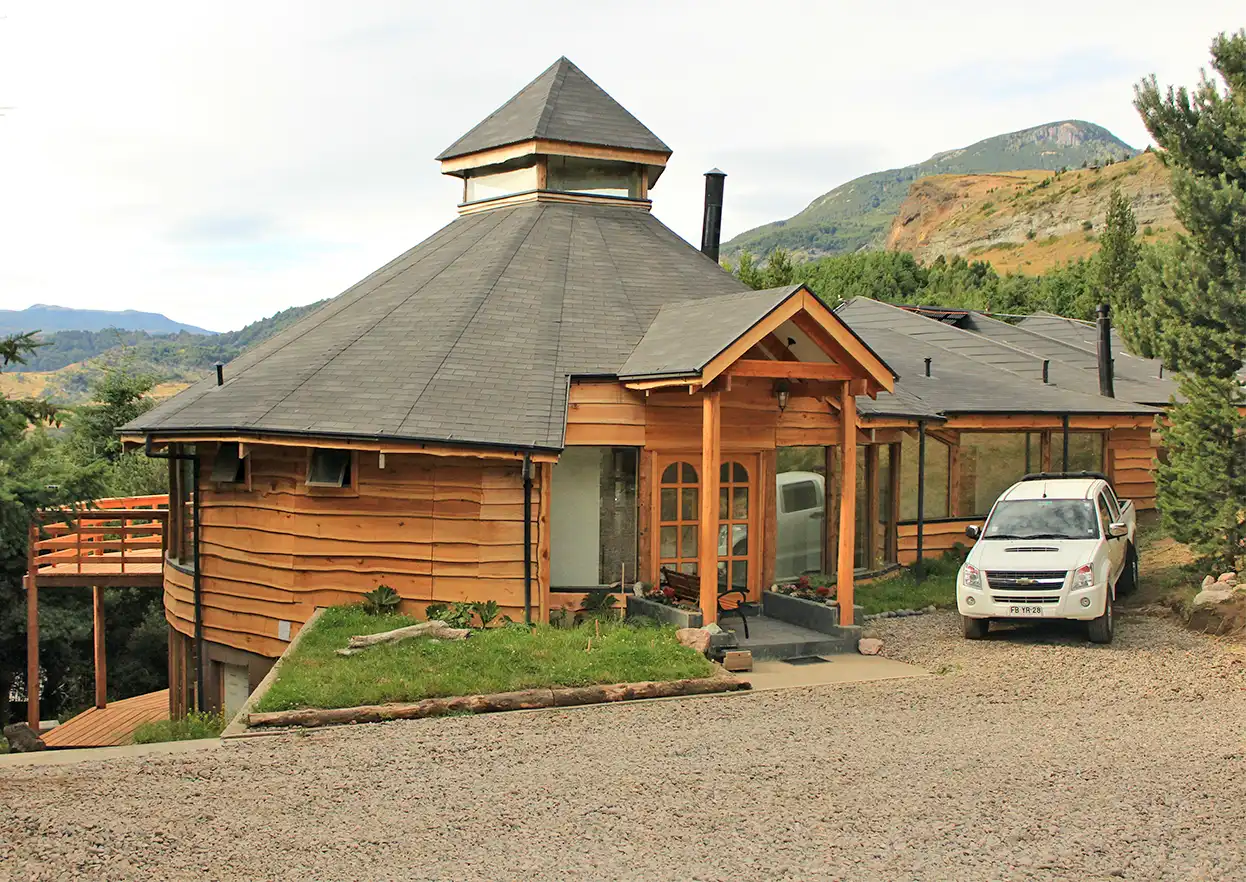
In addition, there are many still water fisheries close by with monster rainbow and brown trout. This is all very good water and most of it within an hour of the lodge.