The Angling Week:
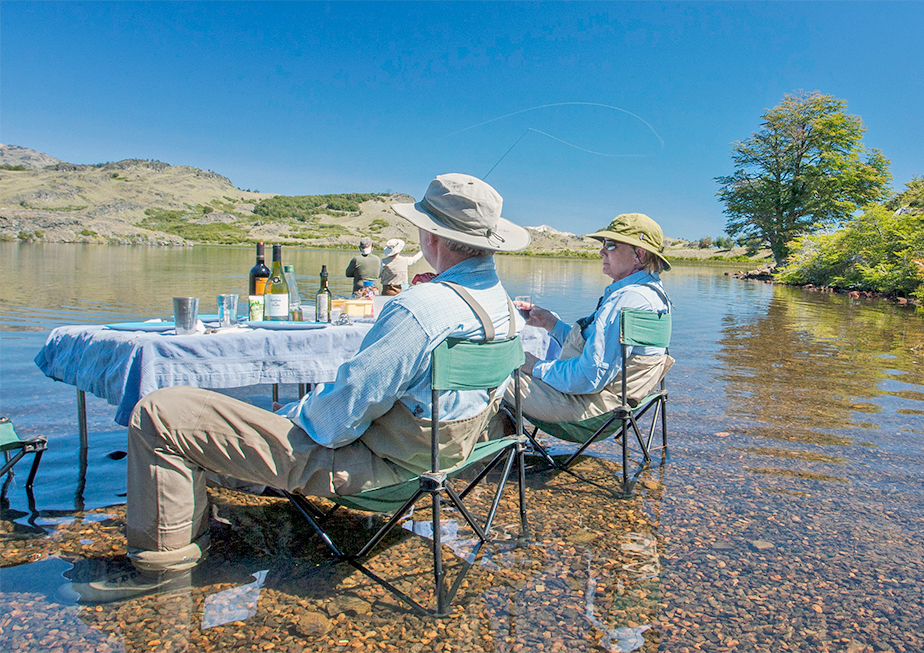
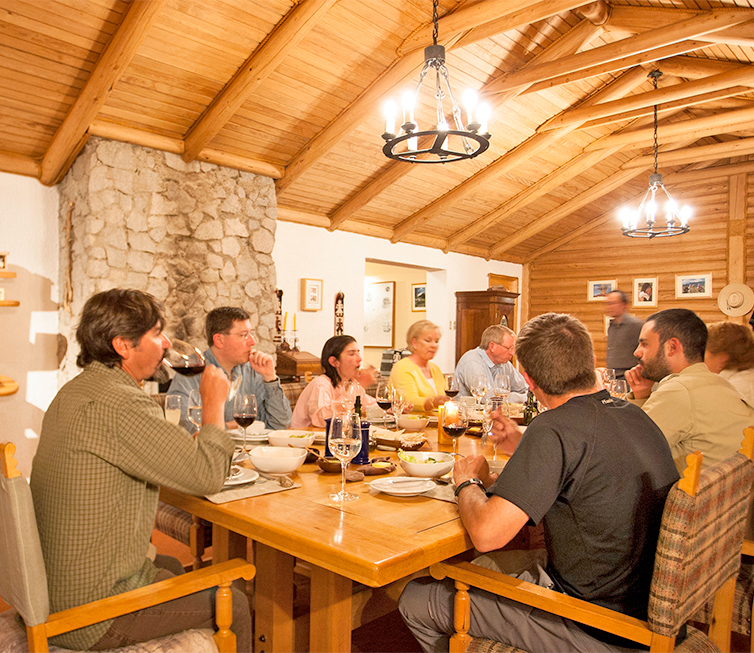
These are full fishing days, and the exact schedule will depend on the guest's wishes. Breakfast and dinner will be served in the lodge and fine mid-day meals are served in the field, stream-side.
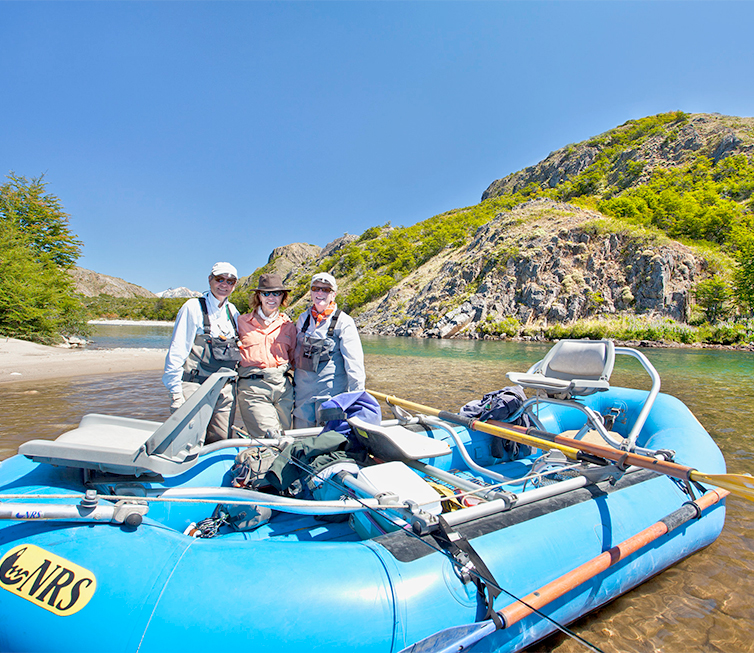
With more than 60 miles of rivers, several spring creeks and many lakes on the ranch, Estancia de los Ríos provides world-class dry fly fishing opportunities on a daily basis. The lodge is located on a 360,000-acre ranch in the heart of Chilean Patagonia. Expect vast uninhabited valleys surrounded by the majestic Andes Mountains, a place of spectacular beauty where you can enjoy unparalleled seclusion and privacy.
Each fishing day can be custom tailored to your wants, needs and ability, and you will be sure you will never run of out of angling options.
Saturday:
Anglers should take an early flight from Santiago to the Balmaceda Airport (BBA) just south of the town of Coyhaique. One of the estancia’s guides will be waiting for you just outside baggage claim; he will help with your bags and drive you to the lodge along the scenic Carretera Austral, the Pan-American Highway, Route 7, which runs south for approximately 770 miles from Puerto Montt to Villa O'Higgins. The trip from the airport to the estancia takes about 4.5 hours depending on traffic (mostly sheep, cows and oxen), and photo stops. Upon arrival at the lodge there is a brief orientation by your host, followed by a light lunch, and then you are off for your first afternoon of fishing. Early that evening you’ll head back to the lodge for a welcome cocktail, followed by a delicious meal. During dinner the head guide will explain the week ahead and the next day’s fishing options.
Sunday:
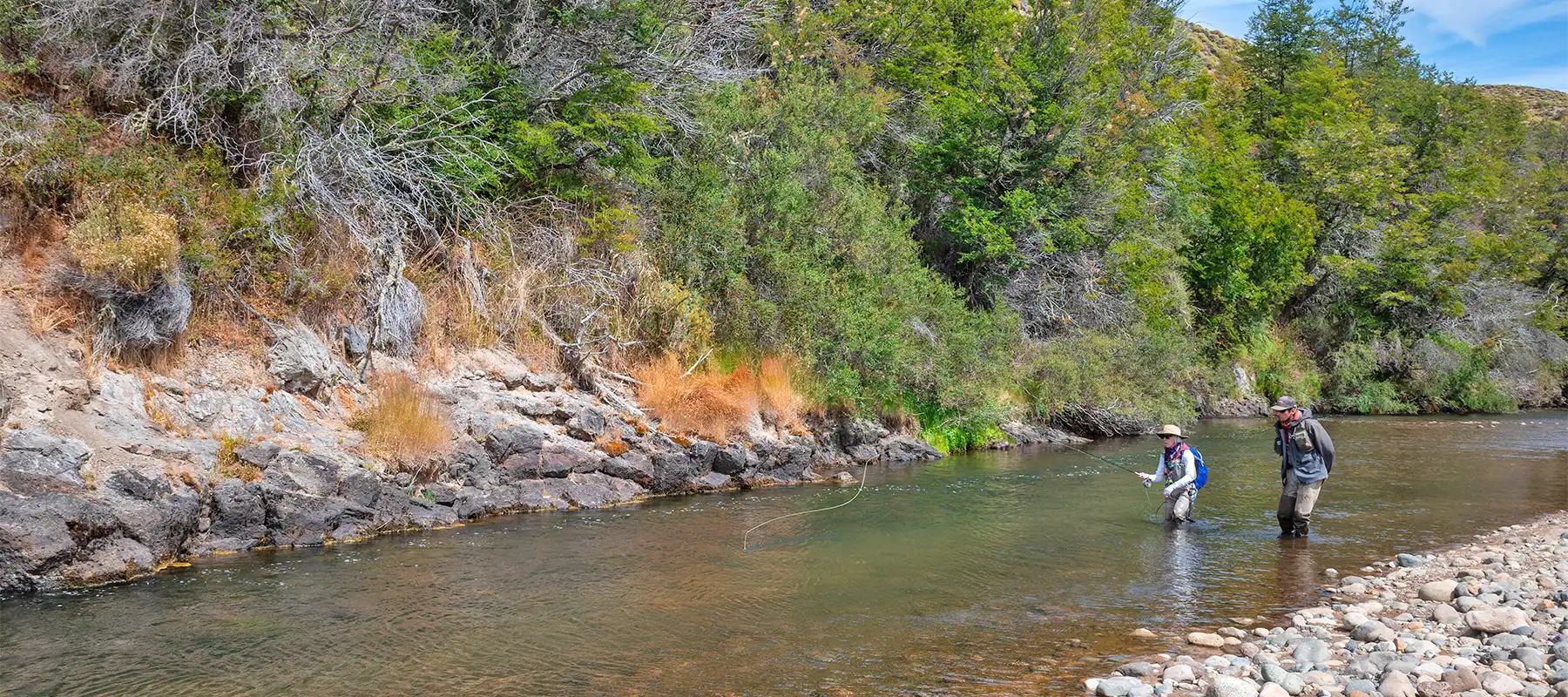
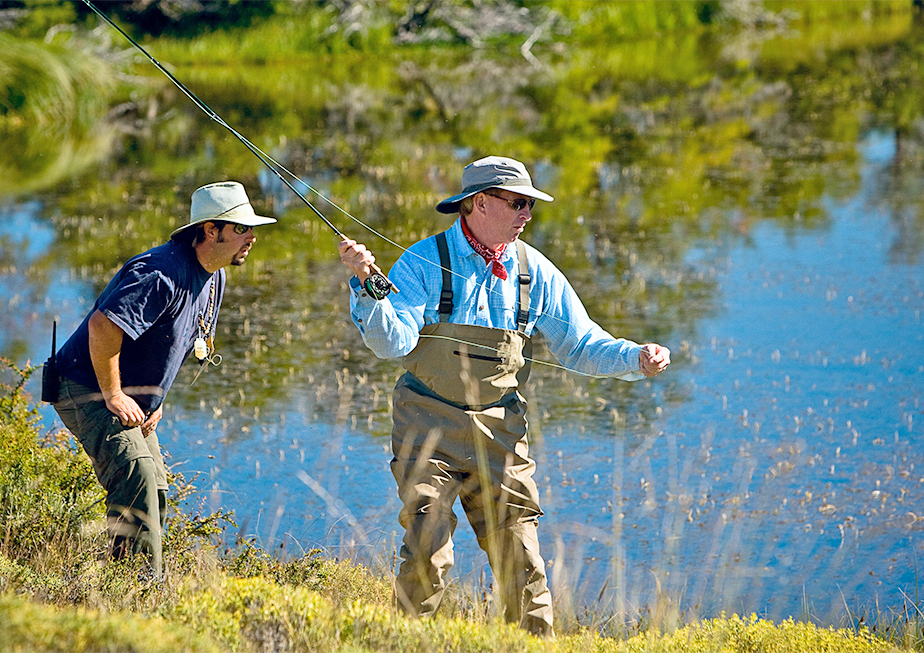
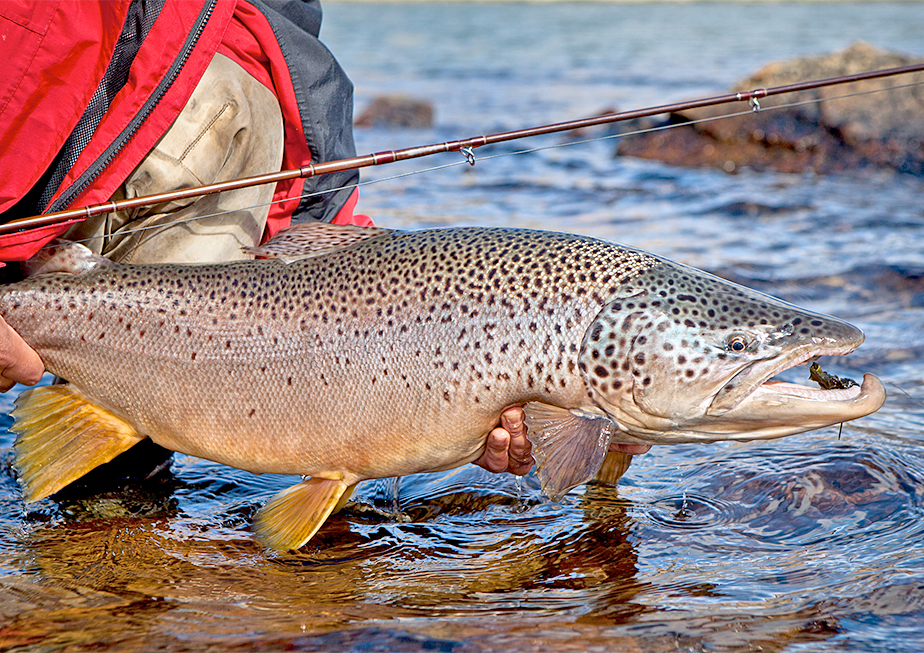
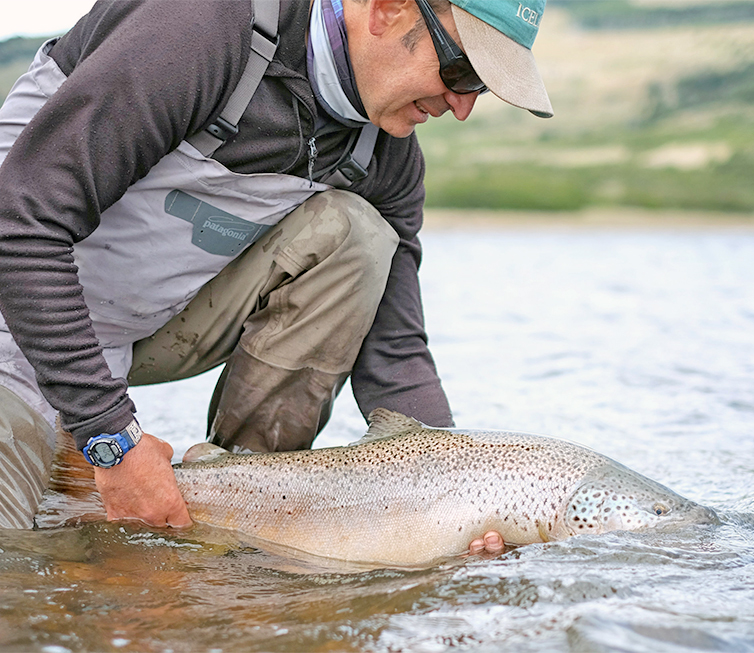
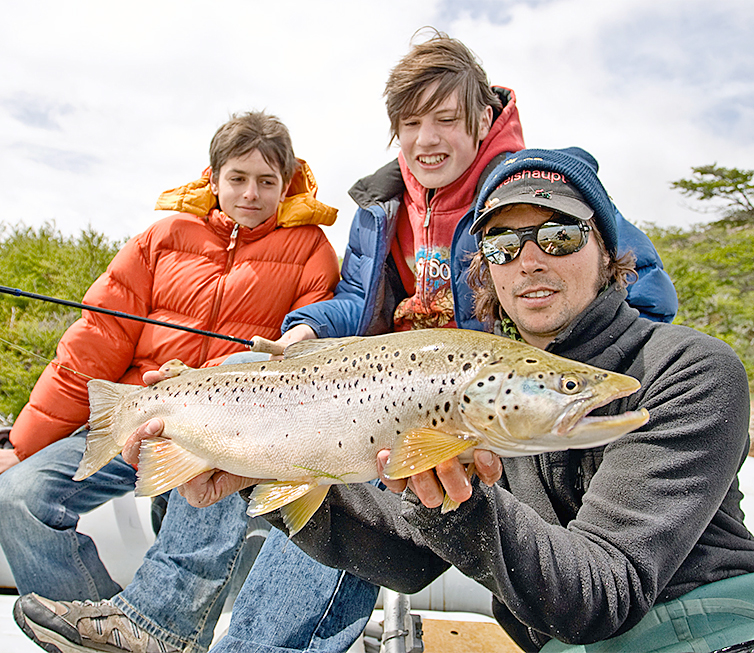
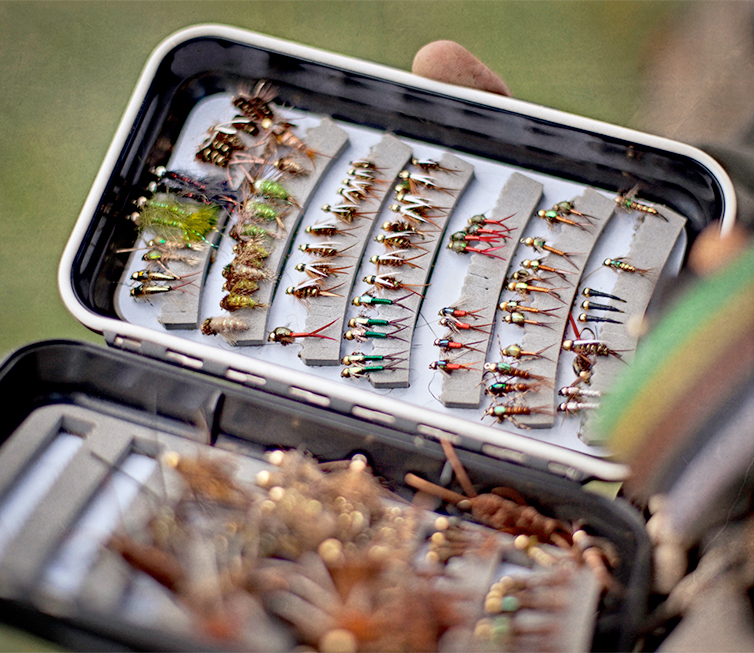
Typically, anglers fish upstream casting dry flies and nymphs. The river has excellent and regular hatches, and a healthy population of brown trout. A good fish weighs from 2 to 5 pounds, and often rise to take well-presented dries. The challenge here is to spot the largest fish within your casting range! After the morning’s fishing, you will enjoy a streamside lunch. The afternoon program includes a nearby spring creek, then a short walk back to the river to take advantage of the main hatch. Spring creeks require more patience and delicate work but they can be extremely rewarding. The hatches on the main river are always exciting, with stretches suddenly coming alive with fish feeding on the surface. When this happens, you want to be close to the largest fish and equipped with the right fly. On a recent summer afternoon our good friend Claudio hooked and landed four beautiful brown trout between 3 and 5 pounds, all on dries, in a little more than an hour.
Monday:
Today you'll fish down the valley towards the Andes. Here the river runs much larger in size due to a large tributary coming in from the north. We will fish below the junction. Here the river goes through a narrow canyon between some rocky banks; pools are very deep and slow, and are good holding spots for large trout. We will use streamers or nymphs until we see some action on top, then change to dries. You’ll fish each pool very carefully with a streamer or nymph, waiting for the big one to take. As soon as these fish grab the fly, they head to a big log or rock - you have to react fast in order to stop them, if you can.
As we fish upstream the river opens into beautiful runs with gravel beds. Here the rest of the group will join us for a stream-side lunch. This section of river has no access but by wading. We continue fishing, trying various dries and nymphs as we approach the evening hatch.
Tuesday:
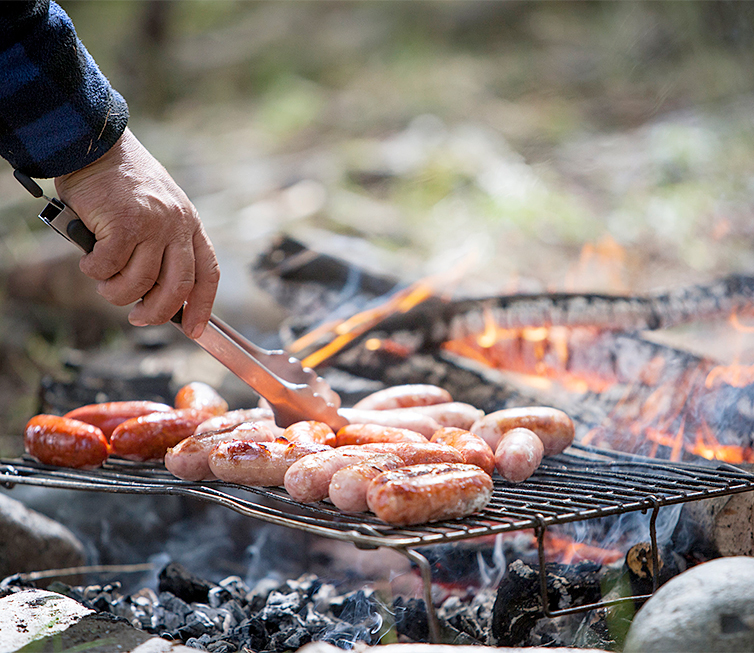
This day we will go to the headwaters. Here the river is smaller and has an interesting structure. We will start with nymphs, fishing pocket water and a few deeper holes, covering between a couple of hundred yards to no more than a mile of river during the morning. As the water temperature rises, we'll switch to a dry fly. Using a smaller rod, you should be able to land between 10 to 15 fish in a morning. In general, wading is easy and safe. The rivers have gravel bottoms and are not slippery. The water is very clear so it's easy to avoid large underwater logs or boulders. After the morning's fishing we'll join the group for an “asado”, the traditional Patagonia barbecue with lamb or slabs of beef attached to iron stakes thrust into the burning coals and rotated slowly. The charred meat is washed down with a robust Chilean red wine. Later, after the asado and some rest, you’ll get ready for more fishing. In the afternoon, our goal is to catch a large trout on a dry fly during the hatch. We'll go to a pool or run where we know there are larger trout. Once there and the fish start rising, you will excellent and regular hatches go after your trophy.
Wednesday:
This is a small water fishing day and we will travel to a small stream located in a valley south from the lodge, not more than 20 miles away. You’ll start with nymphs, slowly covering just a half a mile during the morning. The stream is narrow with grass overhanging deep undercut banks – this water holds strong brown trout in great numbers, many of which have rarely before seen a fly. After lunch, we'll fish further downstream where the river is larger, using hoppers cast close to the grassy banks. This valley is without doubt one of the most remote and beautiful corners of all Patagonia.
Thursday:
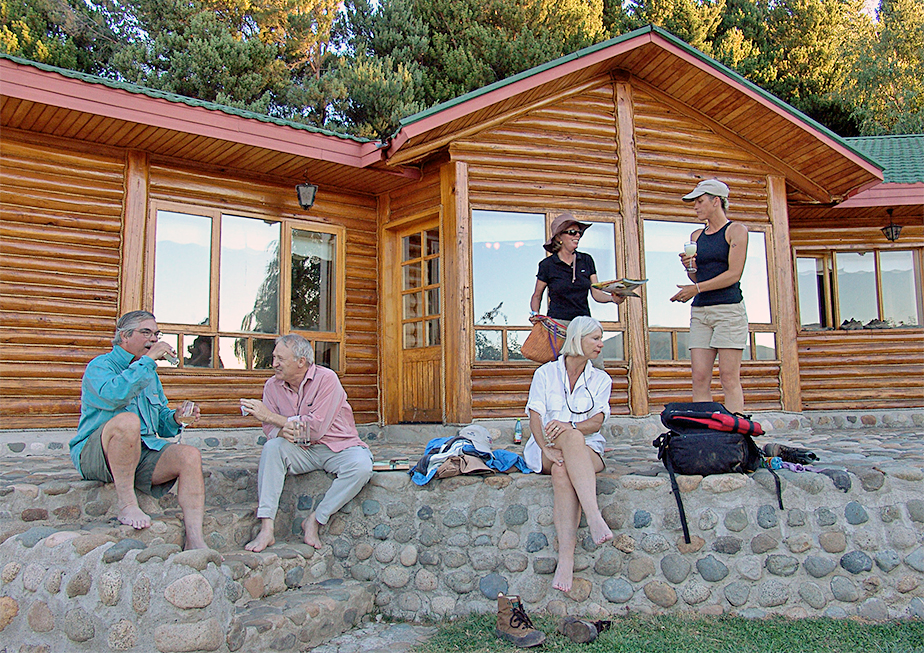
By now your guide will have shown you many of the secrets of our great waters. Like all previous days, you will fish a section of river you have not fished before, or return to one of your favorite spots. In the afternoon we will target the evening hatch on the main river, watching for the subtle rises that reveal larger trout. Later we’ll head back to the lodge for cocktails and a Patagonia- style lamb barbecue dinner.
Friday:
Enjoy a morning session of sight-fishing for large browns in the shallows of a nearby lake. Fish here are very active even on a bright and sunny day, allowing you to see fish as they come to your dry fly. Curiously, most fish come to your fly deliberately, slowly examining your offering with great attention before finally opening a large white mouth to inhale it. The excitement of this type of fishing has no parallel since you are able to watch all the action…the visual anticipation of the strike, and waiting for the fish to go back down with your fly is hard to take! The size of fish here is quite remarkable; this particular situation is very much like sight-fishing a large spring creek.
Saturday:
After breakfast and saying goodbye to your newfound friends, you will be driven to the Balmaceda Airport (BBA) to catch your plane back to Santiago in time for your connection home.
Magdalena Cabin:
For those wanting a bit more adventure, the lodge has a rustic/comfortable cabin tucked away in a remote corner of this enormous ranch, on a bluff overlooking many miles of the beautiful Magdalena Spring Creek. The creek is small and somewhat technical – demanding short, accurate casting to chunky brown trout in small pools and against cut banks – and there is more of it than could be fished in a week. As well, there are a few nearby lakes, most of which are shallow and often offer sight-fishing to large, cruising fish.
The lodge can take integral groups of up to 4 anglers at a time to the Magdalena Camp, arriving one morning and fishing all day, overnighting in the cabin, then fishing all the following day before returning to the main lodge. The trip is strictly optional, and guests decide after they arrive to the lodge if they would like to do it during the week.
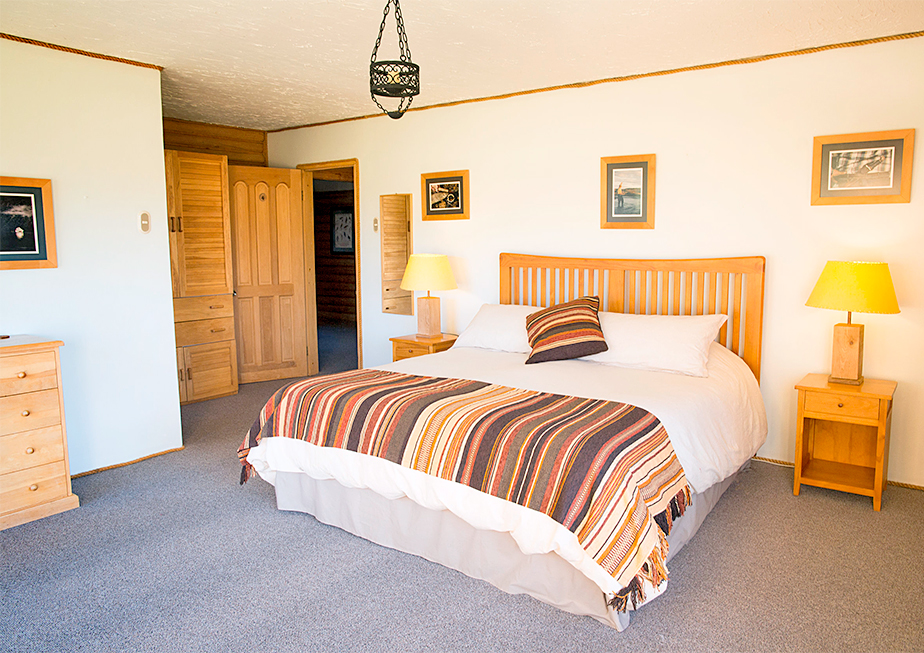
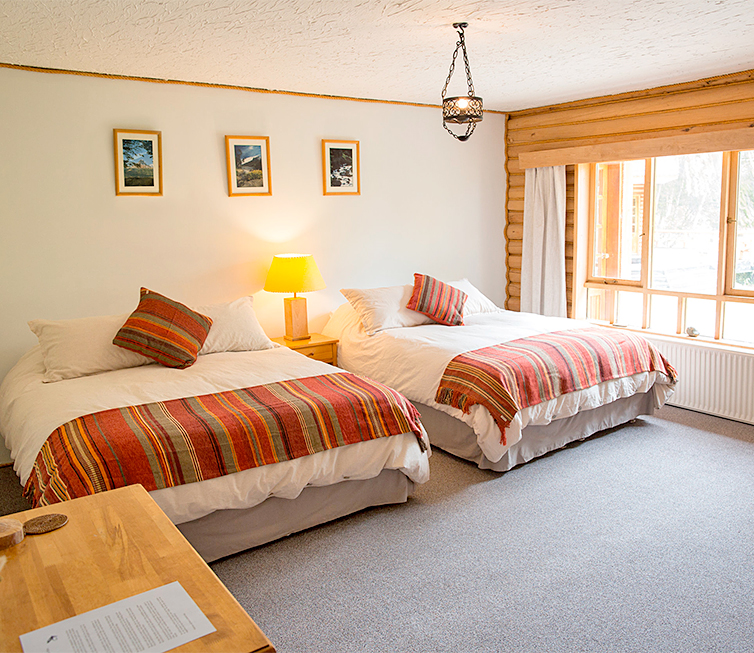
The cabin has two bedrooms for 4 guests, each bedroom having two beds, and all four guests share a single bathroom, including a hot water shower. There is no electricity (though there are two battery packs for those needing to use CPAP machines at night), and no internet. There is a wood stove in case the weather turns cool.