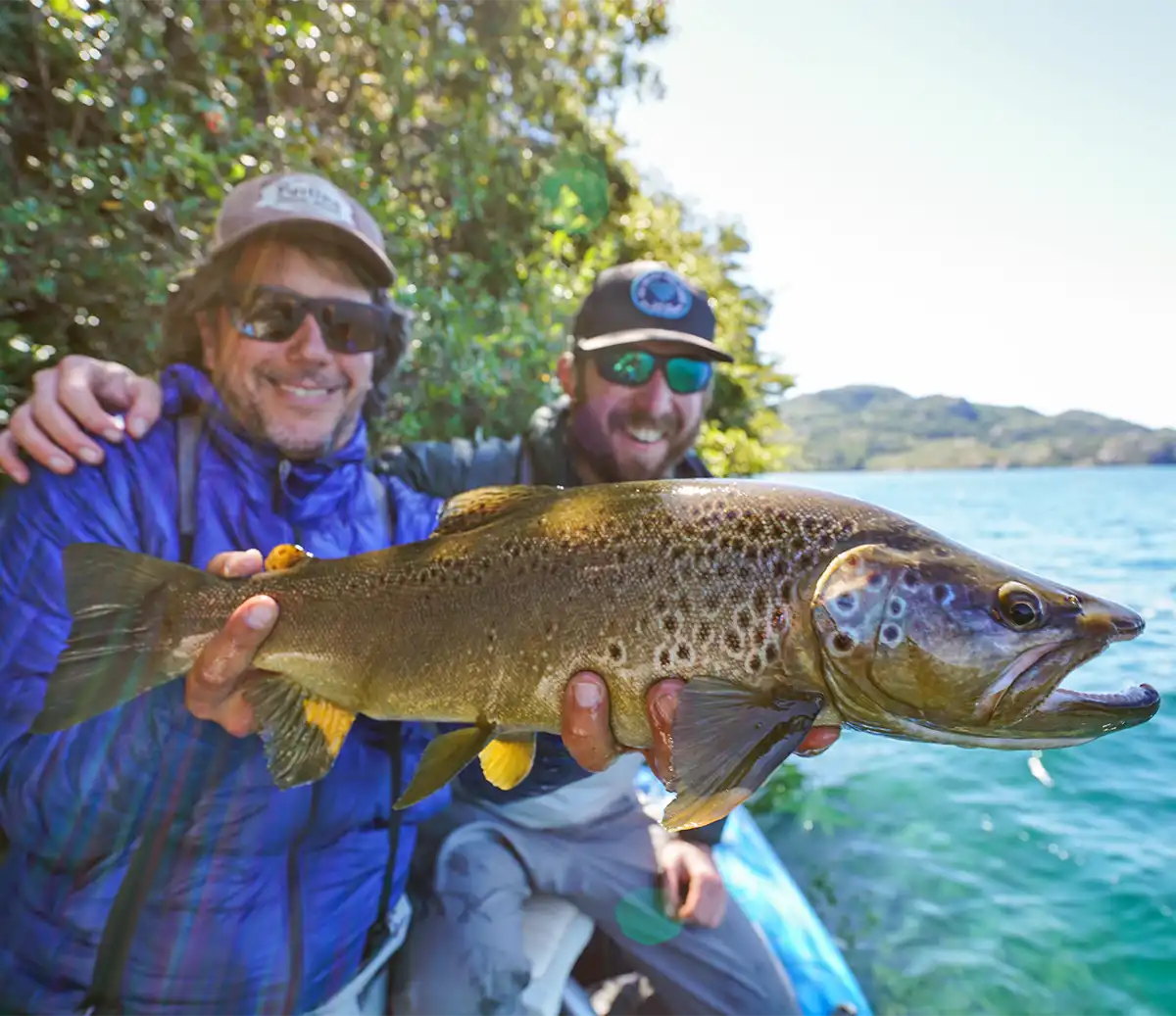
With a multitude of spring creeks, small to medium sized freestone rivers, and trophy still waters, as well as a mix of rainbow, brown, and brook trout all within a relatively small radius, anglers have at their disposal far more options than they could experience in a two or even three-week stay. Guests are encouraged to communicate with the head guide and manager when planning each day of fishing. Generally speaking, the majority of fish caught are rainbows and the larger fish are brown trout.
The Rivers:
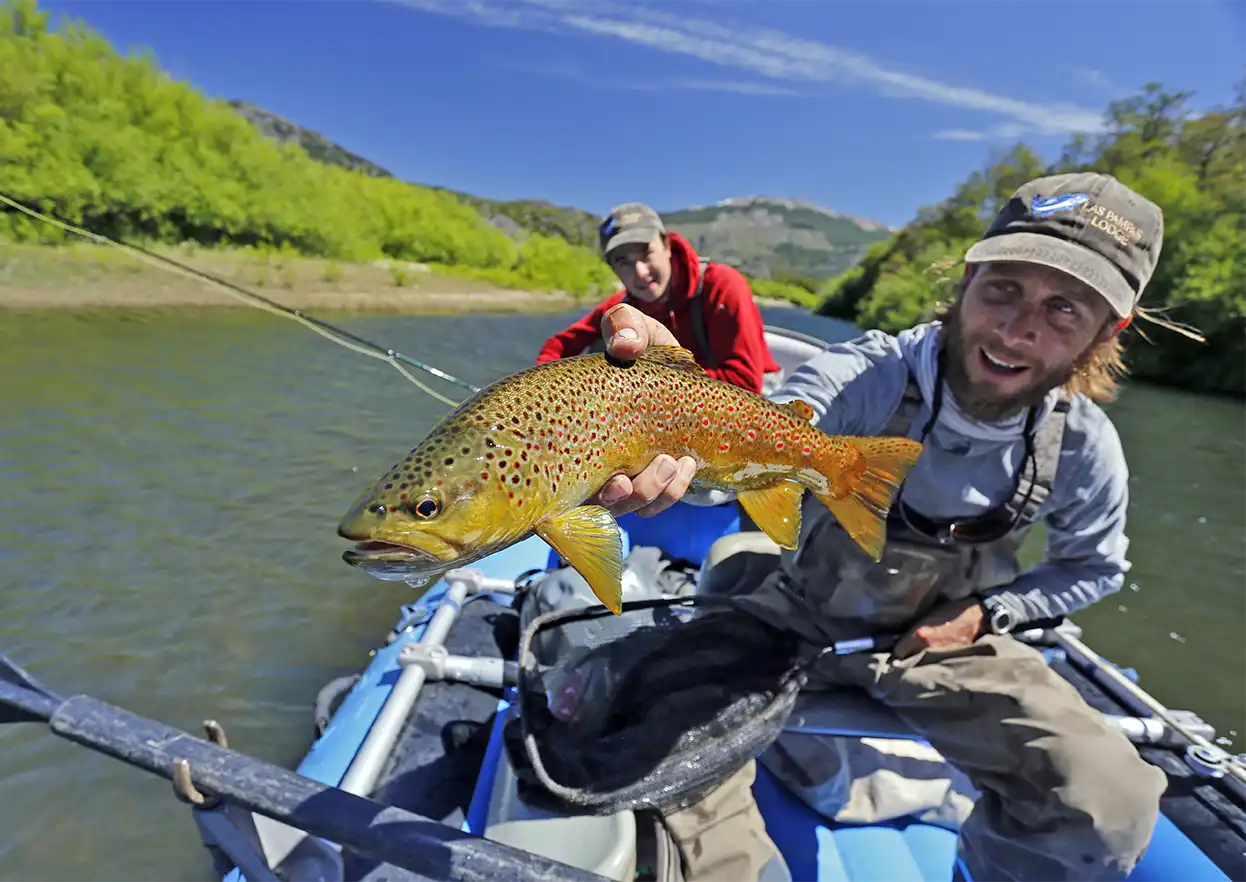
The Rio Pico begins as a small willow lined spring creek and grows quickly as additional spring creeks and small freestone rivers add to its volume. As the river flows westward, it breaks into multiple channels that flow swiftly through open pasturelands. Below the channels the Pico is joined by two medium-size freestones — first by the Rio Pampas and further downstream by the Rio Nilson. The next 10 miles of the Pico offer abundant and sometimes large rainbows and fewer but larger browns that can surpass the 27-inch mark. Although these sections of the river are public, they are very hard to access, requiring two things that Las Pampas has: permission from local landowners to drive to the river on their property and keys to locked gates.
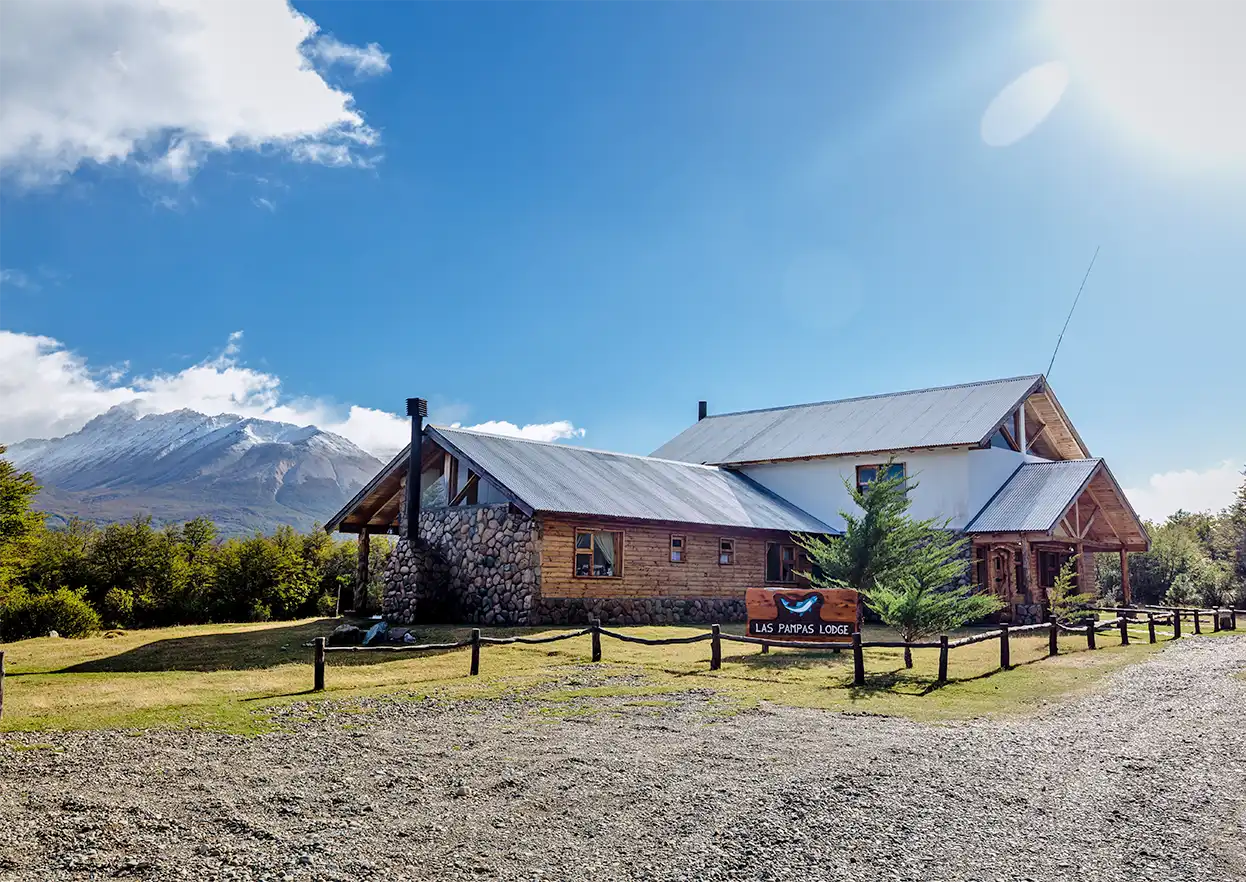
All in all, the Pico offers more than 25 miles of water, five distinct floatable sections, and endless wade fishing opportunities before crossing into Chile on its way west through the Andes. Upper, middle, and low reaches are accessed very easily from Las Pampas Lodge. In addition to the much-touted Rio Pico, we fish other systems, such as the Rio Pampas and the Rio Nilson. These are medium-sized freestone rivers where anglers typically see steady action, sight casting to rainbows and browns in the 10 to 20-inch class. Both streams offer miles of fantastic walk and wade opportunities.
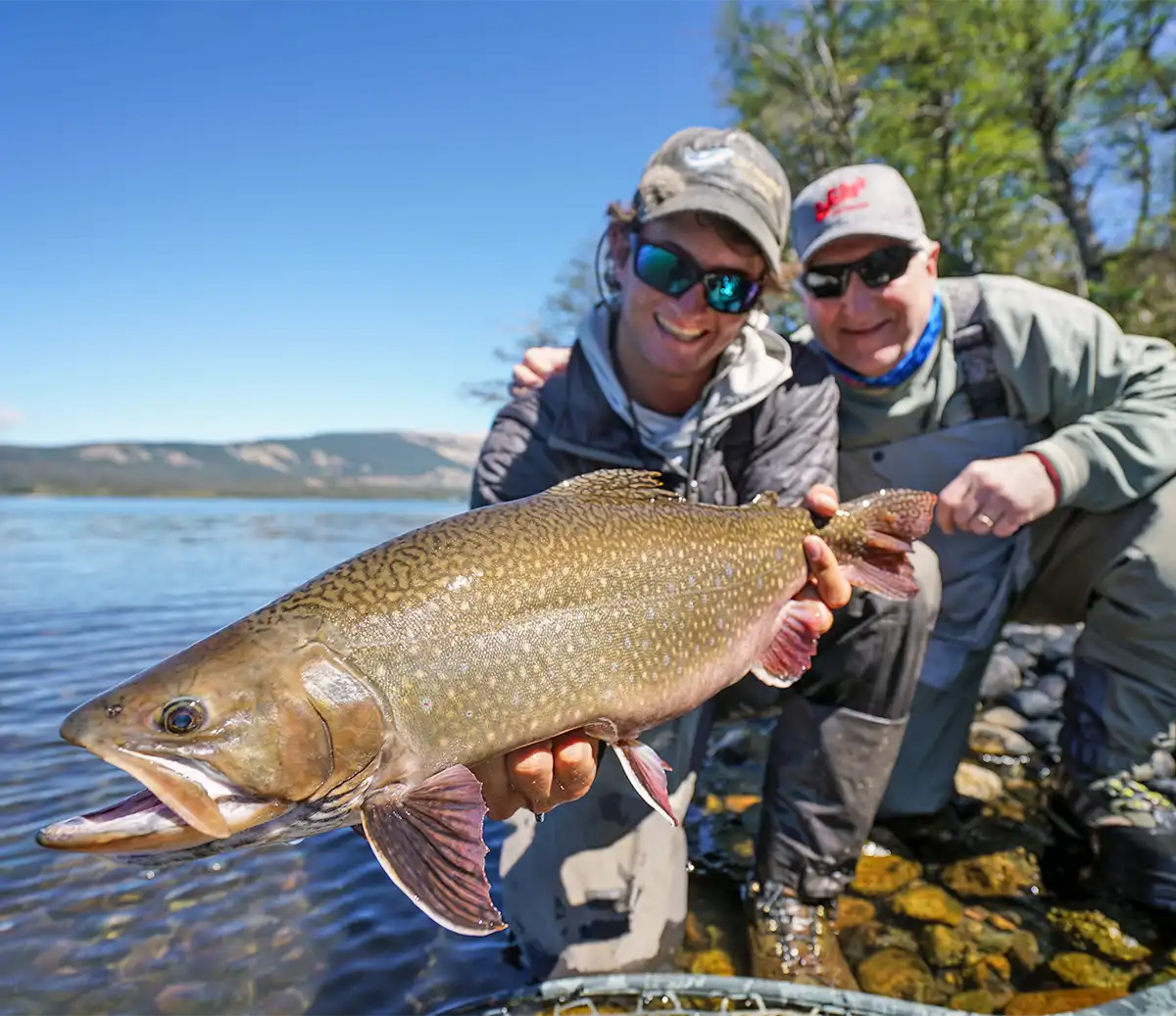
Included in Las Pampas’ never ending nearby offerings is the mighty Rio Corcovado — a large freestone river with gin clear water pouring out of the huge Lake Vinter. “The Corco” — as locals call it — holds the healthiest trophy brook trout in the world and also provides anglers the possibility of catching the biggest rainbow trout in all Argentina rivers. These hogs sit behind the spawning trophy brookies and feed on minnows and eggs. Every angler should fish this unique river at least once in his or her lifetime.
The Spring Creeks:
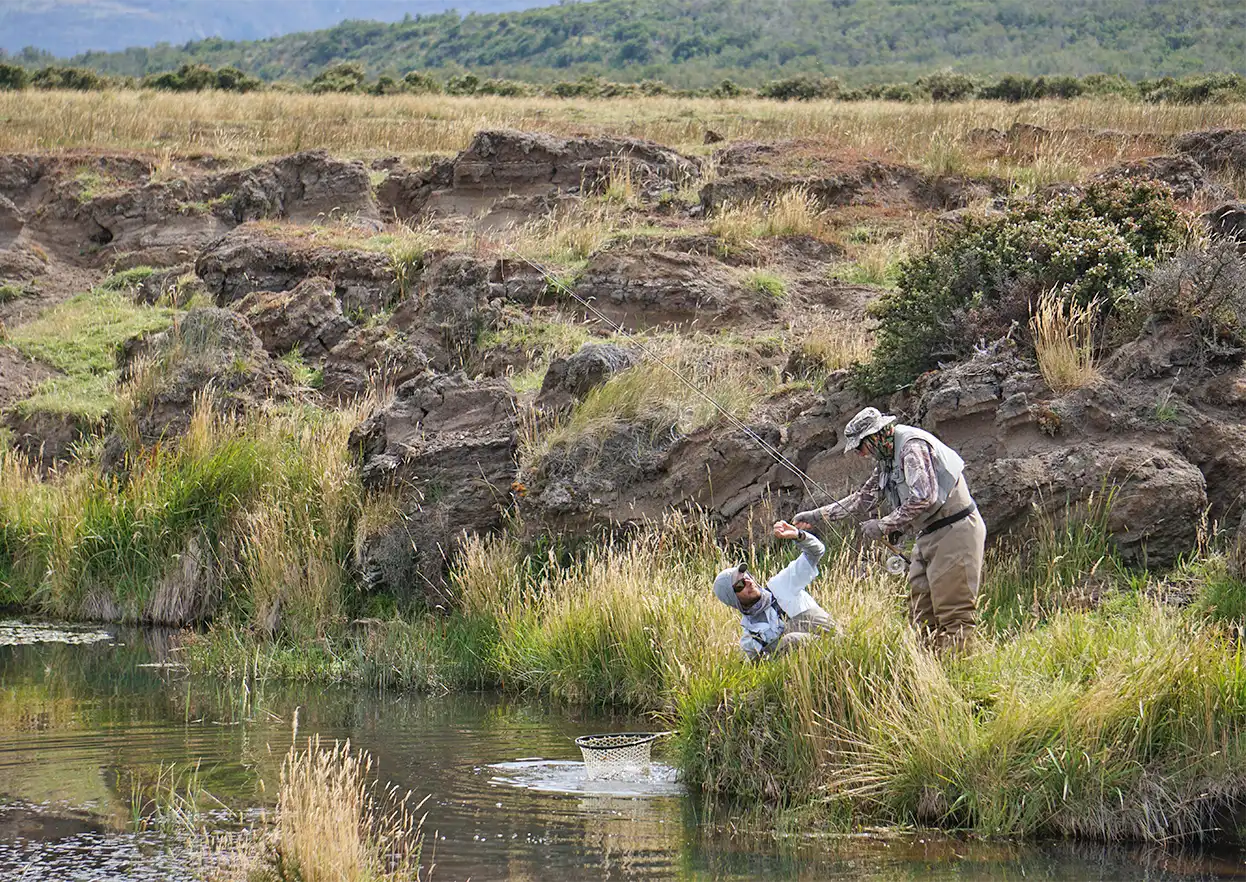
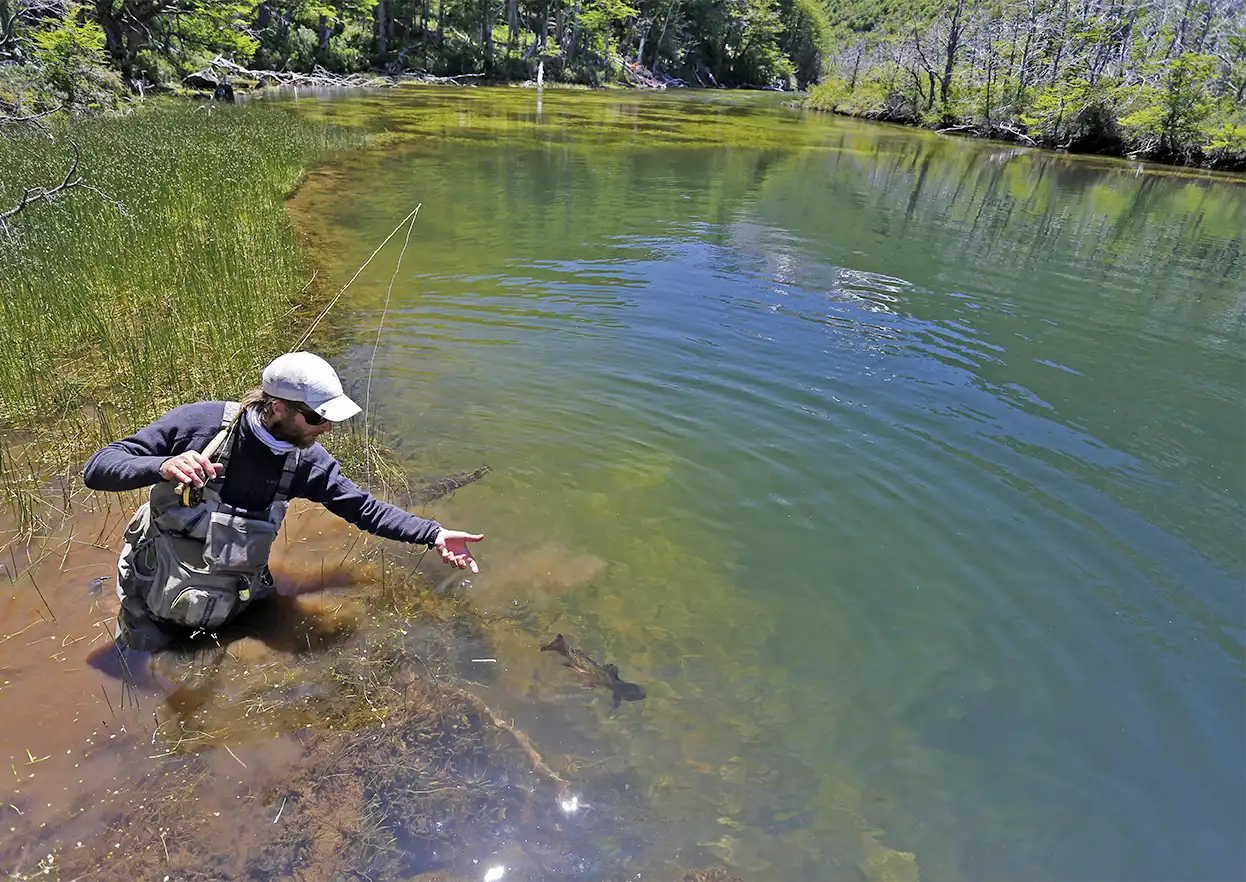
The Rio Pico watershed is home to over a dozen fantastic spring creeks, all of which ultimately feed into the Pico. Varying greatly in size, length, depth, and current speed, each creek presents its own set of angling challenges. The spring creek Terremoto (earth quake in Spanish) is a slow moving, highly technical fishery that puts out some impressive and deep-bodied brown trout.
For lovers of small and at times technical waters, these often overlooked gems have a great deal to offer. Most of these intimate spring creeks hold surprising numbers of good-sized rainbows and trophy browns that are all too willing to rise to a well-presented dry fly. They are one of the secret gems of Las Pampas Lodge.
The Still Waters:
Despite the wide array of river, stream and spring creek fishing options, the Rio Pico area is best known to locals for a series of five highly productive lakes scattered throughout the region’s rugged hills. Though each lake has its own nuances, they all share similar shorelines dominated by rocky outcroppings, thick vegetation, and monster trophy fish feeding on any “unidentified flying objects” that hits the water near them.
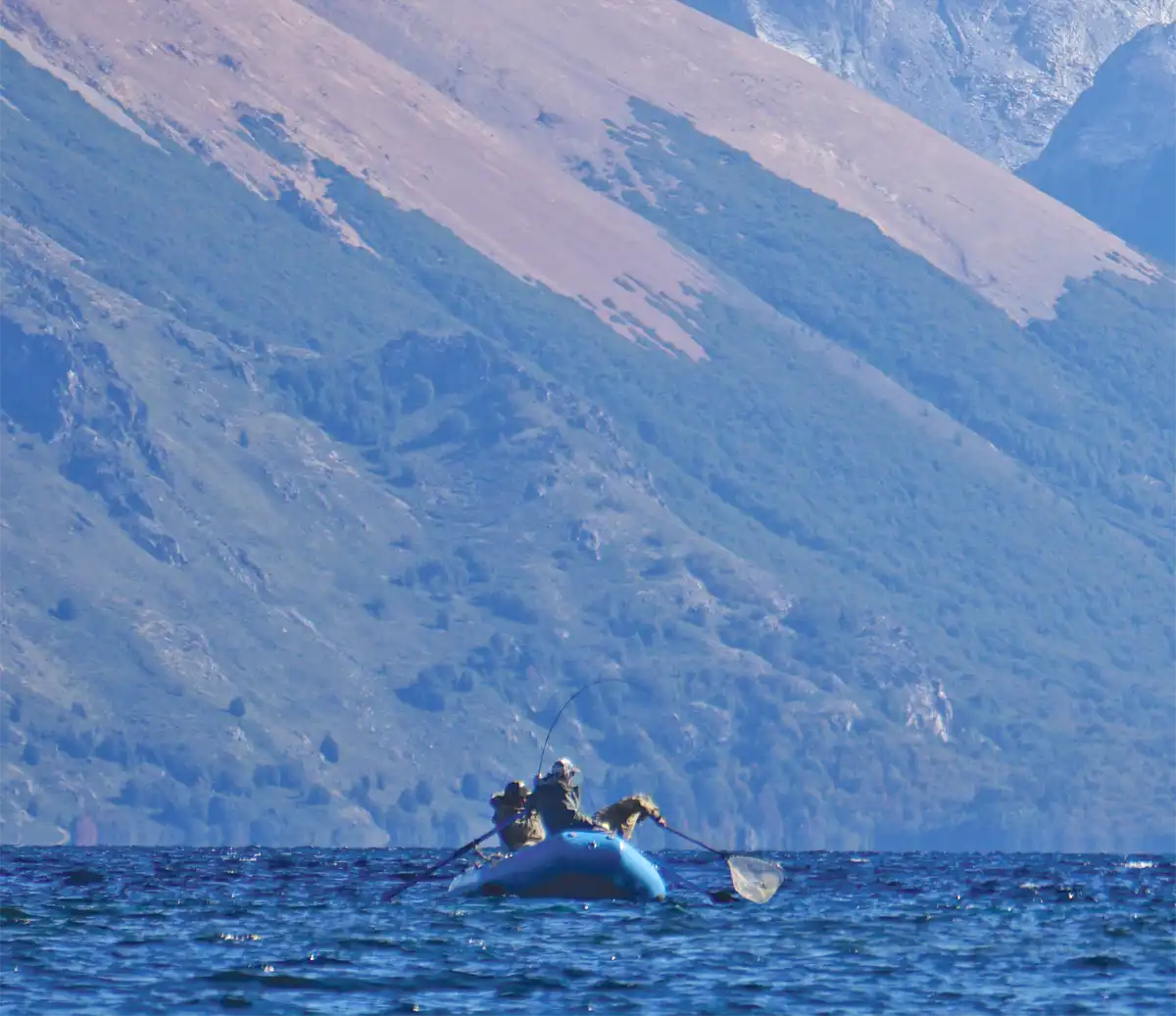
Typically, the Las Pampas guides will row their anglers just off the shorelines enabling their guests to both blind cast and sight cast large dry flies towards the banks. While many northern hemisphere anglers immediately dismiss the thought of lake fishing, we feel it remiss to visit this region without giving it a go.
Not only do these lakes produce the region’s largest fish, but they also can provide very exciting fishing complete with crushing topwater takes and memorable sight fishing opportunities.
Casting a big foam fly from a raft to a rising fish with the potential of having a 20 to 28- inch brown or rainbow come up and suck it in brings a whole new experience of lake fishing.
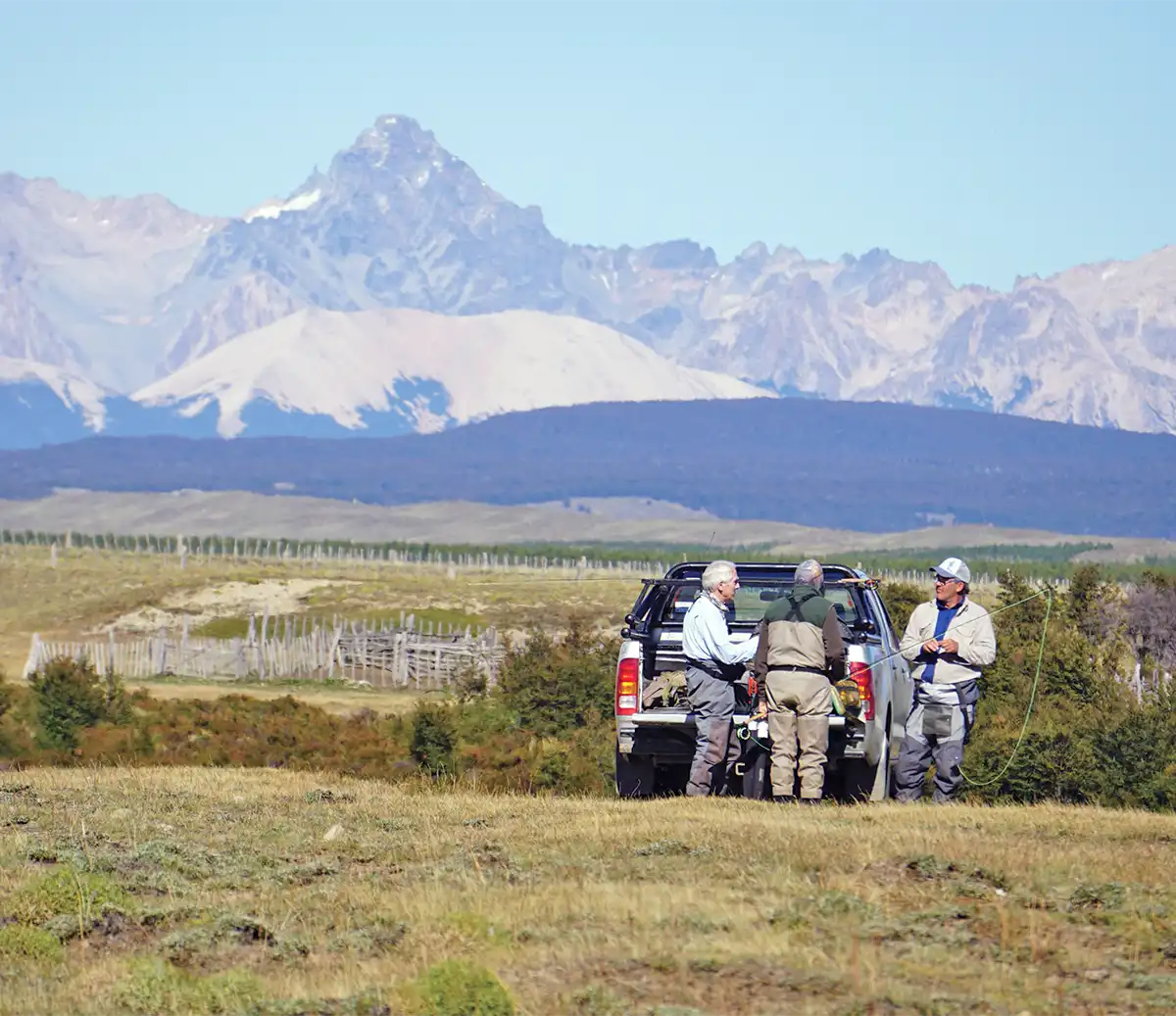
Typically, anglers and guides leave the lodge in the morning after a hearty breakfast in fully-equipped 4x4 trucks loaded with inflatable NRS rafts with specially-designed fishing frames.
The majority of the drive is spent on rough back roads that are interesting and adventuresome in their own right, before coming back to the lodge late in the afternoon after spending the day on the water.
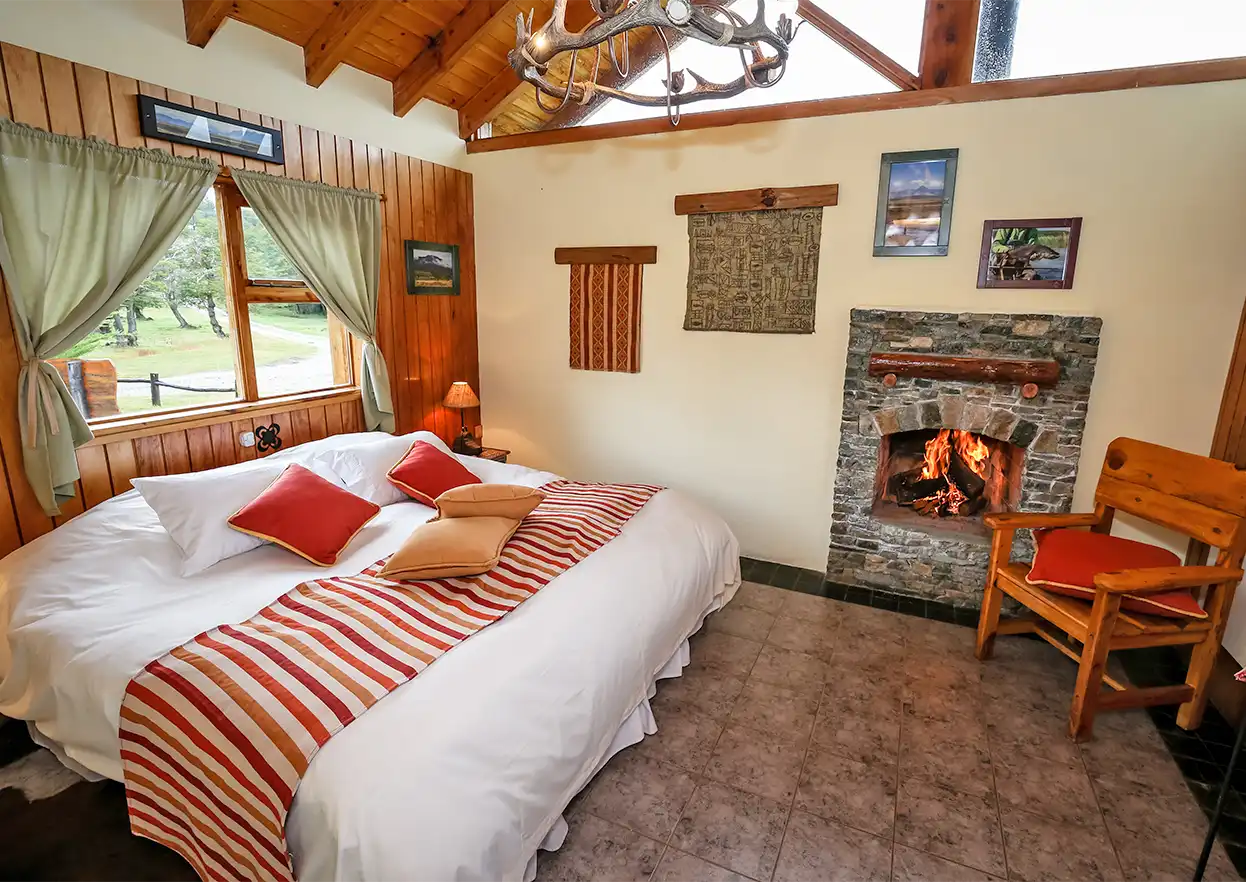
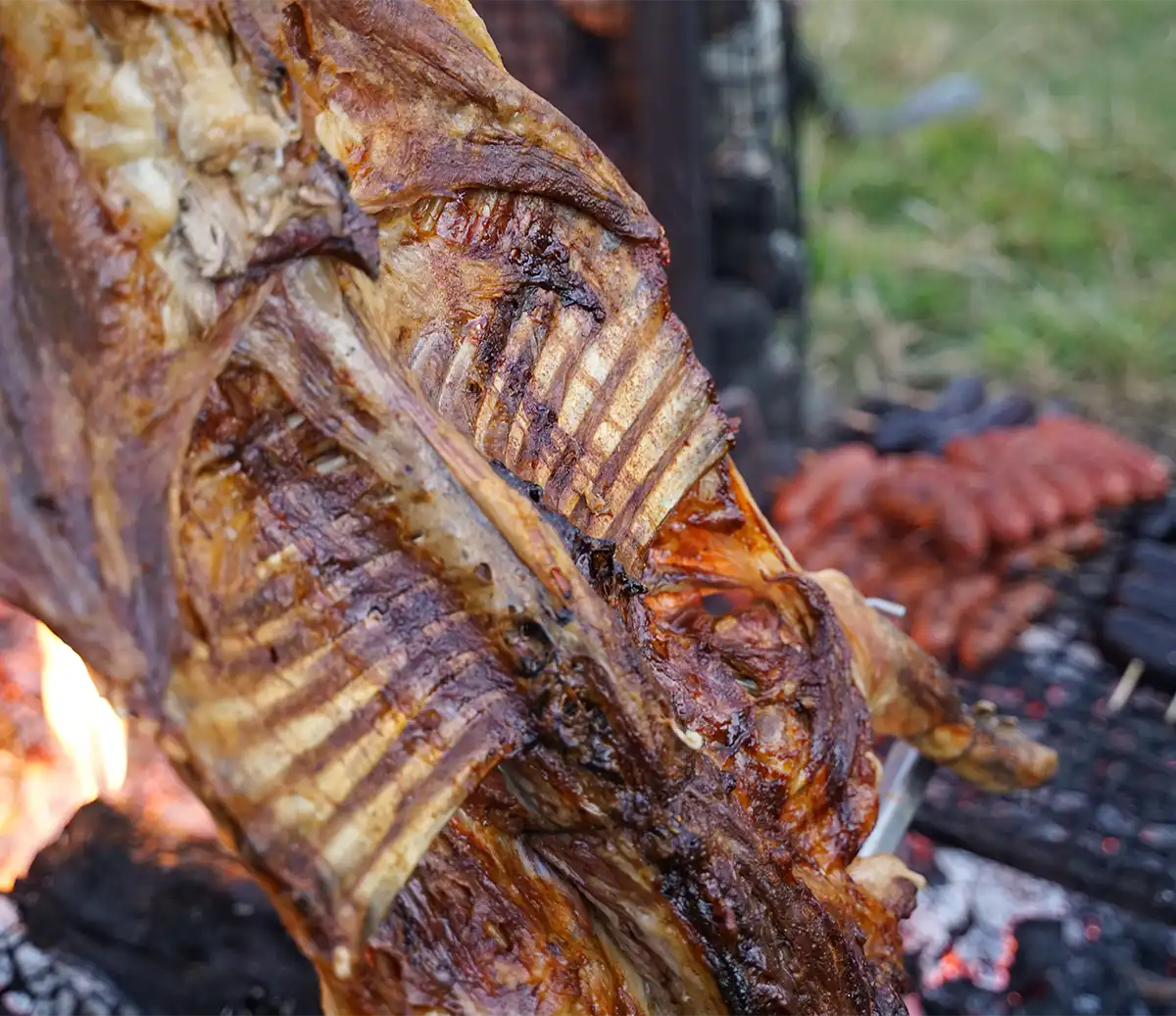
Lunch is taken on the fly on the water or in the field. On return to the lodge, after a full day of fishing, anglers will have plenty of time to clean up, enjoy a wonderful cocktail hour with hors d'oeuvre, followed by a delicious dinner served with fine Argentina varietals.
A Fishing Day at Las Pampas:
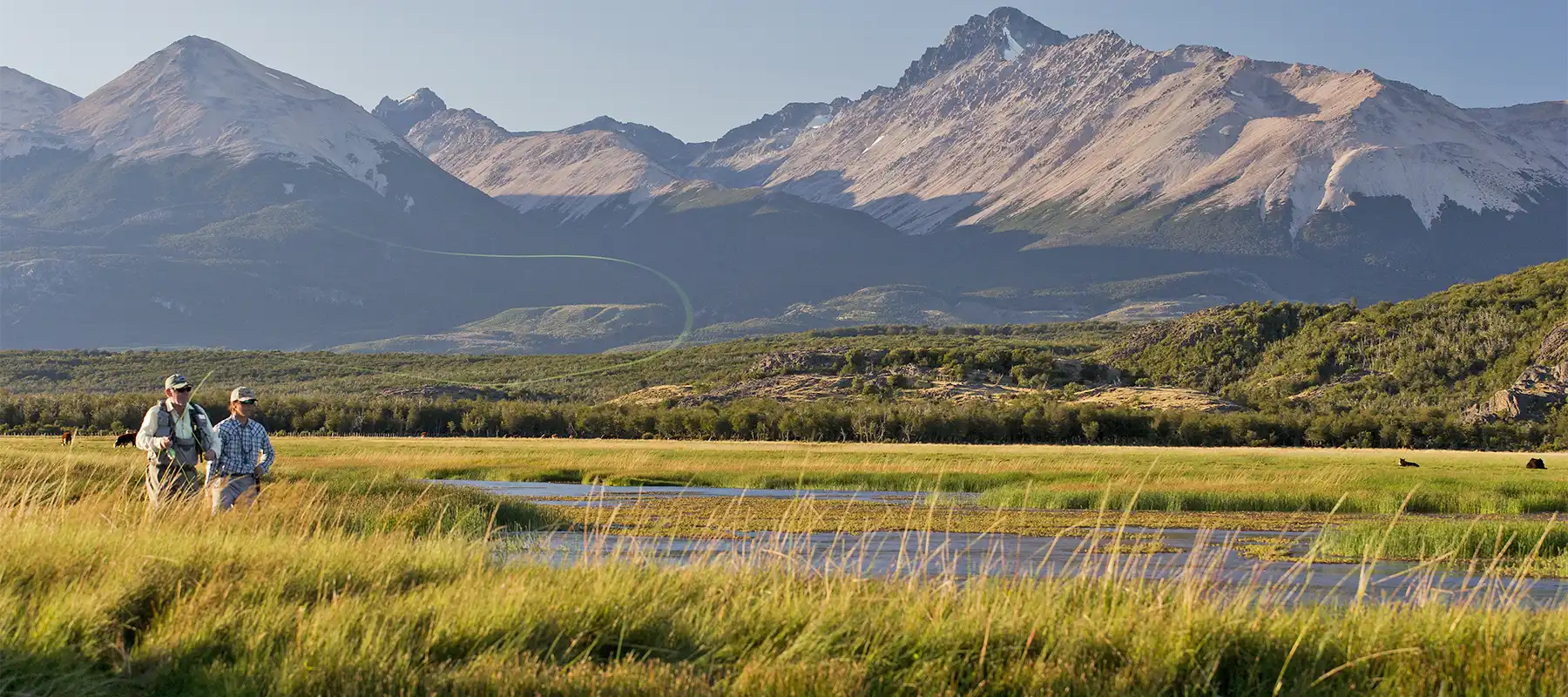
Today, we go to “Africa” a maze of spring creek channels of the Rio Pico in a massive valley, surrounded by arid steppes and snow-peaked mountains. The valley floor is covered by thousands of braided spring creek channels, aquatic vegetation and sweet grass - loaded with browns and rainbows eating Caddis or whatever other aquatic insect is hatching. A short drive (5 minutes) from the Las Pampas Lodge has us driving through a locked gate and entering Nuñez’s 7,000 acre cattle ranch where our fishery awaits. It’s an amazing resource of small watersight fishing to free rising wild trout, exclusive to Las Pampas guests. My first good shot at an eating fish, lands a 23 inch rainbow taken on a Missing Link - thanks Mike Mercer! It’s all I can do to navigate the fish through a maze of obstacles as she leaps and runs in every direction – all seemingly at once. Marcel, fishing with Anka, lands a fat brown that is easily 23 inches just upstream from me, minutes after my bow is released. We sneak along the banks, crawl on our bellies and wade between channels sight fishing to sipping trout the next couple hours, (we each have our own guide) until the hatch finally quiets and the fish go rest. It should be noted that this is not tiny spring creek fishing in a channel that is three feet wide, five feet deep (which is not that uncommon in Patagonia). This water is wide, up to and over 40 feet in width in some spots and with good current, cold water and hard fighting fish, that won’t suffer being lined or a bonked on the head by a sloppy cast. “Africa” is classic spring creek fishing – the real deal and a lot of fun!
We meet up with Rob and Ted that have been floating the main Pico, once the myriad of braided spring creek channels combines to form a single channel and enjoy a quick and delicious lunch steam side, then Rob and Ted head to Africa and we jump in the raft with Martin to continue the Rio Pico float Ted and Rob were on this morning. We have about 1.5 hours to fish, before we have to bail on the fishing, head back to Las Pampas, grab our gear and head back to Chile. The border crossing closes at 6:00 p.m. As we are getting into the raft, a fat 20 inch brown cruises by us, Marcel casts his Fat Albert in front of it and it eats - this is going to be good! This is super slow water, barely moving and bordered by a thick wall of willows that are partially submerged. We are actually fishing up stream, blown by the wind. Marcel and I cast a Fat Albert to the submerged willows, back bays, weed patches and cut banks and absolutely wail on the fish - all on dries, great takes, nothing less than 19 inches and fish up to 23 inches - amazing. I lose count of how many eats we have and fish we land, but it was non-stop action for just better than hour and Marcel and I are slack-jawed over the quality of the fishing and the fish! – Pat Pendergast