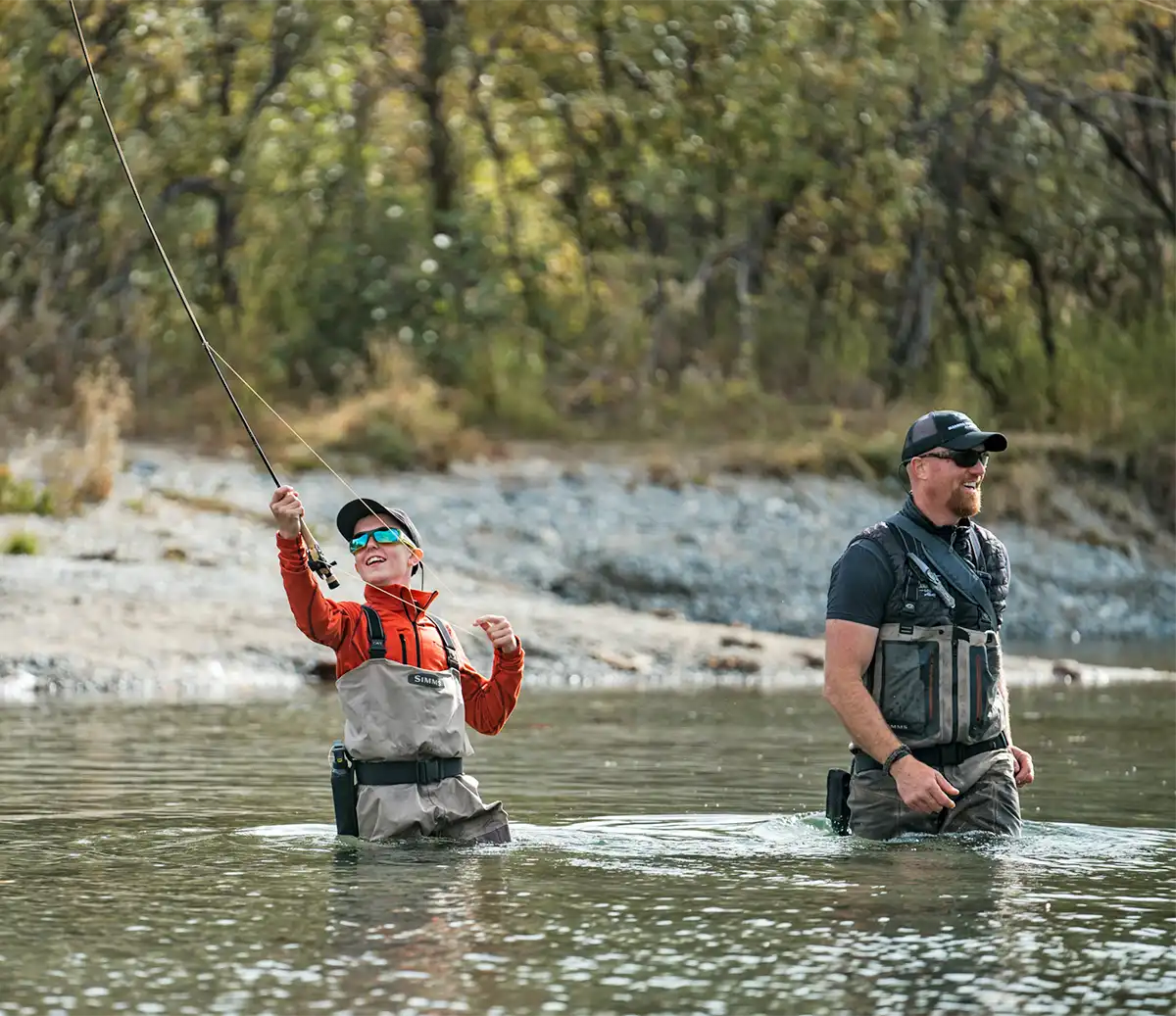
The fishing season at Iliamna River Lodge runs from early June through the end of September. While predicting the weather in Alaska is a highly inexact science, there are some general trends that normally occur. Typically, June is a warm month that is getting warmer, with some short rain storms blowing through. July continues the trend – it is often the warmest month of the short season – and as with June, the days are extremely long, often with little to no actual darkness during the night hours. In August the days begin to shorten a bit, normally still with warm days but cooler evenings. Septembers are usually cool during the day and cold at night. If it seems there were an awful lot of “typically’s”, “normally’s”, “often’s”, and “usually’s” in the last few sentences…well…welcome to weather reports in the Alaskan bush!
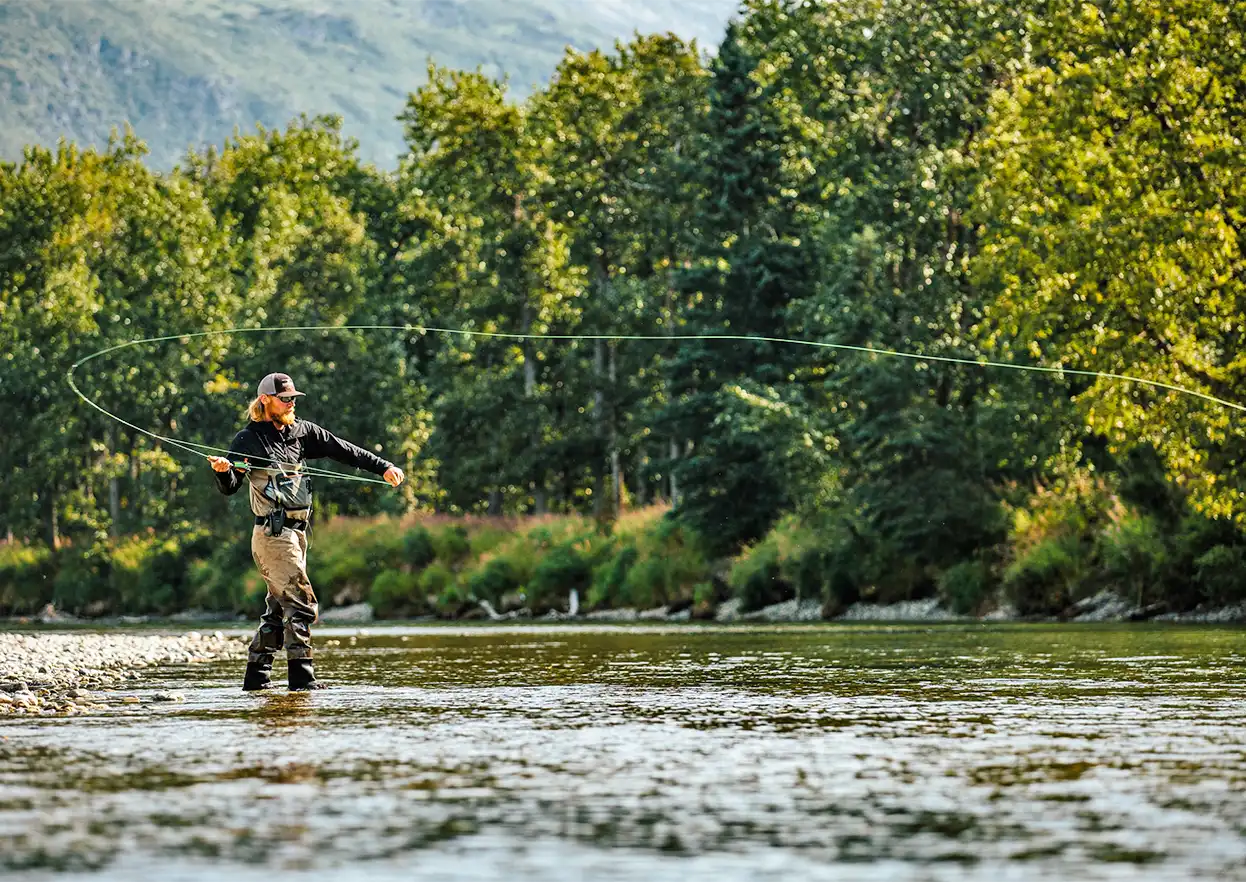
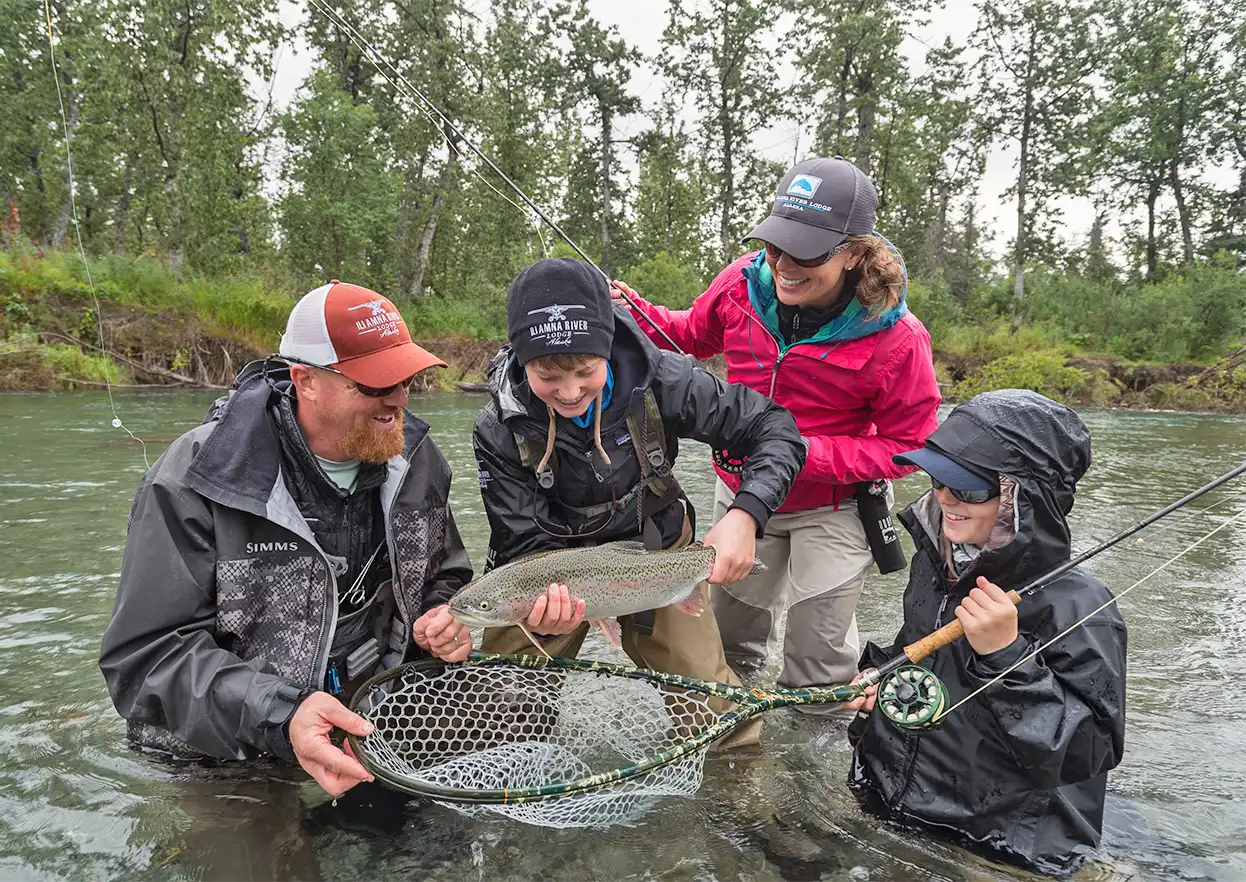
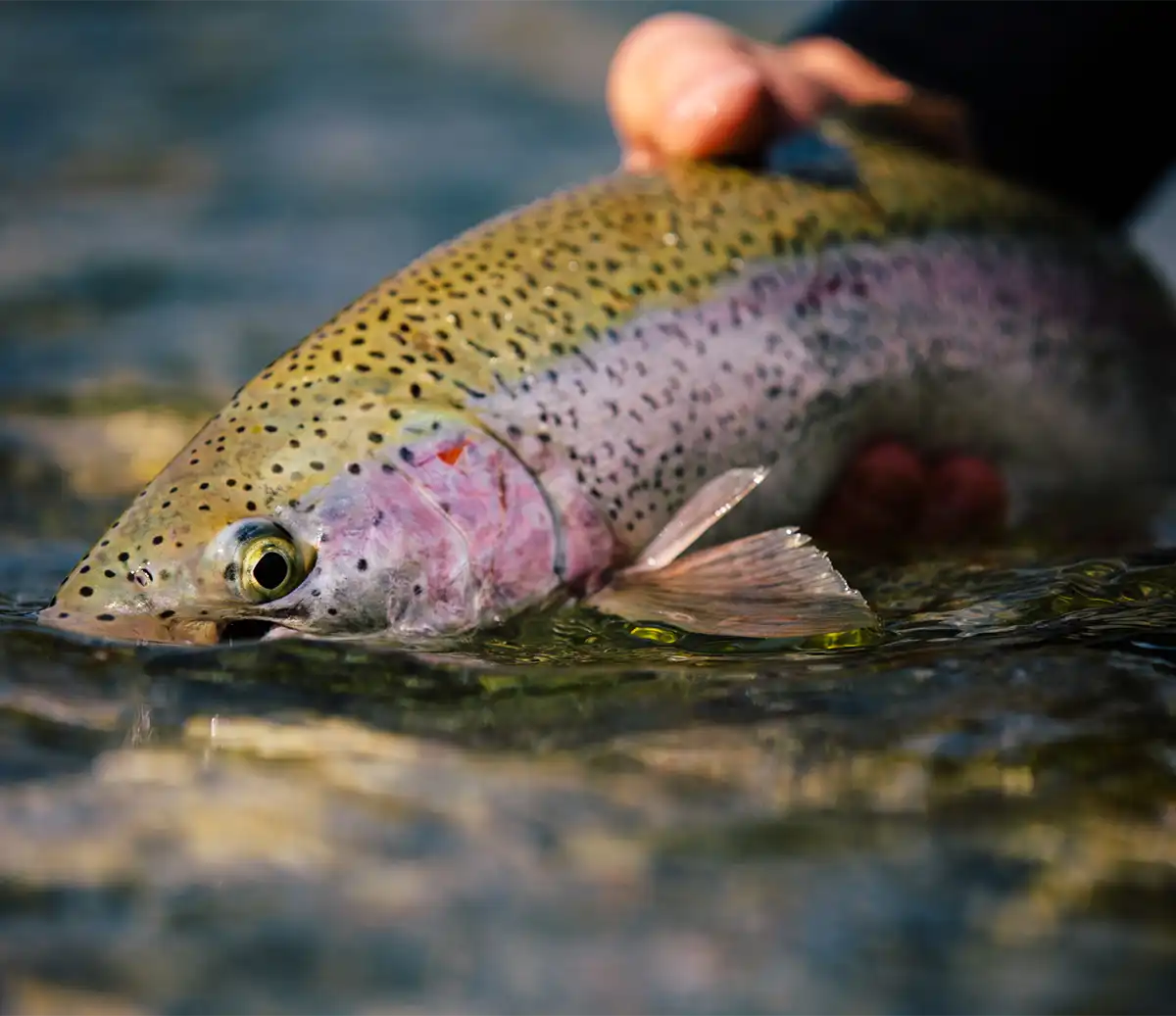
June and early July is a great time for those who love to swing streamers for big trout, as well as offering some limited dry fly fishing. There are no salmon around yet, and often not many dolly varden or arctic char, either; what you have is some rivers with resident trout, as well as small concentrations of big rainbows that have ganged up in the inlet and outlet areas of various lakes, gorging on the small sockeye salmon fry as they enter and exit the lake. Every trout in the region is fine-tuned to this baitfish “smolt” migration, and they are waiting and ready, feeding voraciously. We love to fish weighted streamers on both floating and sinking tip lines this time of year, as the trout are often busting the bait on or near the surface - watch for the arctic terns diving on the bait balls. And because they are surface-conscience, skated mouse patterns can also be productive. As well, there are a few streams that have resident trout and some limited insect hatches, offering the relatively rare option to fish dry flies to bib Alaskan rainbows. Typically, around the first week of July, massive runs of sockeyes begin entering all of the rivers. These mint-bright salmon – averaging 6 - 9 pounds – are tremendous gamefish on a 7 or even 8 weight outfit, and there are literally so many salmon, they disrupt the trout fishing! The trout don’t go away, however, and for those who like warm weather, non-stop action for sockeyes and some pretty good fishing for dolly varden and rainbows, this is a great part of the season. As with June, the trout are best fished with 6 or 7 weight outfits, as these make throwing weighted streamers relatively effortless.
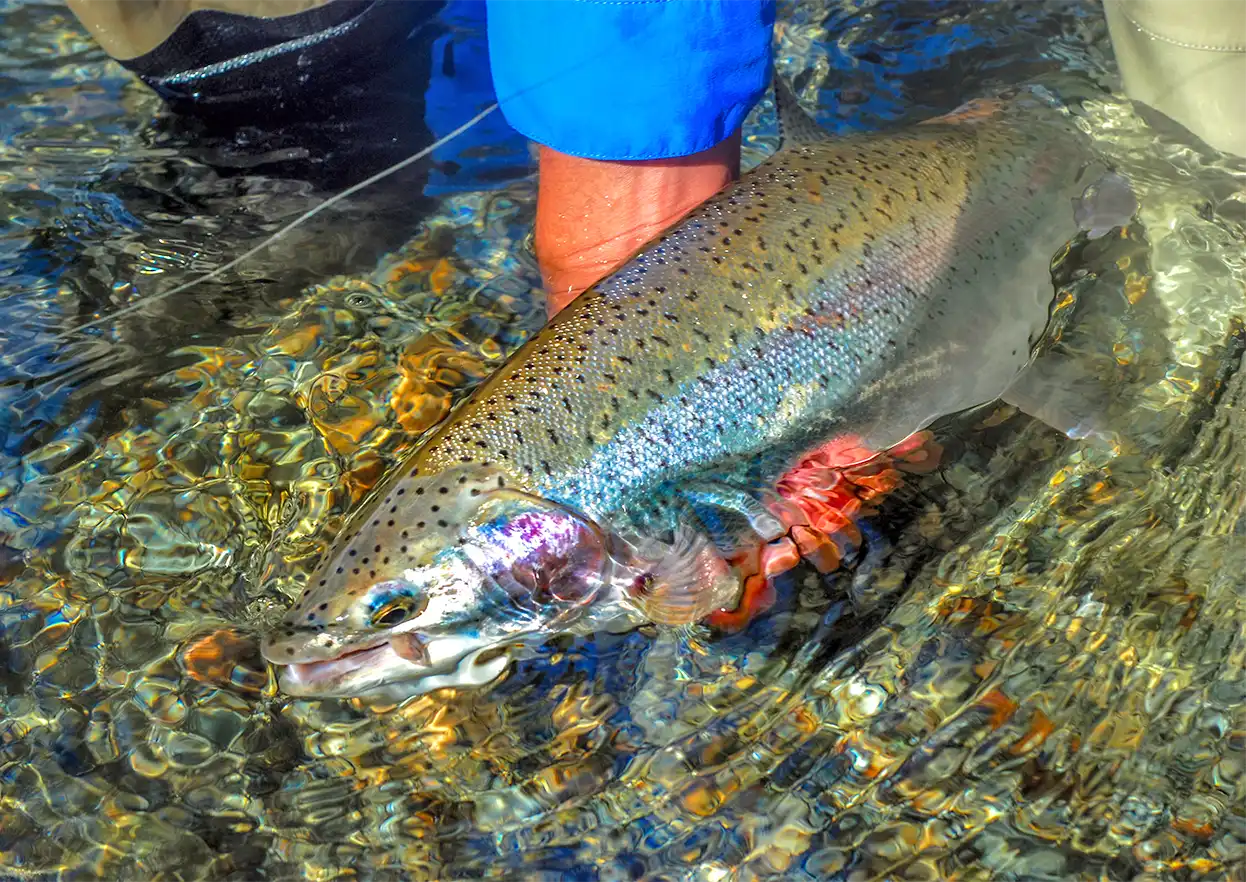
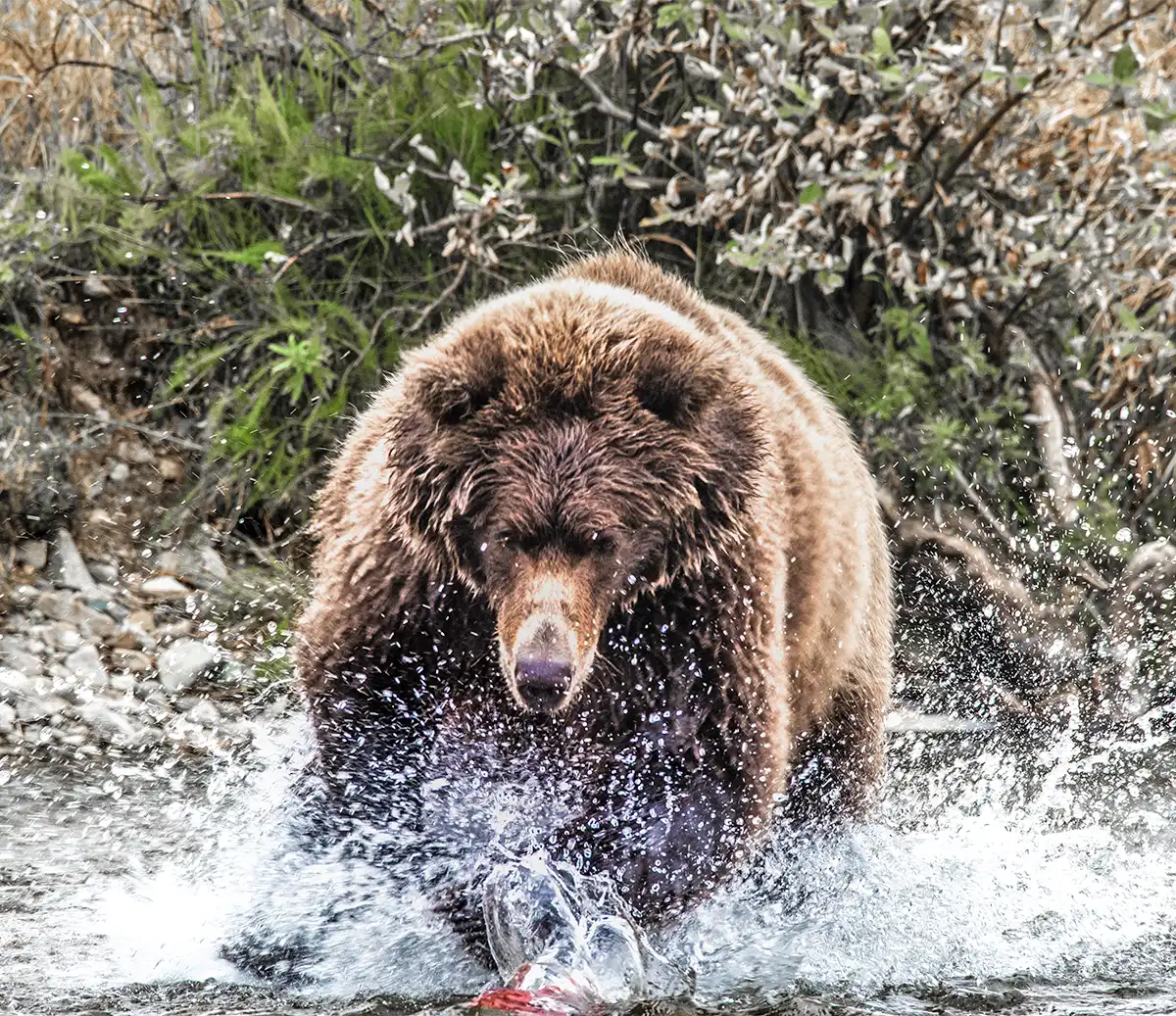
By the very end of July and the first of August, the hundreds of thousands of sockeye salmon begin to actively spawn; overnight, these fish that had spent the past few weeks disrupting the trout fishing suddenly become the darlings of the angler’s world. Big lake rainbows immediately flood the streams, joining their native river brethren hovering behind egg-laying salmon, gobbling the endless conveyor belt of free-floating salmon eggs. For the next 6 - 8 weeks this gluttony continues unabated; trout that weighed in at three pounds in June, might tip the scales at five, come September. Trophy fish that started the game at six pounds could reach the magic 10-pound mark. Inches don’t always mean a lot, this time of year, as trout are often obscenely and disproportionately obese; fish sizes are simply guessed in pounds. While streamers are still fairly effective, dead-drifting single egg patterns dominate the fishing, in all the rivers. As the warmer August days begin to give way to the cool autumn temperatures of September, not a lot changes (except the trout, dolly varden and arctic char continue to pack on the protein pounds). In fact, the egg fishing remains productive nearly through the end of the season, but there is one last variable that occurs as the salmon all die, and sink to the bottom in massive aquatic graves.
As in all of nature, nothing goes to waste…here, the rainbows, feeling the urgency of a long winter spent in lethargy beneath the ice with little or no feeding, turn finally from the dwindling egg supply to a seemingly never-ending source of food, drifting salmon flesh. Needless to say, this is prime time to swing or dead-drift small to giant salmon flesh streamers, and as it happens, these late season trout can be fairly aggressive to almost any large streamer – black, olive and ginger are favorite colors. As well, we begin skating mouse patterns again – you might be surprised how many egg-bloated rainbows can be willing to come to the surface to savage an imitation rodent. Remember, it’s all about protein intake…
Iliamna Basin Weather:
With the Bering Sea to the west and the Pacific Ocean to the south, the one weather factor that is constant, is change. While moisture laden coastal air envelops Bristol Bay, crisp inland air drifts through the interior valleys. June has the longest days of the year, and you’ll often change your base layers between dawn and dusk. In July you can be fishing in a light long sleeve shirt, relying on sunscreen to protect your face. Late August may have the first fall weather, with the tundra turning crimson and gold, ripe blueberries feeding the migrating sandhill cranes, and frost on the deck in the morning. By September, the mountain peaks receive a dusting of fresh snow, and dressing in warm layers keeps you warm. Bring several high tech layers, a top quality outer shell, a good pair of waders, and a pair of wading boots that fit well.