
Gearing Up For Alaska

800 • 669 • 3474

GEARING UP FOR ALASKA

Every year many of us head up to the 49th state to chase fish of all kinds with a fly rod. We look for open dates at our favorite lodges and dream of hooking up with chinook, coho, rainbows, grayling, dollies, char and sheefish. There are certain essentials that go with us on every one of these trips to Alaska. Whether you are headed to a river camp, fly out lodge or a wilderness float, the following items should be in your kit.

RAIN JACKET

It really doesn’t matter if you are headed north for a fishing trip or just to sightsee, you should never go to Alaska without a quality rain jacket. A good breathable jacket is essential for comfort and safety when visiting the Last Frontier. Nothing ruins a day faster than being wet, cold and miserable. You should look for a rain jacket designed for the worst of weather. This is not the place for a “shell”. You can save that one for your trip to the flats for bonefish.

Some of our favorites:
Skwala RS Wading Jacket
Simms G4 Pro Wading Jacket
Patagonia Boulder Fork Jacket – Chris King took this rain jacket on a recent back to back week in Alaska and Montana. You can read his review HERE

PUFFY

You will, at some point in your week in Alaska, run into a cold front. A good puffy is something you should invest in. Look for a puffy with synthetic insulation as it retains warmth even when wet. Those big down jackets are great in sub freezing temps, but when it’s 40 degrees and raining you’re going to want to leave those at home. My puffy goes with me on every trip and can double as a pillow when stuffed into a t-shirt.

Our favorites:
Patagonia’s Nano Puff
Skwala Fusion 3/2 Puffy

WADERS

Good quality waders and boots are of the utmost importance on an Alaskan fly fishing adventure. You can likely borrow a rod if yours breaks, but if your waders leak or fail, your trip will not be fun. You want to go out of your way here and make an investment in a pair of quality waders that will stand up to the rigors of Alaska, most especially getting in and out of jet boats, rafts and float planes.

The best waders on the market are made by Patagonia, Skwala and Simms. We carry most of these here at The Fly ShopⓇ.

Our favorites:
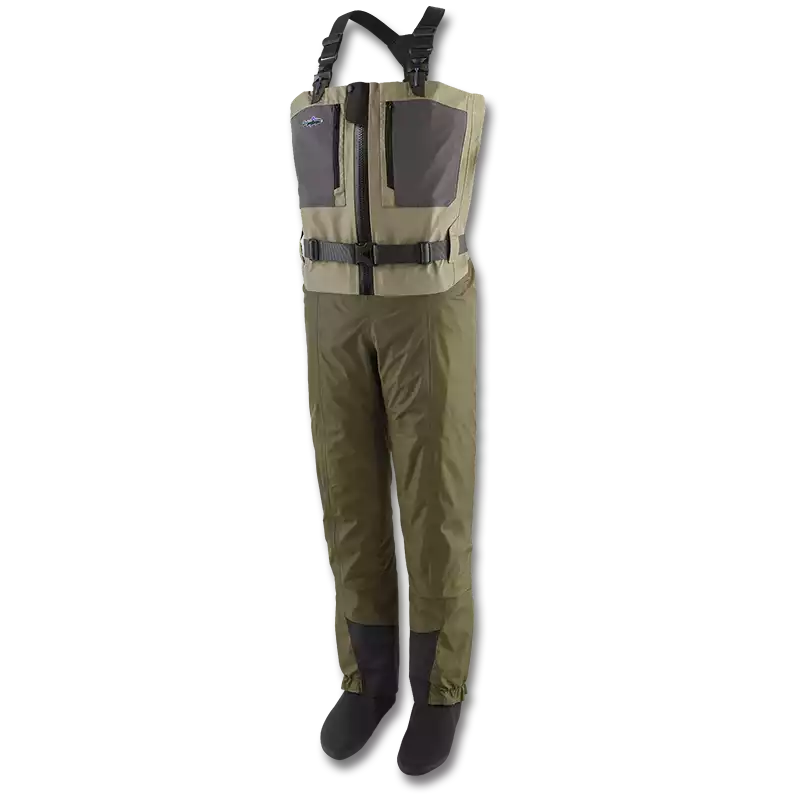
Patagonia Expedition Zippered Waders
Skwala RS Zippered Waders – Pat Pendergast took these on a recent trip to Alaska. You can read his review HERE

WADING BOOTS

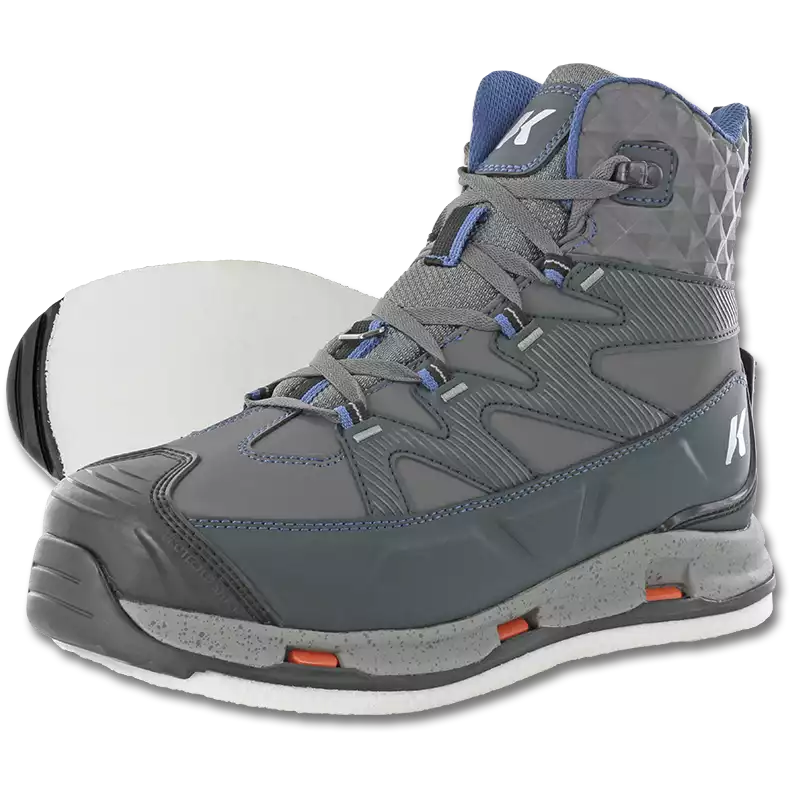
When it comes to footwear you will need to look at rubber-soled wading boots, as felt soles have been outlawed in the state of Alaska. Many of the lodges ask that you don’t use spikes or cleats either, as they are very hard on boats and the floats of bush planes. You will want a pair with Vibram “sticky rubber” on the bottom, or a pair of boots with interchangeable soles like those from Korkers. These boots allow you to remove the spiked soles when getting in and out of your transport, whether by air, sea or land.

Our favorites:
Korkers Devils Canyon Wading Boots
Simms G3 Guide Boots Vibram
Patagonia Forra Wading boots Chris King took a pair of these on a recent trip to Montana. You can read his review HERE

HEADLAMP

This is an absolute must! Alaska weather can be extreme, come out of nowhere and on rare occasions severely delay your ability to return to the lodge. This is a tool that could actually save your life. We all take a headlamp on every trip we go on and we only carry one here at The Fly ShopⓇ. That should tell you something.

Loon Nocturnal Headlamp

WATERPROOF DAYPACK

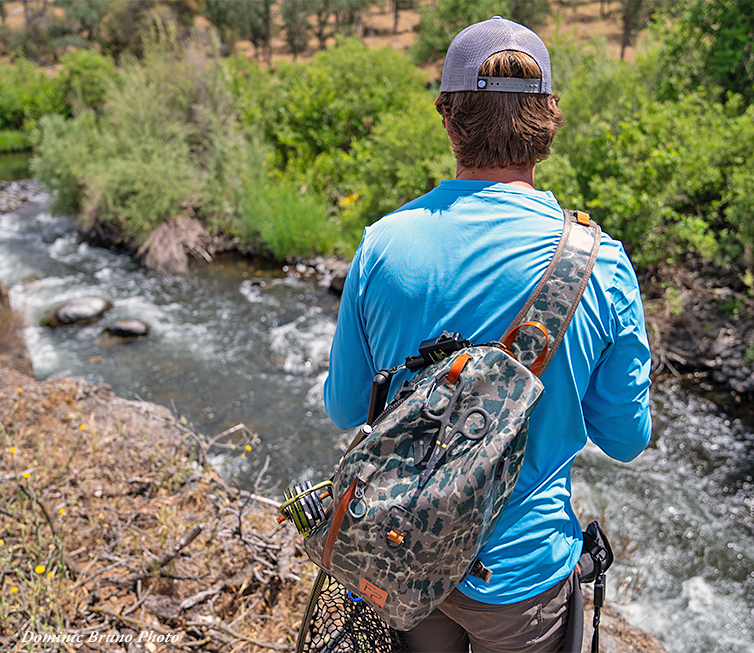
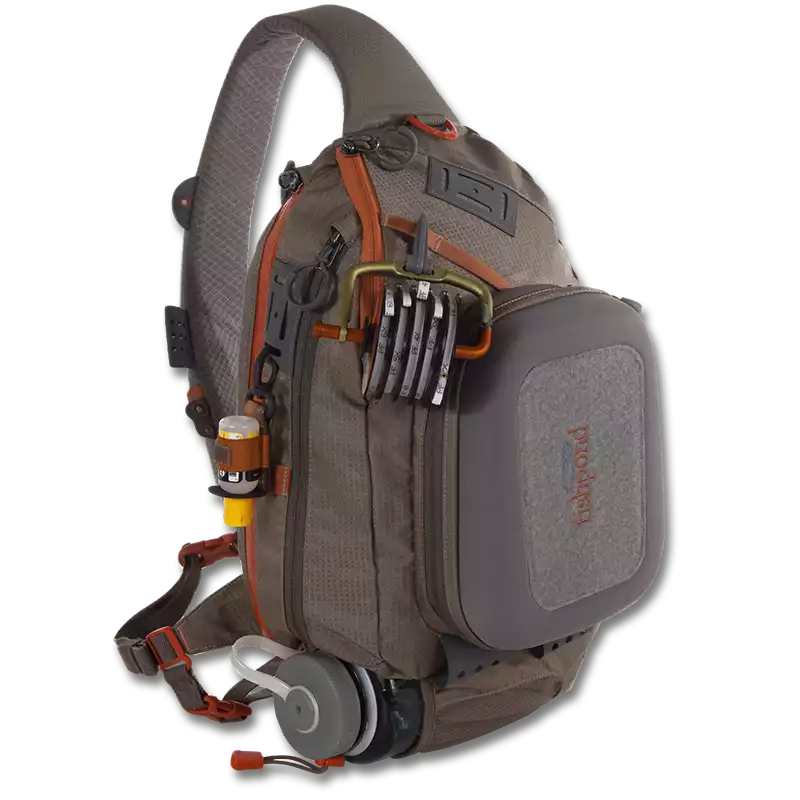
This will double as your carry-on when traveling to Alaska. You will be on the water 6 out of 7 days of your trip and ultimately you will want to keep some things dry. This is a place to stash one of your layers if the afternoon heats up. A place for a few snacks, camera, extra flies or a pair of fingerless gloves when it gets cold. This is also where you will keep your headlamp as mentioned above.

Our favorites:
Fishpond Thunderhead Submersible Backpack
Fishpond Wind River Roll Top Dry Backpack

EVERYTHING ELSE

The rest of your gear is going to be a list of personal preferences. Wool socks for one guy, synthetic for another. Hooded sweatshirt for around the lodge, or your favorite pair of after-fishing shoes. When planning, keep a few things in mind: 

  • Layering is the way to go with base layer, mid-layer, insulation, and hard shell.
  • You are restricted at most lodges to 50 lbs of gear, and wading boots, rods and reels are not light.
  • You don’t need a clean shirt every night for dinner. You are on a fishing trip.
  • You can wear the same street clothes for your travel to Alaska as on your return.

LET US HELP

Every year The Fly ShopⓇ helps put together hundreds of trips for fly fishers heading to Alaska for a week or two of incredible fishing and adventure. Most of us have guided and lived in Alaska – some even owned their own lodge there. Let us point you in the right direction for your interests. Looking for a top tier fly out lodge? We have that. Prefer a wilderness float? We have that. Need a comfortable river camp that won’t break the bank? We have that, too. 

We have been sending anglers to Alaska for the better part of 50 years. It costs you nothing to use an agent like us to coordinate your fly fishing travel. You’ll get hands-on knowledge and experience from someone who has been to that destination and knows exactly what to expect, and when to go based on what you’re desiring. 

You know what else? When you book your travel through The Fly ShopⓇ you’ll be eligible for 15% off your retail purchases for an entire year! (some exclusions apply).

So check out some of our favorites below and let’s get you up to Alaska this coming year.

Royal Wolf Lodge is, arguably, the finest fly-out trophy trout fishing lodge in Bristol Bay. They really have little interest in fishing for salmon (though all the streams they fish are full of them); their program is built completely around the huge rainbows that frequent the streams surrounding this wilderness oasis. If you were to design the perfect trophy trout lodge, you could do no better than Royal Wolf Lodge. Located in the center of Katmai National Park & Preserve, the floatplane flights to most of their targeted streams are only 10-15 minutes in length. They are in the epicenter of Alaska’s revered monster trout region.

  • June 12-19, 4 open spots
  • June 19-26, 4 open spots (includes a free Winston rod)
  • June 26-July 3, 4 open spots
  • August 14-21, 2 open spots
  • September 4-11, 1 open spot

Located on the remote banks of the Aniak River, it’s jam-packed with rainbows, dollies, grayling, salmon, sheefish and northern pike. It’s a fish factory. Talk about a complete fly fishing experience! Aniak River Lodge (ARL) is a lovely tent camp where each 2 anglers share a private 10′ x 30′ tent cabin with en-suite bathrooms and showers, and take meals at the adjacent main lodge Weatherport. Guests travel from Anchorage to the outpost village of Aniak, where they are met by lodge staff, and transferred via jet boat upstream 30 miles to the camp. The big rainbows here love to crush skated mouse patterns, as well as swung streamers. 

  • July 3-10 – 14 open spots
  • July 10-17 – 4 open spots
  • July 17-24 – 7 open spots
  • July 24-31 – 4 open spots
  • September 4-11 – 2 open spots
  • September 11-18 – 8 open spots

Some of the best salmon fishing we’ve found in Alaska, and only 8 guests a week! Lava Creek Lodge is a small outpost lodge on the Alaska Peninsula, south/southwest of Bristol Bay, Alaska. The lodge accommodates a maximum of eight guests during king, chum, and silver salmon seasons. It is custom-tailored for the serious salmon angler who values remote and nearly untouched water, swing fishing for dime-bright kings and chums, and surface and streamer action for big, hyper-aggressive silver salmon. With the ultra-low occupancy, anglers get the pick of the litter of the best pools on the home river, as well as other rivers accessed by float plane.

  • June 15 – 22, 2026 – Kings
  • July 06 – 13, 2026 – Prime Kings
  • July 20 – 27, 2026 – Kings / Chums
  • August 3 – 10, 2026 – Chums / Trout / Dollies
  • August 10 – 17, 2026 – Silvers / Trout / Dollies
  • August 24 – 31, 2026 – Prime Silvers
  • September 14 – 21, 2026 – Prime Silvers

Respect the Redds

800 • 669 • 3474

Respect the Redds
Staying Off Salmon Spawning Beds While Fly Fishing for Trout

If you spend your fall or early winter days wading a salmon river in search of trout, you’re fishing during one of nature’s most important seasons, the spawn. It’s easy to get caught up in the excitement of hungry rainbows feeding behind spawning salmon, but it’s also the time when a little awareness and restraint can make a huge difference for the future of the fishery.

Here in Northern California where The Fly ShopⓇ is located, We have several runs of Chinook salmon that visit us on the Lower Sacramento River. The Fall run is the largest of these and this year there has been a great return of these egg-wagons heading to the upper reaches of the river to do their thing.

It’s an exciting time for trout fisherman as the trout feed heavily on eggs below the spawning salmon.  At times they seem to feed with reckless abandon as they dart back and forth gobbling up every little pink and orange ball they see. The fishing this time of year can be off the charts.

With the salmon numbers declining over the last couple of decades it’s great to see a solid return again in our home river. However, we need to be mindful to take care of these spawning areas and not damage the redds as we chase after the rainbows that dwell in the vicinity looking for a quick protein-packed meal.

What’s a Redd?

A redd is a salmon’s nest – a shallow depression in gravel that the hen salmon digs out with her tail in order to lay her eggs. You can usually spot them in knee-deep, gravelly sections of the river with good current and oxygen flow. The gravel looks cleaner and

lighter than the surrounding riverbed, almost as if someone swept it with a broom. Often, you’ll see salmon actively paired up over these areas or hovering just downstream guarding them.

Those subtle patches of clean gravel might not look like much, but they’re the nursery for the next generation of salmon and an incredibly important resource for the trout population.

Why It Matters

Wading through or standing on redds crushes salmon eggs buried in the gravel. Even a single misplaced step can destroy hundreds of developing eggs. Worse yet, wading through redds can stir up silt that suffocates eggs downstream. These are small, unseen impacts that add up fast, especially on rivers with heavy fishing pressure and declining numbers.

Healthy salmon runs mean healthy trout populations. Those eggs and fry provide the nutrients and forage that keep our wild trout thriving. Protecting redds isn’t just about being ethical. It’s about taking care of the very resource that fuels our best days on the water.

How to Spot and Avoid Redds

  • Look before you step: When you’re wading in shallow riffles or tailouts during spawning season, take a moment to study the bottom. Clean, bright gravel will likely be a redd.
  • Stay off the light spots: Walk on darker, undisturbed gravel or deeper water sections whenever possible.
  • Don’t fish directly over spawning salmon: Target trout below the spawners – that’s where fish are feeding on drifting eggs – without disturbing or worst yet, foul hooking a spawning salmon.
  • Educate others: If you see someone unknowingly wading through a redd, kindly explain what’s going on. Most anglers simply don’t realize the impact.

Fish Smart – Fish for the Future

It’s easy to think your one pair of boots won’t make a difference, but they do. The small actions we take on the water today directly shape the fishing we’ll have tomorrow.

By staying aware, keeping our boots off the redds, and fishing with respect, we help ensure that the cycle continues and that the salmon keep returning, the trout keep feeding, and the rivers keep thriving.

So next time you’re knee-deep in a gravel run with trout scarfing eggs behind spawners, take a second to pause, look down, and remember the future of the fishery is right beneath your feet.

Gear Review: Patagonia Boulder Fork Rain Jacket

800 • 669 • 3474

Gear Review:
Patagonia Boulder Fork Rain Jacket
by Chris King

I have a jacket problem..

My wife is always telling me that I don’t need another jacket and even though I live in a place that sees an average of 6 weeks over 100 degrees, I can’t help myself.

At the beginning of the year I picked up a Patagonia Boulder Fork Rain Jacket. I had originally bought this to replace an older light weight travel jacket. I took this on my first trip to Christmas Island this year. Although I only needed it one day for the ride out to the flats on a morning filled with brief rain showers, it came in handy the following week for a few hikes on the big island with my wife and son and it was comfortable against bare skin for these tropical environments. 

When I left for Alaska in July for a King Salmon trip to Lava Creek Lodge followed by a trip in Montana to the Bob Marshall Wilderness with Spotted Bear Ranch, (You can read my full trip report HERE) I thought I was making a mistake by only bringing this one jacket with me. With the weight restrictions on gear for both the bush planes in Alaska and the Mule strings into the Bob, I chose to leave the big coat at home.

I was pleasantly surprised at the jacket’s performance. We had days in Alaska with 30 mph gusts and intermittent rain and I never felt cold or wet. This jacket dried out every night in the lodge without fail and was dry and ready for the next day’s fishing.

In Montana it was the perfect size to roll up and stuff in my day pack. I only needed it one time on one of the horse pack days but I was glad I had it.

Some of the reasons I love my new Patagonia Boulder Fork Rain Jacket

    • H2No® Performance Standard 3‑Layer Waterproof Shell
      Built with a 3‑layer, 3.7 oz 30‑denier 100% recycled polyester ripstop face, polyester membrane, and recycled polyester tricot backer, finished with PFC‑free durable water‑repellent. Provides long‑term waterproof and breathable performance. 
    • Minimalist & Packable Design
      Streamlined elements keep the jacket lightweight and highly packable for backcountry or daily carry.
    • Adjustable Hood with Laminated Visor
      Low-profile hood with single‑pull adjustment and laminated visor provides good visibility and sheds water, accommodating varied headwear while laying flat when unused. 
    • Watertight Zippers & Functional Pockets
      Waterproof anti-corrosive center-front zipper, one zippered chest pocket, two high welted handwarmer pockets—big enough for a fly box. 
    • Stormproof Cuffs & Hem
      Hook‑and‑loop cuffs and adjustable drawcord hem (routed through front pockets) seal out weather and reduce bulk under backpack hipbelts.
    • Fair Trade Certified™ Construction
      Made in Fair Trade Certified™ factories, meaning workers earned a labor premium
    • Hip‑Length & Lightweight
      Offers moderate coverage without extra weight and works well over layers. 
    • Comfortable & Quiet Feel
    • Comfortable Against Skin
      Designed with soft tricot lining and supple fabric, it’s much quieter and more comfortable than stiffer Patagonia shells like the Torrentshell. 
    • Practical Pocket Placement
      Pockets sit higher on the torso—particularly good when wearing a backpack or wading, preventing water ingress or interference with pack straps. 
    • PFAS/PFCs Free
      Uses 100% recycled face fabric and DWR without PFAS/PFCs, Which are not outlawed in many states

Gear Review: Patagonia Forra Wading Boots

800 • 669 • 3474

Patagonia Forra Wading Boots Gear Review
By Chris King


On a recent trip deep into Montana’s Bob Marshall Wilderness with Spotted Bear Ranch, I brought along a pair of Patagonia Forra Wading Boots and they more than earned their keep. The trip started with a 25-mile horsepack journey into the wilderness, followed by a three day float out on the river. With gear weight strictly limited for the pack mules, the Forras were a welcome companion: lightweight, low-profile, and reliable. The space I saved on boots? It went to extra whiskey for the campfire which is arguably just as essential after a full day of dry-fly fishing for native Westslope Cutthroat.


One day, we hoofed it 10 miles round-trip along the White River, a stunning tributary of the South Fork of the Flathead. The terrain was anything but easy side hills, loose rock, and brushy banks but the Forras held up without complaint. They offered solid ankle support, dependable grip, and surprising comfort. In fact, they’re the first wading boots I’ve worn that didn’t have me reaching to pull them off the moment I stepped out of the water. More than once, I found myself still wearing them around camp while waiting for dinner.


On the river, they shined just as bright. The grip was excellent, even on slick, algae-covered cobble that used to make “sticky rubber” feel more like playing broom hockey. As we floated downstream into warmer water, the boots remained comfortable and dependable, even during long wet-wading sessions and side hikes to those too good to pass up spots.


I had stubbed my toe just before the trip, (you can read my full trip report HERE) and these boots offered enough protection that I never gave it a second thought once we were on the trail. I wore them with both wool and neoprene socks and went with my regular street shoe size. No issues at all with fit.


If you’re looking for a lightweight, supportive, and river-savvy boot for your next backcountry mission, the Patagonia Forra Wading Boots are absolutely worth a look. They’ll save your feet, your pack weight, and maybe even make a little extra room for the good stuff.


Some of the reasons I love my new Patagonia Forra Wading Boots


Lightweight, Quick-Draining Design

Built with hydrophobic materials and large mesh panels to shed water quickly and reduce weight during use and after.


Highly Durable Construction

Reinforced synthetic uppers provide abrasion resistance while maintaining flexibility and comfort.
Welded TPU overlays in high-wear areas for added protection and longevity.


Vibram® Mars Sole

Non-marking Vibram outsole provides solid traction on wet rocks and muddy banks.
Designed to accommodate studs (sold separately) for enhanced grip on slippery riverbeds.


Low-Profile, Athletic Fit

Slim and supportive fit makes them ideal for wet wading, hiking to remote waters, or wearing with lightweight neoprene booties.
More like a trail shoe than a traditional wading boot, which appeals to anglers who prioritize mobility.


Minimal Water Retention

Lightweight foam and minimal padding absorb less water than traditional boots, keeping your feet lighter and more agile all day.


Toe and Heel Protection

Structured toe box and heel counter offer impact protection when scrambling through rough terrain or submerged hazards.

Gear Review: Simms Latitude BiComp Bottoms

800 • 669 • 3474

Gear Review: Simms Latitude BiComp Bottoms
by Chris King

Chris King wading and fighting a fish at Christmas IslandI had a chance to try out a pair of the Simms integrated tights and shorts on a recent trip to The Villages on Christmas Island. Coupled with my sun shirts, Simms Sungaiter, and Simms Sungloves, this is one of the first saltwater trips where I did not get torched by the sun. The Latitude BiComp Bottoms offer a protection of UPF 50+ and they move with you and never feel restricting or binding in any way. They fit tightly enough in the right areas to discourage chafing when walking all day in wet, salty clothing and they never bound up or pinched in the wrong areas.

The “tight” thing is something all of us need to get behind. They don’t flutter in the wind when standing on the deck, they don’t balloon up when walking in thigh or waist deep water, and they never felt hot on even the warmest days. They also do a great job of protecting against cuts and scrapes when you are in a coral-scaped wonderland and the next flight out to the nearest medical attention is a week away. This is not the time or place to get an infection.

Chris King holding a bonefish at Christmas IslandThere are pockets on the shorts that are mesh so they never fill with water, a good design, though I never found myself using the pockets. Honestly, I might have if they had zippers. The shorts also include belt loops but I found that the drawstring in the waist band was plenty to hold them in place for the day. The inseam on the shorts is 5 inches with a slight cut on the sides at the hip. In my opinion this would be better at 7 or even 9 inches, with an inseam that fits more like a pair of board shorts.

I will admit that I felt a bit like Peter Pan and found myself skipping to the boat one morning. But, when you are out on the flats chasing critters and your mind is ever so far away from your adult responsibilities, shouldn’t we feel forever young?

Features & Benefits:

  • Sun Protection – UPF 50+ keeps you protected from harsh UV rays
  • Scrape and abrasion protection
  • Quick-draining pockets – reduces drag and weight
  • Drawstring waist – keeps your bottoms where they’re supposed to be
  • Reduced drag in the water – no additional, loose material to cause drag when wading
  • Moves with you without binding or pinching
  • Feeling like a kid again

Give me a call or send me an email to learn more about new flats fishing garb!

Chris King
Travel Specialist
chris@theflyshop.com | 800-669-3474 | 530-222-3555

Gear Review: Korkers Salt Sneaker Boot

800 • 669 • 3474

Gear Review: Korkers Salt Sneaker Boot
by Chris King

I recently had the chance to test out a pair of the new Korkers Salt Sneaker Boots during a trip to Christmas Island in late March. I was really impressed with how comfortable they were, even though I didn’t follow the break-in recommendation. I found that the fit was true to size. I chose a size 10 which is my street shoe size as well.

Korkers Salt Sneaker Boot

Over the course of the week, I wore the boots with regular socks, neoprene socks, and gravel guards, and I’m happy to report I didn’t get a single blister. Good footwear is essential for all-day wading with wet feet, and these boots really delivered. The Kling-on soles provided excellent grip on all surfaces, from coral and sand to the boat, and I never felt like I was going to slip. They also performed well on the rocky ocean side, providing great ankle support when needed.

Guide wearing the Korkers Salt Sneaker Boots on the deck of the boat

Interestingly, I noticed that most of the guides were wearing the same boots. These guys spend the entire year fishing on the flats, so their choice speaks volumes. If it’s their boot of choice, it should probably be yours too!

Features & Benefits:

  • LIGHTWEIGHT – The lightest flats shoe we’ve found, without losing durability.
  • WIDE TOE BOX SIZE – Allows for toes to move without cramping as well as allowing for different sock options.
  • NON-MARKING KLING-ON SOLE – A must for any flats skiff. If your soles mark the boat, the captain won’t allow you to wear them on the boat.
  • SLOTTED LACE KEEPER – Keeps the tongue centered and debris out.
  • CORROSION RESISTENT HARDWARE – Not going to rust or corrode from use.
  • CHRISTMAS ISLAND GUIDE TESTED & APPROVED – These guides spend over 300 days a year wading through the saltwater.
  • Traditional laces with reinforced non-corrosive eyelets.
  • Industrial-grade, puncture resistant internal plate protects the foot from sharp coral and other sharp objects.

Give me a call or send me an email to learn more about new flats fishing garb.

Chris King
Travel Specialist
chris@theflyshop.com | 800-669-3474 | 530-222-3555

Chris King holding a GT

Gear Review: Fishpond Thunderhead Submersible Small Lumbar Pack

800 • 669 • 3474

Gear Review: Fishpond Thunderhead Submersible Small Lumbar Pack
by Chris King

Chris King holding a bonefish in Christmas IslandOn a recent trip to fish the flats I had the chance to use one of the Fishpond Thunderhead Submersible Small Lumbar Packs. Let’s get something straight – it’s a fanny pack, no matter what you call it. And being a Gen Xer I’m ok with that because it’s not the first one that I’ve owned.

Fishpond makes this pack in 2 sizes. I chose the smaller size because I always take a waterproof backpack with me on all of my travels…I used to fish with this backpack and always found that I brought too much gear. At times I would feel it in my back at the end of a week. For on-the-water use the fanny pack worked out perfectly. I kept my backpack in the boat for the day as a boat bag and only carried it with me the few items that I needed for the spot we were at. I was at Christmas Island and the boat will drop you and your guide off to fish a particular area for a while, then move you to different spots periodically throughout the day. So, when I jumped out of the boat for a particular flat I had only what I needed with me. The pack is plenty big enough for 2 fly boxes, 2 spools of tippet, a hook file, 3 extra leaders, a microfiber towel, a bottle of water, my iPhone, a Clif bar, a jerky stick and a can of Zyn.

Chris King fighting a fish at Christmas IslandThe top-entry pack features a TRU Zip waterproof and submersible zipper, and everything was kept bone dry for the entire week. There was even a flat that we jumped out on that was belly deep while looking for GT’s and not a drop of water entered the pack. I used both the waist strap and the shoulder strap to keep it in place. While fishing it always stayed secure and never got in the way of casting. The shoulder strap is on my off side and it is something I am accustomed to as I wear a sling pack when trout fishing. It also makes it really easy to swing the pack around to the front to access a new fly or the hook file, and of course the iPhone for a pic or two.

Features and Benefits:

  • SIZE: Small and out of the way, perfect for walking the flats all day, keeps you from bringing too much gear
  • WATERPROOF: Keeps everything bone dry
  • ACCESS: Easy access when needed, wore it on my back when fishing and spun it forward when needing access
  • SECURE: Stays in place while fishing

Chris King
Travel Specialist
chris@theflyshop.com | 800-669-3474 | 530-222-3555

Gear Review: Patagonia Stealth Switch Packs

800 • 669 • 3474

Gear Review: Patagonia Stealth Switch Packs

Patagonia was hard at work in 2024 creating a unique group of packs – the Stealth Switch Pack series. They didn’t just redesign the same old packs we’ve been using for years; instead, they created a versatile new series. Each bag adapts to your needs at the moment needed.

Patagonia Stealth Switch Pack 3L

Stealth Switch Pack 3L:
This versatile little pack is perfect for the minimalist and attaches right to your wader suspenders, your wading belt, your raft straps, and even other packs and bags. The features on the smallest pack in the series are just what you need and nothing more.

We tested one of these packs before its release and can definitely confirm that it is extremely versatile, with clean lines. We wore it as a chest pack attached to wader suspenders and it was very comfortable and unintrusive when casting and fishing. We also strapped it to a raft on the Trinity River and it was perfect for quick access to the most important tools and gear. With two tool docking stations, you always know where your tools are, and the two zippered front pockets are perfect for small items such as leaders and tippet. The foam fly patch on the front is great for drying and keeping your flies handy throughout the day. It also features a handy magnet on top to hold your fly or tools while rigging your rod or swapping flies. There is also another large stretch pocket on the back of the pack that works great for storing your cell phone. The large main compartment on this pack is just the perfect size to store a fly box, floatant, weights, and indicators.

In our opinion, this is a perfect pack for the dry fly or euro nymph angler.

Patagonia Stealth Switch Pack 5L

Stealth Switch Pack 5L:
If you are looking for a bit more out of your pack, but still trying to keep it small, the 5L is a great choice. This pack offers a few more features and can be worn as a hip, chest, or sling pack. It doesn’t end there – it can also be added to other bags and packs to create the perfect setup. Attach it to your waterproof backpack to keep your necessary tools right at your fingertips.

The layout on this pack is a bit different than its little brother. The embedded magnet on the pack front temporarily holds flies, nippers or hemos for quick fly changes. It includes multiple exterior lash points and hemo/zinger docks to enhance organization and carrying capacity, as well as a front panel that functions as a workstation, and an interior foam fly patch. The interior has three sections: one large zippered pocket, one roomy stretch mesh pocket, and an exterior front, zippered flip-down pocket with four sections and two stash pockets.

We’d recommend this pack for everyone. It’s a great size for just about any situation with plenty of storage for multiple fly boxes and everything else an angler would need for an outing.

Patagonia Stealth Switch Pack 9L

Stealth Switch Pack 9L:
Now for the big boy in this lineup! This pack has it all and was built for both left and right-handed anglers. We view it more as a sling pack, but it can also be converted to a hip pack when needed. The 9L pack is full of features, yet sleek in design to reduce line from catching on it.

Features on this pack include hemo/zinger docks on the shoulder strap and pack face, multiple lash points on the side of the pack and the hip belt, an interior foam fly patch, and corrosion-resistant zippers. Embedded magnets are located on the pack front and the shoulder strap to temporarily hold flies, nippers or hemos for quick fly changes. The pocket orientation includes one exterior front-zippered pocket, one zippered pocket on the shoulder strap that accommodates a phone, and the pack interior features four large stretch compartments. Don’t forget about the external water bottle pocket which can be set up for left or right-handed access, or use the pocket to stash a jacket or other essentials. The last feature is a net sleeve to help keep your net handy at all times.

If you are looking for a great sling or waist pack, you should strongly consider this one. We also took this pack over to the Trinity River, for some swing action, and it was perfect. Worn on your back you have plenty of room to cast, the sleek design kept the line from snagging on loose zippers and straps, and the ability to change it from left to right when needed was ideal.  With just enough room to stow a couple of fly boxes, a spool of Maxima, and maybe a spare reel, this is a great option for the two-handers out there.

Gear Review: Patagonia Men’s Traverse Zippered Waders

800 • 669 • 3474

Gear Review:
Patagonia Men’s Traverse Zippered Waders
by Chris King

Patagonia Men's Traverse Zippered WaderI’ve been fortunate enough to be in fly fishing for the majority of my adult life. From being a sales rep, to guiding all over Northern California, to now being the newest member of the Travel Team at The Fly Shop®. With that, I’ve been able to fish just about every pair of waders that has come down the pike in the past 30 years. Every new wader is supposed to be the next greatest thing and make my wading that much more enjoyable. Some changes in waders have really made a difference. The introduction of breathable materials was the largest change we’ve seen. Since then it’s been more about comfort, accessibility and durability. The addition of a zipper to waders was a necessity and revolutionary, especially for those anglers pushing the half-century mark!

These new Patagonia Men’s Traverse Zippered Waders are a game changer for a lot of anglers, just in cost alone. Maybe they don’t have all of the bells and whistles that some of the more expensive zippered waders have, but that’s why they come in at under $600.

Chris King wading on the Trinity River in the Patagonia Men's Traverse Zippered WadersTraverse Key Features:

  • Lightweight – easily packable, great for travel or bushwack fishing.
  • 2 internal pockets (1 zip & 1 drop pocket) – easy access to your phone, keys, etc.
  • 2 external pockets with zip closures – large enough to store a fly box, gloves, or can of snus.
  • Plenty of room in feet – liner socks and thermo socks, plenty of space to wiggle your toes without bunching.
  • Good mobility in the legs – enough material to easily bend down, kneel, or get in and out of a boat.
  • Heavy duty zipper – The YKK zipper is the same you would find on other zippered waders that cost twice as much.
  • Easy to get on and off – the zipper allows for quick entry and exit for runs to the bushes.
  • Stretch shoulder straps – lessens force on the shoulders and moves with your body.
  • No knee pads – not a essential and ads weight.
  • No hand pockets – clean front – avoids fly or running line from snagging.
  • Reinforced gravel guards – durable material on the inside of the gravel guards resists wear, and the internal grip-material and robust hook, keep them on your boots.
  • Price – these are the least expensive zippered waders on the market and are Patagonia-quality.

Chris King fishing out of a raft on the Trinity River

Out of the box these waders have a few great features for their price point. Two external zippered pockets that will fit a small fly box and plenty of room for leaders, tippet etc… There are an additional 2 interior pockets.  One that has a zippered closure to secure your phone, car keys and one that is drop-in for an extra fly box if needed. There are multiple belt loops to keep your belt secure and out of the way. The belt loops also keep any tools you might wear on your belt in place. The waders are lightweight, a pair of LRM (large | regular | medium foot waders), comes in at 2.9 pounds. Most waders with a zipper are expedition weight for extreme cold. These would be a joy to wear in the summer heat and didn’t feel too bulky. The legs on the waders are cut for exceptional mobility and do not bind up at all even when getting in and out of a raft.  The stocking feet were sized well for my feet without being restrictive and still not being bulky in my wading boots. The shoulder straps had plenty of stretch and didn’t put pressure on my shoulders while in a seated position. The zippered entry makes them incredibly easy to get in and out of. And, if you need to access King Richard, you don’t need to take off your jacket to do so. You are going to miss a few features at this price point like integrated knee pads and external handwarmer pockets, but finding a pair of zippered entry level waders under $600 is a home run.

Give me a call (800) 669-3474 or send an email to chris@theflyshop.com if you want to hear more about these waders or to talk about fly fishing.

Hottest New Fly Fishing Gear for 2025

800 • 669 • 3474

Every year there are a lot of new products that hit the market.  From new rods and reels all the way down to the gadget that we all can’t do without.  Most of the time we all know about the new rod that is supposed to be the tool that changes everything.  Or, the reel that took years to design and is going to change the world.  Of course as a retailer we have to be on top of anything that is new in the world of fly fishing.  So, we meet with reps, manufacturers and go to trade shows.  We used to spend 3 days a year walking the entire IFTD (International Fly Tackle Dealer) show to make sure that we didn’t miss out on any unique new products.  Well, since that isn’t happening anymore we have to rely on the manufacturers and reps to show them to us each Fall.

This year we’ve found some really cool stuff that we believe is worthy of mentioning for 2025.  Some of it we can’t quite talk about yet, while other items are already in the shop and selling well.  The following is a list of The Fly Shop® staffs favorites and why:

Patagonia Men's R1 Air Zip-NeckPatagonia Men’s R1 Air Zip-Neck
Bryan Quick (Director of Outfitters)
We’ve had the Women’s version sitting in front of my desk for the past year and soooo many people have been eyeing them only to discover it’s the Women’s section.  Which is why I’m stoked we have the Men’s this season.  In fact, I purchased mine this last December because I couldn’t wait.  For something to wear around the house to take the chill off, or as an added layer underneath a jacket for those cooler mornings on the river, the R1 Air Zip-Neck is perfect and super comfy.  It has minimum bulk, and the sleeves are tailored pretty tight, so don’t go small if you are in between sizes.  And this is why I love it, nothing gets in the way when you’re bombing casts with your two hander on the river. A bonus is the material sheds water quickly if you dip your arm in the river tailing a fish or retrieving a loose reel spool.

Winston PURE 2 fly rods laying on a table with flies

Winston PURE 2 Fly Rod
Erik Argotti (Travel Associate)
I had the pleasure of taking two of these to Argentina and Chile recently and I was really impressed.  My original thought was that I’d use them for dry fly fishing, but what I realized throughout the weeks was that they were great for nymphing and streamer fishing as well.  The action on these is very smooth and they are a dream to cast and fish.  The sensitive tip sections allow for a lot of feel between the grip and the fly.  Not to mention that these rods are absolutely stunning in look with the high gloss Winston finish and the burl wood insert.  If you are interested in a new trout rod, then I’d highly recommend giving the Winston PURE 2 a shot, you won’t be disappointed.

The Fly Banjo attached to a zipper

Fly Banjo
Terry Jepsen (Chief Operating Officer)
I was told about this product by my friend Karlie Roland.  She was in Redding visiting The Fly Shop® when we were doing product selection for the catalog and was super excited about this little silicone fly dryer.  She told me she knew the people that are making them and that I had to see them and give them a try.  I was skeptical at best.  She later reached out to her friends and they sent me a couple of samples to check out.  I scanned the QR code on the package and watched the video while holding these two Banjo’s in my hand.  For this price, these are an absolute must have.  Dry your flies with the strum of your finger!  The ideal tool for any dry fly angler, especially at dusk.

Angler holding a Galvan Swing reel on the Trinity River

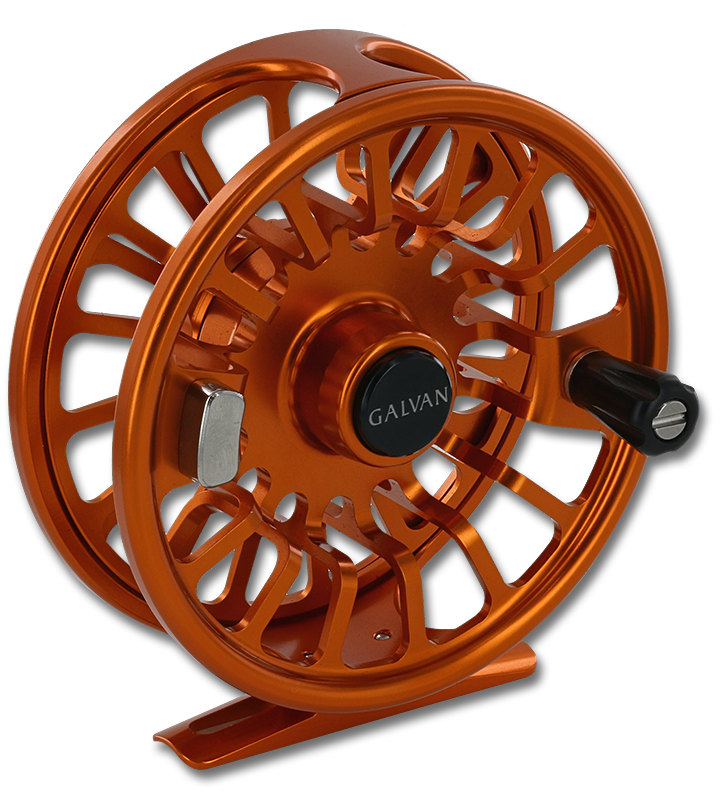
Galvan Swing Spey Reel
Joel Crandall (Retail Associate)
When the Swing reel was released late last fall I had a great time making a short Instagram reel on this product.  Of course, I’m a lover of all the Galvan reels, so I was an easy sell.  This fully caged, beautiful reel is now in my own personal lineup and when I’m two-hand fishing it’s the only reel I use.  The sleek finish is perfect, not too gaudy or shiny.  With 5 great size options, you can use these for trout Spey or for swinging for King Salmon.  The drag will stop just about anything as Galvan used the same drag they use on their Grip series of saltwater reels.

Angler packing his Riversmith Convoy Gear Roll

Riversmith Convoy Gear Roll
Zack Thurman (Retail & Inventory Manager)
This is one of the coolest new products I’ve seen in several years.  I’ve been in fly fishing and purchasing for The Fly Shop® for years and so I’m not that easily impressed with new products. But this one got my attention right away.  It’s even hard to show how great this product is just from a couple of images.  It’s best to watch the video.  I love this new gear roll for its simple, yet abundant, storage as well as how easy it makes it to transport your entire gear set.  Just load it up and you’ll have everything at your fingertips.  Multiple options for carrying, including backpack straps for those deep mountain lake adventures.  The removable changing mat makes it comfortable to gear up or dress down at the start and end of the day.

Winston bamboo rod laying on the rod sock on a table

Winston Bamboo Fly Rods
Shannon Engh (Retail Associate)
I’m not a young buck anymore and I certainly remember bamboo and fiberglass rods.  Honestly, I love the action of these older style rods and bamboo is just a special piece of equipment.  The slower action is excellent for dry fly and small nymph fishing on small streams.  Of course, these aren’t your everyday fly rods nowadays, but they are something unique for those wanting to go back in time and feel that special action that one can only find in bamboo.   We haven’t had bamboo in the shop in all the years that I’ve worked here, so I’m stoked to have a bit of history in the store.  If you are interested in the history of Winston Bamboo, you can check out the blog post we wrote previously – “Winston Bamboo – The History”.

Fishpond Stormshadow Rolling Carry-on

Fishpond Stormshadow Rolling Carry-On
Jordan Taylor (Outfitters Associate)
I love this new carry-on so much that I previously wrote a Gear Review on it.  Over the years, I’ve never quite found “the one.” I’ve tried countless bags, but I can’t even remember the last time I used the same luggage for a trip. There always seems to be someone willing to lend me a bag, and honestly, I never thought of my carry-on as an essential piece of gear. Maybe it’s because I’ve had so many duds in the past… But that all changed when I decided to upgrade to the Stormshadow Rolling Carry-On from Fishpond.  The Stormshadow features two main compartments that make it so easy to stay organized. The bottom features a solid, reinforced shell to protect fragile items when the flight attendants are stowing additional bags and slamming down the overhead bins during those “completely full flights” we’re all familiar with.

Korkers Women's Bantam Lite Wading BootKorkers Women’s Bantam Lite Wading Boot
Kianna Chao (Retail Associate)
These new boots from Korkers are impressive.  I have small feet and it has been a challenge to fit into a great pair of boots.  Some are too tight, while others allow my feet to move around in the toe box too much.  These new boots from Korkers are perfect!  The dual soles allow me to use the rubber for hiking into the fishery and swapping to the felt for on/in the water.  I really like how lightweight they are and how they remind me of a hiking boot just as much as a wading boot.  I would highly recommend these boots for all women anglers.

If you didn’t see something that you are looking for, we suggest you checkout our 2025 Fly Fishing Catalog & Travel Guide. We note all new products for 2025 in the publication with a “trout icon”.