
Salmon is the common name for several species of fish in the family Salmonidae. Salmon live along the coasts of both the North Atlantic (one migratory species Salmo salar) and Pacific Oceans (approximately a dozen species of the genus Oncorhynchus), and have also been introduced into the Great Lakes of North America.
Typically, salmon are anadromous: they are born in fresh water, migrate to the ocean, then return to fresh water to reproduce. However, there are populations of several species that are restricted to fresh water through their life. Folklore has it that the fish return to the exact spot where they were born to spawn; tracking studies have shown this to be true, and this homing behavior has been shown to depend on olfactory memory.
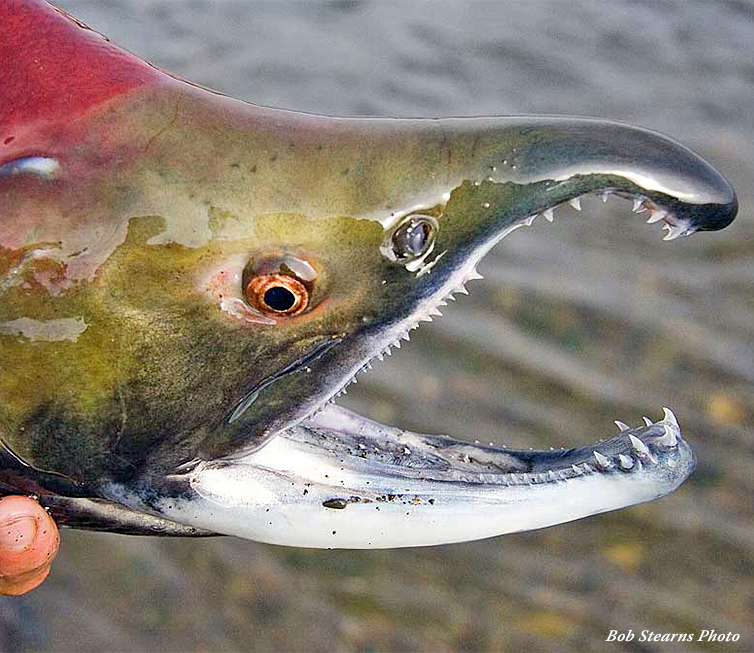
They are born in fresh water, migrate to the ocean, then return to fresh water to reproduce. However, there are populations of several species that are restricted to fresh water through their life. Folklore has it that the fish return to the exact spot where they were born to spawn; tracking studies have shown this to be true, and this homing behavior has been shown to depend on olfactory memory. Prior to spawning, depending on the species, salmon undergo changes. They may grow a hump, develop canine teeth, develop a kype (a pronounced curvature of the jaws in male salmon). All will change from the silvery blue of a fresh run fish from the sea to a darker colour. Salmon can make amazing journeys, sometimes moving hundreds of miles upstream against strong currents and rapids to reproduce.
The species of salmon that we will cover on this page are the Chum, Pink, Sockeye, and Cherry. We cover the Chinook (King) and Coho (Silver) on their own individual species pages.
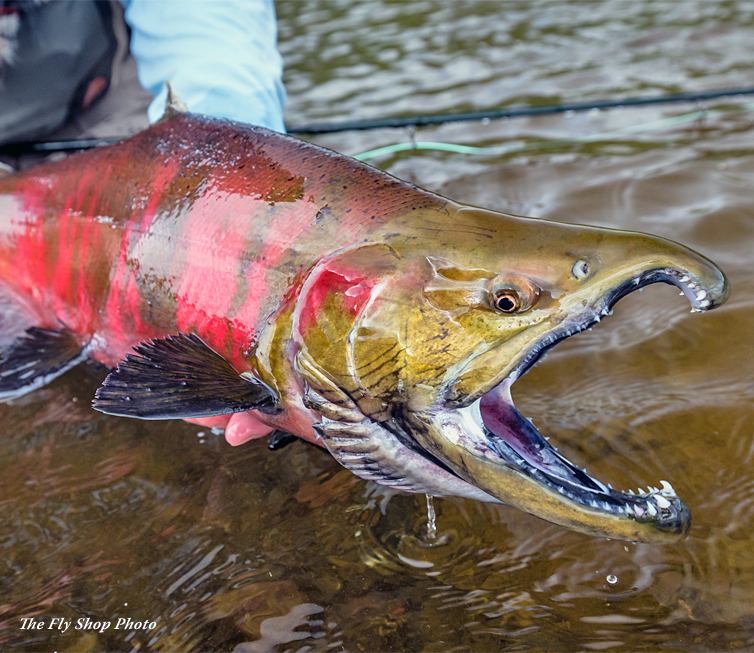 Cherry Salmon (Masu Salmon):
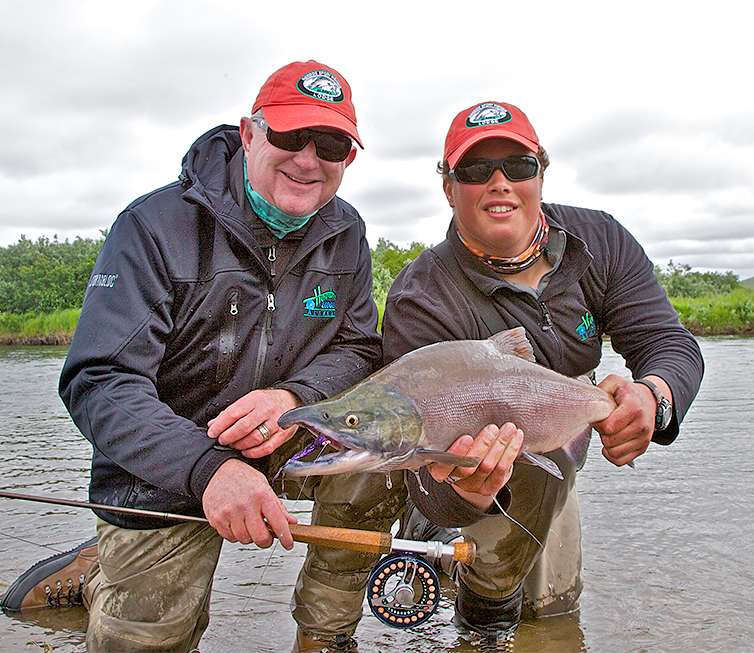
The masu salmon (Oncorhynchus masou), also known as masu or cherry trout (sakura masu) in Japan, is a species of salmonid belonging to the genus Oncorhynchus, found in the North Pacific along Northeast/East Asian coasts from the Russian Far East (Primorsky, Kamchatka Peninsula, Sakhalin and Kuril Islands) to south through Korea, Japan and Taiwan.
A masu salmon which has reached sexual maturity has a darkened back, and the stripes on the body sides become bright red with crimson tinge to merge on the abdomen into one common longitudinal band of lighter color. For this reason, it was given the name cherry salmon.
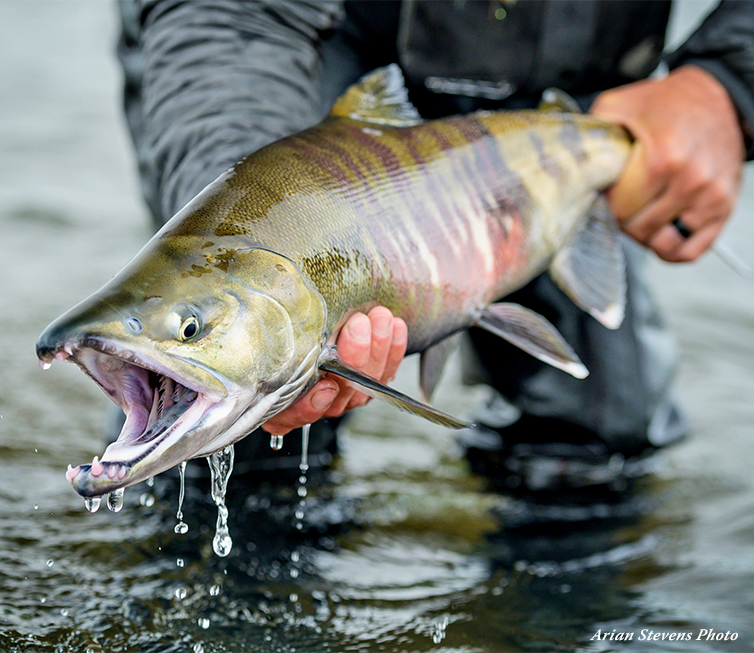 Chum Salmon:
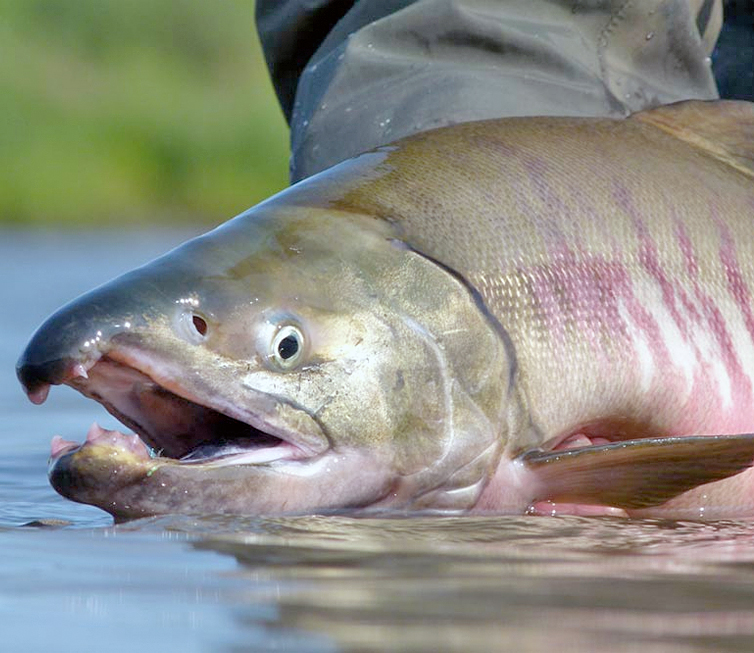
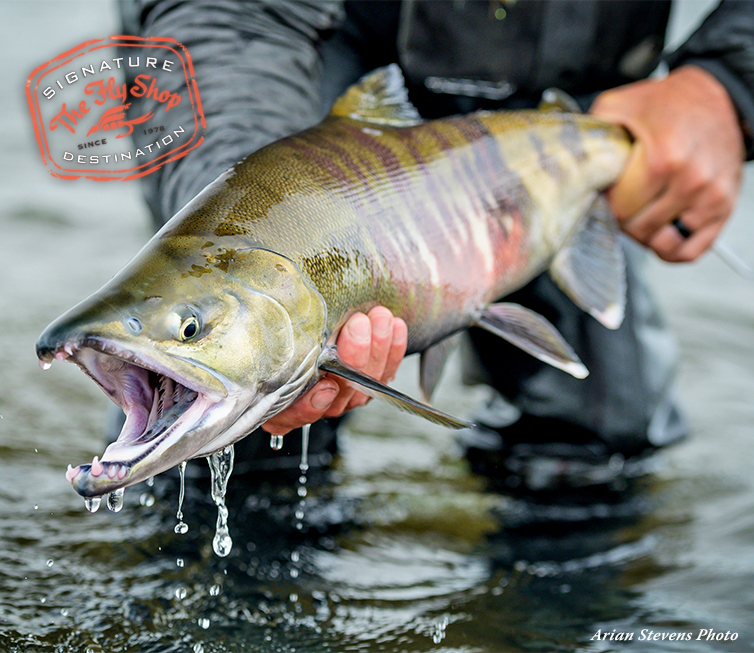
The chum salmon (Oncorhynchus keta), also known as dog salmon or keta salmon, is a species of anadromous salmonid fish from the genus Oncorhynchus (Pacific salmon) native to the coastal rivers of the North Pacific and the Beringian Arctic, and is often marketed under the trade name silverbrite salmon in North America.
Chum have an ocean coloration of silvery blue green with some indistinct spotting in a darker shade, and a rather paler belly. When they move into fresh water the color changes to dark olive green and the belly color deepens. When adults are near spawning, they have purple blotchy streaks near the caudal peduncle, darker towards the tail. Spawning males typically grow an elongated snout or kype, their lower fins become tipped with white and they have enlarged teeth.
 Sockeye Salmon:
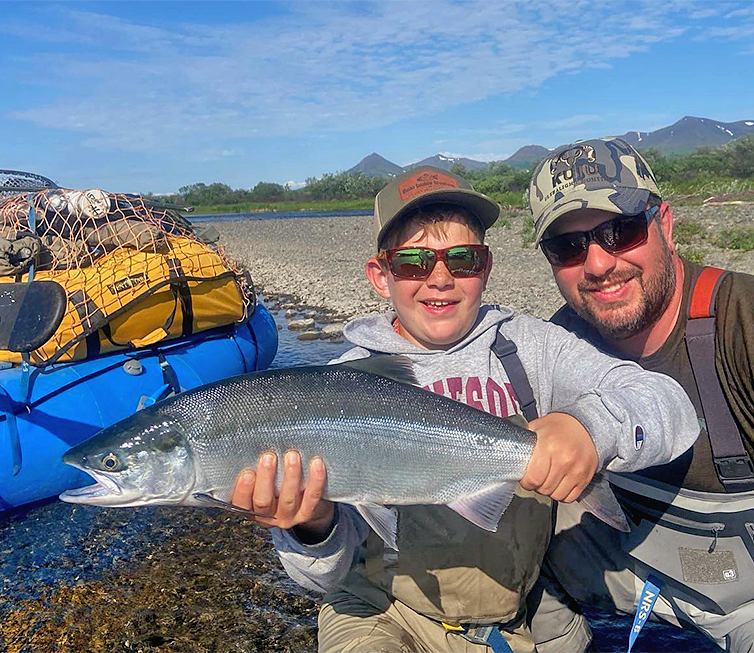
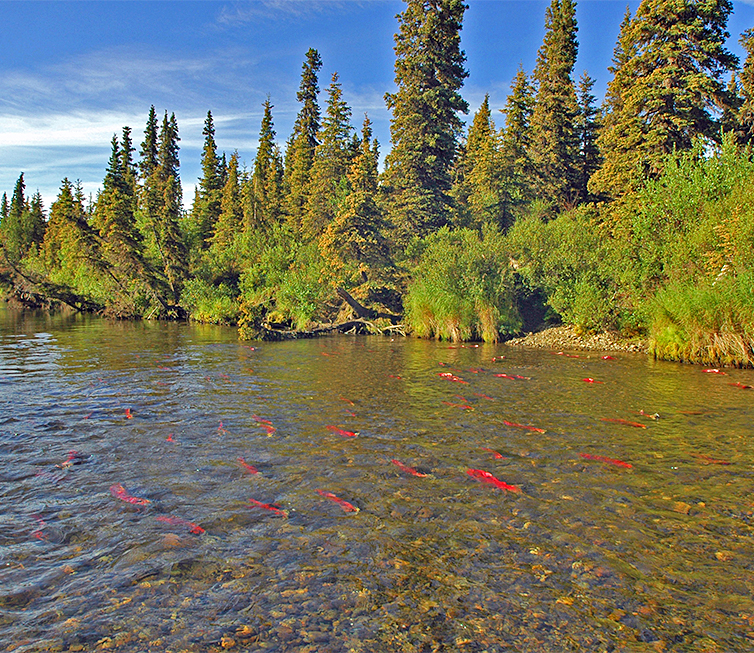
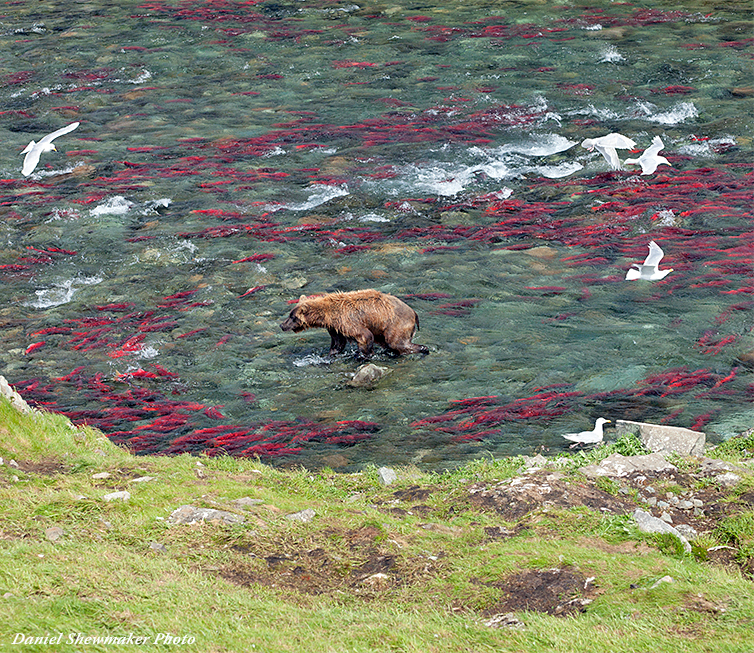
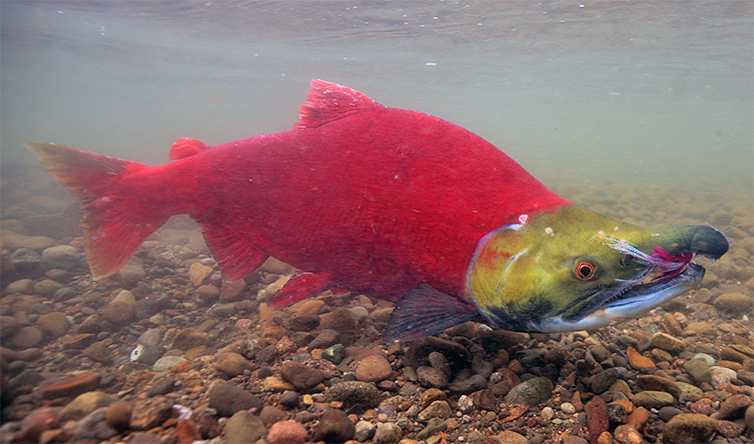
The sockeye salmon (Oncorhynchus nerka), also called red salmon, kokanee salmon, blueback salmon, or simply sockeye, is an anadromous species of salmon found in the Northern Pacific Ocean and rivers discharging into it. This species is a Pacific salmon that is primarily red in hue during spawning.
Sockeye are blue tinged with silver in color while living in the ocean. When they return to spawning grounds, their bodies become red and their heads turn green.
 Pink Salmon:
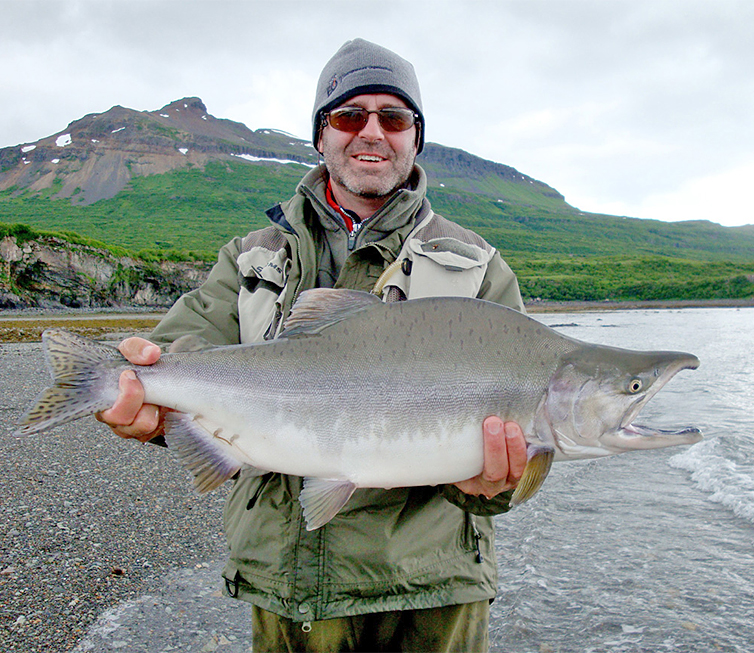
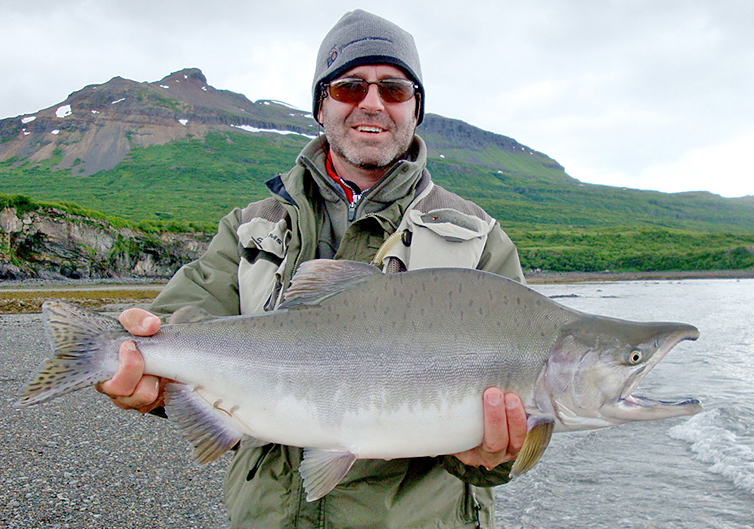
Pink salmon or humpback salmon (Oncorhynchus gorbuscha) is a species of euryhaline ray-finned fish in the family Salmonidae. It is the type species of the genus Onchorhynchus (Pacific salmon), and is the smallest and most abundant of the seven officially recognized species of salmon. The species’ scientific name is based on the Russian common name for this species gorbúša (горбуша), which literally means humpie.
In the ocean, pink salmon are bright silver fish. After returning to their spawning streams, their coloring changes to pale grey on the back with yellowish-white belly, although some turn an overall dull green color. During their spawning migration, males develop a pronounced humped back, hence their nickname “humpies”.