La Posada de los Farios [“The Inn of the Brown Trout“] is a comfortable and intimate lodge, accommodating a maximum of six (6) guests in a part of the world that time seems to have forgotten.
It is rare to see another angler, and the few fishermen that have wet a line on the Cisnes (home water) would prefer that it remain a well-kept secret. The regional rivers invite few comparisons because there aren’t many spots on earth that could match their superb fly-rodding during our North American winters.
Among the best in this angling paradise is the Rio Cisnes (Swan River), near the Argentine border north of Coyhaique. Cisnes fishing rivals that of any of the other Patagonian watersheds, and offers a tremendous amount of geographical and angling diversity. Equally important are the spectacular dry fly, streamer, and nymph fishing on the Rio Cisnes that remains reliable from December through March.
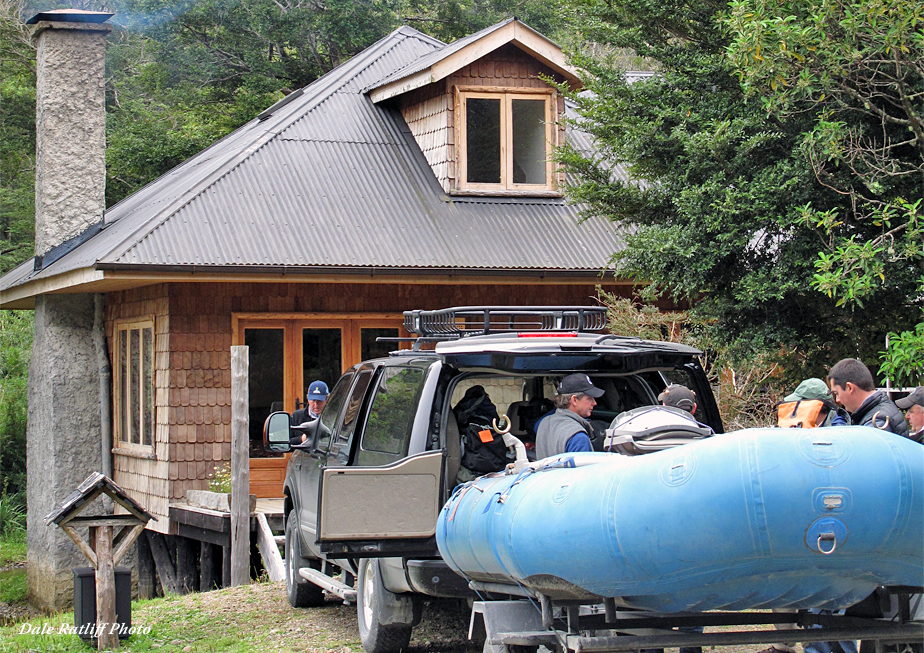
The talented staff at La Posada de los Farios uses a combination of state-of-the-art rafts, four-wheel drive vehicles, strategically placed optional overnight “wilderness” lodging, and a wealth of knowledge. The action is sometimes fast and furious, and the geography changes quickly from the high desert atmosphere of the headwaters to old growth forest and snow-capped peaks that surround the lower river near the lodge. The scenery is provocative, and every turn in the river seems to offer another, equally breathtaking vista.
Your host, Rex Bryngelson, is a very talented and experienced guide, a professional outdoorsman, photographer, and angler. A graduate of California State University at Humboldt (our prestigious wildlife and fisheries school), Rex has tackled much of the most difficult white water in North and South America, and spent years searching Chilean Patagonia for exactly the right destination to begin a fishing operation. Like his guests, he is convinced that he has found it!
This past year La Posada de los Farios was open for its 15th successful season. This is truly a special fishing experience, a wonderful spot, with a fine staff and great fishing right at the doorstep.
Reservations & Rates
Rates
Description (Double Occupancy/Single Angler)
3 Nights/2 Days with 2 full days of angling ($2,700/$3,300)
4 Nights/3 Days with 3 full days of angling ($3,400/$4,100)
5 Nights/4 Days with 4 full days of angling ($4,100/$4,950)
6 Nights/5 Days with 5 full days of angling (Sun-Sat) ($4,850/$5,900)
7 Nights/6 Days with 6 full days of angling ($5,600/$6,850)
Add 1 Night and 1 full day of angling ($750/$900)
Single Angler Rate: private room & private guide/boat
Inclusions
Your angling package at La Posada de los Farios includes fishing, guide service, ground transportation, lodge accommodations and meals, beer, wine, Pisco Sours (Chilean national cocktail) and mixes.
Non-Inclusions
Not included in your La Posada de los Farios package are hard liquor and items of a personal nature are not provided. Fishing licenses are not included in the package price. The license cost is US $75.00 for non-residents and can be purchased at the lodge upon arrival.
Travel Insurance
The Fly Shop® is not in the insurance business, but we recommend Travel Guard coverage as a service with a desire to see your best interests protected. It is impossible to know when an unfortunate situation (loss of luggage, fly rods, illness in the family, or an accident) may occur. However, such things can and do happen, and this insurance can provide a means of recourse against non-refundable financial losses.
• Travel Insurance Information
Seasons at La Posada de Los Farios
Trout season in Chilean Patagonia swings into high gear by the New Year, and continues until leaves turn crimson and drop with the arrival of winter in late April.
Trout and salmon are not native to South America. They were first introduced into Chile and Argentina's regional rivers beginning in the early 20th Century primarily by European owners of large estancias in the
Read More
south who imported the eggs and smolt by ship from hatcheries in both the U.S. and Europe. The first brown trout were introduced to Chile's rivers in 1906, and three decades later the world famous strain of McCloud River rainbows (salmo Shasta) were added to the cold clear rivers and streams of that part of Patagonia. Subsequent government sponsored introductions into the pristine lakes and rivers of the Lakes Region of Chile were very successful and this area blossomed into a sports fishing mecca in the 1950's and 1960's.
It was made famous by writers such as Rodrick Haig-Brown, Ernest Schweibert and Joe Brooks. Additionally, introductions into Patagonian waters have been highly successful and the Aysen Region of Chile (Coyhaique) is now considered the sports fishing center of Chile. Rainbow and brown trout are the most abundant species and trophy size brook trout can be found in a few remote areas.
Over the last decade we have seen an increase in the number of Pacific salmon making their way upstream, and resident trout have started to key-in on the salmon spawn as a food source. Although a few fly fishing outfitters are targeting the migrating salmon, we don't think this trend is going to take over the trout fishing in Chilean Patagonia. However, it does warrant attention and it will be interesting to see how it all plays out.
Spring in Chile begins in December. Trees have dropped their blossoms and warm summer weather lands in Patagonia before Christmas presents have been opened.
Trout season in Chilean Patagonia swings into high gear by the New Year, and continues until leaves turn crimson and drop with the arrival of winter in late April. The summers of Patagonia are abbreviated, much like those of Montana and Wyoming. Warm days often begin with cool mornings and can be punctuated by sudden thunderstorms. But for the most part, the best time to visit this fantastic part of the world is from mid-November through mid-April.
Opening day in Chile is in November, traditionally a time when North American fishermen are preoccupied with family and holidays. Schools in South America release their students just before Christmas and the rivers of Patagonia don't see much pressure until after the first of the year. Raul San Martin, one of the most highly respected fly fishing guides and outfitters just across the border in Argentina insists that the best fishing happens in December. The landscape is ablaze with a mind-baffling wildflower display, known locally as "Chocho" (Chilean word for "Lupine Season"). European Lupine carpet the landscape in an explosion of violets, reds, purples and yellows. Fish are on the surface, targeting caddis and mayfly emergences, as well as blizzard hatches of small creamy moths. Their January is our June/July. Spring snow melt is gone, the weather's reliable temperatures are pleasant, and the hatches are predictable. Mosquitoes aren't a concern in most of Patagonia, but the Lake District of Chile can be plagued for a few weeks with Chulihuachos, a pest resembling a horsefly that has all but disappeared by the end of the month.
By the first of February trout begin to key on the caddis hatches and hoppers, stag beetles and other terrestrials that dominate mid-summer fly fishing action. Probably because of the weather, February and March are the most popular months to travel to and fish Patagonia. Too, our winter is a great time to escape to Patagonia's summer and trout fish for a week or so; something difficult to do when Michigan or Vermont is frozen solid.
April is the beginning of fall in the Southern Hemisphere. Kids go back to school and the traffic is light on the streams and rivers of Chile. Like the Rockies, the weather is less reliable in the fall; days are shorter and temperatures are cooler. Dress for a full range of weather possibilities and plan on some of the best mayfly hatches (especially callibaetis on overcast days) as well as streamer fishing.
The country of Chile is divided into 15 regions with the vast majority of fly fishing taking place in the XI Region, called Aysen, that stretches from Puerto Montt to O'Higgins. Within this vast region of more than 109,000 square kilometers fly fishing outfitters base out of the communities Lago Verde, Coyhaique, Aysen, and Cisnes. Weather in this part of the world is complex; a mixture of heavy maritime climate with cold water influences from the Pacific give way to an increasingly dry continental climate as you head east toward the Andes and Argentine border. There are four different recognized climates with the Aysen Region, (cold rainy temperate), (Andean degenerating to steppe), (cold steppe), and (high altitude icy).
Getting to La Posada de Los Farios
Getting to Chile these days is relatively simple and painless with a wide choice of convenient, daily flights from Los Angeles, Atlanta, Dallas, Miami, and New York.
In the mid-60's, it took pioneer fly fishers, like Joe Brooks 22 hours to fly from Miami to Santiago and another twenty hours in the air with numerous stops along way to reach the trout infested waters in and
Read More
around Puerto Montt - now that's dedication!
Getting there is easy with a wide choice of convenient, daily flights from Los Angeles, Atlanta, Dallas, Miami, and New York. Most flights are direct, departing the States in the afternoon or early evening and arriving early the next morning in Santiago, the Capitol of Chile. Airlines that service Chile include LAN, Delta, United and American.
Arriving in Chile is simple, hassle free and safe. The flights are almost always on time, the new ulta-modern airport is clean, and the entire experience, from clearing immigrations and customs to connecting with domestic flights, is very smooth. Airfares from the U.S. to Santiago vary widely, with tickets from New York, Miami and Los Angeles ranging from $900 to $1,200 round trip. Usually the best fares can be had by flying LAN, the national airline of Chile. LAN is one of the largest air carriers servicing South America. Their modern, new air fleet has a superb record for reliability, safety and on time departures and arrivals.
Immigration Requirements for entry into Chile:
U. S. Citizens: When traveling to Chile, a valid passport is required with an expiration date occurring at least 6 months later than the day of arrival. Chilean Tourist Card: A Chilean Tourist Card Application will be handed out by your carrier during your flight to Chile. Please fill out the application and present it and your passport to Chilean Immigrations upon arrival into Santiago. Immigrations will take one copy of the Tourist Card and leave you with another which you must keep with your passport and present to Immigrations when you leave Chile. Loss of your tourist card may result in a penalty upon departure.
Your end airport destination when fishing with La Posada de los Farios is a small regional airport south of the city of Coyhaique called Balmaceda (airport code BBC). We ask that you arrive Balmaceda in the early afternoon. On departing Balmaceda, please book a flight back to Santiago in the afternoon to allow plenty of time for auto transfer from the lodge.
Day of Arrival:
After a comfortable night in Santiago (optional), guests arrive Balmaceda Airport in the early afternoon, where they are met by Rex Bryngelson or one of his staff and taken to the lodge. Often, you will have a delicious lunch at the Bryngelson’s home in Coyhaique before starting the drive to the lodge. This is a great opportunity to pick-up any sundries you might have forgotten or check your email.
The drive to the remote lodge on the Rio Cisnes is about three and a half hours and is highlighted by beautiful roadside scenery and stunning mountain vistas of the Southern Andes. Anglers and their companions are met upon arrival and introduced to the lodge and staff. The comfortable riverside ranch house backs up against the Andes and a large hanging glacier, all visible from the front porch. Each of the guest rooms is well appointed, has a private bath, and the amenities are in stark contrast to the remote Patagonian location.
After a brief orientation, you will have a chance to purchase your fishing license, organize tackle and to get settled in and get a shower, that way you can enjoy a nice dinner, relax and get to bed early enough to be fresh for a full day of fishing the next morning.
The Angling Week:
These are full fishing days, and the exact schedule will depend on the guest's wishes. Breakfast and dinner will be served in the lodge and fine mid-day meals are served in the field, streamside.
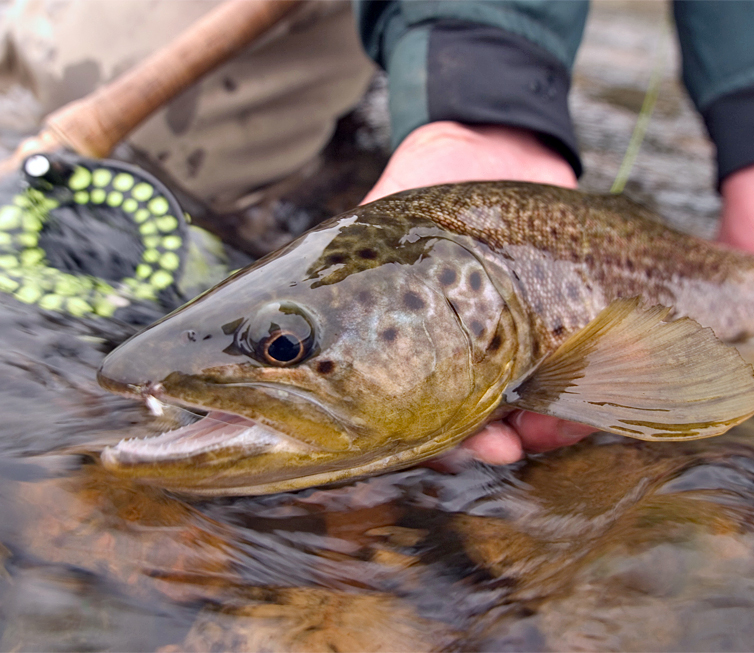
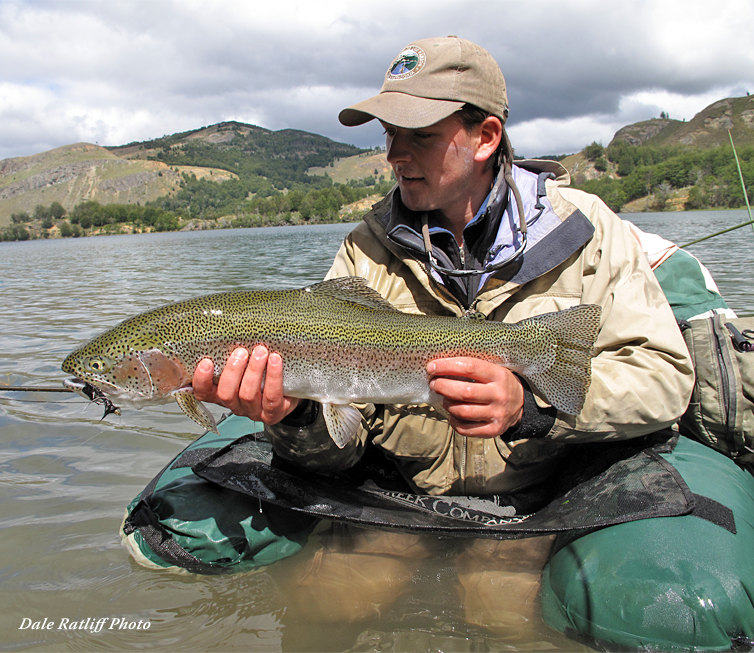
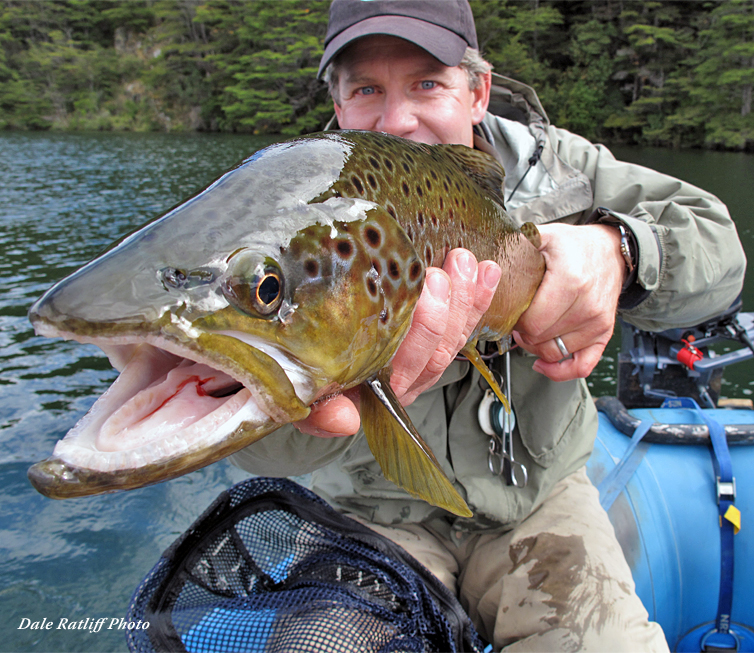
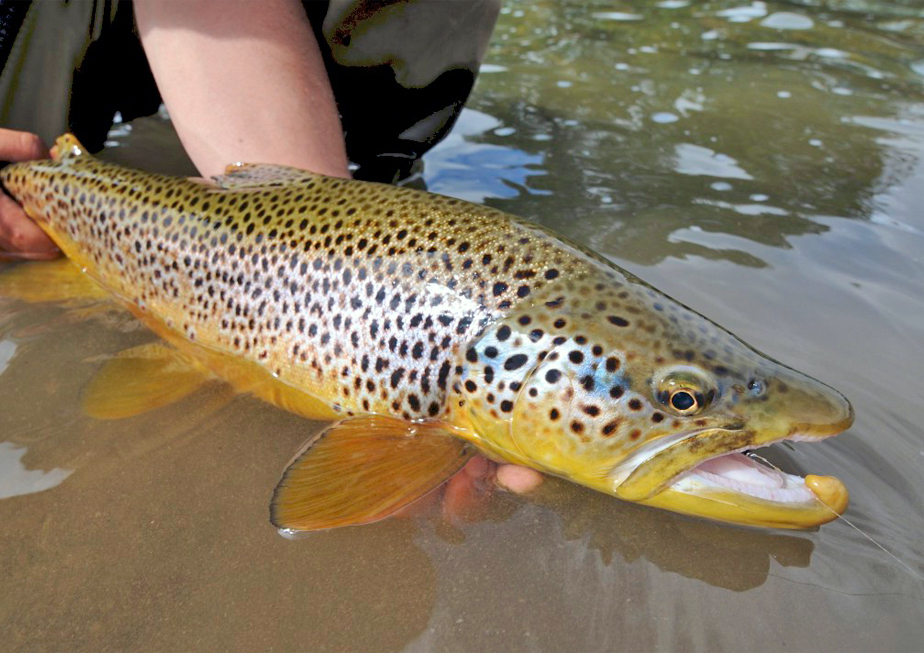
La Posada de los Farios angling is exclusively for Brown Trout in the Cisnes River, and a combination of rainbow, brown trout, steelhead, and Silver salmon on the coastal streams and estuaries. The fjord lands are a wonderful angling option accented by spectacular scenery and occasionally superb fly fishing.
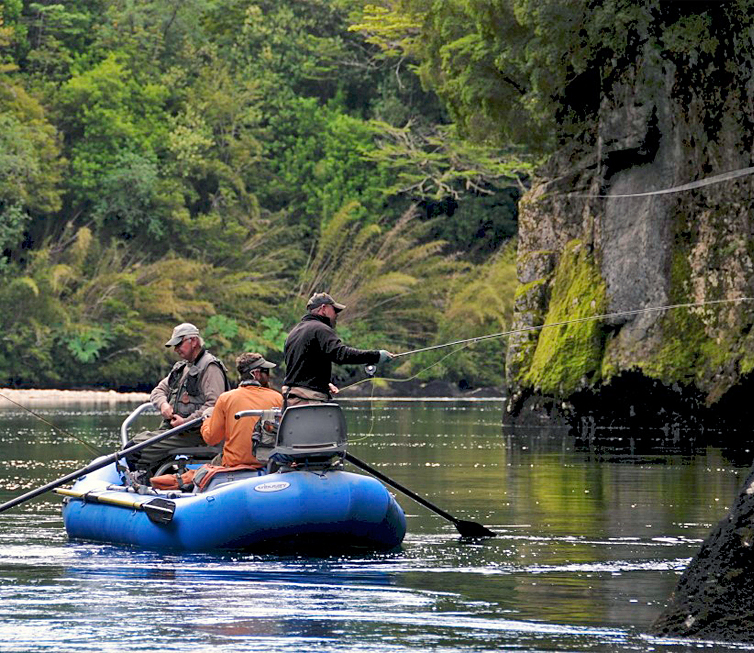
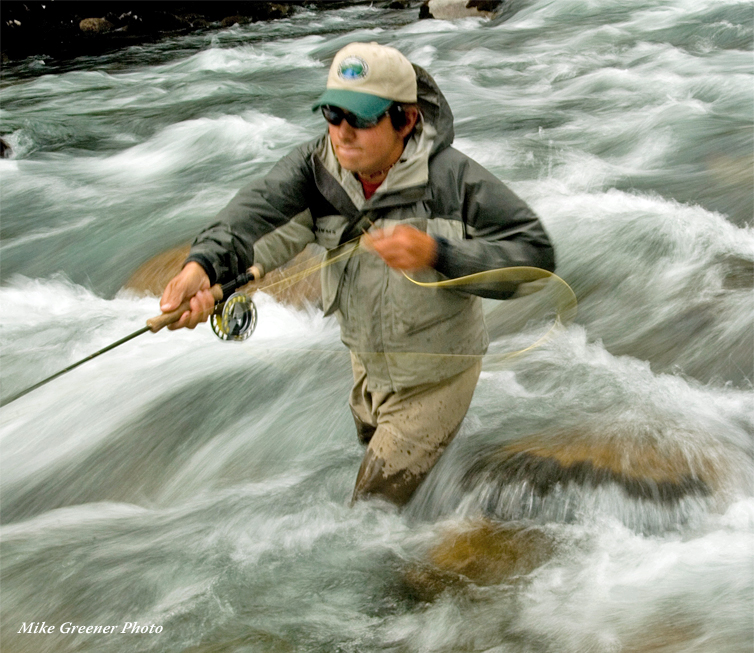
The fishing on the Cisnes is done either on foot from a variety of access points along the river, or any of a series of day-long float trips. An optional overnight float trip is a terrific introduction to water that is seldom seen in the region, and Rex and his guide staff have several superb lakes within easy striking distance of the lodge.
The after-angling cocktail reception always includes Pisco Sour, the Chilean version of a Margarita, a variety of domestic beers and some of Chile's finest varietals.
Dinners, like all meals at the lodge, are informal, superb, and accompanied by delicious Chilean wines.
Day of Departure:
Anglers will be transported to the Balmaceda Airport and begin their journey home with the flight to Santiago or the continuation of their South American angling or travel holiday.
Make it easy on yourself. Alicia Regueiro and her expert staff at Holdy Tours (800) 446- 1111 or alicia@holdytours.com are a full service travel agency. They've been our first choice for ticketing for years because Holdy professionals are intimately familiar with the intricacies of travel to Chile, Argentina and all South America. Holdy gets rave reviews from us for arranging reasonably priced flights as well as city tours, hotels, transfers, and optional add-on travel packages to our fly fishing trips. They know the best routes and connections for even the most complicated Patagonia angling destinations and they've teamed up with LAN to offer the best airfares and service to South America. Make it easy on yourself and contact Holdy Tours for your flight accommodations to, from and within Chile.
Lodging at La Posada de Los Farios
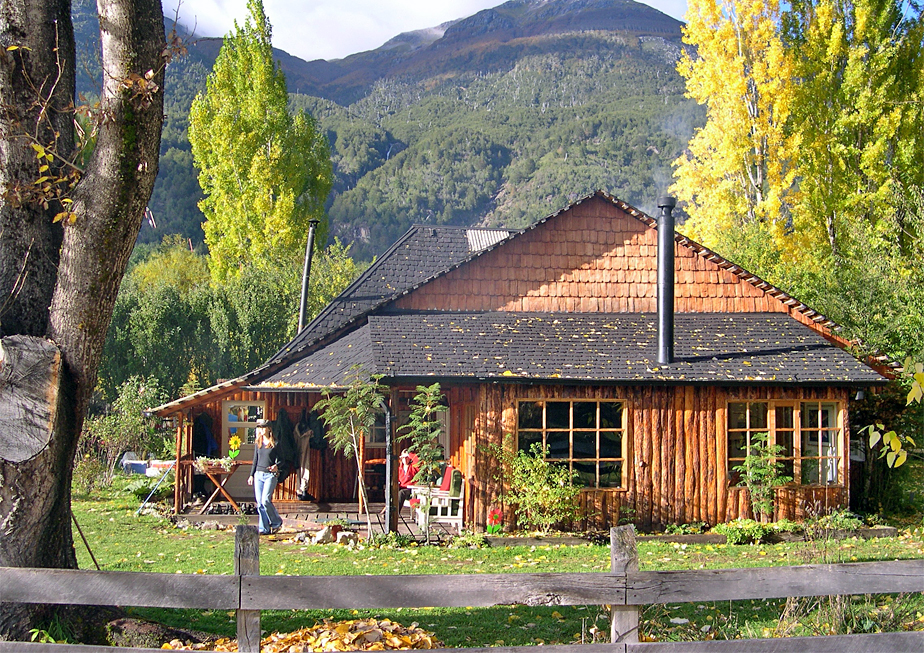
The Lodge at La Posada de los Farios sits on the bank of the Cisnes River and is the original historic 60 year old ranch house, modified to comfortably handle a maximum of just 6 guests per week.
It opened for its first guests in January, 1994. Los Farios, itself, is on a small (4,000 acre) working cattle ranch, located in the heart of the Cisnes Valley, far from any sort of organized civilization. The roads aren’t paved
Read More
in this part of Patagonia and the only phone is close to an hour’s drive away in the village of La Tapera toward the Argentine border.
The three guest rooms in the lodge are simple, spacious, and tastefully decorated, each with its own private bathroom. This timber framed (out of logs cut and hand hewed from the ranch) house oozes charm and warmth and the atmosphere Rex and his wife Maike have created is homey and relaxed. The living room is surrounded by a bank of windows and is the gathering place for cocktail hour and delicious hors d'œvres. Breakfast and dinner are served in the dining room, just off the living room. Heat is provided by two wood stoves and electricity provided by generator. There is no phone service at Los Farios, however the do have radio contact to Coyhaique in case of emergency. All linens are provided at Los Farios as well as bar soap and shampoo. There are no single occupancy options at La Posada.
Chef Fernando is a talented kitchen magician and his family-style meals are centered around fresh fish, chicken, lamb and beef. Fernando Bravo has been with Los Farios for many seasons and is now considered among the very finest lodge chefs in all of Chile today. His wonderful breakfasts and dinners are a highlight, and the dining schedule is built around the day’s best fishing, not the schedule of the guides or staff. Meals are always accompanied by fresh baked bread, salads, and fresh vegetables from the garden, and complimented by the finest Chilean wines. Delicious lunches are served in the field and prepared by your guide. They are usually served on a table with table cloth, cloth napkins and a great bottle of red “tinto” or white wine “vino blanco” to complement the cuisine.
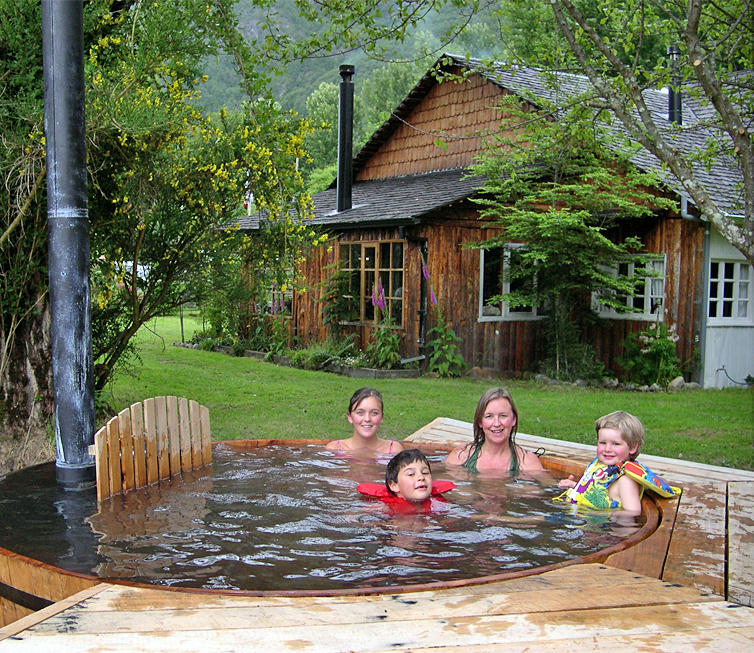
At the end of the day, you can look forward to some of Fernando's amazing empanadas, a cold beer and a soak in the lodge's steaming wood-fired hot tub. A real treat at La Posada de los Farios is the traditional Patagonian style barbequed lamb "asado" prepared over an open fire by local "gauchos" as a final farewell celebration.
Non-Angling:
La Posada de Los Farios has a variety of interesting "non-fishing" options that are guided:
• Birdwatching: Condors, parrots, kingfishers, ibis and woodpeckers, to name a few.
• Cultural visits: A visit to some of the neighboring farms & villages is a fascinating day trip. It is often the most memorable part of a guest's trip to Chile. The local rural people live a lifestyle like one would imagine it to have been like in the Western U.S. a century ago.
• Hiking: There are some wonderful hiking opportunities into some very remote and fantastically beautiful country at La Posada de los Farios. Guests interested in hiking should bring appropriate foot wear, rain gear (top and bottom) and day-pack.
• Coastal Chile Touring: The fjords of Coastal Chile offer non anglers and anglers alike some of the most spectcular and dramtic scenery in all South America. If you are booked for a week at La Posada, we highly recommend taking the two and half hour drive to the coast (an amazing trip in itself) and spending at least one night and a day or better exploring this maritime eco-system.
• River rafting: There are many spectacular sections of the Rio Cisnes to raft. Most parts of the rivers are easy w/little dangerous whitewater. However, challenging whitewater trips can be arranged for the adventurous visitor.
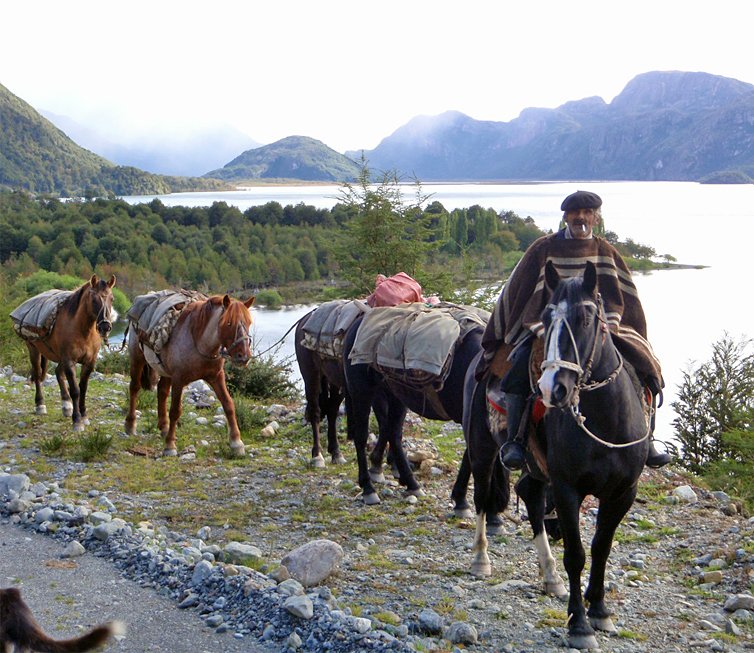
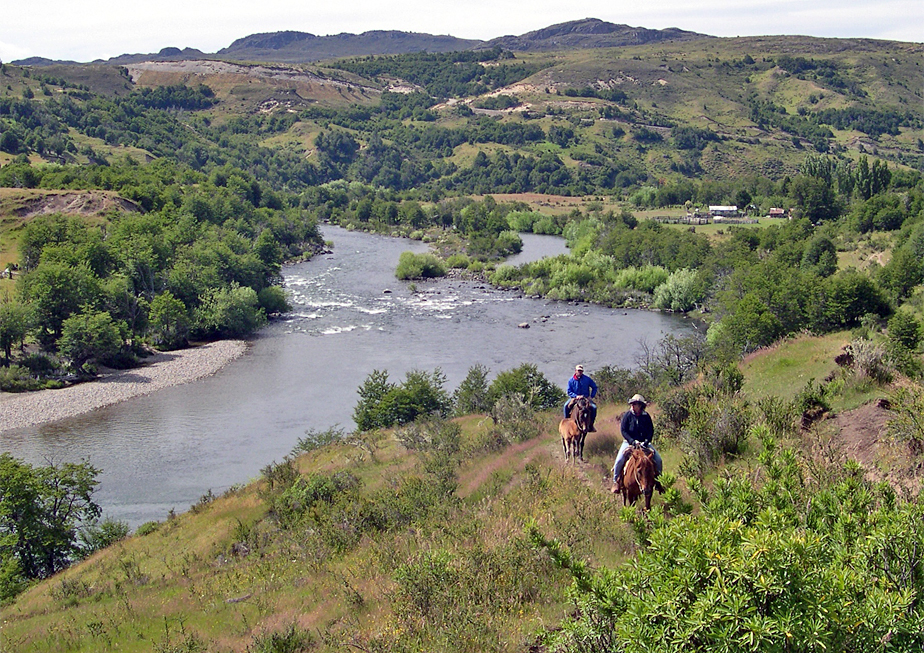
• Horse Back Riding: The area around LPDLF is horse country and numerous trails lead off in all directions through spectacular mountain vistas and virgin forest. Horses are well-mannered and sure-footed.
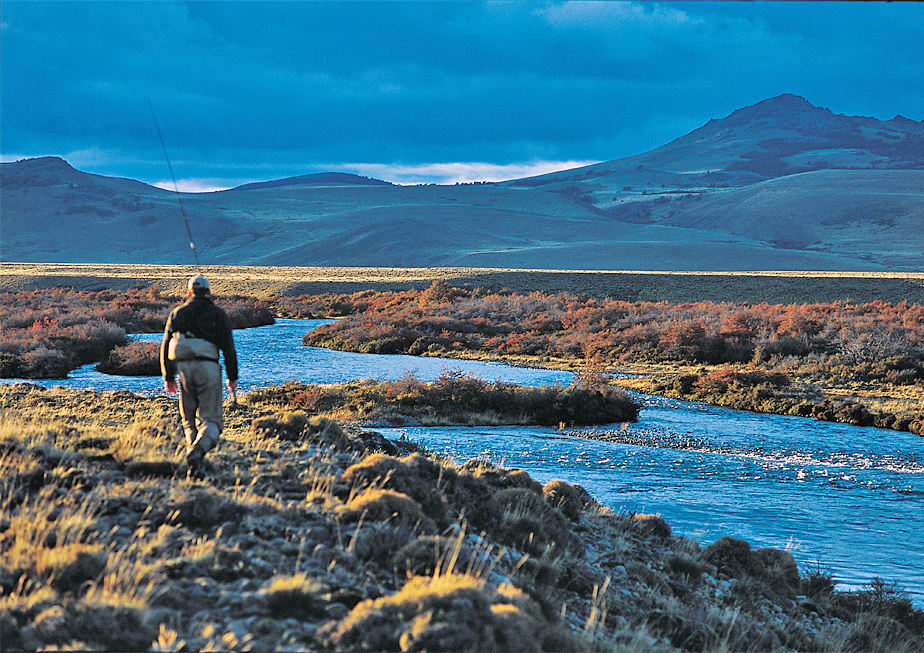
Fishing at La Posada de Los Farios
Fishing conditions at La Posada range from very easy to demanding, and fishermen of all skill levels and ages can expect to do well in normal conditions.
The shallow tributaries support healthy numbers of smaller brown trout, offering non-stop action for anglers using high floating dry flies and grasshopper patterns, while the lagunas and large serpentine sections of
Read More
The main stem of the Cisnes harbor healthy numbers of mature wild trout. These Browns are often thick in many of the regional rivers, lagunas, and spring creeks. There is also a moderate run of King salmon that can on occasion be targeted. Very few of the wading destinations at Los Farios are challenging or difficult. Anglers often choose to wade "wet" in the intimate spring creeks and lagunas, and use lightweight waders for the deeper portions of the river that require more aggressive wading. State-of-the-art angling rafts with rowing frames are on hand and the day long float trips offer a Montana-style accent to this terrific South American experience. The Cisnes Medio region forms the border between rain forest and dry pampa, at approximately 1,000' elevation. The weather is very reliable, and the warm Chilean summer is pleasantly accented by a few showers. Sweaters and rain jackets might be required, as the weather can be variable as fall approaches.
The Upper River Float (moderate to difficult):
Starts roughly 1 hour upriver to the east of the lodge. This is a 10 mile float and can make for a very long day. However, it can be broken up into 2 parts if anglers are willing to make an approximate 1 mile hike out from the river to the road at the 1/2 way point. (It is a moderately difficult hike along a dirt road with a short but steep uphill ascent of approx. 300 yards. This float section is the highlight of our fishing program both fishing wise and scenically. It flows through semiarid mountainous terrain and can offer excellent dry fly action with the right conditions.
There is one class III rapid to be navigated about 3/4 of the way through the float. We typically fish large attractor dries like Chernobyls, Fat Alberts, Gypsy Kings and Hoppers. However, streamer fishing can be very productive as well, especially with wet high water conditions. Wooly Buggers with white rubber legs typically work the best. Fish on this section average between 15-18 inches and anglers often have shots at fish 20 inches or better. We sometimes make stops to fish one of the several spring fed lagunas or small spring creeks that are accessible along the river where larger trout can be found and often sight-fished to. From the take out it is about a 40-minute drive back to the lodge.
Lodge Float (easy):
This float starts right from the lodge and is about 6 miles long. This is a good place to start the week after the long trip down to Chile. This section is wide and meandering and floats through some old growth Coihue (coy-way) forest that makes up the transition zone between the drier Patagonian steppe and the coastal temperate rain forest. Fish average 10-14 inches on this section of the river and are very abundant. This is not to say that larger fish cannot be found here! All of the very largest predatory browns (25 inches +) we have caught from the lodge have been on this section of the river. The river passes by 2 small tributaries, The Rio Las Torres and the Rio Rodriguez, and anglers may stop to fish the lower sections of either one of these, as well.
Again, we typically fish large attractor dries like Chernobyls, Fat Alberts and Gypsy Kings. Black-bottomed foam flies seem to be the most productive - we believe this is because fish are always on the look out for beetles that are especially abundant in this area. Every 2 years we experience a prolific hatch of the huge Cantaria beetles (large stag beetles) from mid December through February. Streamer fishing can also be very productive, especially with wet high water conditions. Wooley buggers with white rubber legs perform very well. From the take-out it is only about a 15-minute drive back to the lodge. This float can also be done in 2 parts. We often offer the upper ½ of this float as an option on a guests day of arrival.
Lower Canyon Float (moderate to difficult):
This float option has been opened up as a result of the expansion of the "Carretera Austral" or "Southern Highway". The float begins about 25 kilometers down river to the west of the lodge (30 minutes). Here the river delves into the lush coastal rainforest with even more rugged and spectacular glaciated mountain terrain providing for the back drop. Along the way to the put-in we pass by Villa Amengual, a quaint rural village of about 200 inhabitants and our closest link to civilization. The river gets big down here and flows several miles away from the road and, due to the fact that there is a tricky class IV rapid to be negotiated, we will only undertake this float when the water flow conditions are favorable. We choose not to chance making this float during too high of water conditions and, for safety reasons, we will only operate this float as a two boat trip. It is hard to imagine a more spectacular float in Chile or, anywhere else in the world for that matter. The river is big, the mountains are big, the forest is lush and primeval and, although the typical brown is not overly large, we have seen some truly monster browns come out of the depths on nearly every trip we have made down there, especially in the tight canyon sections along the rock walls. We believe it is only a matter of time before someone lands a 30+ inch fish down there. It is challenging fishing, often throwing large flies on heavy sinking lines but, there is the very real possibility of catching, or at least getting a glimpse of, that brown trout of a lifetime.
The Rio Manihuales (easy):
Due to the present paving of the Carretera Austral (Southern Highway) it will now be reasonable for us to add the Rio Manihuales to our float fishing options. There are 3 or 4 floatable sections of this river from about 45 minutes to 1 hour and 15 minutes away from the lodge. This will be our closest and only option (aside from the coast) where we can fish for rainbow trout in addition to brown trout. The Manihuales is a large river and best fished from a boat. The river is rugged with immense logs lining the banks in several areas providing for excellent structure for larger fish. Deep pools with high rock walls on other sections also provide great habitat for large fish. The terrain surrounding the Manihuales is very similar to the middle Cisnes area near the lodge and highlighted by spectacular views of Cerro Picacho, an impressive peak reminiscent of the Matterhorn. The Browns and Rainbows of the Manihuales average good size and it is almost a given that someone during the day will land a fish in excess of 20 inches during a days float.
Lower river wade options (moderate to difficult):
There is some moderately easy wading to do right in front of the lodge that becomes easier the lower the water gets. During high water we will suggest floating instead. This is a good option on the day of arrival.
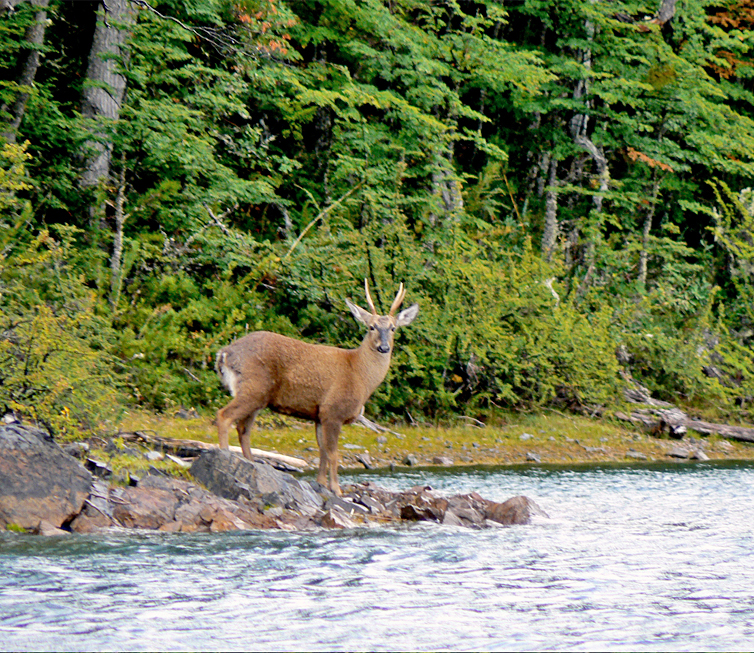
About 10 minutes up from the lodge there is a gorgeous wading option at a place we call Jose's. This is moderately difficult wading and involves and fair amount of walking. The river bottom is primarily large cobbles and boulders, but not slippery, nor is the current overly fast. This section of the river is very rarely fished. It is quite scenic here where the river leaves the rugged canyon section of the river called La Garganta ("The Throat"). A few seasons some of our guests spotted a rare Huemul deer here at close range. Fish tend to average small, 10-14 inches but are abundant and we often do very well here fishing smaller dries. Especially productive are small (#14) black beetles, but larger attractor dries also can work well. We typically bring a raft with us to cross the river and to fish a large pool that is inaccessible wading and where we have the best luck for larger fish. There are also a couple of hidden and protected oxbow lagunas here that can produce some nice size trout, and are a nice respite during windy days.
The New Zealand Hole (moderate to difficult):
There is also another wading area just up river from here we call The New Zealand Hole, named as such because it is a deep canyon pool like what I have always envisioned it to be like in New Zealand. It involves a ¼ mile walk down a moderately rugged trail. This is where the lodge record brown (31 inches) was caught once during high water conditions; a 28 inch fish was also caught here the same day, both using streamers. It is a gorgeous place to fish with steep granite walls surrounding a deep bottomless pool. This is a good place to spot large browns that are very difficult to trick into eating a fly. However, it is rugged and only recommended for agile anglers who are able to scramble over steep rock along the river's edge to get into position to present a fly.
There is some relatively easy wading where the pool tails out. Dry fly action can be very good here but, as is typical with many of the deep pools along the Cisnes, the fish can be very spooky and some very accurate casting is often required to be successful here.
Tributaries (easy wading):
There are 2 small tributaries, The Rio Las Torres and the Rio Rodriguez, located about 10 minutes downstream from the lodge that can be fun to fish. They are both reasonably easy wading. Getting to the Rio Las Torres involves using a raft to cross, or crossing using a small cable car that traverses about 20 feet above the water. Both rivers produce primarily small browns, but we have seen 20+ inch fish come out of both of them over the years. (We believe these larger fish are spawners that decided to stay in the tributary to prey on the smaller fish.)
The tributaries can be good options during windy days as they are relatively protected. We access another tributary called the Canelo River about 10 minutes up from the lodge that can also be a lot of fun but, the wading can be moderately difficult as it is very rocky. All of these tributaries are only good for a few hours each so we will sometimes move from one to the next to make a full day out of it.
The Moro River (difficult):
Another productive tributary that comes into the Cisnes about 40 minutes up-river from the lodge. It has a very scenic canyon with nice pools and is relatively arid and protected. Dry fly action can be very good and we often find larger browns in each of the main pools. It is tough wading and only recommended for the anglers who are strong waders and hikers and up for a good strenuous adventure.
The Upper Upper Cisnes (easy):
Larger average fish (14-18 inches) on this section. About 1 hour up river from the lodge the Cisnes splits and the southern branch becomes a small and very easily waded river that could probably best be described as a creek. This is where the mountains begin to fade giving way to the vast open Pampa to the east. Conditions tend to be windier here because of the relative lack of protection. This section can make for excellent dry fly fishing especially, during the hopper season from (mid-January through mid-March) and then afterwards as the mayfly action gets going, from mid-March on. There are 2 main beats we wade fish on this section. There are also several small spring-fed lagunas that are accessible in this area that can produce some larger trout. Fishing these section can involve a good amount of walking (1-2 miles) over flat easy terrain.
The Main Upper Cisnes (easy):
About 50 minutes upriver. This is also relatively easy wading with small gravel but, bigger water than the upper Upper section (during high water times we typically opt to float fish rather than wade this area). Again, dry fly action can be excellent during the hopper season from (mid-January through mid-March) and then afterwards as the mayfly action gets going, from mid-March on. There are 3 main beats we fish here, all of which provide access to some of the spring fed lagunas or small spring creeks that can provide for good dry fly action for larger fish. Sight fishing is often possible in these lagunas. Again, a fair amount of walking (1-2 miles) over easy terrain is required to best take advantage of the fishing options in this area. River crossing can be difficult, especially during higher water conditions.
Lago Las Torres (easy to moderate):
Located about 20 minutes form the lodge. Surrounded by jagged mountain peaks that literally rise up to over 1 mile above the lake's edge. It is hard to imagine a more scenic setting. The lake is surrounded by a lush and ancient old growth temperate rainforest and completely protected within the 40,000-acre Lago Las Torres National Reserve. There is a very healthy population of brown trout that average 18-22 inches and are spectacularly colored due to the rich organic quality of the water. Dry fly action can be superb on warm days as the browns aggressively hunt adult dragonflies cruising just above the water's surface. It is common to see large fish launch completely out of the water to capture dragonflies several feet above the water. They will often exhibit the same aggressiveness towards a large attractor dry fly, such as a Gypsy King, when effectively presented. The explosiveness of the takes can be unforgettable. There is a tremendous amount of structure along the edges of the lake with numerous large logs, weed beds and reed areas. There are several shallow open areas between the reeds and the shoreline where large browns can sometimes be stalked and sight-fished to.
Hidden Lagoon (moderate):
There is a remote and very productive hidden laguna (where we keep an Outcast boat) that is connected to the main lake via a small creek. It involves a moderately difficult 1/4 mile trek through the jungle to reach it. The fishing in the laguna can be excellent for fish averaging 18 inches and better. It is very protected and a good place to be during windy conditions.
Lago Los Farios (private lake):
For many people, the thought of lake fishing conjures up images of vast, featureless expanses of water and hours of mind-numbing trolling, hoping for some unseen denizen of the deep to somehow find their lure and bite. Not very scintillating stuff. The lake and laguna fishing at Rex's couldn't be further from this kind of picture. Imagine instead small, manageable-sized lakes and ponds, the kind you can often float tube around in an hour, or less. Visualize shallow, clear water, where you can see many of the beautifully- marked 12 - 20 inch browns before you cast to them. Consider that these fish see only a handful of anglers each year, and often rise eagerly and aggressively to large dry flies, as well as chasing midsized streamers and nymphs. In addition, some of the lagunas are tiny; the kind you sneak up to, not really believing anything bigger than a guppy could possibly live in, then stand slack-jawed as a big brown head engulfs your hopper off the surface, the owner of which, when you set the hook proceeds to cartwheel wildly across the top of the water. No, trolling this DEFINITELY is not!
It's a great trip for those who enjoy riding horses. Our horses are very mellow. It's a relatively easy 1.5 hour ride (4 miles) beginning in arid open country on the upper river where the mountains just start to begin to settle down before melding into the open Patagonian pampas to the east. The trail rises up several hundred feet through this spectacular open mountain country before eventually leading into an old growth Lenga forest (Southern Beech) that surrounds the entire lake.
"The lake (which we are now calling Lago Los Farios) is a mile and a half in length and truly pristine with fantastically clear water. One of our guests and guides last year had the rare experience of sighting an endangered Huemul (Andean Deer) close up as it waded along the lake's edge. There is a very large and healthy population of brown trout that averaging between 15 - 19 inches that are incredibly stout and hard fighting. We believe that a prolific scud population is what contributes to their exceptional condition. Dragonflies are abundant and we often have great success taking fish on large drys (Gypsy Kings, Chernobyl Ants, etc.) throughout the season. As always, weather conditions dictate the techniques that we employ to take fish, with warm days typically providing the best surface action." - Rex Bryngelson
Why We Endorse This Destination:
La Posada de Los Farios Lodge
• La Posada de Los Farios is a restored ranch house on the scenic banks of the Rio Cisnes, replete with the feeling of real Patagonia and the gaucho lifestyle. It is very remote, and it's rare to ever see another angler on any of the water they fish. A week here is like stepping back in time, both culturally and fishing-wise... you'll return home knowing you've experienced authentic Patagonia. The lodging is comfortable, so you'll wake up each morning refreshed and ready for another day on the water; the fishing is largely from rafts, making for beautiful daily floats and productive fishing; and the food is delicious, leaving you excited for each new meal!
• Unlike most local fly fishing lodges, La Posada de Los Farios is happy to host anglers for less than full weeklong stays, with no set arrival and/or departure days. This makes it the perfect destination to add to other lodge stays, or for those who are in the country for other reasons and simply want to add several fishing days to their travel schedule. Travel to and from Trouters is simple, which lets you concentrate on enjoying a wonderful fly fishing holiday.
• La Posada de Los Farios' fishing program is based around numerous different floats on their home water, the Rio Cisnes, and another nearby river, the Rio Manihuales. These floats vary from smaller water flowing through open meadows at their upper ends, to big water serpentining through deep, rugged canyons downstream. And all of it offers prime fishing with large foam dry flies and streamers, all season long, making for a lot of beautiful and productive days. As well, owner Rex Bryngelson has a private lake reached only via horseback that is loaded with chunky brown trout, many of whom will eagerly inhale large dries. If you enjoy fishing dry flies and streamers in solitude, you won't be disappointed at La Posada. There are no down days here; every day is a fishing day. No matter what the weather and conditions, the guides will have you fishing in productive water every day of your stay.
• Host and head guide Rex Bryngelson is an American who moved to Chile decades ago, married a beautiful Chilean wife, and they have run their lodge on the banks of the Cisnes ever since. This gives guests the best of all worlds - an owner who speaks perfect English and completely understands the American culture and what it is North Americans want, and a Chilean native who infuses the lodge experience with authentic Chilean culture. This touches all aspects of the trip, from the fishing, to the accommodations, to the cuisine!
• La Posada de Los Farios is a small operation, accommodating a maximum of 8 guests at a time. This is no big corporate lodge, but a family-run operation where personal attention and flexibility in the daily fishing program is the norm. Your fly fishing trip will be custom-tailored to your wants and needs and you will go home with wonderful memories and as a new member of the Bryngelson family.
Additional Photos