It would be hard to imagine a destination more perfectly suited for permit fishing. Each day anglers are within minutes of a vast array of flats which, in rising and falling tides are loaded with tailing permit. Typically, anglers and guides will plan their daily schedules around the tides, fishing whatever hours give the best amount of hours on favorable tides. If the best tides are at five in the morning, your guide will be waiting for you then at the dock, boat prepared, with both breakfast and lunch in the cooler. These guides routinely give their clients eight to nine hours of fishing time, beginning early in the morning or staying late into the evening, to be on the flats for the best fishing possible.
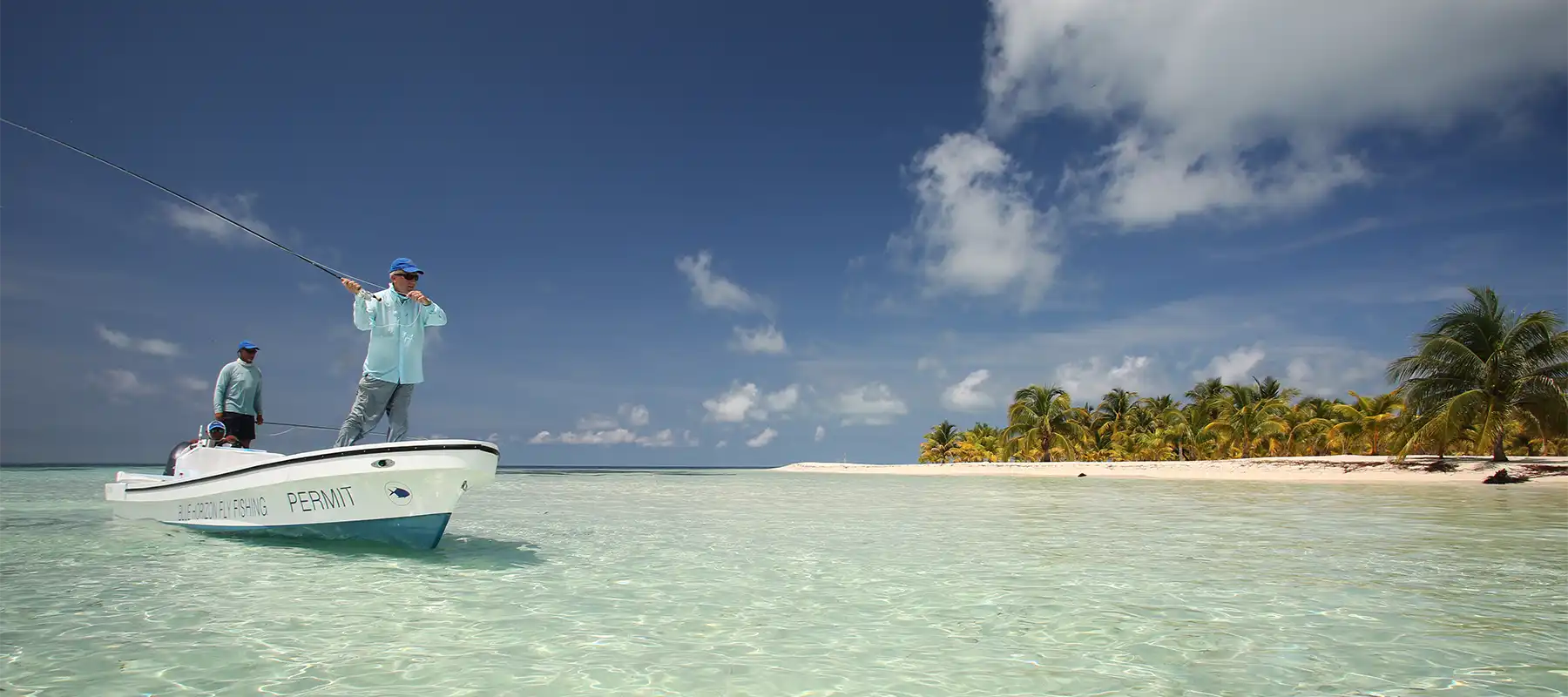
It is common to see tailing permit in front of the lodge on their “home flat.” With numerous famous permit flats within a ten minute boat ride, the action begins shortly after you step onto the boat. Due to the location of the lodge, their guides are the first boats on the flats each day. Other guides, who bring anglers from the mainland, often arrive hours after you will have started your day of fishing. It is quite common for Blue Horizon guests to have already landed a permit before the first boats from the mainland arrive on the flats.
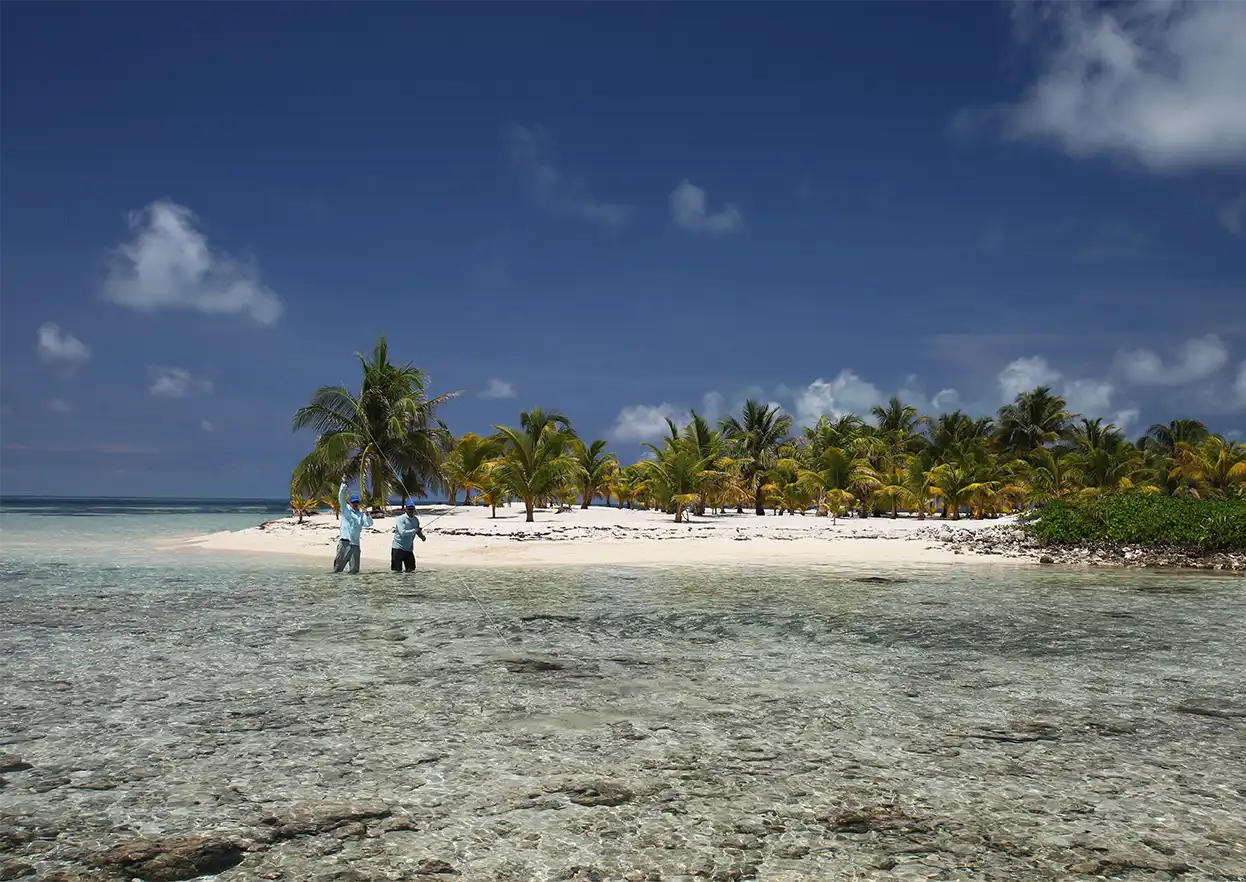
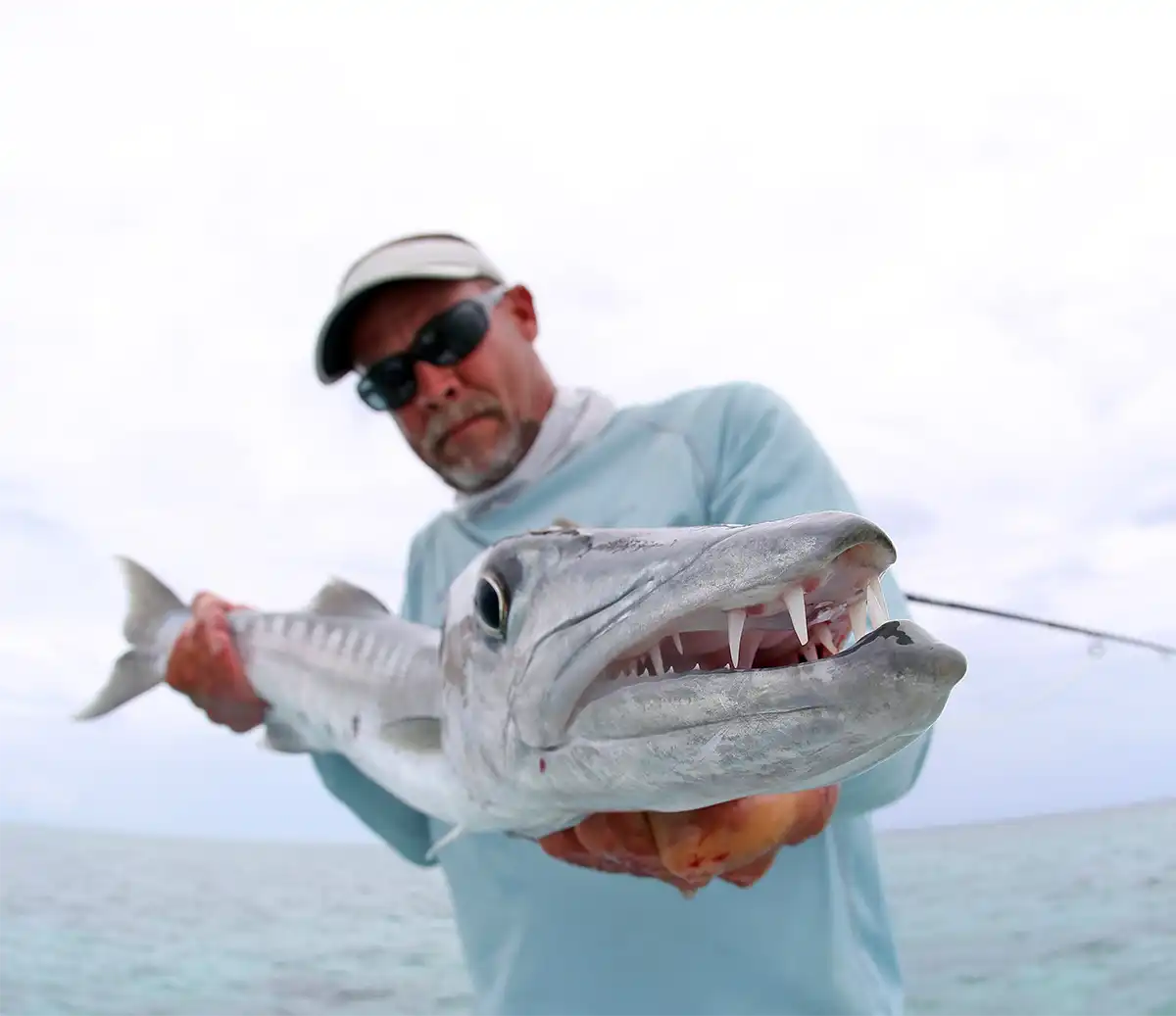
Besides the world-class permit fishing, anglers can also choose to target a limited amount of bonefish flats, as well as having access to a mix of small-to-large-sized tarpon. The bonefish are found on typical hard-bottomed flats, and accessed both from wade-fishing and from the skiffs. The larger tarpon are fished in reef cuts, swinging streamers on sinking lines, while smaller tarpon can be found in small lagoons on the leeward side of several mangrove islands. As well, there are barracuda and a number of reef species, for anyone wanting to mix it up with a variety of hard-fighting species.
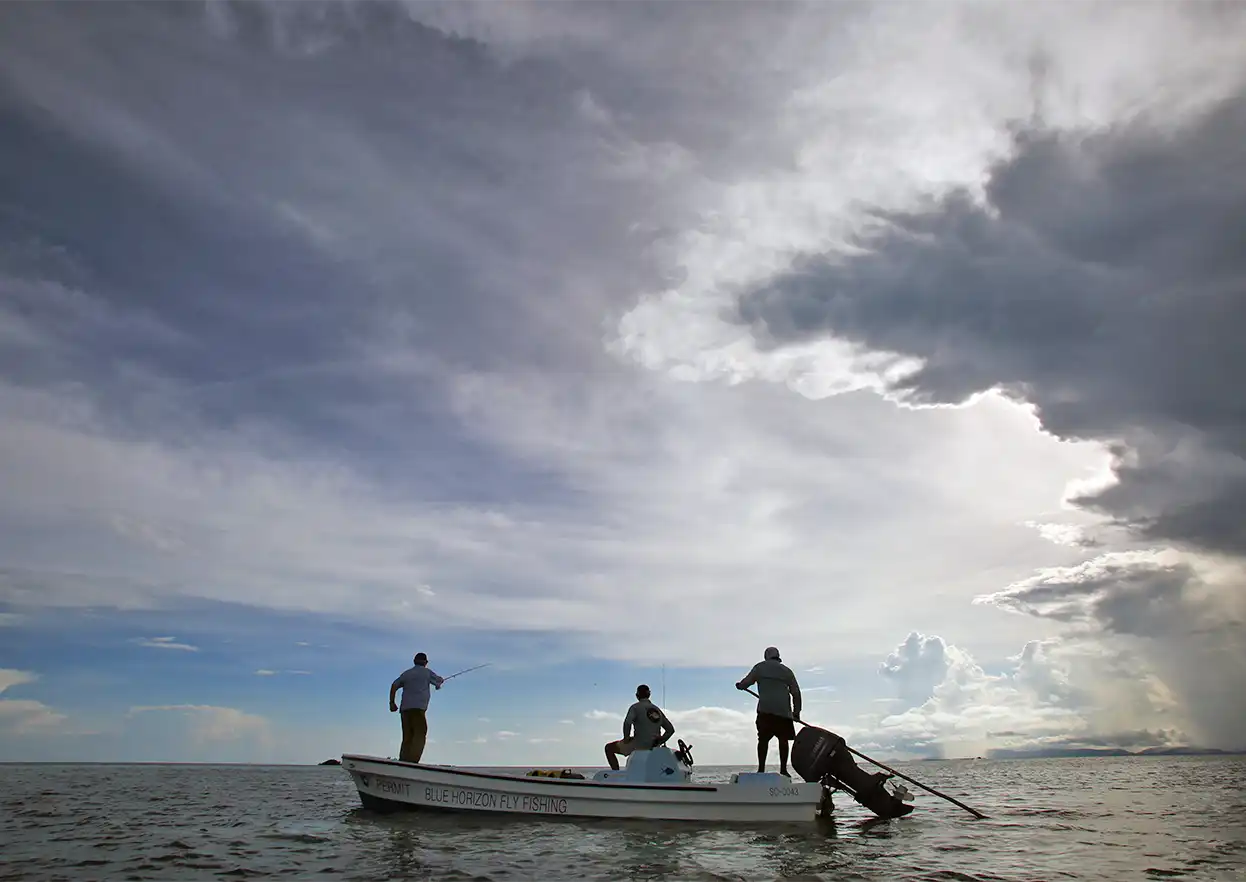
Blue Horizon guides are seasoned professionals and totally focused on getting their anglers multiple shots at permit. Each has been selected and trained by world-renowned permit guide Lincoln Westby. Blue Horizon provides customized pangas, perfectly suited for fishing their local waters. These boats are equipped with huge, clear casting decks, powerful motors, and the ability to be poled in mere inches of water.
Fishing at Blue Horizon:
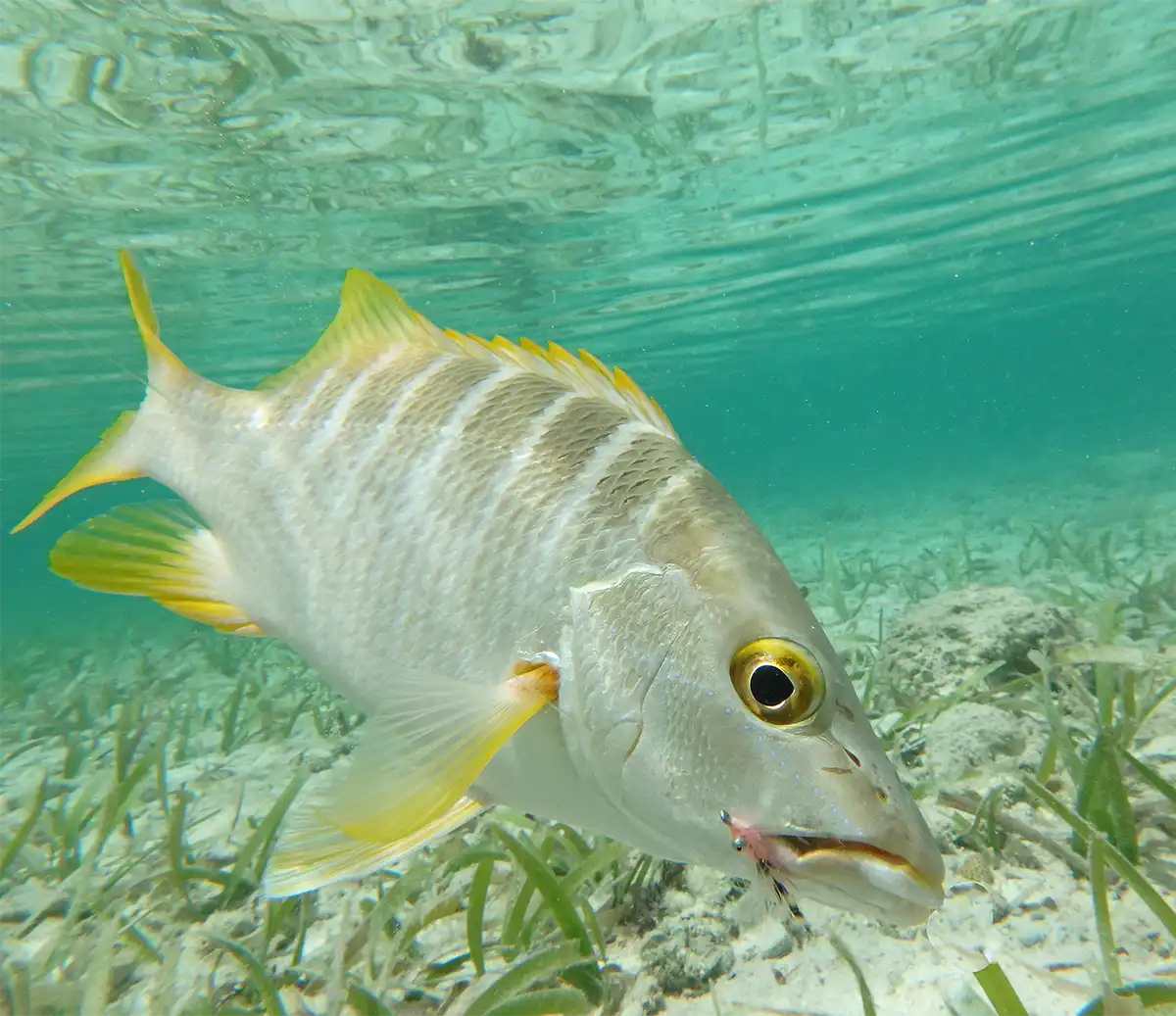
The South Water Caye Marine Reserve, locally known as Permit Alley, is composed of productive pancake flats and many schools of permit, bonefish, and cruising tarpon. The nearby Meso-American Reef is home to permit and tarpon, as well as jacks, snapper, barracuda, and other species. Tarpon are present year round, and found around nearby cayes, in channels, and in the Placencia lagoon, also home to healthy populations of snook. From late April through August, anglers can cast their flies at large migratory tarpon, some exceeding one hundred pounds.
Besides the vast experience of their talented guides, the next best reason to fish with Blue Horizon Lodge is the proximity to the most productive permit flats in Belize. It is very common to travel less than ten minutes from the lodge and be casting to tailing permit. Occasionally the guides will make longer runs, but only if they are confident that they will find un-pressured fishing.
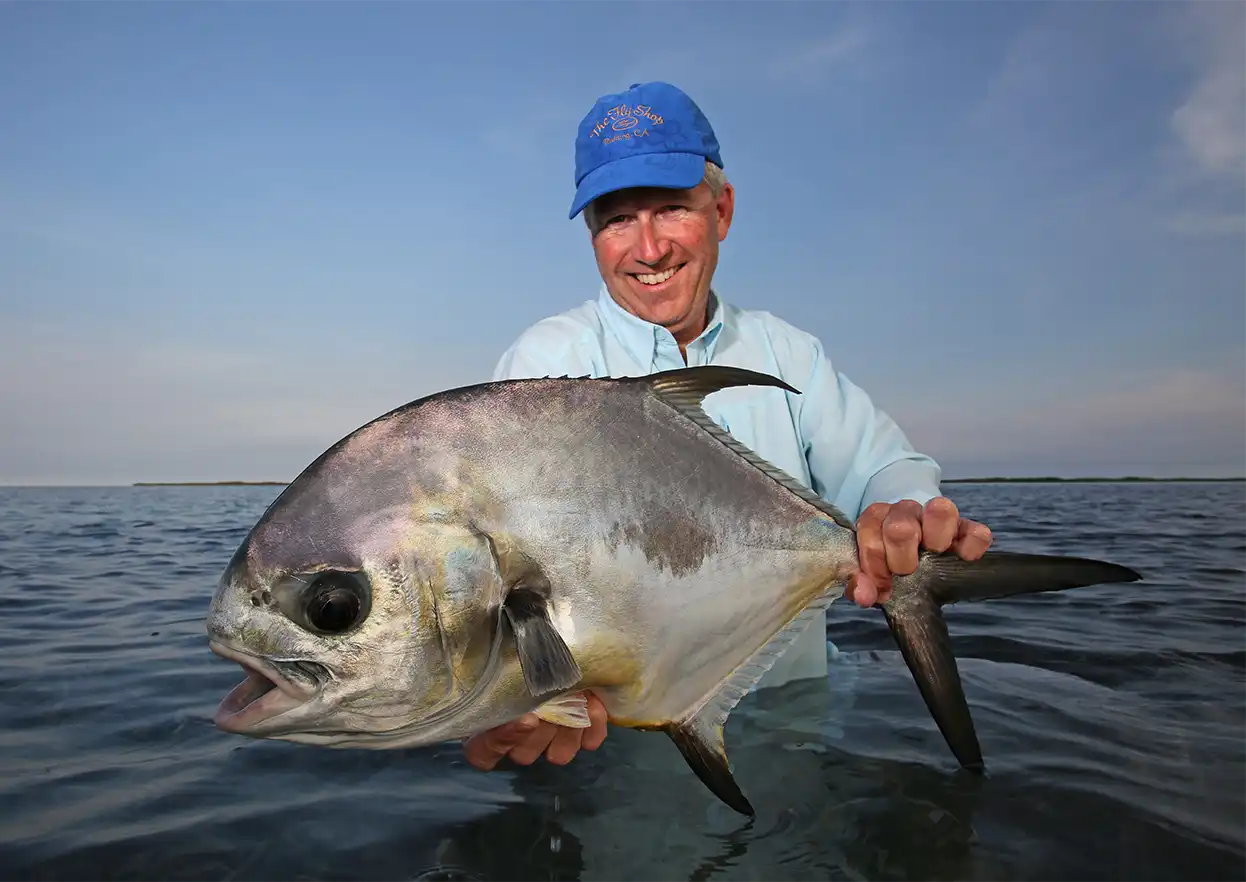
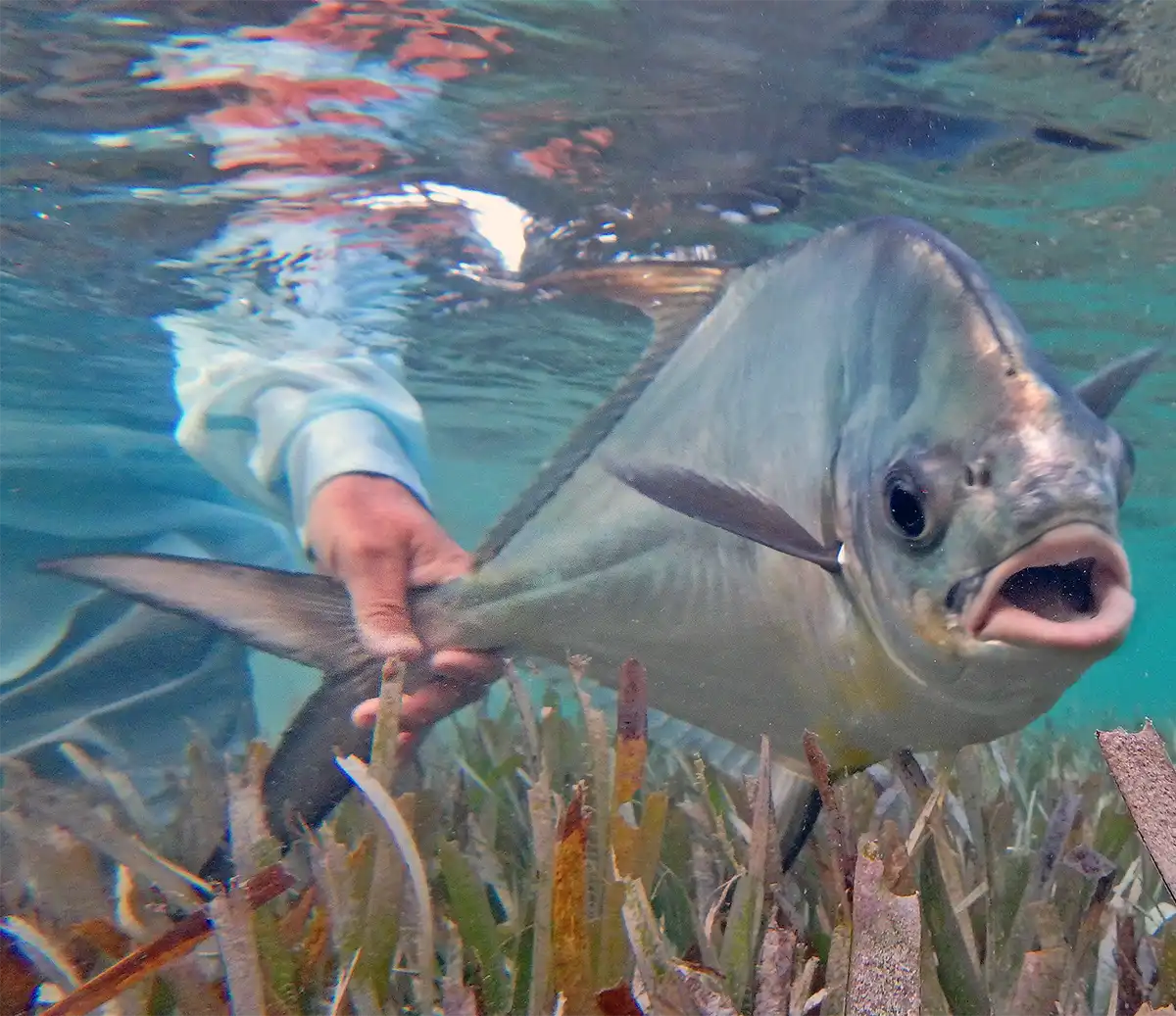
The vast majority of anglers come to Southern Belize to pursue permit. Permit are plentiful and typically found on the pancake flats and the outer cayes of “Permit Alley”. You can expect plenty of shots at five to twenty pound permit on any given day. There are few places in the world you can expect to have more shots at permit. What makes Permit Alley so unique is the number of tailing permit you will encounter. The majority of the permit shots will be to tailing fish. A tailing permit is a feeding permit, and you should expect to have eighty percent or more of the permit you see to be tailing.
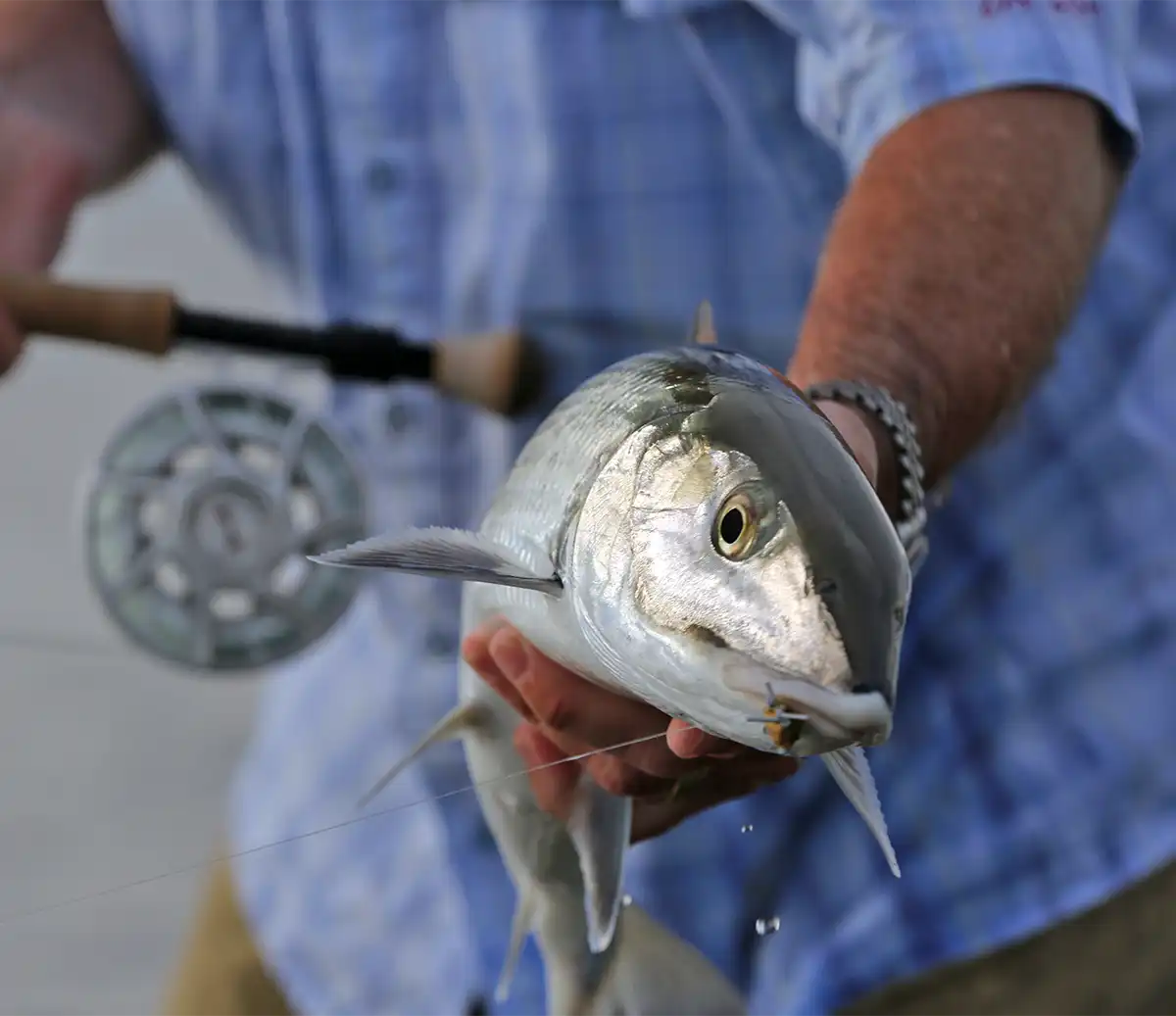
While the area is best known for permit, there are impressive numbers of bonefish. The most common place to see bonefish is on the flats near the cayes or on select reef flats. On an average day on the flats, any time of year, you will see and fish to schools of bonefish in the two to five pound range. These fish tend to be in schools; however, there are singles and doubles if you are interested in more challenging fishing. Blue Horizon guides can consistently find schools of bonefish, even during low tides and in weather conditions that could limit the encounters with permit.
Tarpon are present in the fishery throughout the year, in select channels and inside protected island lagoons. The tarpon migration is generally from late April through August in this part of Belize, with the channels and cayes in the South Water Caye Marine Reserve getting robust schools of tarpon during the migration. There is considerably less pressure in these waters then in the more famous areas of Northern Belize. The tarpon in this fishery tend to be ‘eaters’, not ‘lookers’.
Fishing Schedule:
Most guides and fishing lodge operations in Belize will start the day at a set time, no matter what is happening with the tide. At Blue Horizon Lodge, they fish the best tides no matter what time of the day… as long as there is day light. They fish the tides, not the clock. Some mornings the guides will be leaving before the sun rises. Other days you’ll sleep in. The tides are the master and they determine when and for how long each fishing session will span.
There are two basic schedules at Blue Horizon Lodge. The first routine sees early morning starts, with a mid-day break at the lodge, then back on the water once the tides turn, fishing until dark. During a mid-day high tide cycle, your guide day will start between six and seven am, and you can expect to be fishing until at least three pm before returning to the lodge.