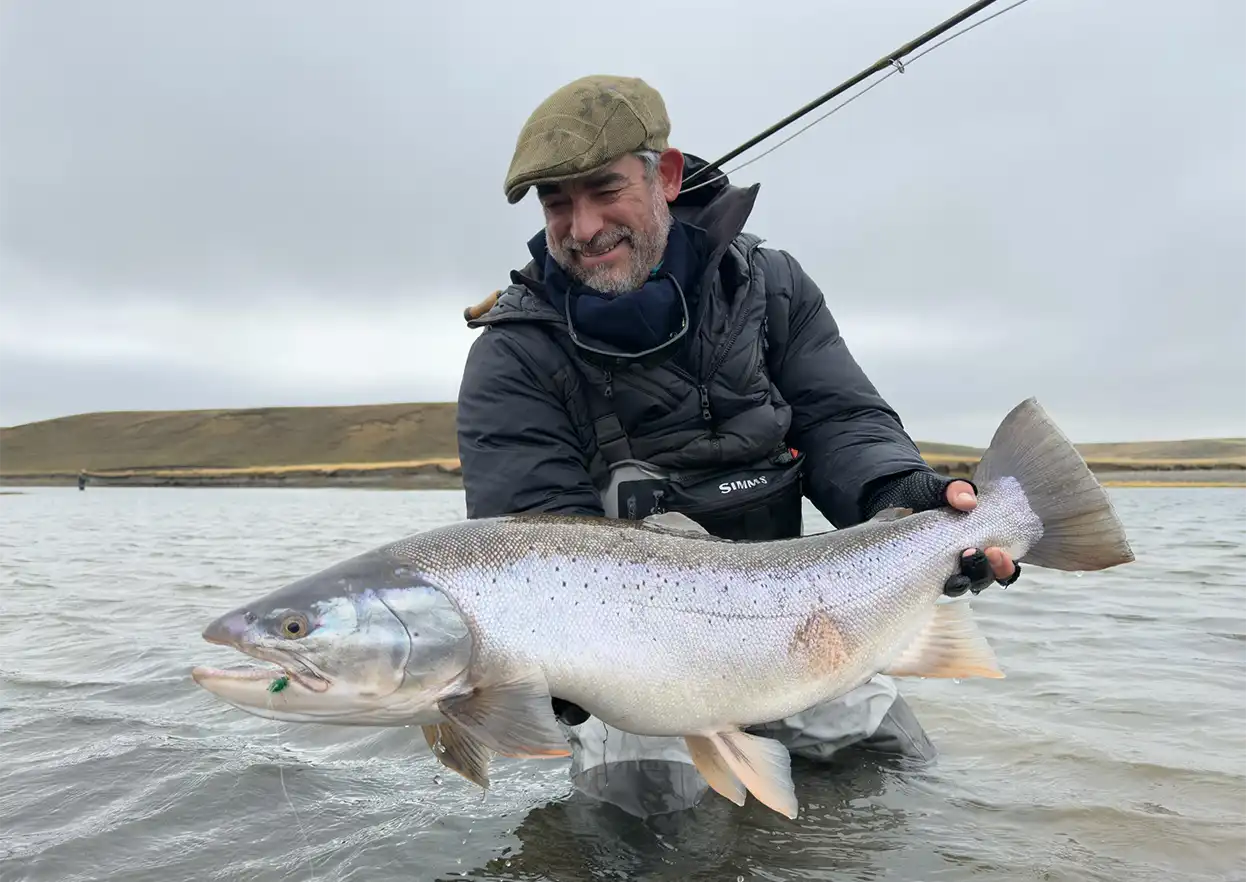
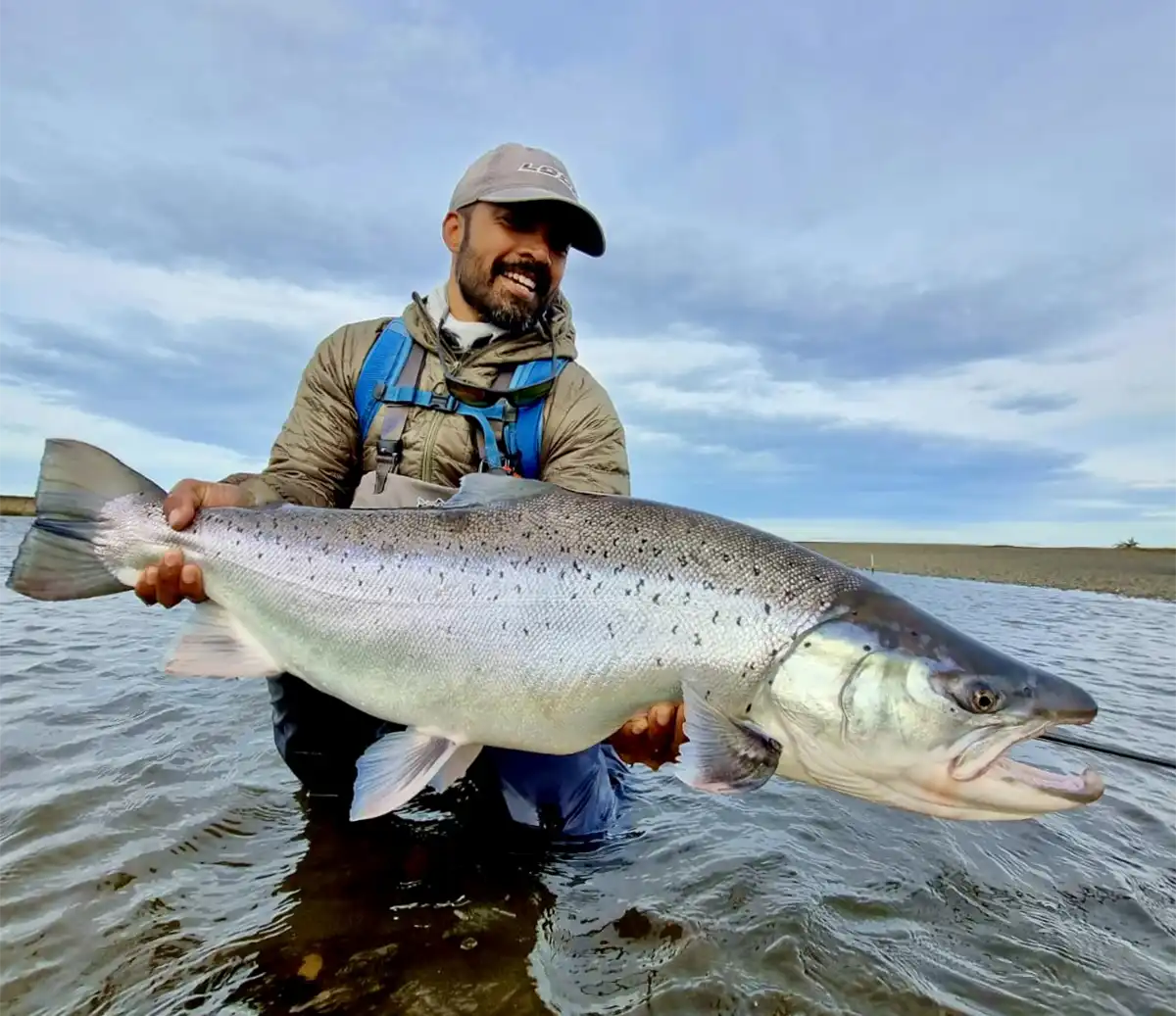
Hooking up with a big sea run brown is an emotional fishing experience that defies accurate description.
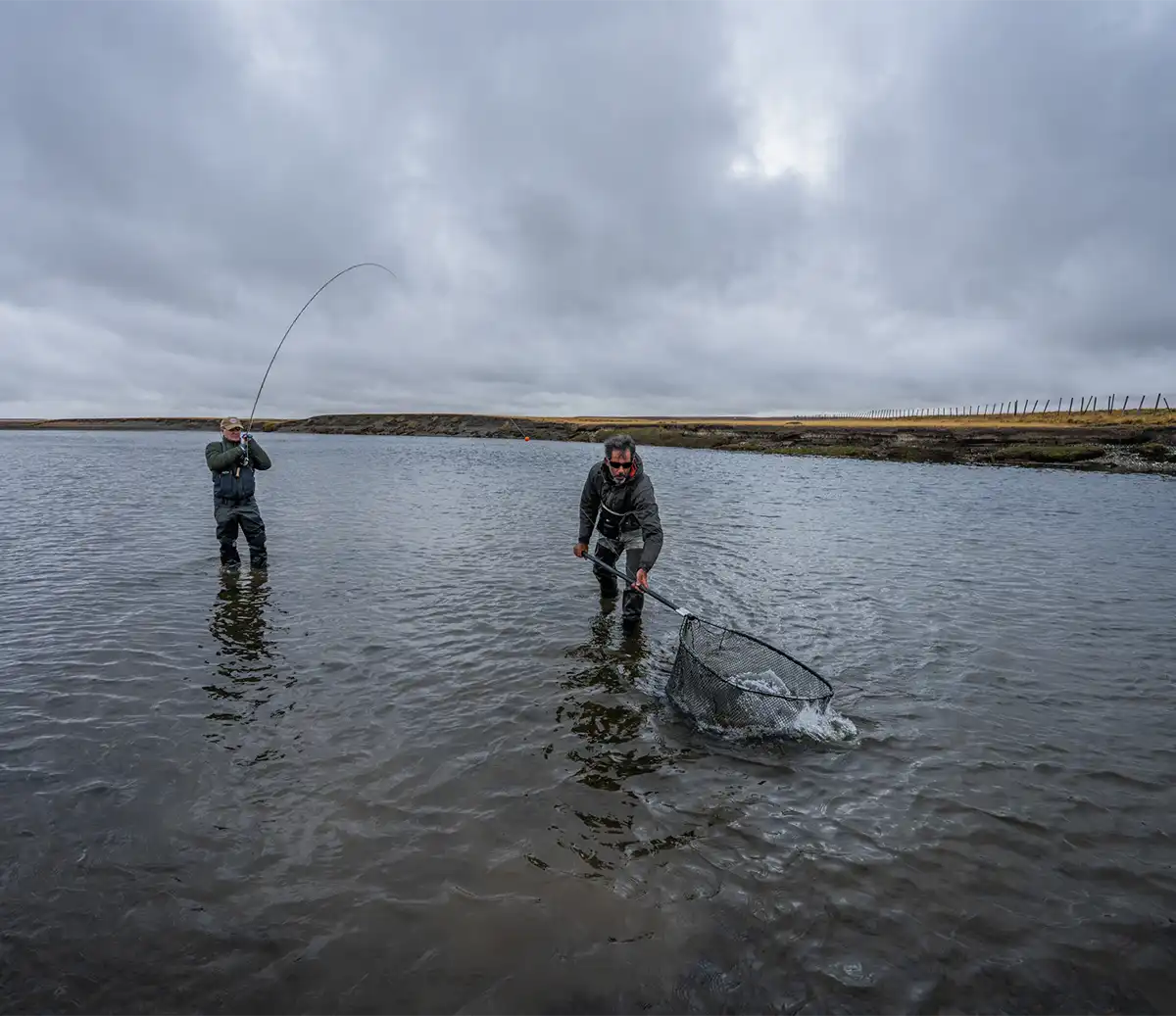
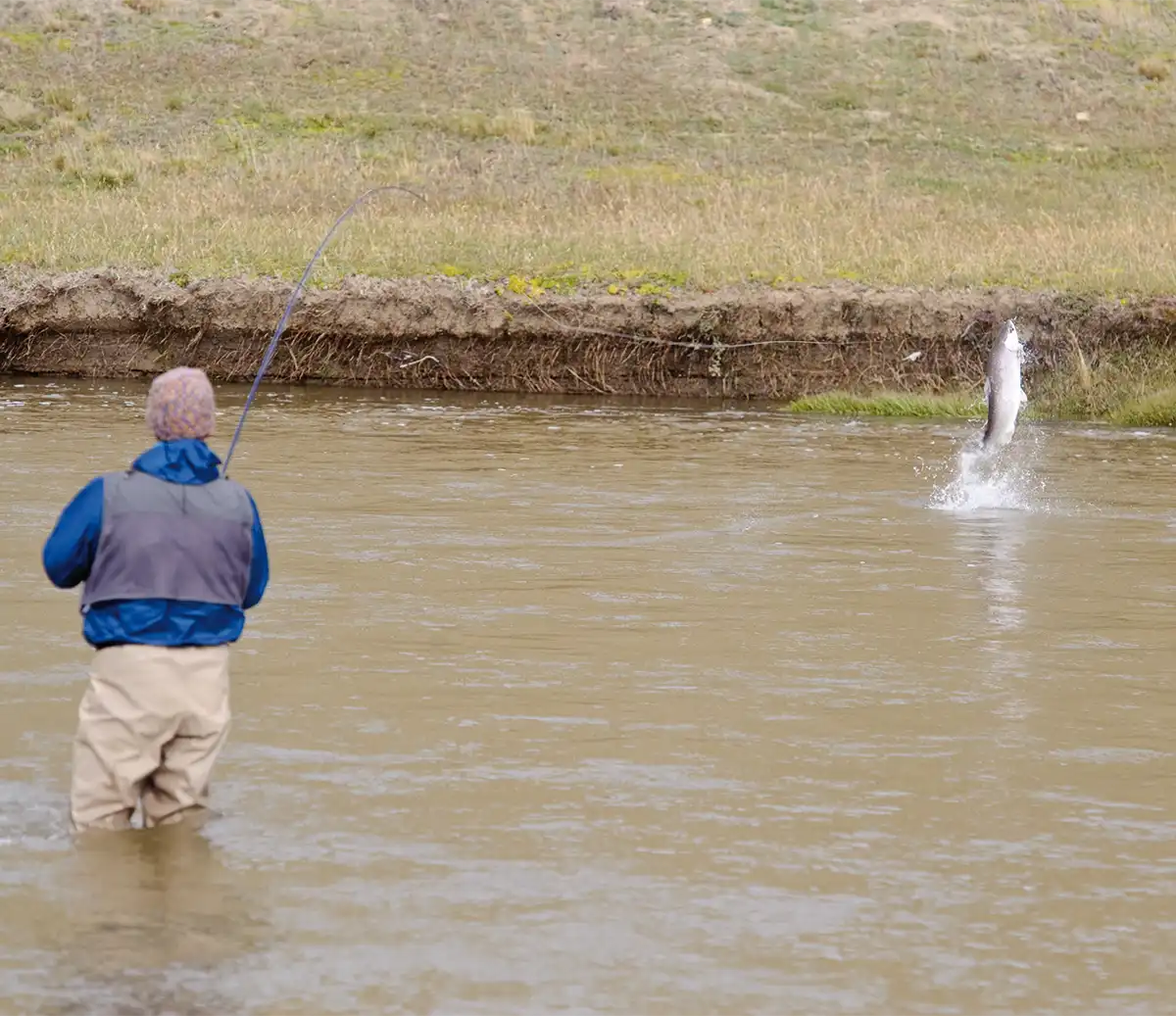
Most fish grab a streamer or nymph on the swing and your first notion is you've hooked a snag. But there are damn few snags in the Rio Grande. It's about this time when the three-foot long "snag" starts violently shaking its head, and it's time to plant your feet and get ready for a fight.
After weighing and measuring the length and girth of nearly 6,000 sea trout for three years in a row, University of Montana biologists have developed a very accurate formula for estimating their weight, without the use of a Boga or other accurate scale.
Weight (lbs) = 64.16 x (fork length (m) x girth (m)) 1.4676
These big brown trout are much like Pacific salmon and steelhead, in that they're most active in low light conditions. The scientists call them nega-phototropic, and as the sun gets higher, fish retreat to the deepest parts of the pools. Perhaps it's because they're used to the deeper sea, or they feel exposed to predators in bright sunlight, but it's a fact they're more aggressive and much more likely to strike a fly in the early morning, late evening, or when it's overcast. In mid-day, when the sun is at its highest, they're unlikely to respond to even the most perfectly presented fly. One of the reasons so many photos of the Rio Grande mega trout look like deer caught in the headlights is that most are caught early or late in the day.
Typical Fishing Day:
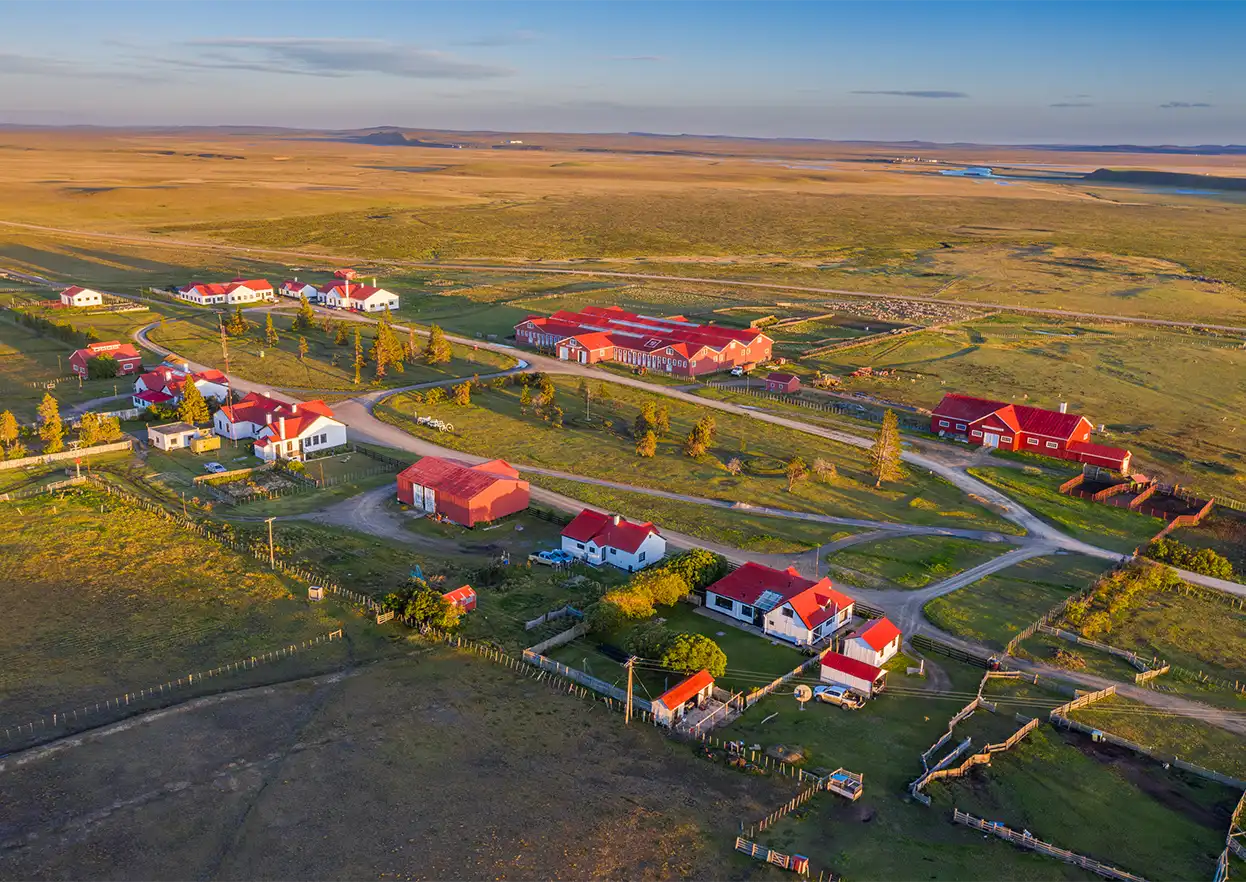
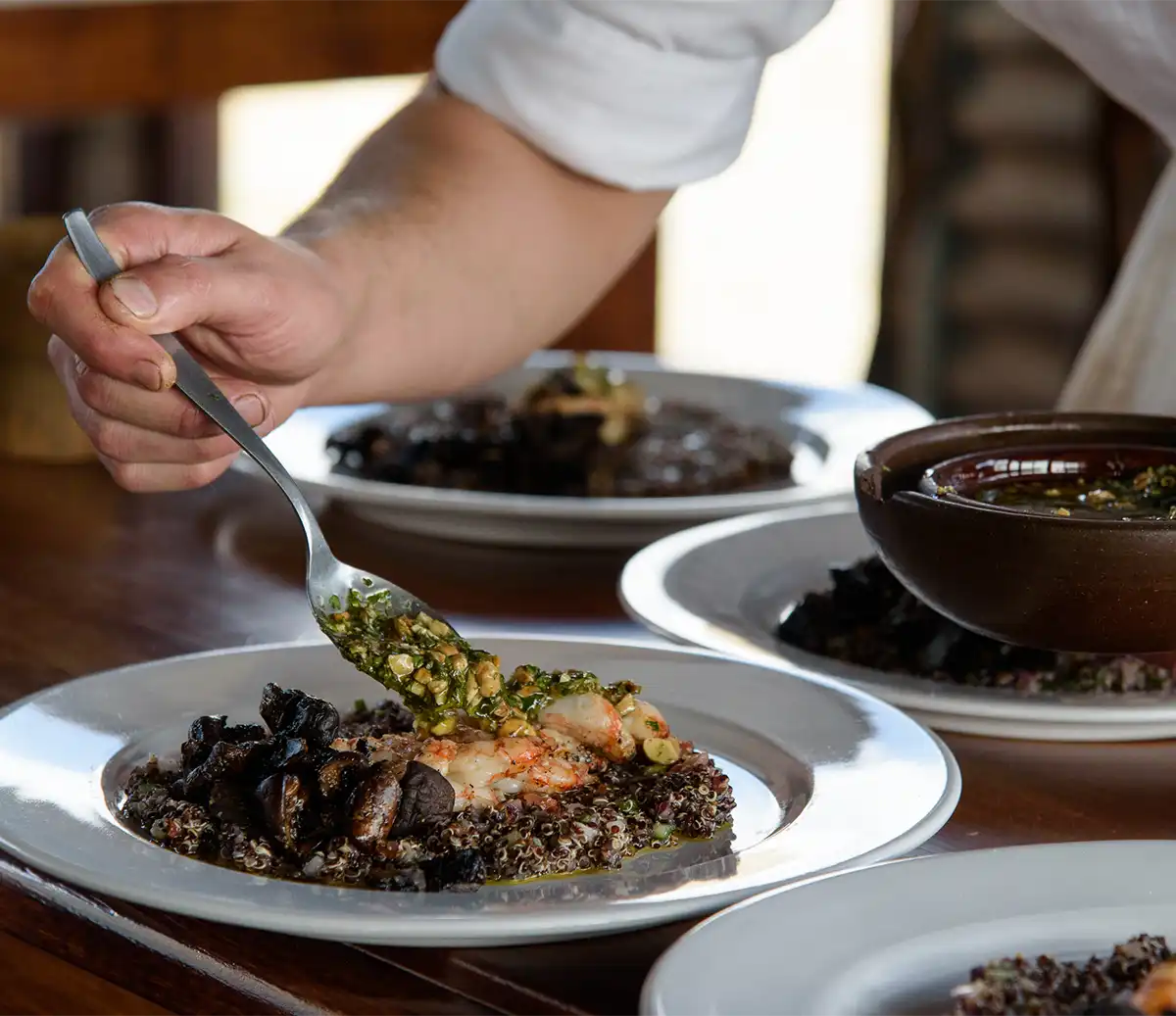
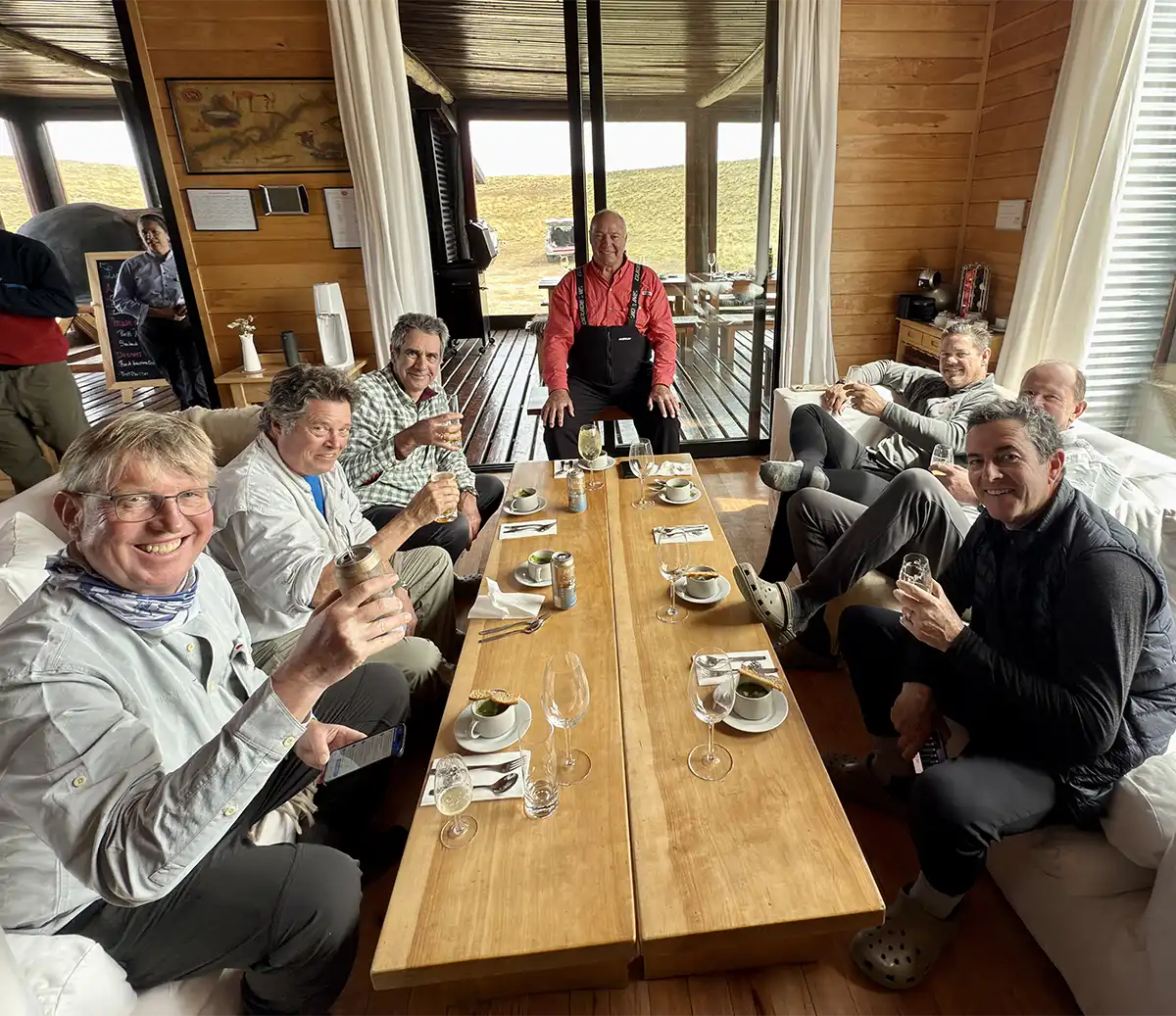
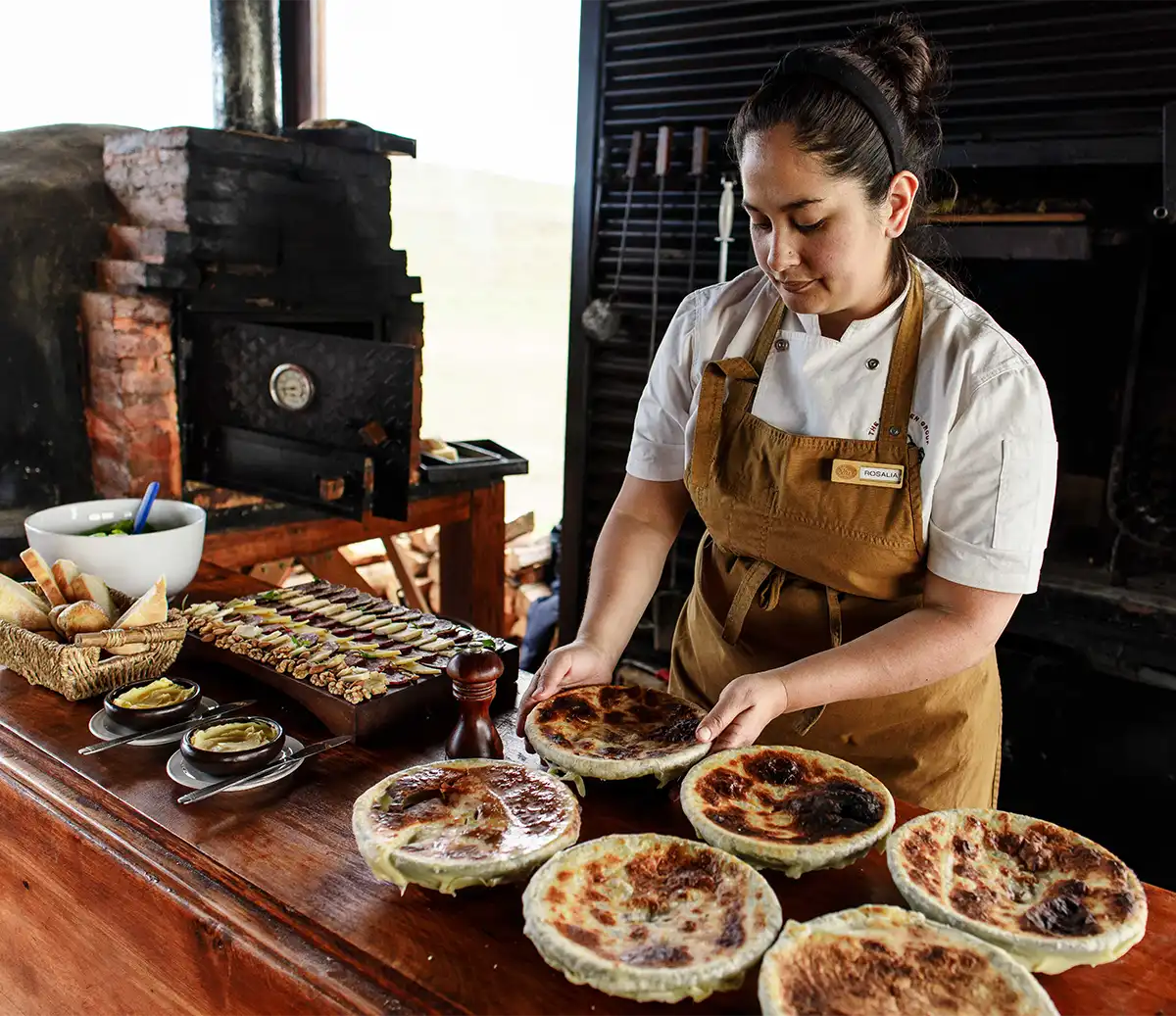
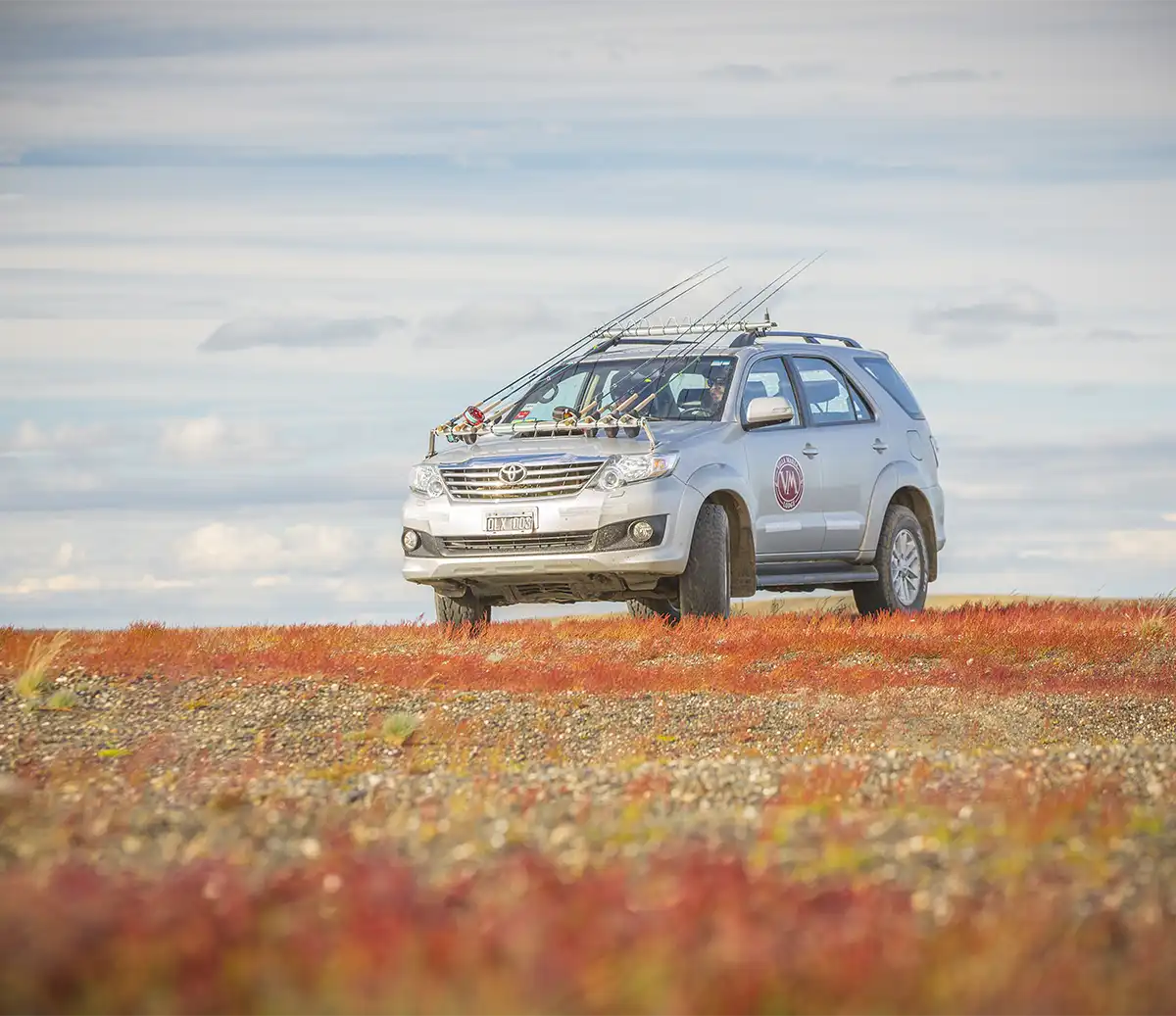
Fishermen start each morning with a light breakfast of fresh fruit, cereals, yogurt, toast and coffee, as well as a full American Breakfast, followed by a full morning of fishing. Each two anglers share a guide and vehicle. Their beat usually consists of two to four pools, all for themselves. Fishermen typically return to the lodge by 1 o'clock in the afternoon where a delicious midday meal, perfectly complemented by local wines, is served, followed by a well-earned siesta.
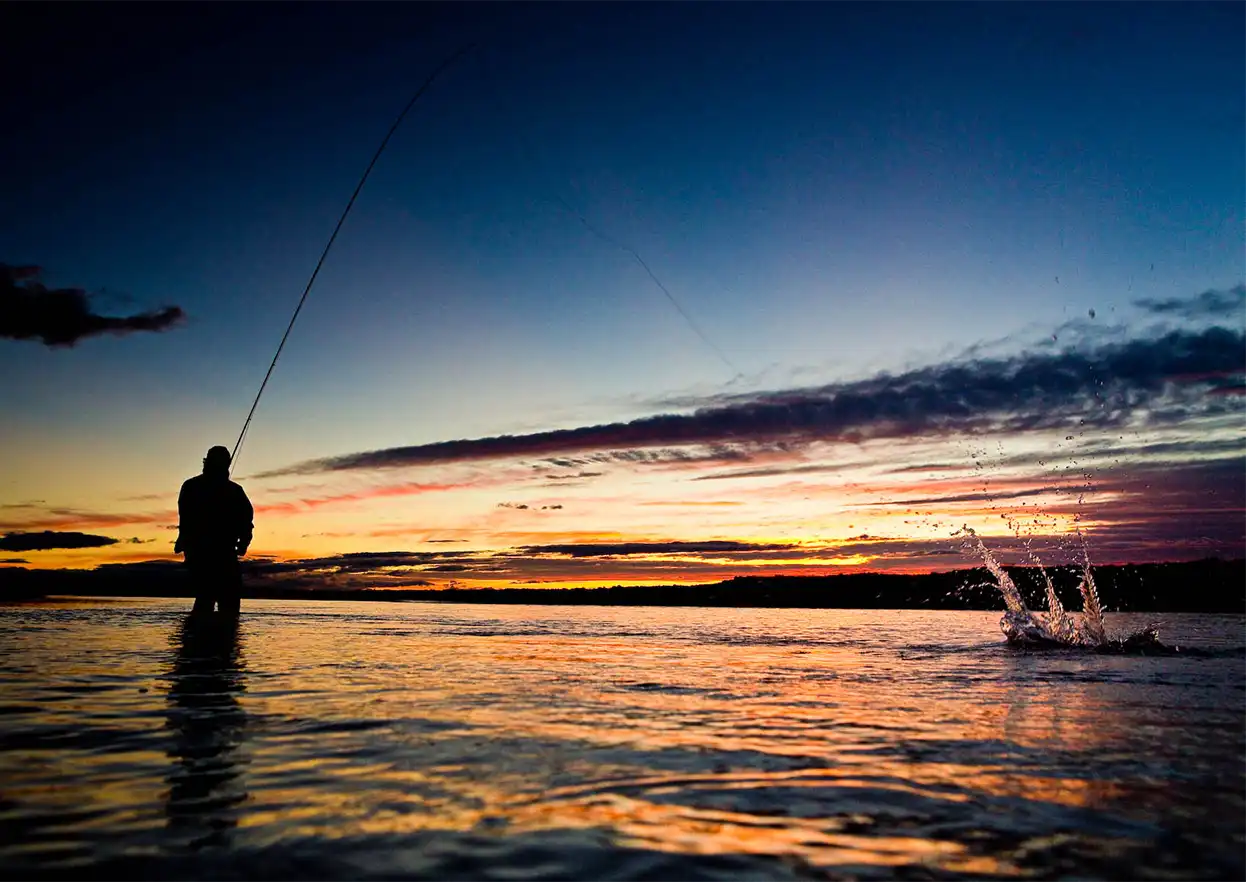
Anglers, well-fed and rested, fish the evening session right up to (and sometimes beyond) the brilliant Tierra del Fuego sunsets. They'll then return to their respective lodges, in time to regale each other with tales of giant fish, then sit down to yet another meal that would put many five-star restaurants to shame. By this time you have been ridden hard and put away wet, only to rise the next morning and start it all over again. What a wonderful way to be treated... EAT, SLEEP, FISH, EAT, SLEEP, FISH, EAT, SLEEP...
Fishing and the Wind:
Much is said about the winds of Tierra del Fuego and it is seldom that any of it is good. The truth is that the Rio Grande isn't super wide, casts are seldom seventy feet, and almost never directly into the wind. Competent casters have little difficulty adjusting to the almost constant gusts and even those that struggle agree quickly that the results are worth every effort.
Tackle and techniques on the Rio Grande are not very complicated. Anglers choose from a broad range of lines, tips and terminal tackle according to the water conditions. Experienced steelhead and Atlantic Salmon fishermen immediately feel "in their element." Quartering downstream with streamers or dead drifting nymphs are the most common methods used, and skated dry flies are terrific when the conditions are right.
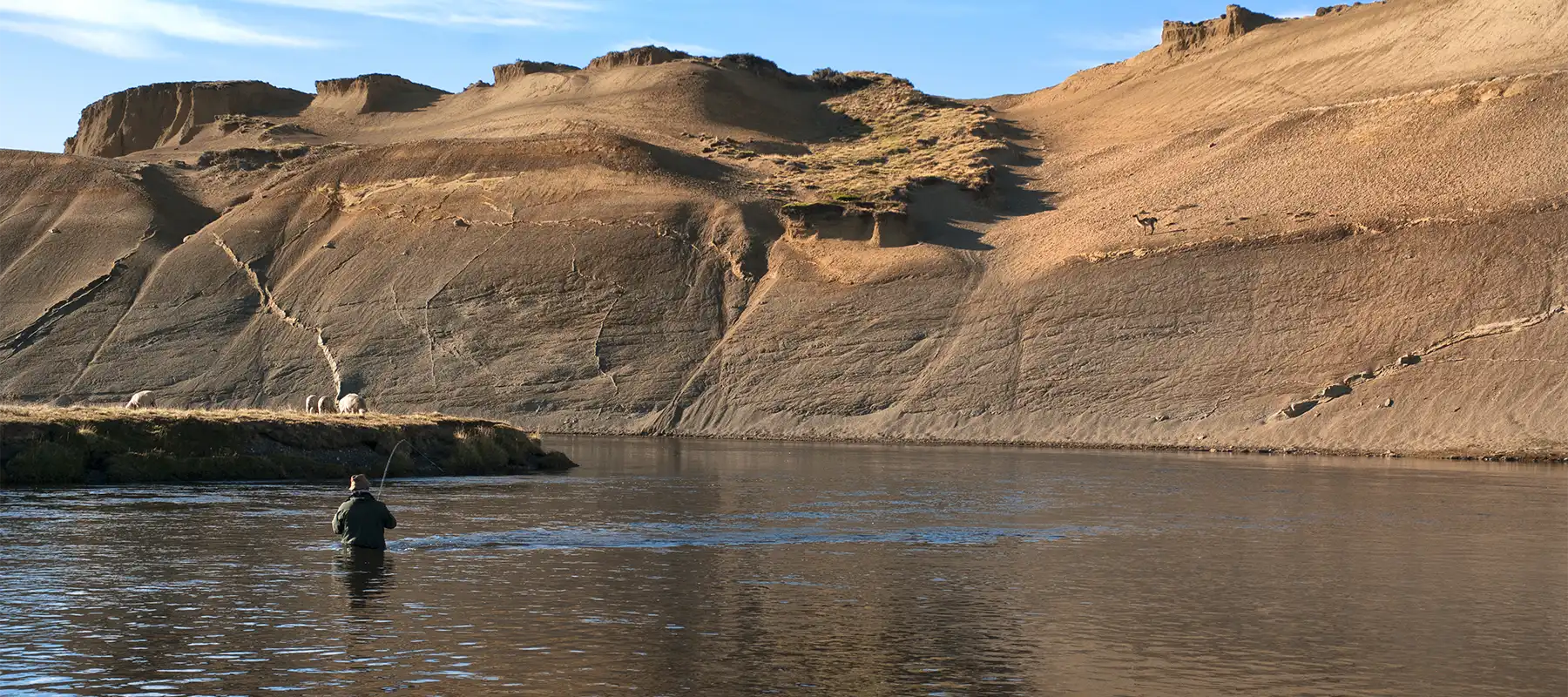
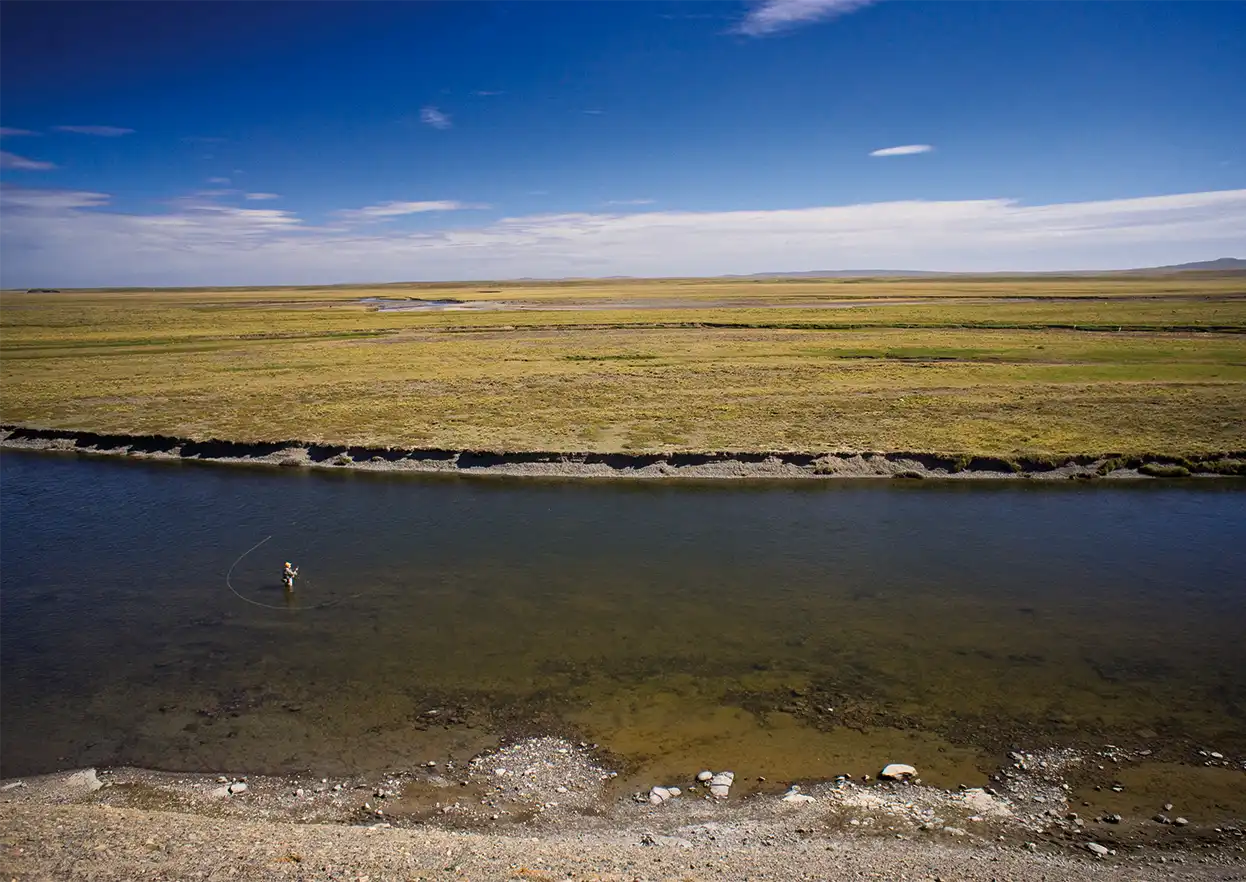
The Rio Grande is one of the easiest streams to wade in the world. The river is seldom more than thigh deep, and can be easily crossed between pools. There's little moss on a bottom made of nothing but perfect spawning habitat ranging in size from pea gravel to golf ball sized rocks. Leave your studded boots at home because there isn't a rock big enough on the Rio Grande to trip over.