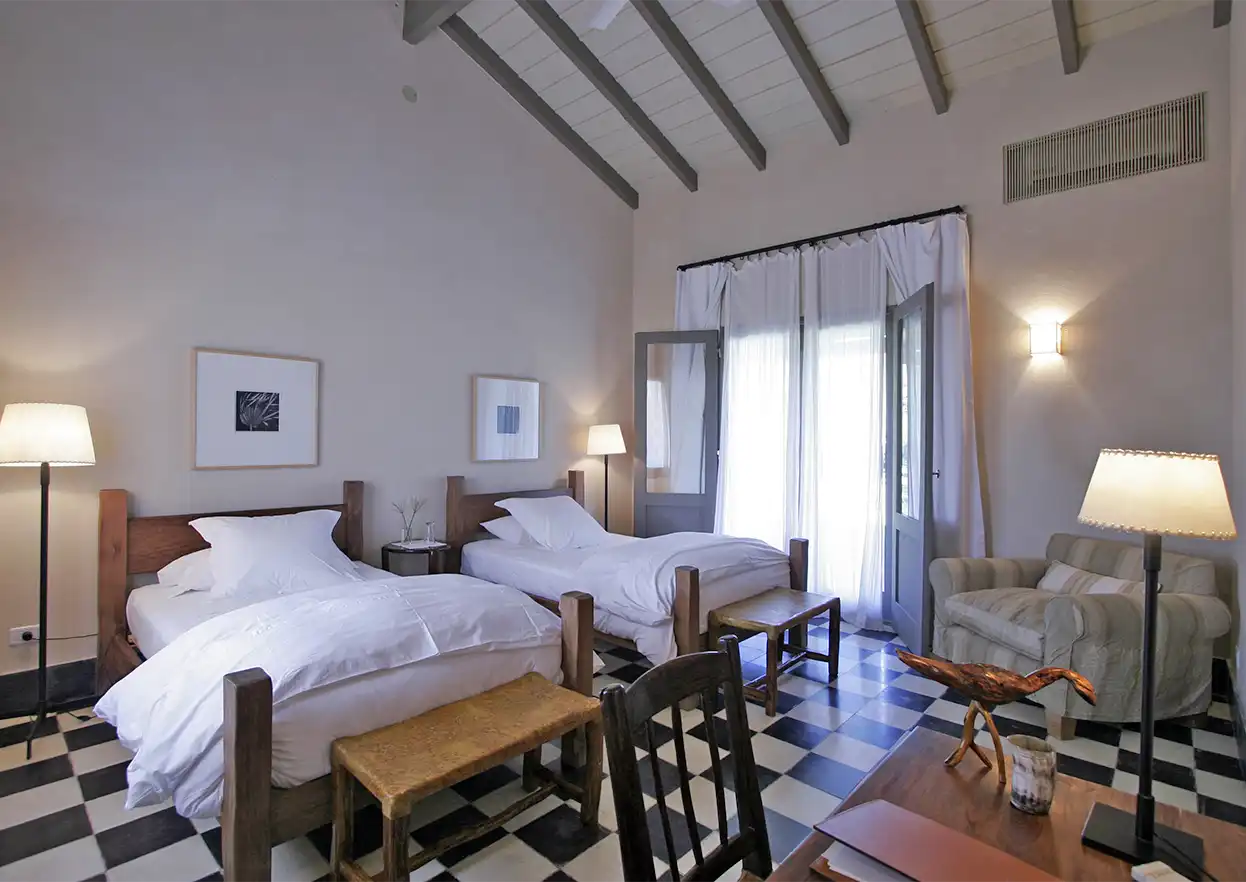
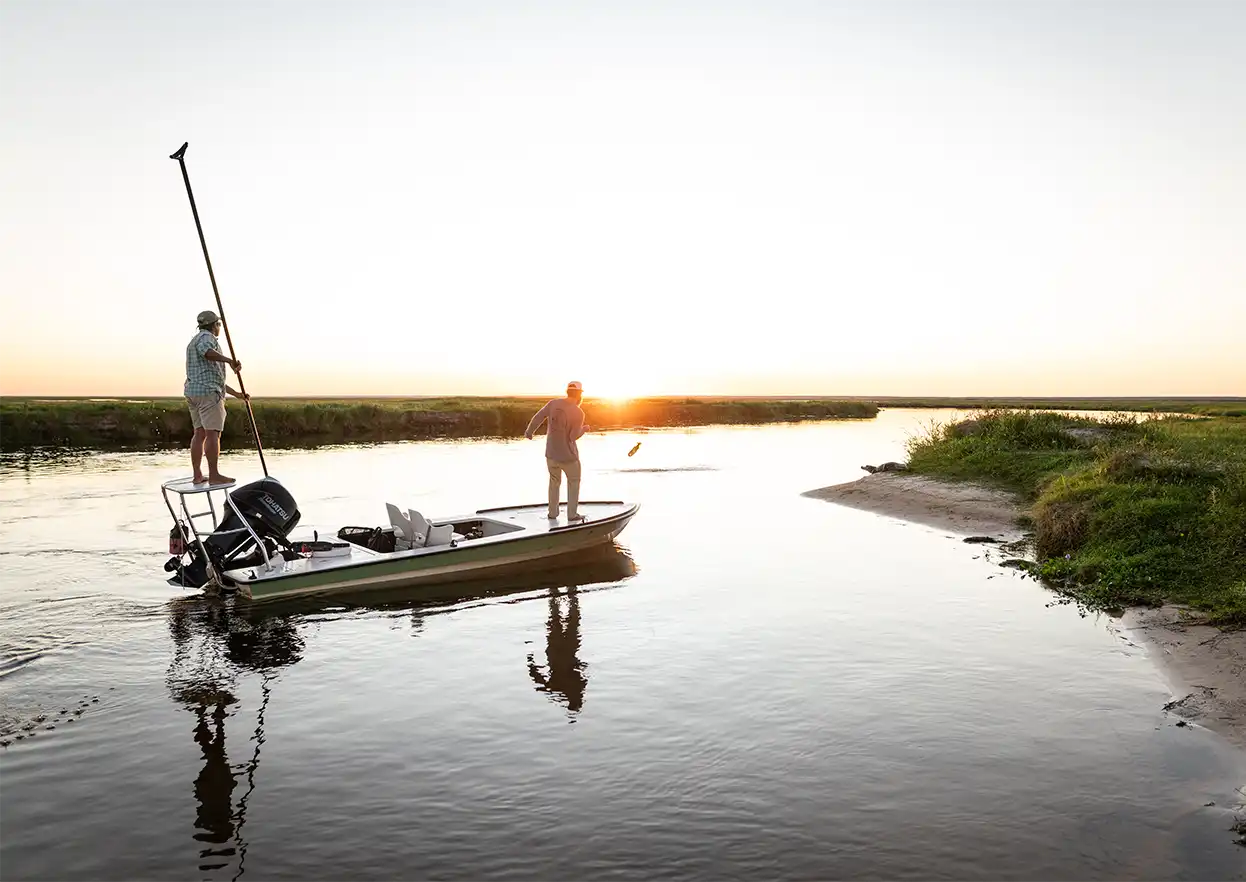
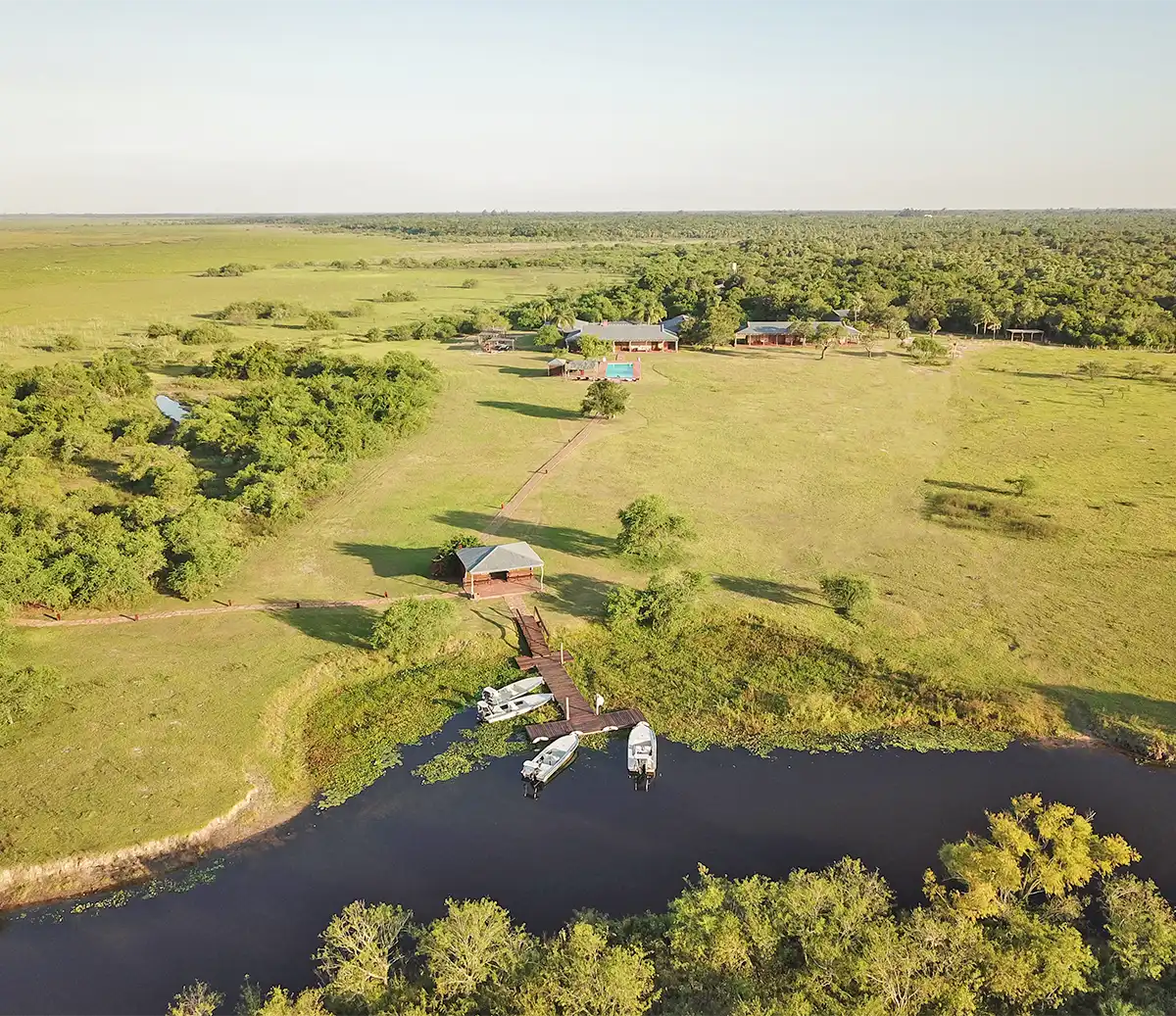
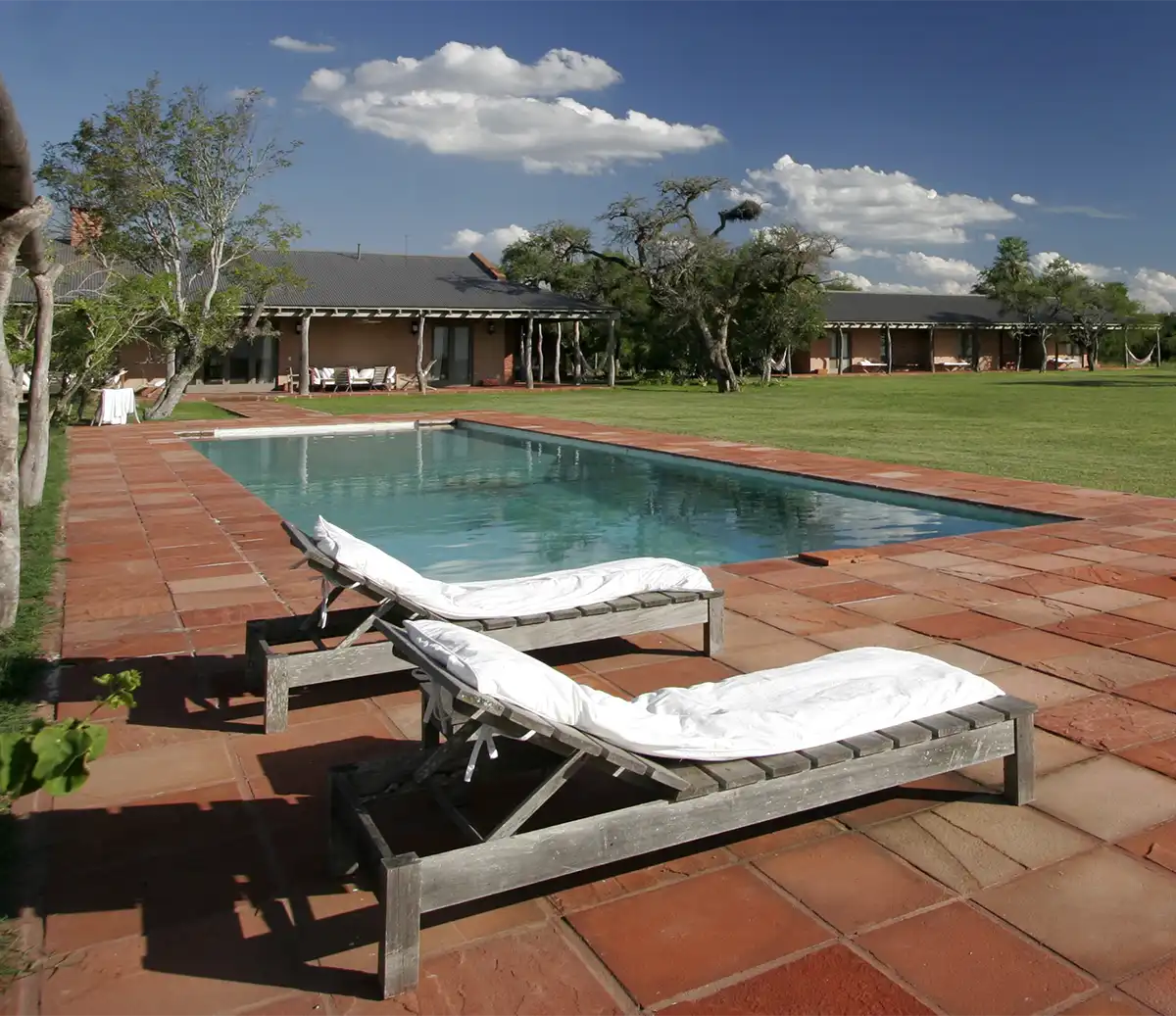
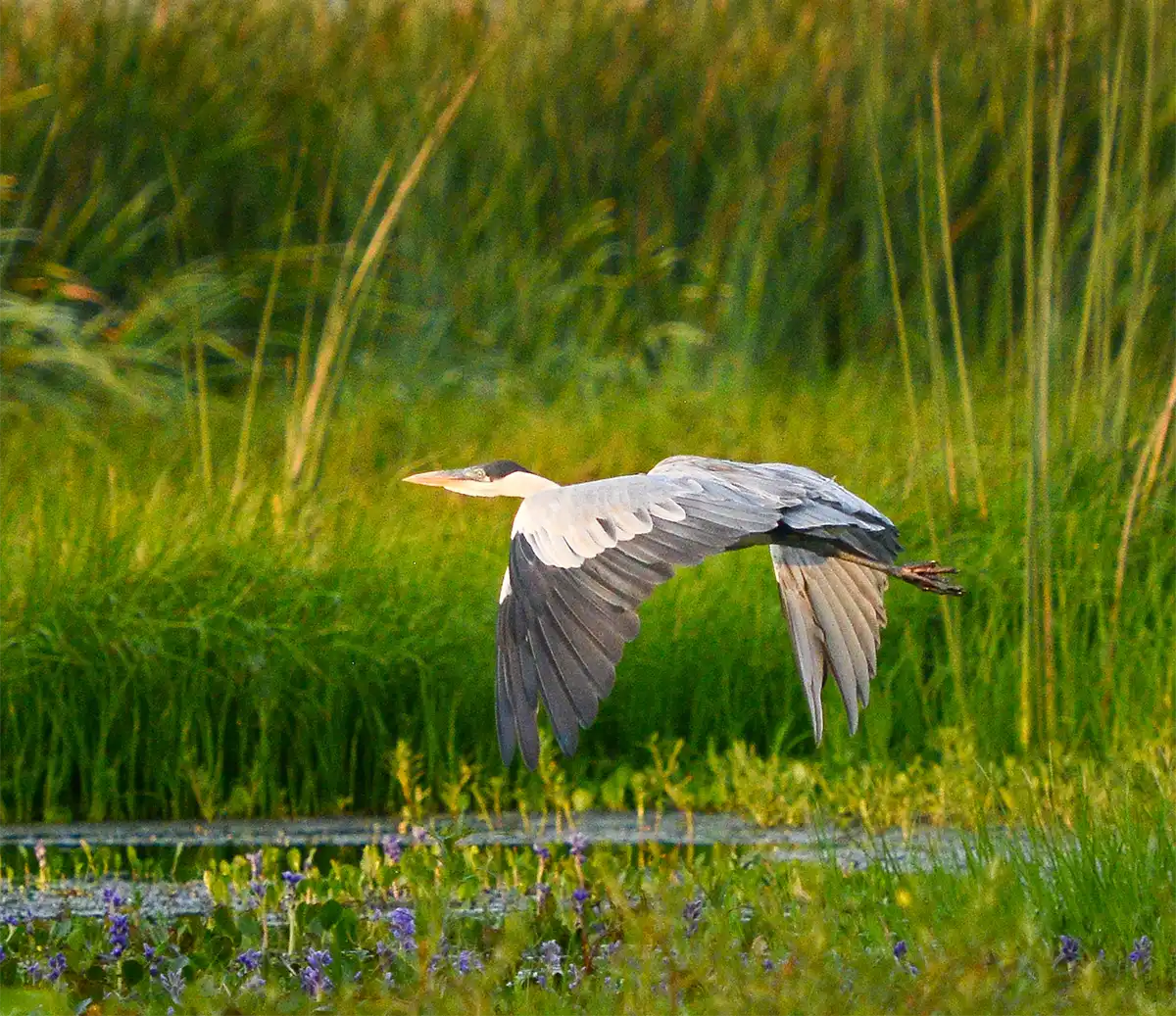
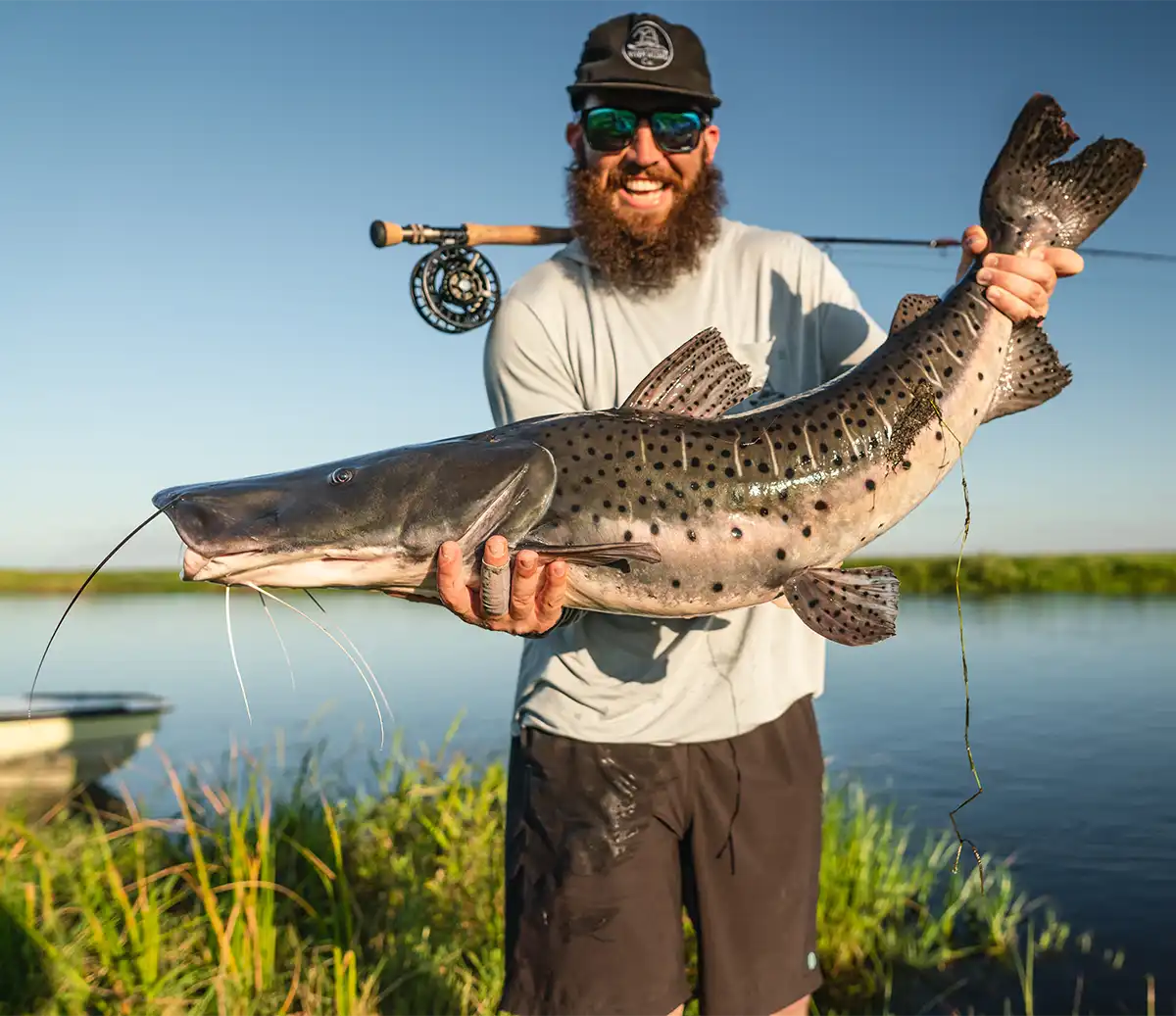
A typical day at Pirá is a feast of sights, sounds, culinary delights... and some damn good fishing to boot. At dawn, as you throw open the curtains that cover the large French windows of your room, you gaze past the covered verandah to the magnificent Ibera Marsh. A short walk on the natural stone patios of the covered galleries brings you to the spacious dining room where tall doors open to a wide verandah. While you eat breakfast and gaze out at the marsh, you enjoy an amazing array of birds… from parrots to rails and from herons to kites. Even though their warbles and squawks fill the morning air, you are only viewing a small percentage of over 350 species of birds that inhabit this vast wilderness. While you enjoy a cup of strong Argentinean coffee, the guides are cleaning the morning dew off the Hell's Bay skiffs and gassing up the Yamaha motors. By the time you walk the 200 paces from your air-conditioned room to the dock, the guides are ready and the morning chill has gone from the air.
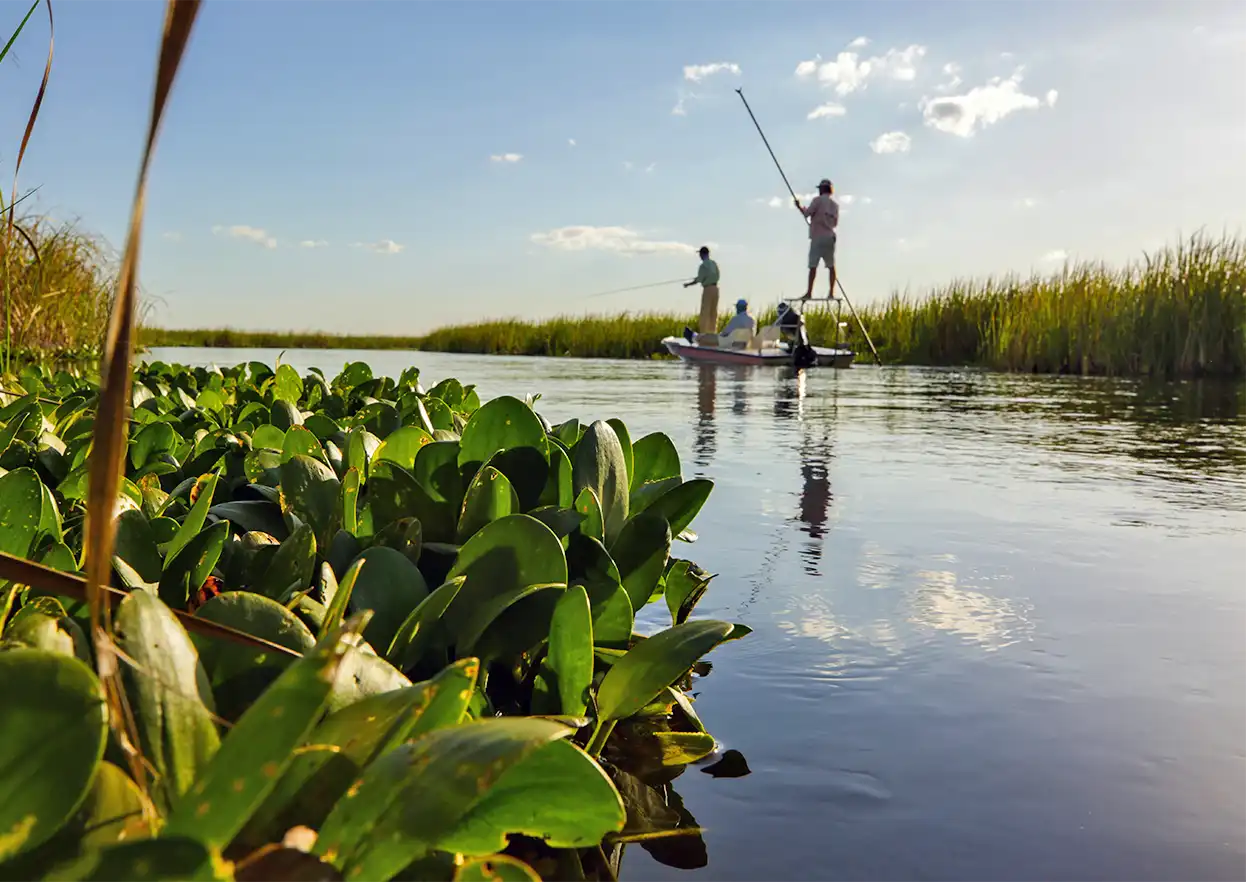
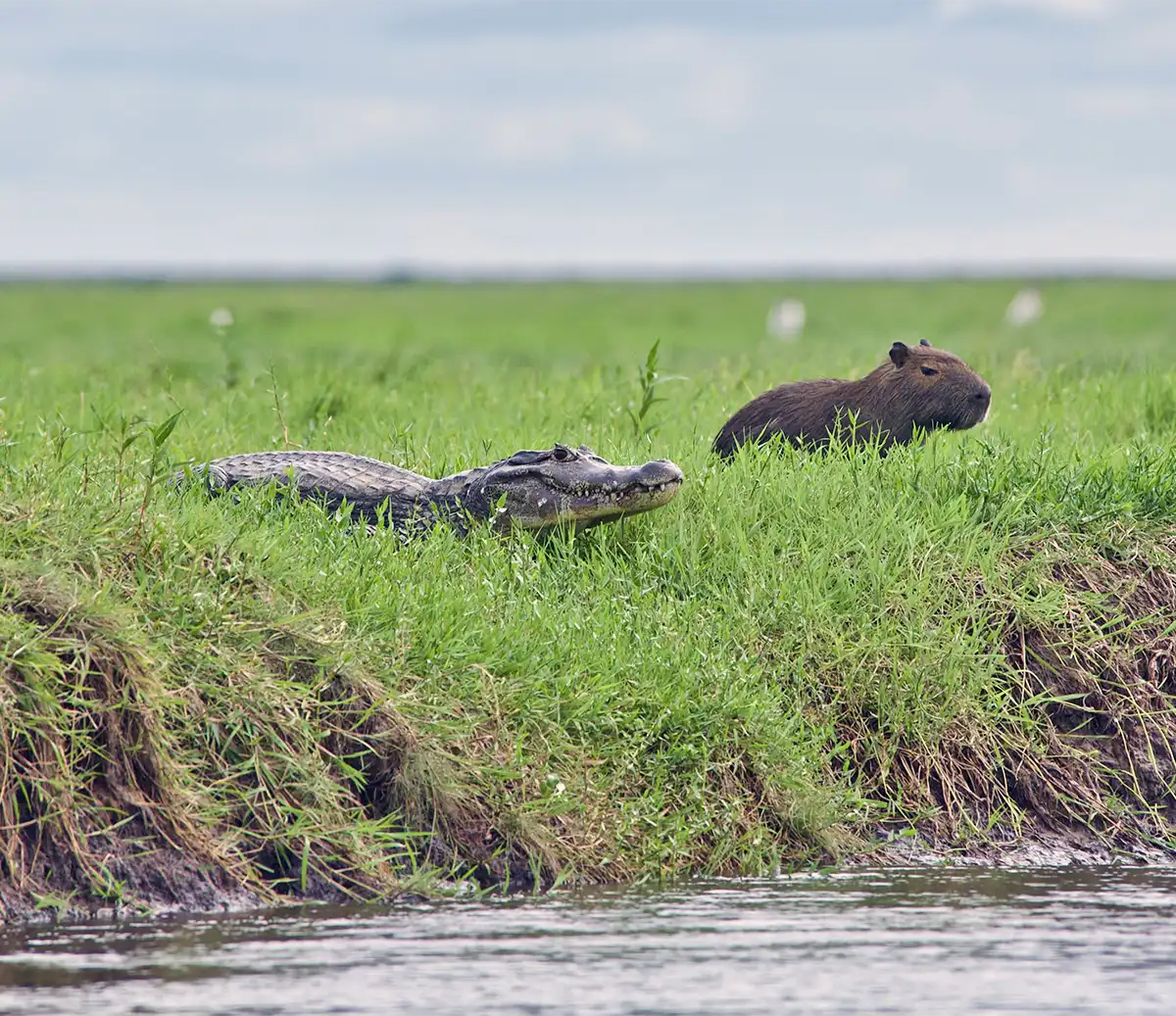
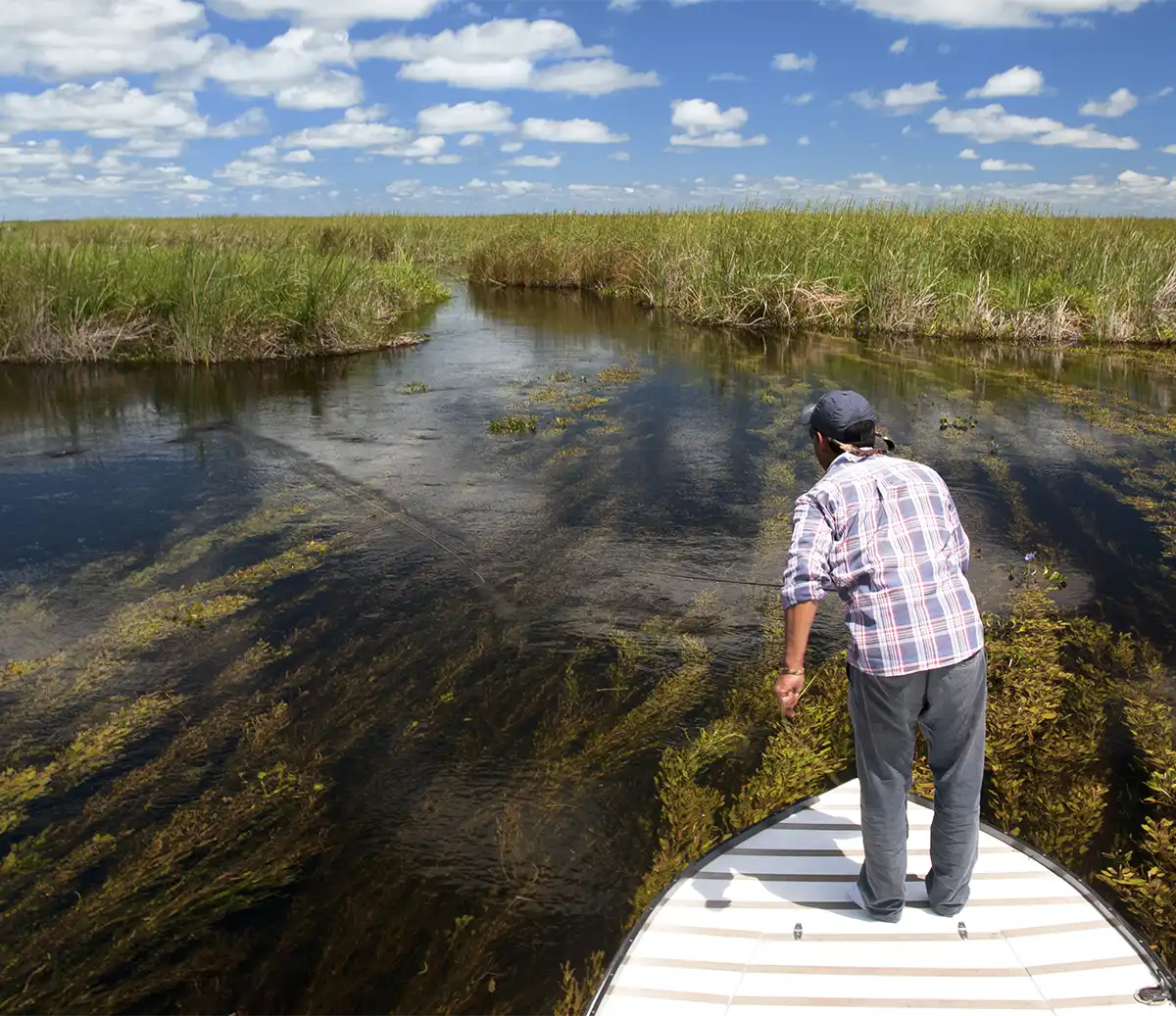
After the guides quickly stow your gear, you're off. You may go left downstream to the Corrientes River or motor off to the right into the labyrinth that is the marsh proper. Whichever direction you choose, the views are stunning. Birds, startled by the boat, spring up like popcorn from the water's edge, while capybara and caiman sneak back into the water ending, at least temporarily, their morning bask. These capybara (the world's largest rodent and perhaps also the cutest) and caiman (a crocodilian growing up to 10 feet) are just 2 of the 85 mammals and 70 reptiles (including anaconda, otters and howler monkeys) that inhabit the marsh.
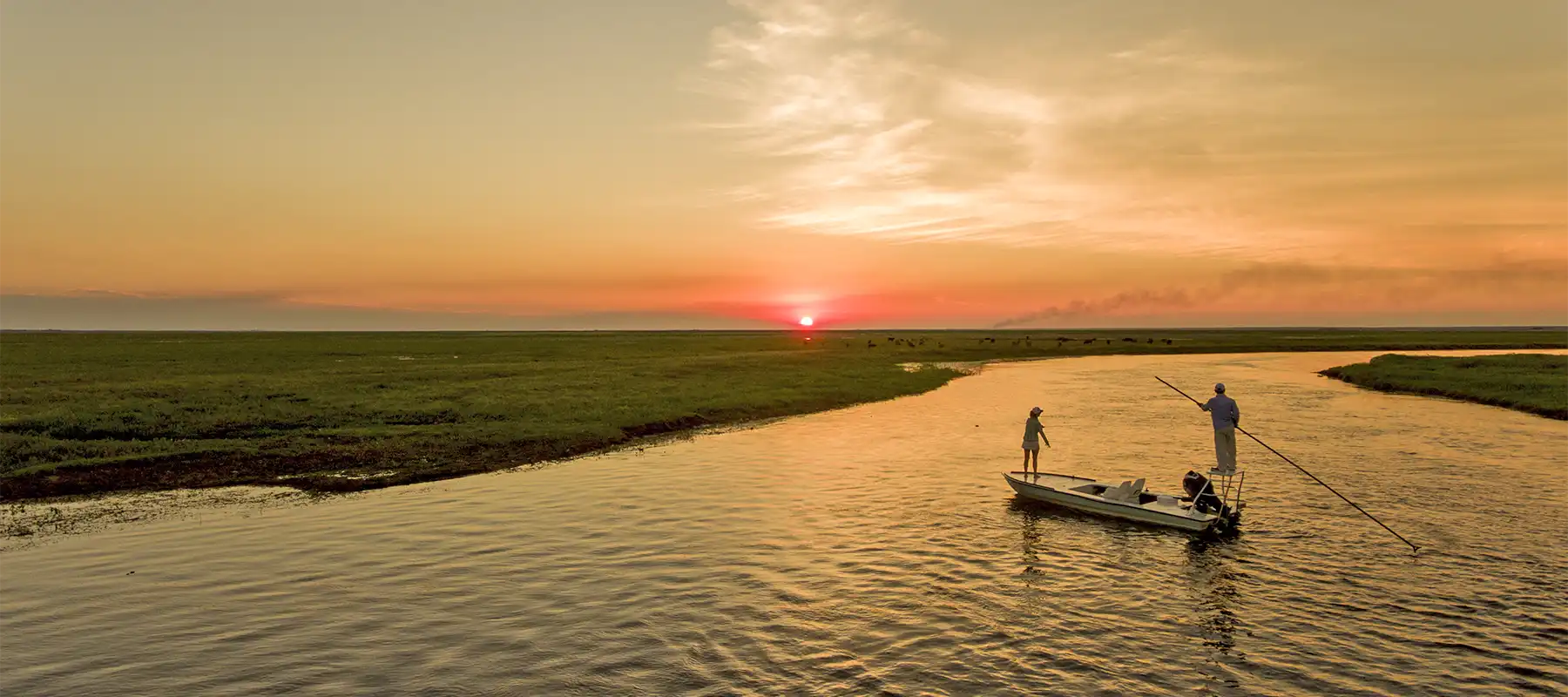
Ibera means shining or sparking water in the local Guarani Indian dialect and these waters do glow as they snake through fields of papyrus and rafts of purple-flowered hyacinth. The Ibera marshland is a vast wetland system of crystal-clear creeks, natural canals and shallow lakes. The Ibera covers some 5,000 square miles and is considered the largest body of pristine, totally uncontaminated water in all of the Americas. As such, the Ibera is more than twice the size of Everglades National Park.
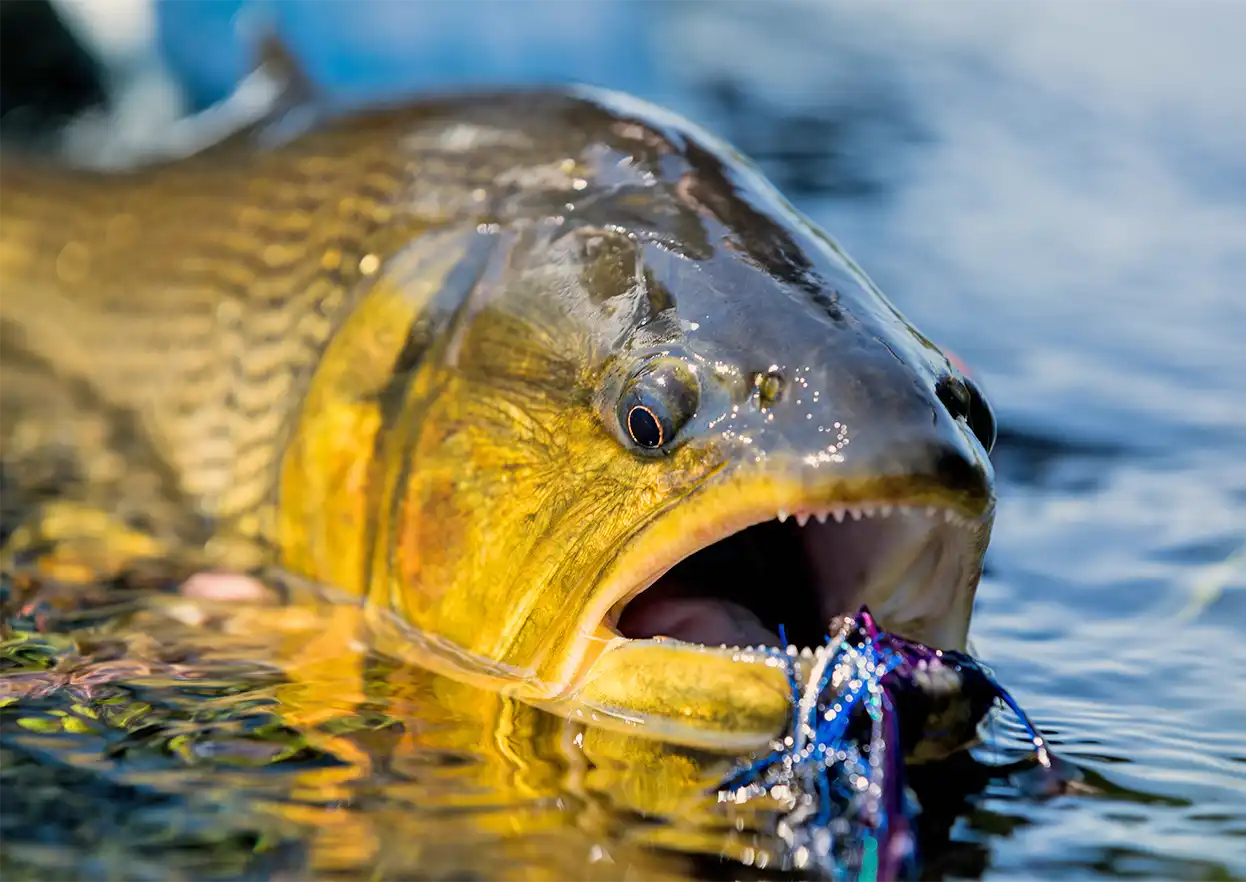
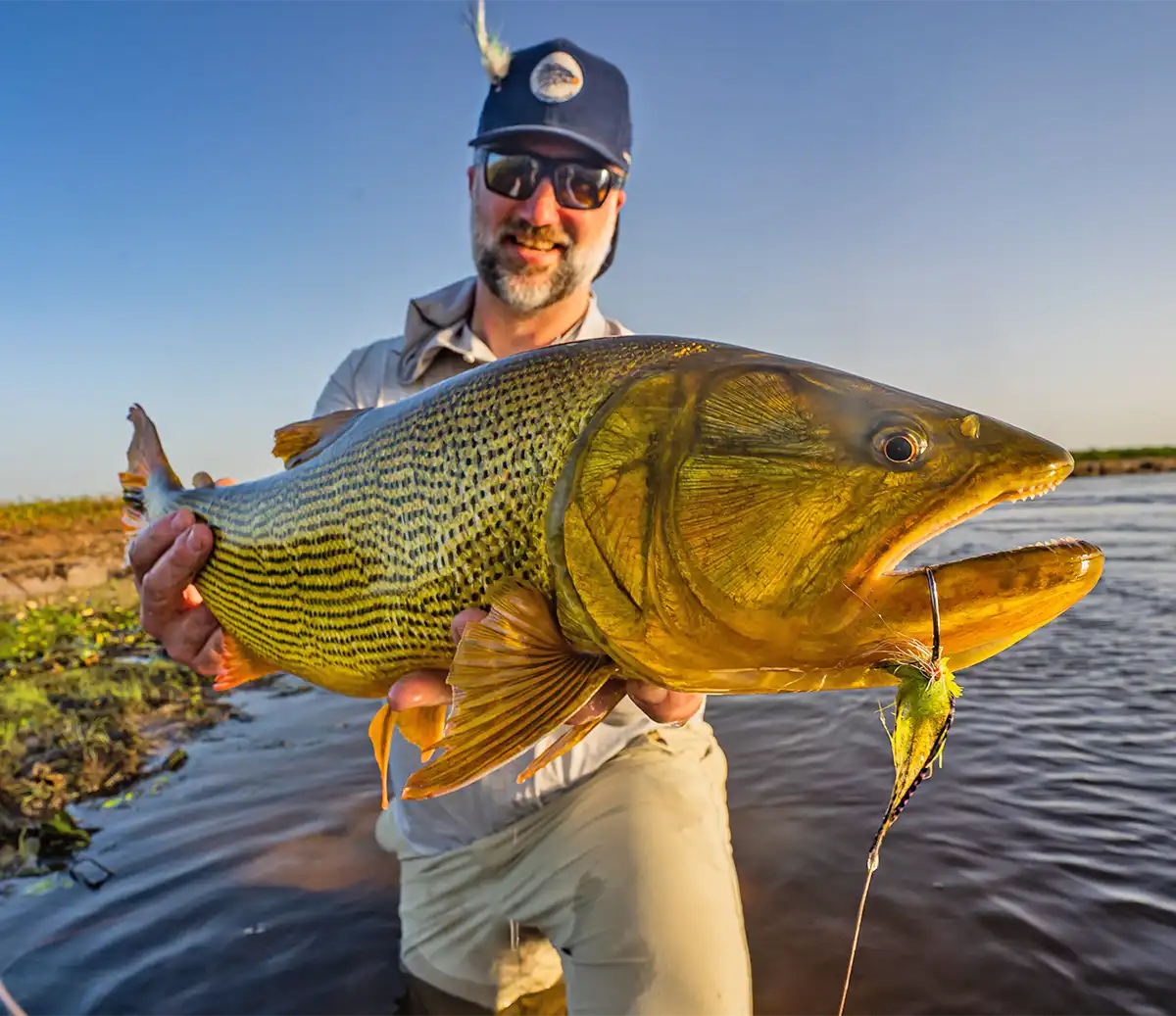
If luck shines upon you this morning, you will catch a dorado, certainly one of the world's great game fish. Savage takes and relentless runs followed by a series of explosive jumps put this fish among the world's elite piscatorial performers. The beautiful, black-flecked, iridescent gold body of the dorado encases a fish that is a cross between a dyspeptic rottweiller and a tarpon (with a bit of a big brown trout thrown in). This radiant characin is known locally as the "tiger of the river". With a mouth like a vice jam-packed with a ripsaw's teeth, this exceptional sport fish averages around 4lbs and can get up to 20lbs in the Ibera. A 10 pound dorado is a true trophy and is considered one of South America's greatest freshwater challenges.
At around 12:30, you decide to motor back to the lodge just as the heat of the day has begun to settle in on you. Fresh lemonade and a few preliminary treats on the shaded verandah quickly take any wilt out of your attitude.
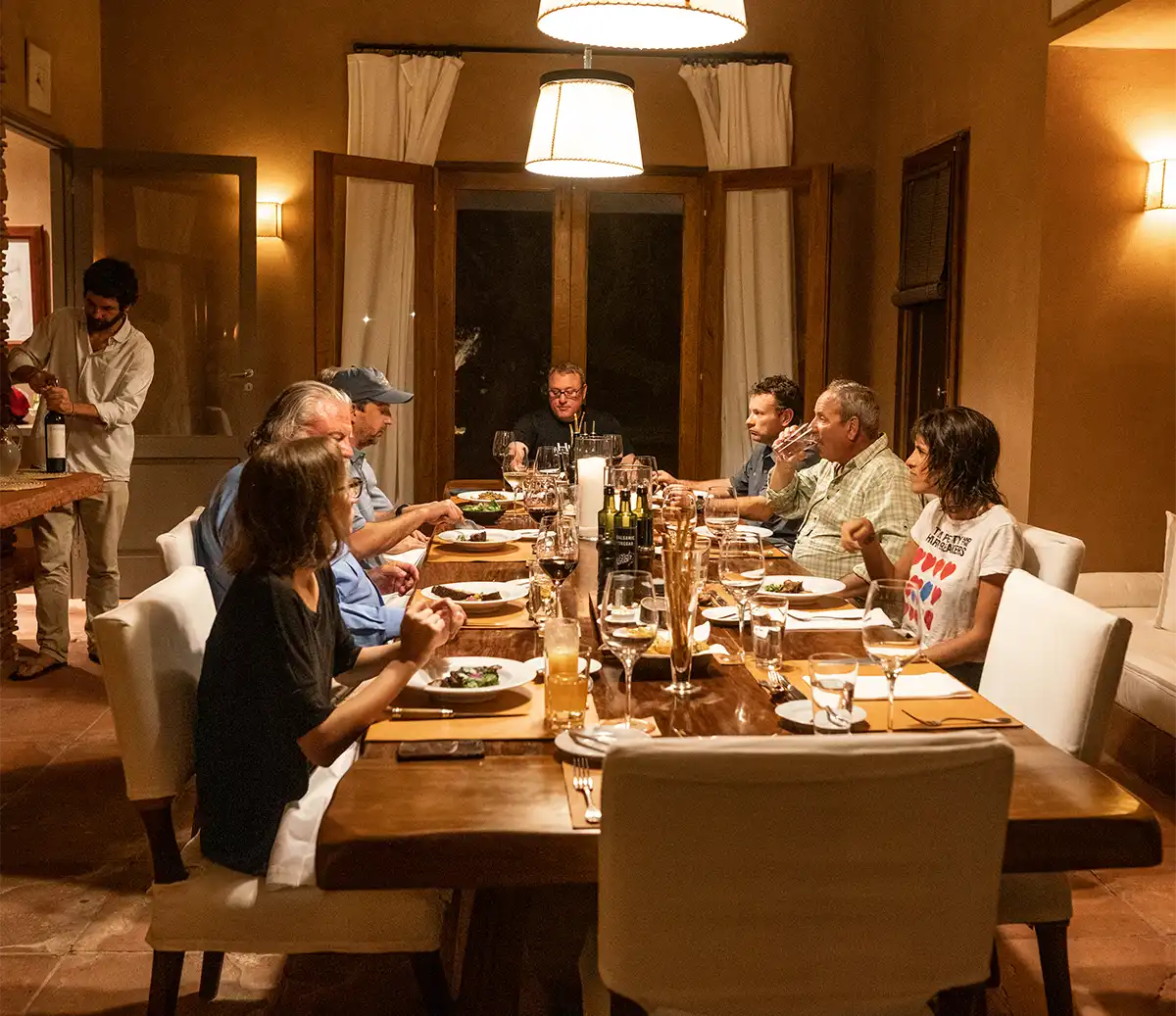
"Lunch" follows, but seems too plebeian a term for these truly 5-star mid-day repasts. Expertly prepared soups, salads, meats and pastas followed by sumptuous homemade desserts could accurately be described as gourmet. All is accompanied by excellent Argentinean wines. Sated by perhaps the finest "lunch" you've ever had while fishing, you retire for a siesta during this, the hottest part of the day.
At around 3:00 (give or take depending on your wishes), you head out for the afternoon "session" (as the guides call it). You will not return until the sun has set. Fishing in the marshland while watching your shadow stretch into dusk is a magical experience. To hook a golden dorado at dusk is a sight you will not soon forget. Their frenzied jumps splash molten gold light into the dark evening waters.
You then head home buzzing back through the Ibera's pools, channels and secret passages. Hot showers, cold libations and fresh hors d'oeuvres await your return. Refreshed, maybe you tie a fly or two for tomorrow in the bar before strolling to the dining room for a late Argentinean-style dinner, usually served at 9 – 9:30 P.M. The evening meal is as incredible as lunch and no one walks away from the massive wood table without commenting on the wonderful meal they have just experienced. Sated, you walk to your room to the sound of crickets and bell frogs as the Milky Way shines brilliantly over the marsh. The best part is that tomorrow you get to do it again!
Pirá is truly one of the greatest experiences in the angling world. A week at Pirá has been described as more of a "sensory experience" than a pure fishing trip. Indeed, when you combine the wildlife and the awesome natural beauty with the sumptuous meals (and throw in the antics of "El Tigre" just so you'll remember you're here to fish), your senses will, at a minimum, have received a good "spring cleaning".
For South American adventurers, the freshwater dorado is the marquee player, but there are a few things you should know before you venture south. With an extremely strong jaw lined with sharp teeth, wire leaders and care when removing hooks is absolutely essential. Dorado like big flies (4-5" is best on usually 3/0 hooks), fast retrieves and an aggressive "grit your teeth" attitude. Your attitude must match theirs. If you hope to latch on to this bony-mouthed predator, you must cast well; retrieve fast and strip-strike with power. Use a delicate trout hook-set and the brute will jump once and be gone, leaving you with but a brief flash of gold (and an open mouth).
Other Activities:
Unlike many remote fishing lodges, Pirá offers much for the non-angler, including hours of horseback riding along the edge of the marsh, where they will see an endless variety of birds and wildlife in unspoiled habitat. The marsh can be explored by canoe or sea-kayak and sunbathing and relaxing by the inviting pool is also a perfect way to unwind and enjoy the reliable, sunny weather.